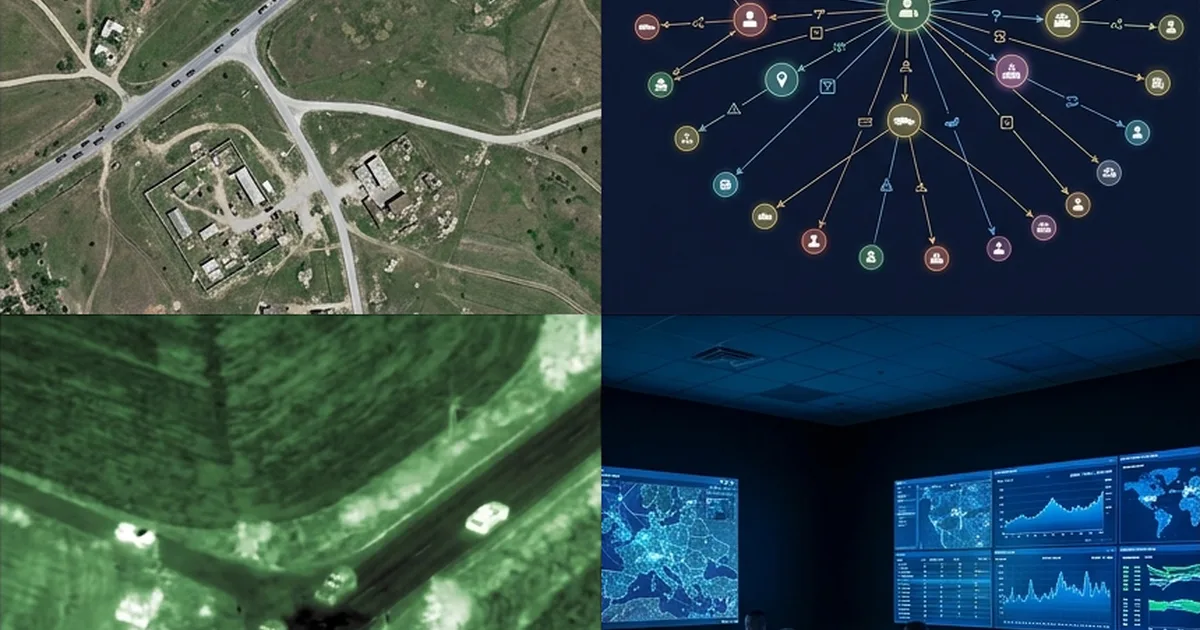
Modern military intelligence is leveraging a fusion stack of Graph Neural Networks (GNNs), Large Language Models (LLMs), and knowledge graphs to overcome the limitations of traditional AI in dynamic, adversarial environments. This architecture is designed to handle complex, real-time decision-making, such as differentiating combatants from civilians under strict time constraints. The knowledge graph serves as the semantic backbone, modeling entities, relationships, and temporal dynamics on the battlefield to provide a governed foundation for LLM reasoning and GNN inference. AI
IMPACT This fusion architecture addresses critical limitations in current AI for high-stakes, adversarial environments, potentially enabling faster and more accurate decision-making in military operations.
RANK_REASON The article discusses a technical architecture for AI in military intelligence, focusing on the integration of LLMs, GNNs, and knowledge graphs, rather than a specific product release or a new model. [lever_c_demoted from research: ic=1 ai=1.0]
AI-generated summary · Google Gemini · from 1 sources. How we write summaries →