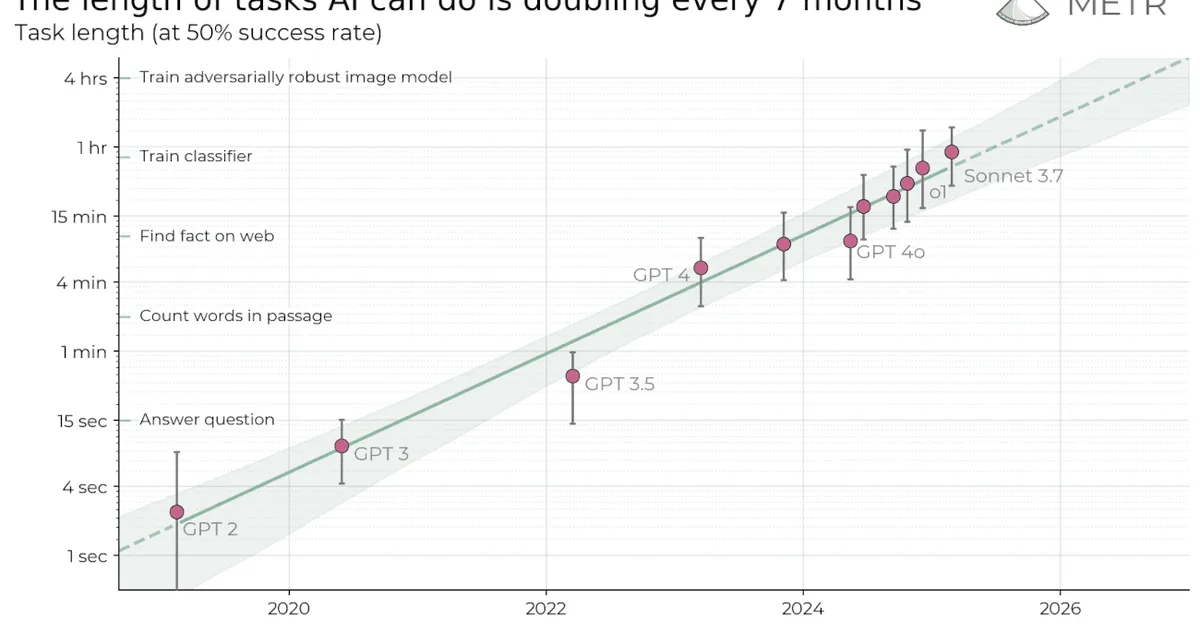
A recent analysis on LessWrong proposes a mechanistic theory for the observed exponential increase in AI time horizons, as depicted in the METR graph. The author argues that the 'time horizon' metric primarily reflects the number of challenging subtasks within a given task, rather than the AI's operational speed. This perspective suggests that longer tasks, which require more distinct requirements, are more likely to expose an AI's limitations, thus influencing the measured 'time horizon'. AI
IMPACT This analysis reframes understanding of AI progress metrics, suggesting task complexity, not just speed, is key to predicting future capabilities.
RANK_REASON The cluster discusses a theoretical interpretation of existing AI progress metrics, rather than a new release or empirical finding.
AI-generated summary · Google Gemini · from 1 sources. How we write summaries →