PulseAugur
EN
LIVE 01:34:51

AI models can now be fine-tuned using synthetic data, reducing costs and privacy risks

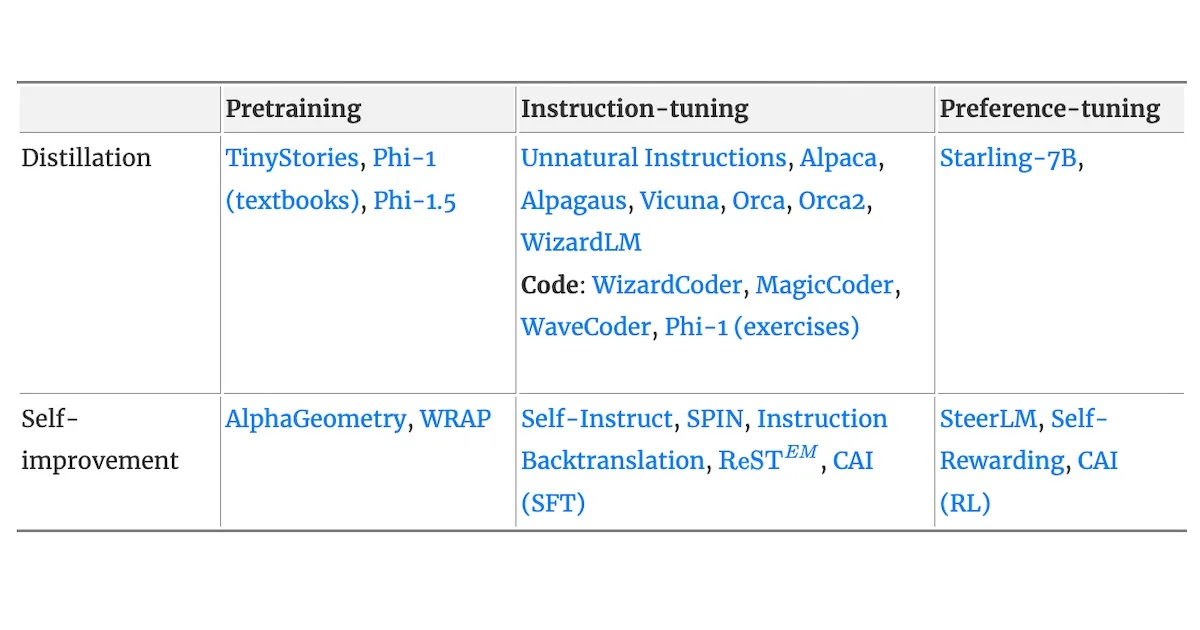
Synthetic data, generated by models or simulations rather than real-world sources, offers a faster and more cost-effective alternative to human annotation for fine-tuning AI models. This approach can lead to improved model performance and generalization while also mitigating privacy and copyright concerns. Two primary methods for generating synthetic data include distillation from a more capable model and self-improvement techniques where a model refines its own output. These methods can be applied to pretraining, instruction-tuning, and preference-tuning to enhance various aspects of a model's capabilities. AI

RANK_REASON The article discusses research papers and techniques for generating synthetic data for AI model fine-tuning.

Read on Eugene Yan →

AI-generated summary · Google Gemini · from 1 sources. How we write summaries →
AI models can now be fine-tuned using synthetic data, reducing costs and privacy risks

How we ranked this

Signal score
0 / 100
Composite score across the factors below. Higher = stronger signal that this story matters right now.
Newsworthiness bucket
Research
The article discusses research papers and techniques for generating synthetic data for AI model fine-tuning.
Source corroboration
Single-source cluster
Only one publisher covered this so far. Single-source stories can still rank when the publisher is high-authority, but they lack cross-source corroboration.
Topics
paper, model release
Editorial topic classification. Feeds into how the story surfaces on /topic/<slug> hub pages and into the per-entity coverage mix.
AI-industry relevance
High
Clearly on-topic for AI-industry coverage.
Story freshness
959 days old
Aged out of breaking-news scoring windows; ranking reflects the durable signal from the full source set.

Full methodology in our editorial standards.

COVERAGE [1]

  1. Eugene Yan TIER_1 English(EN) ·

    How to Generate and Use Synthetic Data for Finetuning

    Overcoming the bottleneck of human annotations in instruction-tuning, preference-tuning, and pretraining.