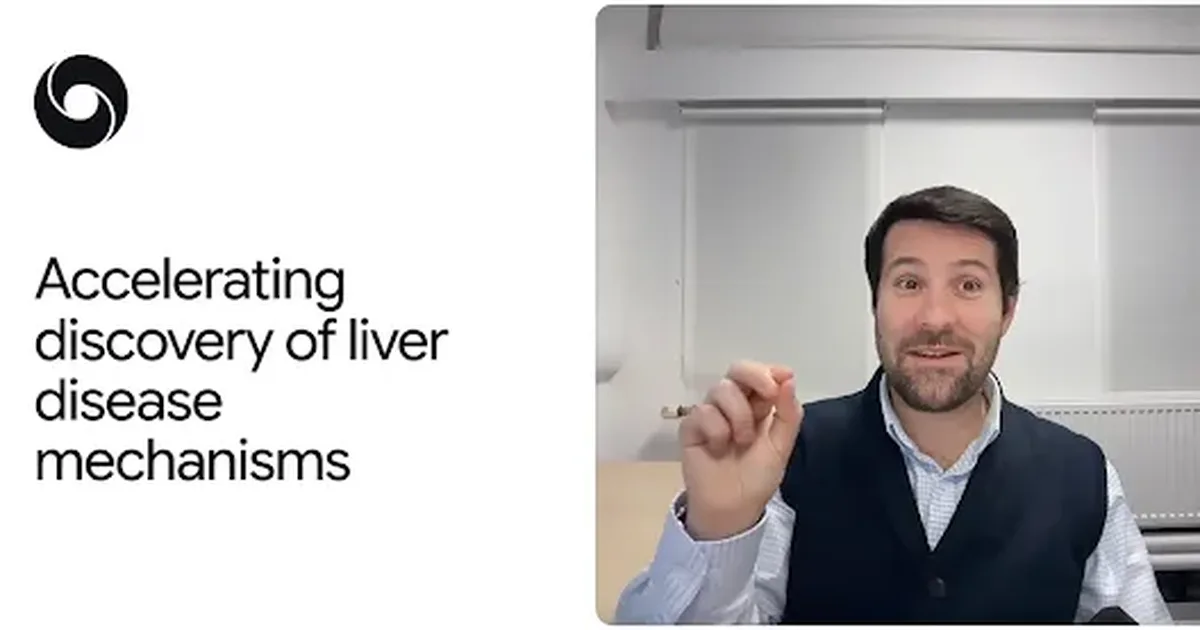
Google DeepMind's Co-Scientist platform is accelerating biomedical research by helping scientists sift through vast amounts of literature to identify novel hypotheses and potential drug combinations. A bioengineer at the University of Edinburgh used Co-Scientist to investigate metabolic dysfunction-associated steatohepatitis (MASH), a complex liver disease. The system helped pinpoint the NLRP3 inflammasome as a key molecular link in MASH, a hypothesis that was later experimentally verified and could lead to new targeted therapies. AI
IMPACT AI tools like Co-Scientist can significantly accelerate scientific discovery by synthesizing complex data and generating novel hypotheses, potentially leading to faster development of treatments for diseases.
RANK_REASON The cluster describes the application of an AI tool to advance biomedical research and generate a verifiable scientific hypothesis. [lever_c_demoted from research: ic=1 ai=1.0]
- Co-Scientist
- Filippo Menolascina
- Google DeepMind
- metabolic dysfunction-associated steatohepatitis (MASH)
- NLRP3 inflammasome
- resmetirom
- University of Edinburgh
AI-generated summary · Google Gemini · from 1 sources. How we write summaries →