PulseAugur
LIVE 12:04:50
commentary · [6 sources] ·
0
commentary

College students show AI cognitive dissonance, leading to cheating and return to proctored exams

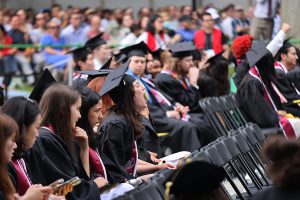
College students are exhibiting a dual attitude towards AI, simultaneously booing commencement speakers who celebrate the technology while also widely using it for coursework and, in some cases, academic dishonesty. This phenomenon, described as cognitive dissonance, stems from a fear of falling behind peers if AI tools are not used, despite concerns about hindering critical thinking skills. In response to widespread cheating, institutions like Princeton and Stanford are reverting to proctored exams and traditional methods like blue books, as AI detection tools have proven unreliable. AI

Summary written by gemini-2.5-flash-lite from 6 sources. How we write summaries →

IMPACT Highlights the ethical challenges and adaptive strategies emerging in higher education due to widespread AI adoption by students.

RANK_REASON The cluster discusses opinions and behaviors related to AI use in higher education, including student attitudes, academic dishonesty, and institutional responses, rather than a specific product release or research breakthrough.

Read on Fortune →

College students show AI cognitive dissonance, leading to cheating and return to proctored exams

COVERAGE [6]

  1. Fortune TIER_1 · Sasha Rogelberg ·

    College students are booing commencement speakers celebrating AI, but the wave of hate hasn’t stopped them from using it to cheat on their exams

    The rise of AI has created cognitive dissonance among a generation resentful of AI for taking jobs, but feeling like they have to use the technology to survive.

  2. Mastodon — fosstodon.org TIER_1 · [email protected] ·

    Stanford and Princeton are moving back to proctored exams and blue books. The reason: finished work alone no longer reliably shows what students learned. AI det

    Stanford and Princeton are moving back to proctored exams and blue books. The reason: finished work alone no longer reliably shows what students learned. AI detector tools have false-positive risks and can't anchor misconduct cases, so universities are instead tracking process—dr…

  3. Mastodon — fosstodon.org TIER_1 · [email protected] ·

    College during AI: A sharp and despairing essay about the cynicism of Stanford students using AI tools and chasing success https://www. nytimes.com/2026/05/17/o

    College during AI: A sharp and despairing essay about the cynicism of Stanford students using AI tools and chasing success https://www. nytimes.com/2026/05/17/opinion /chatgpt-ai-college-school-graduation.html?emc=edit_nn_20260517&nl=the-morning&segment_id=219973 # education # st…

  4. Mastodon — mastodon.social TIER_1 日本語(JA) · [email protected] ·

    Stanford University student talks about how AI has changed university life https://fed.brid.gy/r/https://gigazine.net/news/20260519-stanford-student-reflects-chatgpt/

    「AIが大学生活をどのように変えてしまったのか?」をスタンフォード大学の学生が語る https:// fed.brid.gy/r/https://gigazine .net/news/20260519-stanford-student-reflects-chatgpt/

  5. Mastodon — mastodon.social TIER_1 · aihaberleri ·

    📰 ChatGPT Academic Fraud Exposed by Stanford Student (2026) A Stanford University student has detailed how ChatGPT and artificial intelligence have normalized a

    📰 ChatGPT Academic Fraud Exposed by Stanford Student (2026) A Stanford University student has detailed how ChatGPT and artificial intelligence have normalized academic dishonesty within elite institutions. In a New York Times guest essay, Theo Baker describes how AI tools have tu…

  6. Mastodon — mastodon.social TIER_1 Türkçe(TR) · aihaberleri ·

    📰 ChatGPT and Academic Fraud at Stanford: Theo Baker's 2026 Analysis A student at Stanford University discusses how ChatGPT is transforming academic life

    📰 Stanford'da ChatGPT ve Akademik Sahtecilik: Theo Baker'ın 2026 Analizi Stanford Üniversitesi'nde bir öğrenci, ChatGPT'in akademik hayatı nasıl dönüştürdüğünü ve 'küçük bir sahtecilik' kültürünün yaygınlaşmasını anlatıyor. Theo Baker'ın deneyimleri, yükseköğretimdeki etik sınırl…