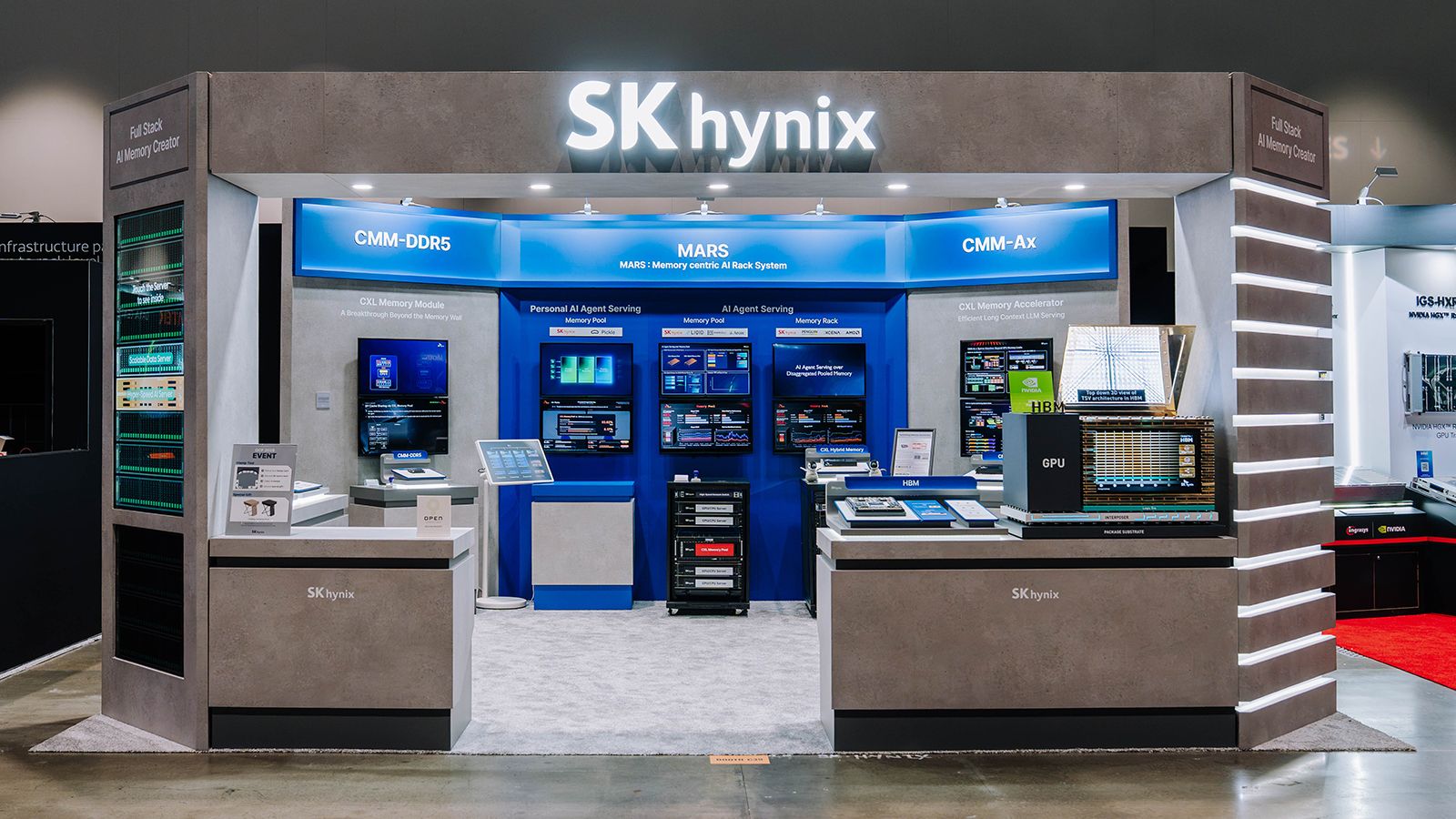
Researchers at the University of Texas at Arlington and Intel have found that shared CXL memory pools, proposed as a solution for AI's KV cache, introduce significant software overhead that can negate performance benefits. Their tests on four servers sharing a CXL memory pool revealed that software-based locking mechanisms, necessary due to a lack of hardware cache coherence between servers, add a 3-5 microsecond delay per lock acquisition. This overhead caused benchmarks like breadth-first search to perform worse with multiple servers than with a single server, although some workloads like hash tables showed improved throughput. AI
IMPACT Potential performance bottlenecks in CXL memory pooling could impact the scalability of AI models requiring large KV caches.
RANK_REASON Research findings on the performance implications of CXL memory pooling for AI workloads. [lever_c_demoted from research: ic=1 ai=0.7]
- breadth-first search
- CXL 3.0
- hash table
- InfiniBand
- Intel
- Intel Xeon 6787P
- KV cache
- Lamport's fast mutex
- Micron
- Peiran Du
- RDMA
- SK hynix
- University of Texas at Arlington
AI-generated summary · Google Gemini · from 1 sources. How we write summaries →