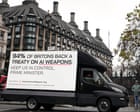
Governments are increasingly using AI in warfare, leading to faster and less human-controlled targeting of military objectives. This trend is evident in conflicts involving Iran, the US, Russia, and Ukraine, as well as in the Middle East with systems like Israel Defense Forces' "Lavender." The lack of human oversight in AI-driven strikes raises serious concerns about accountability and the potential for war crimes, particularly with anti-personnel weapons that struggle to differentiate between combatants and civilians. An upcoming conference in Geneva presents an opportunity to establish international regulations, potentially through a treaty, to govern autonomous weapons systems and prevent their proliferation to non-state actors. AI
IMPACT Accelerates the need for international policy and legal frameworks to govern the use of AI in warfare and prevent potential war crimes.
RANK_REASON The article discusses the increasing use of AI in warfare and calls for international policy and legal responses, including a potential treaty, to regulate autonomous weapons systems. [lever_c_demoted from significant: ic=1 ai=1.0]
- Convention on Certain Conventional Weapons
- Geneva
- Iran
- Israel Defense Forces
- Lavender
- Magnifica Humanitas
- Minab
- New Zealand
- Palestinians
- Russia
- Ukraine
- US
AI-generated summary · Google Gemini · from 1 sources. How we write summaries →