PulseAugur
EN
LIVE 07:22:34

Chip verification methods could improve voice agent development

This post draws parallels between the verification methodologies used in the chip design industry and the development of voice agents powered by large language models. It highlights that both can be viewed as finite state machines with complex transitions and interactions. The author argues that the agent industry, being much younger, lacks the robust verification frameworks developed over decades in electronic design automation (EDA), particularly concerning coverage closure for edge cases. AI

IMPACT Applies established verification techniques from hardware design to improve the robustness and testing of AI-powered voice agents.

RANK_REASON The article discusses a methodology comparison and potential application, rather than a new release or event.

Read on dev.to — LLM tag →

AI-generated summary · Google Gemini · from 1 sources. How we write summaries →
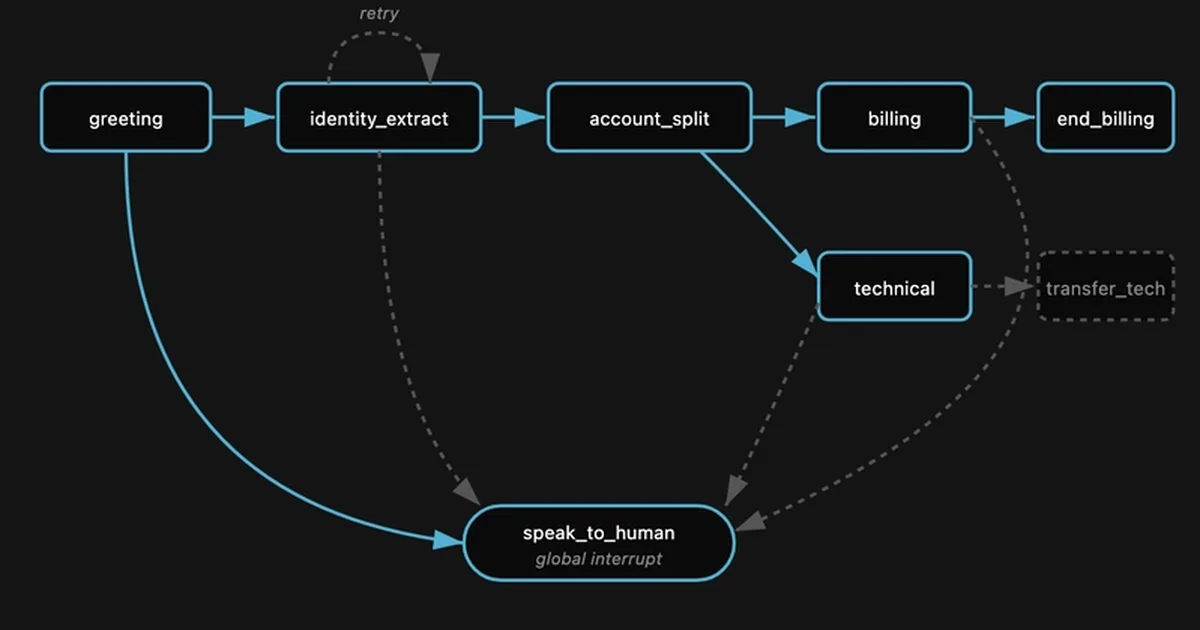
Chip verification methods could improve voice agent development

How we ranked this

Signal score
0 / 100
Composite score across the factors below. Higher = stronger signal that this story matters right now.
Newsworthiness bucket
Commentary
The article discusses a methodology comparison and potential application, rather than a new release or event.
Source corroboration
Single-source cluster
Only one publisher covered this so far. Single-source stories can still rank when the publisher is high-authority, but they lack cross-source corroboration.
Topics
other
Editorial topic classification. Feeds into how the story surfaces on /topic/<slug> hub pages and into the per-entity coverage mix.
AI-industry relevance
High
Clearly on-topic for AI-industry coverage.
Story freshness
145 days old
Aged out of breaking-news scoring windows; ranking reflects the durable signal from the full source set.

Full methodology in our editorial standards.

COVERAGE [1]

  1. dev.to — LLM tag TIER_1 English(EN) · Peter ·

    Designing Voice Agents Like Chips: Coverage Closure for Agent FSMs

    <p>A voice agent and a SoC differ entirely at the substrate level — one is a graph of prompts driving an LLM, the other is millions of gates etched into silicon. One level of abstraction up, the structures align: both are finite state machines whose interesting behavior lives in …