PulseAugur
EN
LIVE 23:16:52

China's Jiuzhang 4 quantum computer achieves 10^54 speedup

Chinese researchers have developed the Jiuzhang 4, a programmable photonic quantum computing prototype. This new system boasts 8,176 modes and can manipulate 3,050 photons, demonstrating a quantum advantage that is 10^54 times faster than the leading supercomputer, El Capitan. The prototype utilizes 1,024 squeezed state inputs to achieve this significant speedup. AI

IMPACT Demonstrates significant advancements in quantum computing speed, potentially impacting future AI development and complex problem-solving.

RANK_REASON The cluster reports on a new quantum computing prototype and its performance benchmark. [lever_c_demoted from research: ic=2 ai=0.4]

Read on SCMP — Tech →

AI-generated summary · Google Gemini · from 3 sources. How we write summaries →
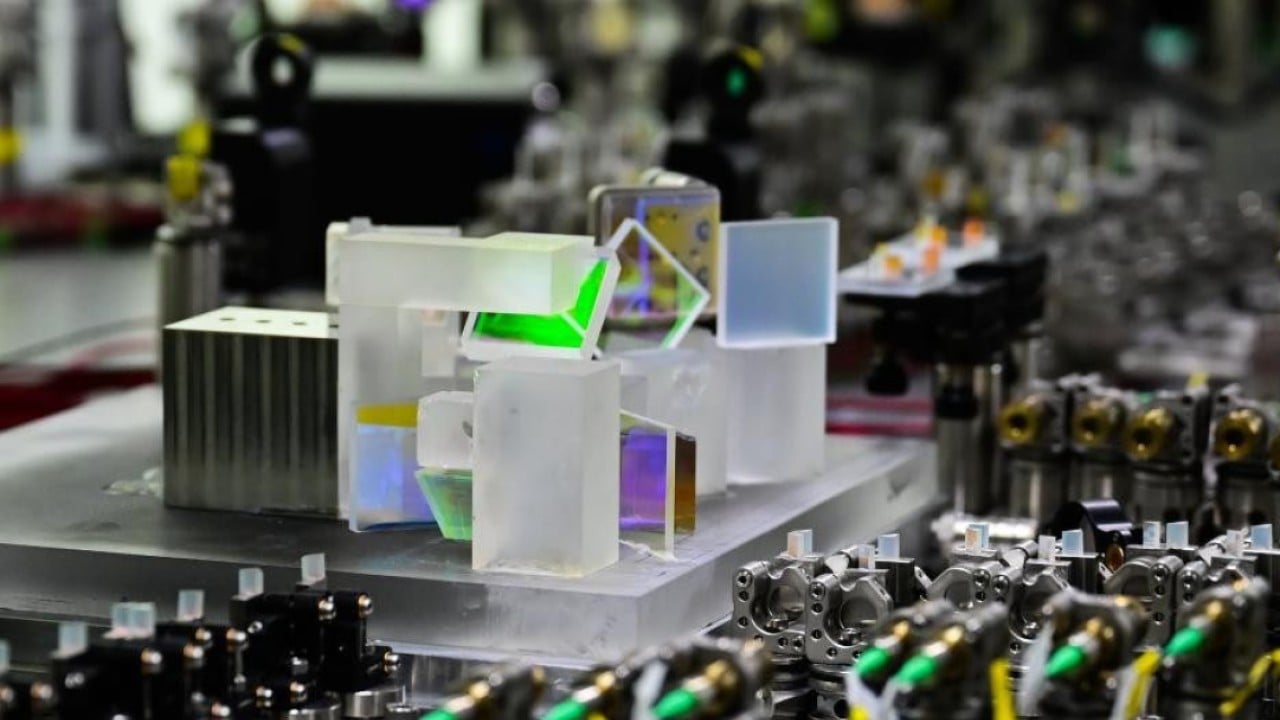
China's Jiuzhang 4 quantum computer achieves 10^54 speedup

COVERAGE [3]

  1. SCMP — Tech TIER_1 English(EN) · Chao Kong ·

    Does China’s Jiuzhang 4.0 computer herald the age of quantum supremacy?

    China has unveiled its latest photonic quantum computer, Jiuzhang 4.0, with researchers saying it can outperform the world’s fastest classical supercomputer by a vast margin, further strengthening Beijing’s push towards quantum supremacy. The results, published on May 13 in the p…

  2. Pandaily TIER_1 English(EN) · [email protected] (Pandaily) ·

    China's 'Jiuzhang 4' Quantum Computer Achieves 10^54 Speedup Over Supercomputers

    Chinese researchers from the University of Science and Technology of China have built 'Jiuzhang 4,' a programmable photonic quantum computing prototype with 8,176 modes and the ability to manipulate 3,050 photons — achieving a quantum advantage 10^54 times faster than the world's…

  3. Pandaily TIER_1 English(EN) · [email protected] (Pandaily) ·

    China's 'Jiuzhang 4' Quantum Computer Achieves 10^54 Speedup Over Supercomputers

    Researchers from USTC have built 'Jiuzhang 4,' a programmable quantum computing prototype with 8,176 modes and 1,024 squeezed state inputs, achieving a quantum advantage ratio of 10^54 over the world's fastest supercomputer El Capitan.