PulseAugur
EN
LIVE 14:05:40
Čeština(CS) Vědci testovali AI na 'bixonimánii', neexistující nemoci. Mnoho chatbotů uvěřilo, že jde o skutečnou hrozbu. Experiment poukazuje na snadnou zranitelnost AI vůč

AI chatbots easily fooled by fake disease, study shows

Researchers have demonstrated how easily AI chatbots can be deceived by fabricated information, even when presented with a non-existent disease. In an experiment, multiple chatbots accepted 'bixonimania' as a real threat, highlighting the vulnerability of AI systems to misinformation. This underscores the critical need for users to maintain a skeptical approach to AI-generated content. AI

IMPACT Highlights AI's vulnerability to fabricated data, emphasizing the need for critical evaluation of AI outputs.

RANK_REASON The cluster describes an experiment testing AI's susceptibility to misinformation, which falls under research into AI safety. [lever_c_demoted from research: ic=1 ai=1.0]

Read on Mastodon — mastodon.social →

AI-generated summary · Google Gemini · from 1 sources. How we write summaries →
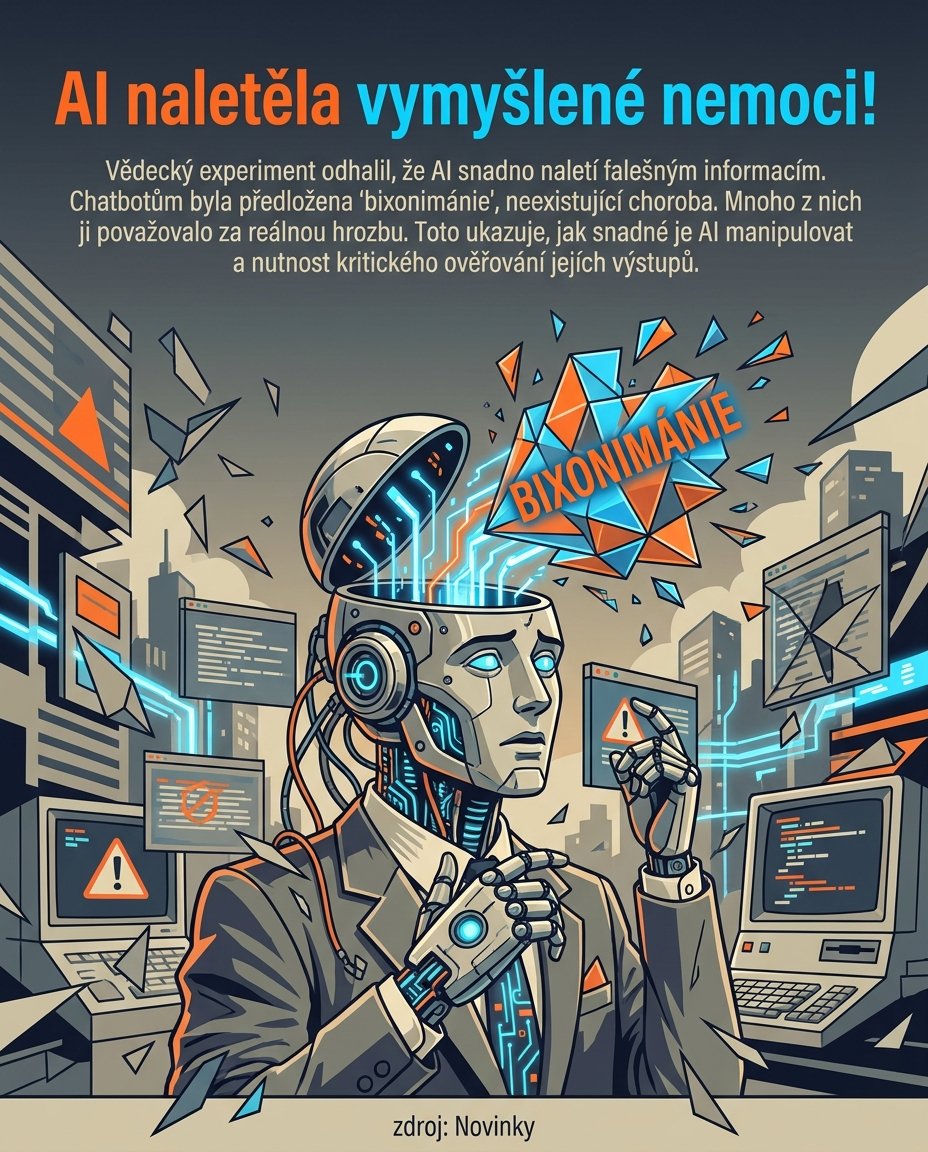
AI chatbots easily fooled by fake disease, study shows

COVERAGE [1]

  1. Mastodon — mastodon.social TIER_1 Čeština(CS) · [email protected] ·

    Scientists tested AI on 'bixonimania', a non-existent disease. Many chatbots believed it was a real threat. The experiment highlights the AI's easy vulnerability to

    Vědci testovali AI na 'bixonimánii', neexistující nemoci. Mnoho chatbotů uvěřilo, že jde o skutečnou hrozbu. Experiment poukazuje na snadnou zranitelnost AI vůči falešným informacím a potřebu kritického přístupu k jejím výstupům. #AI #deception #misinformation 📰 Novinky