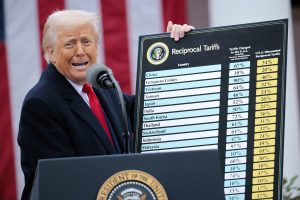
Despite President Donald Trump's "Liberation Day" tariffs aimed at reducing the U.S. trade deficit, the gap has widened to its largest point since March 2025. Economists attribute this increase, which saw imports rise significantly more than exports, partly to the booming AI industry's demand for overseas hardware. The fluctuating nature of Trump's tariffs, rather than their existence, is cited as a reason for their ineffectiveness, as businesses have adjusted prices rather than supply chains due to the uncertainty. AI
IMPACT The AI boom's demand for hardware is identified as a significant contributor to the widening U.S. trade deficit, highlighting AI's growing influence on global economic indicators.
RANK_REASON The article discusses the economic impact of a former president's policy decisions and their failure to achieve stated goals, with a significant mention of the AI industry's role. [lever_c_demoted from significant: ic=1 ai=0.4]
- Boston University
- Bureau of Economic Analysis
- China
- Donald Boudreaux
- Donald Trump
- Federal Reserve Bank of Minneapolis
- Fortune
- George Mason University
- International Emergency Economic Powers Act
- Liberation Day
- Supreme Court of the United States
- Tarek Alexander Hassan
- U.S.
AI-generated summary · Google Gemini · from 1 sources. How we write summaries →