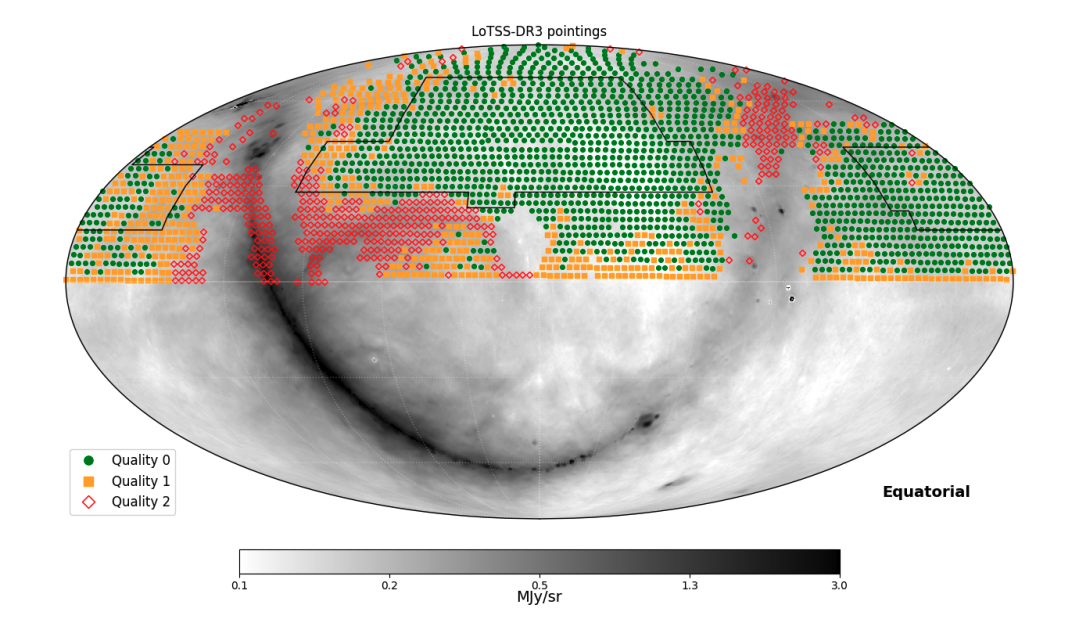
A new paper details a catalog of galaxy clusters identified using the LoTSS-DR3 data, presenting an automated pipeline for detecting diffuse radio emission. This pipeline utilizes a Convolutional Neural Network, specifically RADIO-UNET, trained on simulated universe data. The research highlights the application of AI for large-scale astrophysical analysis, enabling detection capabilities beyond human scale and speed. AI
Summary written by gemini-2.5-flash-lite from 1 source. How we write summaries →
IMPACT Demonstrates AI's capability in large-scale scientific data analysis, potentially accelerating discovery in astrophysics.
RANK_REASON This is a research paper describing a new catalog and detection pipeline for astrophysical phenomena. [lever_c_demoted from research: ic=1 ai=1.0]