PulseAugur
EN
LIVE 19:31:43

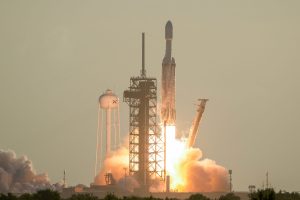
SpaceX launches NASA's Roman Space Telescope for cosmic discovery

SpaceX successfully launched NASA's Roman Space Telescope aboard a Falcon Heavy rocket, marking a significant advancement in astronomical observation. The $4.3 billion telescope, designed to explore dark matter and energy, will survey the cosmos with an unprecedentedly wide field of view. It is expected to discover thousands of supernovae, tens of thousands of planets, and billions of galaxies, working in conjunction with other powerful telescopes like Webb and Hubble. AI

RANK_REASON Launch of a major scientific instrument by a prominent space agency and private company. [lever_c_demoted from significant: ic=1 ai=0.1]

Read on Fortune →

AI-generated summary · Google Gemini · from 1 sources. How we write summaries →
SpaceX launches NASA's Roman Space Telescope for cosmic discovery

How we ranked this

Signal score
4 / 100
Composite score across the factors below. Higher = stronger signal that this story matters right now.
Newsworthiness bucket
Research
Launch of a major scientific instrument by a prominent space agency and private company. [lever_c_demoted from significant: ic=1 ai=0.1]
Source corroboration
Single-source cluster
Only one publisher covered this so far. Single-source stories can still rank when the publisher is high-authority, but they lack cross-source corroboration.
Topics
product, other
Editorial topic classification. Feeds into how the story surfaces on /topic/<slug> hub pages and into the per-entity coverage mix.
AI-industry relevance
Low
Off-topic or adjacent — cluster remains reachable but doesn't surface in AI-industry rankings.
Story freshness
Breaking (< 6h)
Fresh story with cross-source coverage still developing. Ranking may shift as more sources report.

Full methodology in our editorial standards.

COVERAGE [1]

  1. Fortune TIER_1 English(EN) · Marcia Dunn, The Associated Press ·

    SpaceX launches NASA’s newest crown-jewel telescope, which will look for ‘the weird, the rare and the unusual’ — including dark matter and energy

    “It’s going to find thousands of supernovae, tens of thousands of planets, billions of galaxies and tens of billions of stars.”