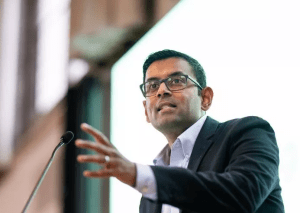
Arvind Narayanan, co-author of "AI Snake Oil," argues that the primary fear surrounding AI is not about machines becoming sentient, but rather about the technology exposing existing inequalities and the limitations of human prediction. He contends that while generative AI offers significant utility for knowledge workers in tasks like research and analysis, other AI applications, particularly those used in high-stakes decision-making for hiring, healthcare, and criminal justice, are often unreliable and can lead to unfair outcomes. Narayanan also highlights the risk of workers being relegated to "janitorial work" or becoming a "moral crumple zone," where they absorb blame for the failures of automated systems they cannot fully control. AI
IMPACT Highlights concerns about AI's use in high-stakes predictions and the potential for workers to be blamed for automated system failures.
RANK_REASON Opinion piece by a named credible voice discussing AI's societal impact.
- AI Snake Oil
- Arvind Narayanan
- Criminal-justice systems
- generative artificial intelligence
- Hospitals
- Human-resources departments
- machine learning
- Silicon Valley
AI-generated summary · Google Gemini · from 1 sources. How we write summaries →