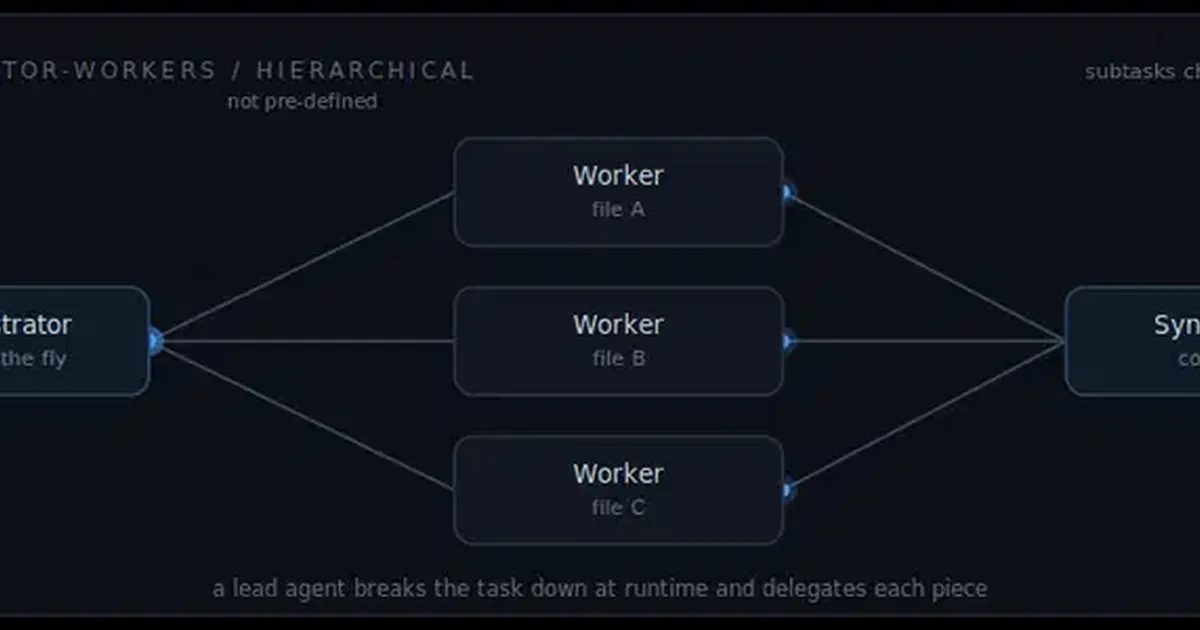
The orchestrator-workers pattern, also known as hierarchical task decomposition, involves a central agent that dynamically breaks down complex tasks into subtasks at runtime. These subtasks are then delegated to specialized worker agents, whose results are synthesized by the orchestrator. This approach is particularly useful for ambiguous, open-ended problems where subtasks cannot be predefined, such as coding or complex research tasks. However, it introduces significant architectural complexity, increased latency, and higher operational costs due to the numerous model calls involved. AI
IMPACT This pattern offers a structured way to handle complex, unpredictable tasks for LLM agents, potentially improving their capabilities in areas like coding and research.
RANK_REASON Describes a software development pattern for LLM agents.
AI-generated summary · Google Gemini · from 1 sources. How we write summaries →