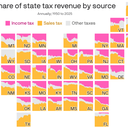
States are increasingly diverging in their primary sources of tax revenue, with a growing number relying on consumption taxes like sales and gross receipts, while others continue to depend heavily on income taxes from wages and profits. This shift, analyzed using U.S. Census data from 2025, shows states like Texas and Florida heavily favoring consumption taxes, making their budgets more sensitive to spending and tourism. Conversely, states such as California and New York are more exposed to market fluctuations due to their reliance on income taxes. This divergence can disproportionately affect lower-income families, potentially exacerbating racial inequalities. AI
RANK_REASON Analysis of U.S. Census data reveals a significant divergence in state tax revenue strategies, impacting economic and social equity. [lever_c_demoted from significant: ic=1 ai=0.1]
- Alaska
- California
- Connecticut
- Florida
- Massachusetts
- Nevada
- New Hampshire
- New York
- Oregon
- South Dakota
- Texas
- Washington
- Wyoming
AI-generated summary · Google Gemini · from 1 sources. How we write summaries →