PulseAugur
EN
LIVE 05:59:18

AWS details practical approaches for effective LLM tool design

Designing effective tools for large language models (LLMs) is crucial for optimal performance, as poor tool design can lead to issues like bloat and confusion. Bloat occurs when tool definitions consume excessive context, degrading the LLM's reasoning abilities. Confusion arises from ambiguous naming, semantic similarity between tools, and unclear descriptions, leading to incorrect tool calls and retries. Practical approaches to mitigate these problems involve refining tool descriptions, optimizing response fields, providing clear error messages, and implementing schema constraints like enums and default values. AI

IMPACT Effective tool design is critical for improving LLM performance and reducing context waste, directly impacting the efficiency of agentic systems.

RANK_REASON Blog post detailing practical approaches and tradeoffs for designing tools that interact with LLMs using the Model Context Protocol (MCP).

Read on AWS Machine Learning Blog →

AI-generated summary · Google Gemini · from 2 sources. How we write summaries →

AWS details practical approaches for effective LLM tool design

COVERAGE [2]

  1. AWS Machine Learning Blog TIER_1 English(EN) · Daniel Wells ·

    MCP tool design: Practical approaches and tradeoffs

    In this post, we show where MCP tool design goes wrong and how to fix it with practical context engineering approaches.

  2. Medium — Anthropic tag TIER_1 English(EN) · Harnish Savsani ·

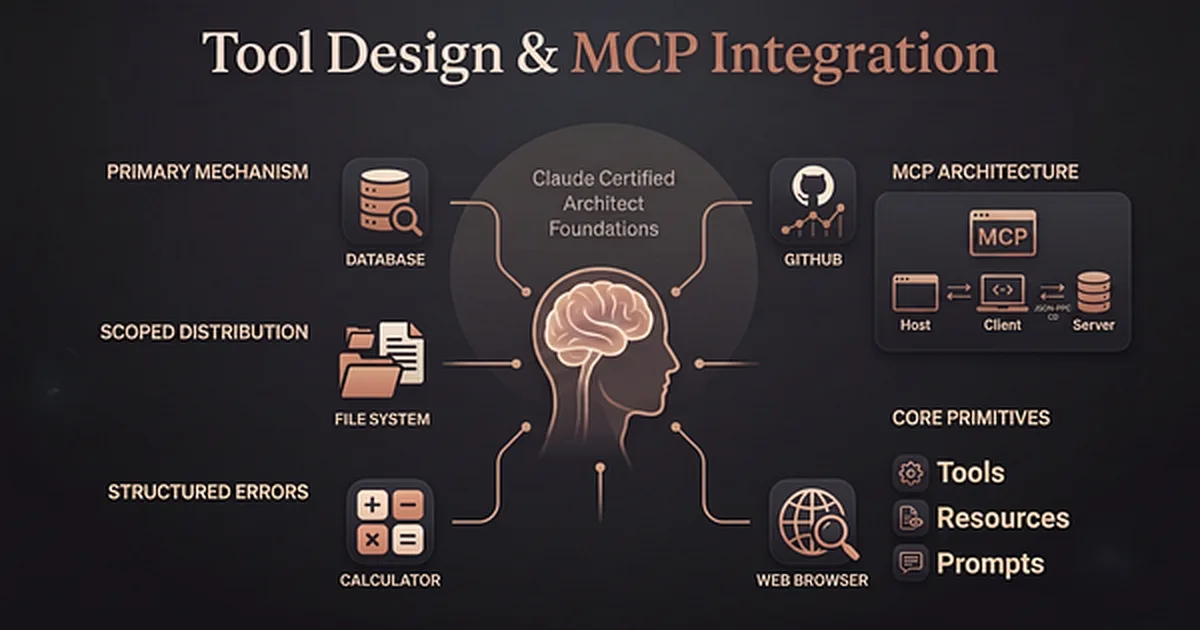
    Crushing Domain 2: Tool Design & MCP Integration ️

    <div class="medium-feed-item"><p class="medium-feed-image"><a href="https://harnishsavsani.medium.com/crushing-domain-2-tool-design-mcp-integration-%EF%B8%8F-050ae0c9e960?source=rss------anthropic-5"><img src="https://cdn-images-1.medium.com/max/600/1*dfbhrW6e1r2-ZNM_BWvWDA.png" …