PulseAugur
EN
LIVE 06:16:52

Huawei's 'Tau Law' challenges Moore's Law with new chip scaling framework

Huawei has introduced 'Tau Law,' a new chip scaling framework that prioritizes total system latency reduction over transistor density. This approach challenges the traditional scaling dictated by Moore's Law and offers a roadmap for performance improvements through 2035, focusing on areas like packaging and interconnects. AI

IMPACT Potentially enables more efficient chip architectures for AI workloads by focusing on system latency.

RANK_REASON New theoretical framework for chip design presented by a major tech company.

Read on Pandaily →

AI-generated summary · Google Gemini · from 2 sources. How we write summaries →
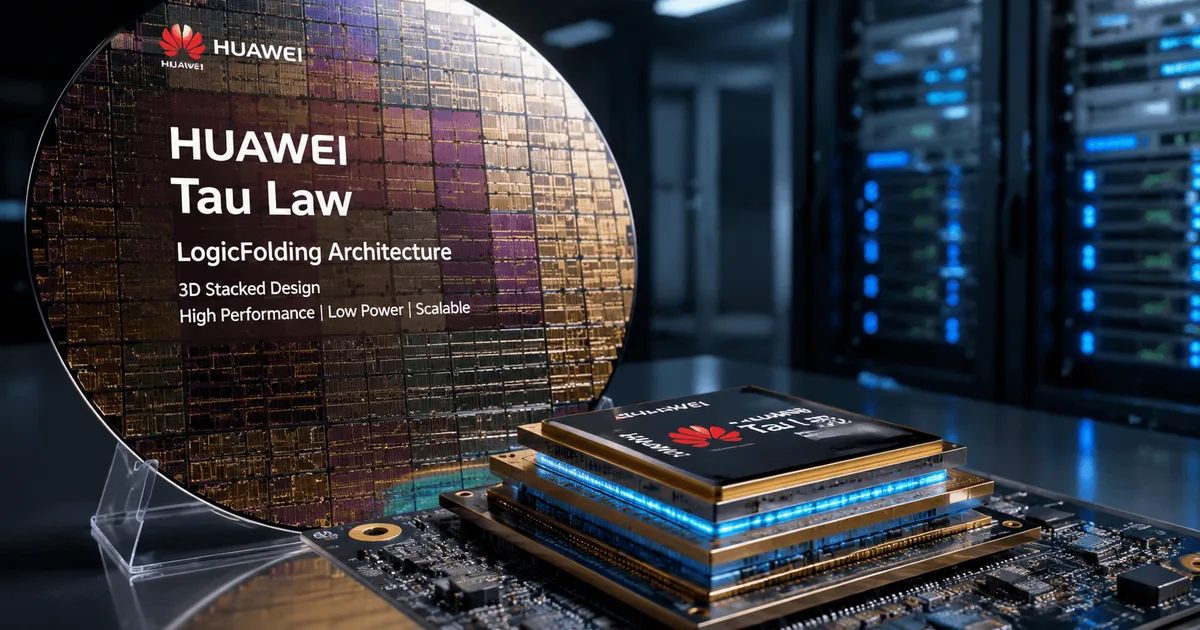
Huawei's 'Tau Law' challenges Moore's Law with new chip scaling framework

COVERAGE [2]

  1. Pandaily TIER_1 English(EN) · [email protected] (Pandaily) ·

    In the Death Throes of Moore's Law, Huawei's Tau Law Rewrites Chip Rules

    Huawei's Tao's Law V2 unveils a new chip scaling framework based on total system latency reduction, challenging Moore's Law with concrete production data and a roadmap through 2035.

  2. Mastodon — fosstodon.org TIER_1 English(EN) · [email protected] ·

    Huawei's 'Tau Law' Challenges Traditional Chip Scaling Huawei has introduced 'Tau Law,' a new theoretical framework for chip design that aims to extend performa

    Huawei's 'Tau Law' Challenges Traditional Chip Scaling Huawei has introduced 'Tau Law,' a new theoretical framework for chip design that aims to extend performance improvements beyond the limits of Moore's Law, particularly in packaging and interconnects. This Chinese innovation …