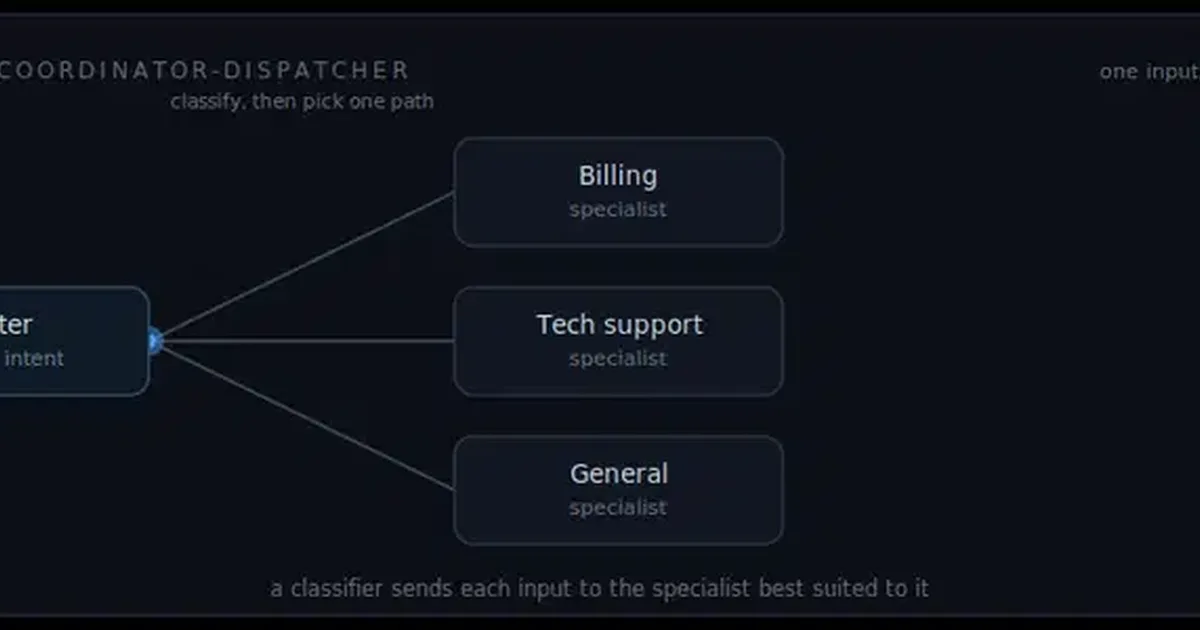
The concept of routing in large language models involves classifying an input and directing it to a specialized agent or model best suited for the task. Anthropic refers to this as routing, while Google uses terms like coordinator or dispatcher pattern. This approach allows for more focused prompts and can lead to cost savings by directing simpler queries to smaller, less expensive models and complex ones to larger, more capable models. However, routing introduces additional model calls, potentially increasing costs and latency, and carries the risk of misclassification if the classifier is unreliable or descriptions are vague. AI
IMPACT This pattern enables more efficient and cost-effective LLM application development by segmenting tasks.
RANK_REASON The item discusses a technical pattern for LLM application architecture, not a specific product release or research breakthrough.
AI-generated summary · Google Gemini · from 1 sources. How we write summaries →