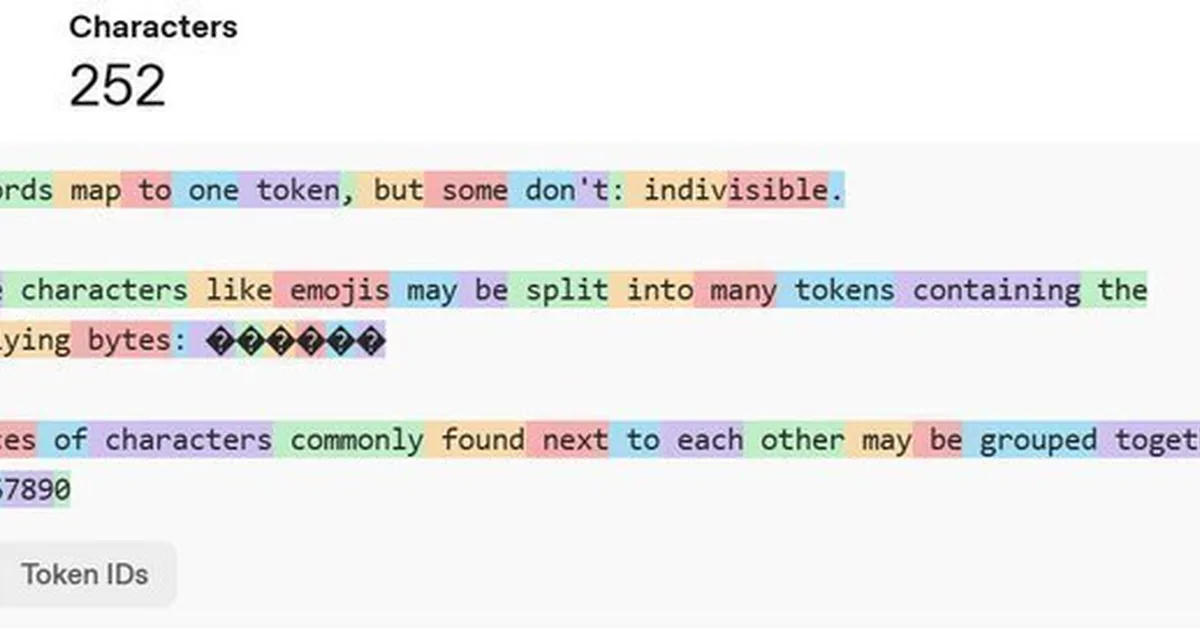
AI models process text not as words, but as numerical tokens, which are often sub-word fragments. This tokenization process, typically using Byte Pair Encoding (BPE), converts text into numerical vectors, allowing models to understand meaning through mathematical relationships rather than direct language comprehension. The size and composition of a model's token vocabulary, heavily influenced by its training data (often predominantly English), dictate how it interprets and responds to prompts, leading to potential biases and limitations, such as miscounting letters in words that are split across multiple tokens. AI
IMPACT Understanding tokenization reveals how LLMs process information, highlighting the importance of prompt engineering and potential biases in model outputs.
RANK_REASON Article explains a core technical concept (tokenization) behind LLMs, rather than announcing a new release or product.
AI-generated summary · Google Gemini · from 1 sources. How we write summaries →