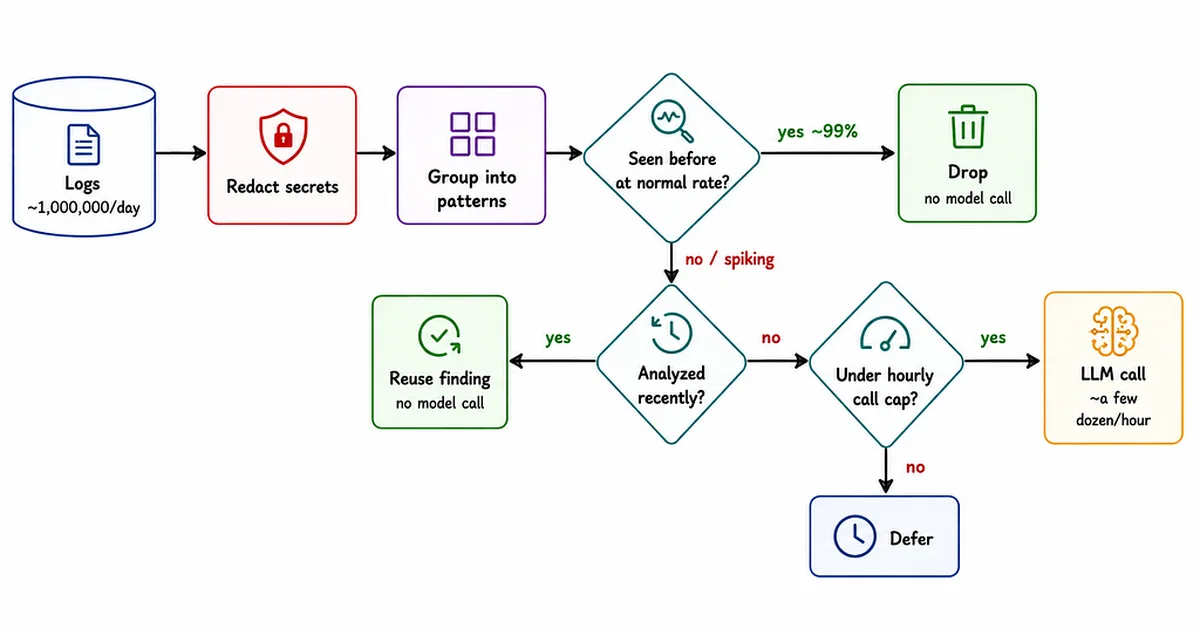
Sending all log data to a Large Language Model (LLM) for analysis can be prohibitively expensive, often leading to project abandonment. A more cost-effective approach involves an architectural change that filters logs before they reach the LLM. This method, similar to spam filters and fraud detection, ensures the LLM only processes a small fraction of log lines, specifically those that deterministic code cannot explain. By grouping similar log entries and identifying patterns, the system can significantly reduce the volume of data sent to the LLM, making AI-driven log analysis economically viable. AI
IMPACT Optimizes LLM cost for log analysis by filtering data, making AI observability more economically feasible.
RANK_REASON The article describes a technical approach to optimize the use of existing AI models (LLMs) for log analysis, rather than a new AI release or research.
AI-generated summary · Google Gemini · from 1 sources. How we write summaries →