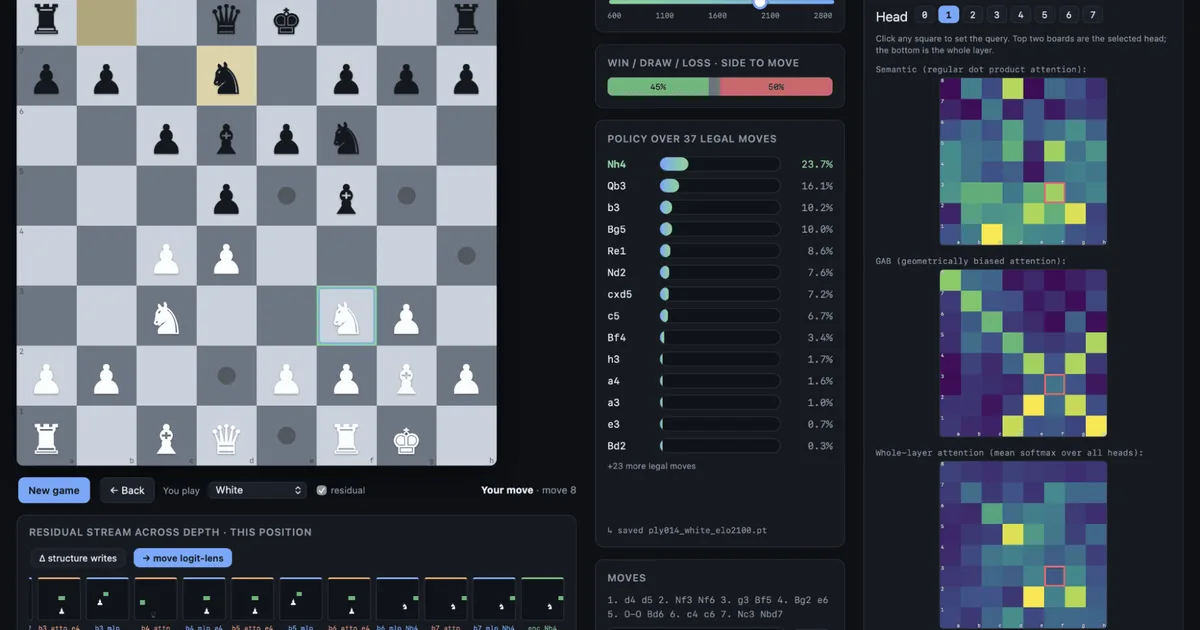
A mechanistic interpretability project is investigating the internal workings of Maia 3, a transformer-based chess engine designed to mimic human play. The initial findings suggest that the network's representation of a knight fork tactic becomes decodable after the fifth transformer block's attention layer. This research aims to understand how specific skills are encoded within neural networks, with potential future applications in cognitive neuroscience and AI safety. AI
IMPACT Provides insights into how AI models represent and process complex tactical information, potentially informing future AI safety and cognitive science research.
RANK_REASON The item describes a research project using mechanistic interpretability to analyze a specific AI model's internal representations of a chess tactic. [lever_c_demoted from research: ic=1 ai=1.0]
AI-generated summary · Google Gemini · from 1 sources. How we write summaries →