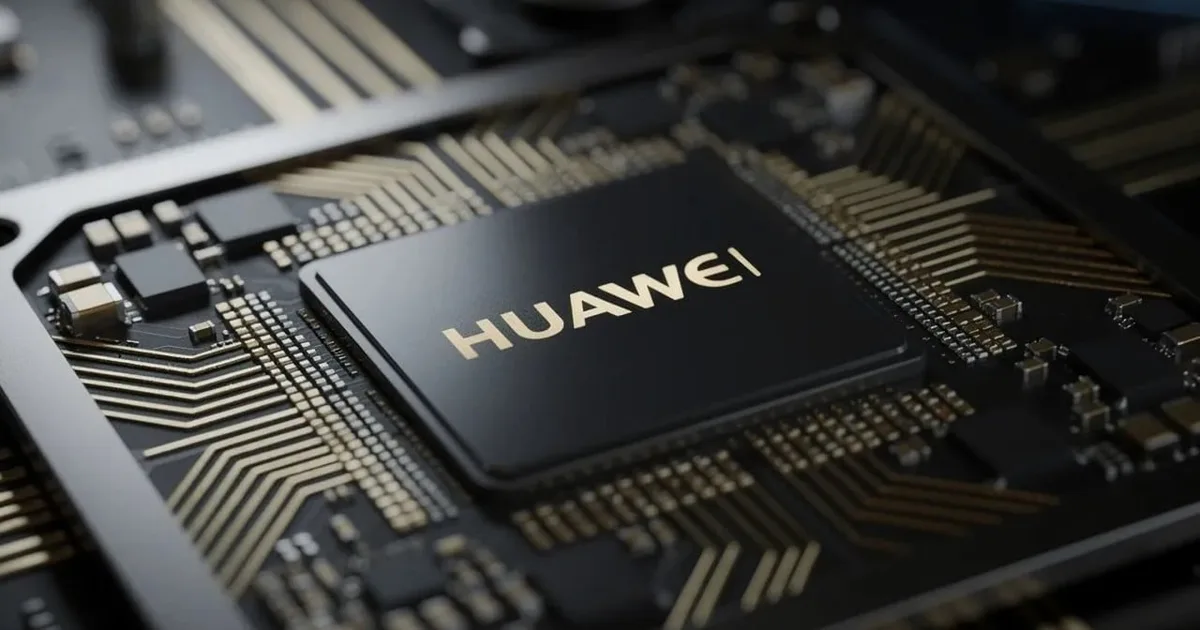
Huawei is developing a new smartphone chip, the Kirin 2026, which is expected to significantly boost performance without relying on advanced lithography. This advancement is attributed to the "Tau Scaling Law" framework, a new production data unveiled by the firm. The Kirin 2026, slated for the Mate handset, demonstrates a 41% reduction in power consumption and a 5.6% decrease in power density compared to the Kirin9030 Pro, achieved through a double-layer folding architecture that shortens signal travel distance. AI
IMPACT This advancement in chip design could lead to more powerful and energy-efficient smartphones, potentially impacting the performance of AI applications on mobile devices.
RANK_REASON The cluster describes a new technical framework and production data for a smartphone chip, published on a scientific paper platform. [lever_c_demoted from research: ic=1 ai=0.7]
AI-generated summary · Google Gemini · from 1 sources. How we write summaries →