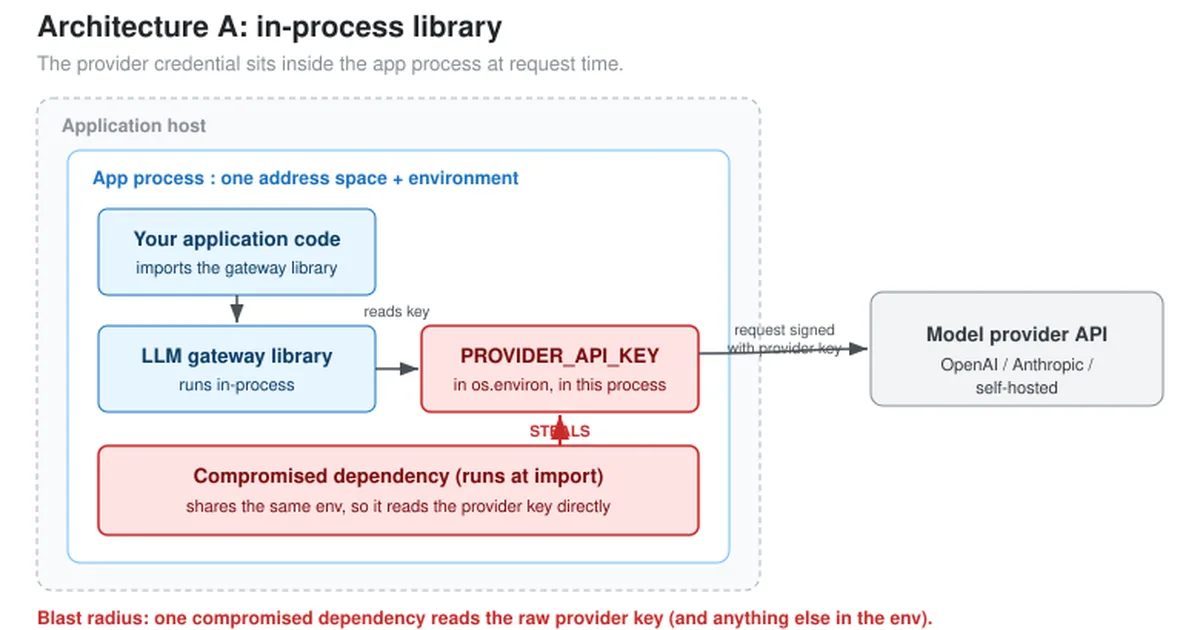
An article discusses two primary architectures for managing API keys in applications that utilize Large Language Models (LLMs). The first, in-process architecture, stores API keys directly within the application's environment, making them accessible to all dependencies. The second, network proxy architecture, separates the LLM provider API key into a dedicated proxy service, with the application only holding limited gateway tokens. This separation aims to reduce the potential impact of a compromised dependency by limiting the attacker's access to sensitive credentials. AI
IMPACT Choosing the right architecture for managing LLM API keys can significantly reduce the risk of credential theft and limit the blast radius of security breaches.
RANK_REASON Article discusses architectural patterns for managing API keys in LLM applications, which is a tooling/infrastructure topic.
AI-generated summary · Google Gemini · from 1 sources. How we write summaries →