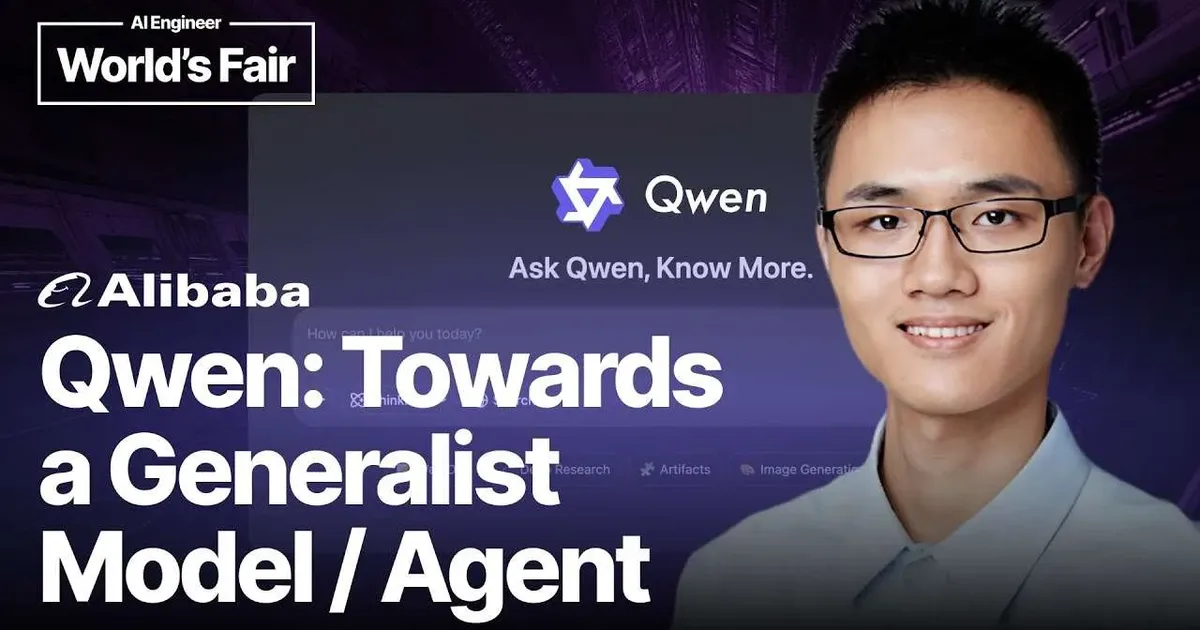
Junyang Lin, former technical lead for Alibaba's Qwen project, has shifted his focus from training large language models to developing AI agents. He argues that while hybrid thinking models like Qwen3, which combine direct response and step-by-step reasoning, have advanced capabilities like multilingual support, merging these modes can degrade performance. Lin contrasts this with Anthropic's approach, suggesting that reasoning should be tailored to specific workloads rather than benchmark performance, and that the future lies in agentic thinking, which involves planning, acting, and adapting within an environment. AI
IMPACT Suggests a shift in AI development focus from pure model training to agentic systems capable of planning and acting in dynamic environments.
RANK_REASON Article discusses a former lead's perspective on AI model development and future directions, rather than a new release or product launch.
- Alibaba
- Anthropic
- Claude 3.7 Sonnet
- Claude 4
- DeepSeek-R1
- Gemini 2.5 Pro
- Junyang Lin
- OpenAI
- Qwen
- Qwen3
AI-generated summary · Google Gemini · from 1 sources. How we write summaries →