PulseAugur
EN
LIVE 00:09:03

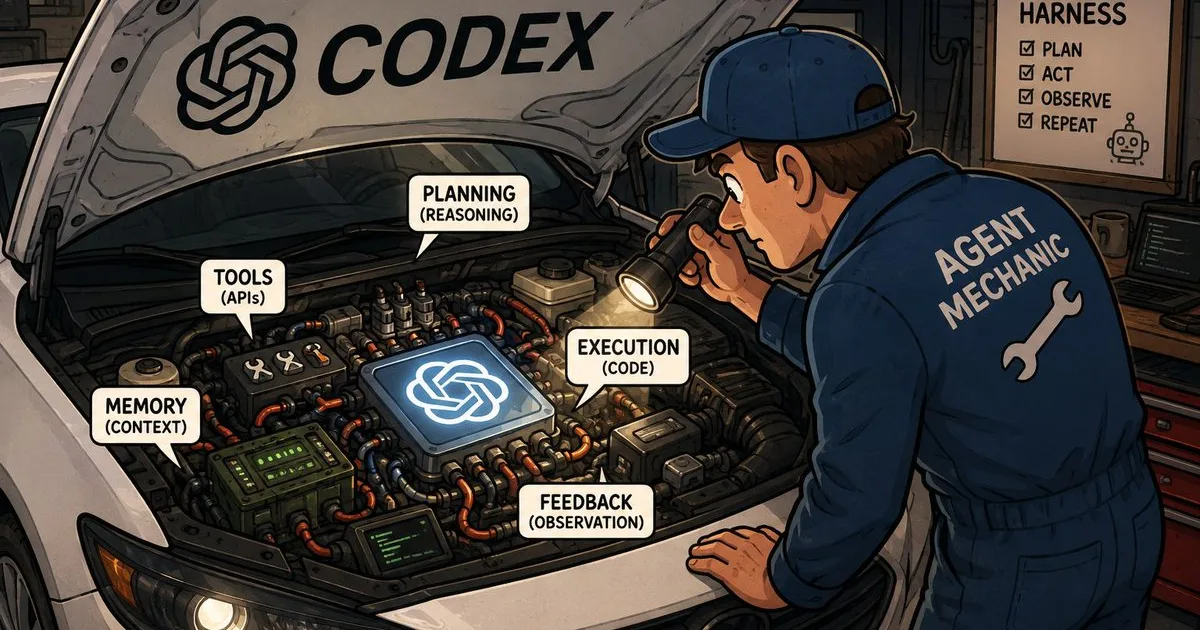
AI agent harnesses explained: Context orchestration, not magic

SemiAnalysis explains that "harnesses" in agentic AI tasks are context orchestration tools, not magic. These harnesses route requests to LLM servers, format inputs, and manage conversation history, as models themselves are stateless. The key differences between various harnesses like Claude Code, Codex, and OpenCode lie in their context management and user interface features, rather than the core models like Opus or GPT 5.5. AI

IMPACT Clarifies the role of AI "harnesses" as context managers, emphasizing that model capabilities, not just orchestration, drive agentic task performance.

RANK_REASON The cluster consists of a multi-part X thread explaining the technical concept of AI harnesses, not a primary release or significant event.

Read on X — SemiAnalysis →

AI-generated summary · Google Gemini · from 5 sources. How we write summaries →
AI agent harnesses explained: Context orchestration, not magic

COVERAGE [5]

  1. X — SemiAnalysis TIER_1 English(EN) · SemiAnalysis_ ·

    So while all harnesses make slightly different decisions while performing this "plan, act, verify" pattern, this loop is the common skeleton driving all agentic

    So while all harnesses make slightly different decisions while performing this "plan, act, verify" pattern, this loop is the common skeleton driving all agentic tasks. So let's stop talking about harnesses like they're magic! While good harness engineering helps, the real power h…

  2. X — SemiAnalysis TIER_1 English(EN) · SemiAnalysis_ ·

    When you send a message, the harness will route your request to the appropriate LLM server, then apply some chat templates to convert the HTTP request to someth

    When you send a message, the harness will route your request to the appropriate LLM server, then apply some chat templates to convert the HTTP request to something the model can better understand. The harness will also add more advanced parameters to control cache, max output htt…

  3. X — SemiAnalysis TIER_1 English(EN) · SemiAnalysis_ ·

    So a "harness" is really a context orchestration tool. Every request body it builds typically has the same three parts:

    So a "harness" is really a context orchestration tool. Every request body it builds typically has the same three parts: 🟠 System Prompt: the "you are Claude Code" setup, plus injected stuff like your file tree or recent commits 🟠 Tool Definitions: a list of JSON schemas

  4. X — SemiAnalysis TIER_1 English(EN) · SemiAnalysis_ ·

    It is first helpful to understand how the underlying models work. Opus, GPT 5.5, etc (the models) are all stateless -- they remember nothing between requests. T

    It is first helpful to understand how the underlying models work. Opus, GPT 5.5, etc (the models) are all stateless -- they remember nothing between requests. That is, each time you press "enter" at the prompt factory, the harness rebuilds the entire conversation and ships it htt…

  5. X — SemiAnalysis TIER_1 English(EN) · SemiAnalysis_ ·

    Everyone's always talking about agentic coding harnesses: Claude Code, Codex, OpenCode, Pi... the list goes on. But what's the difference between all of them? W

    Everyone's always talking about agentic coding harnesses: Claude Code, Codex, OpenCode, Pi... the list goes on. But what's the difference between all of them? What even Is a harness anyway? In this thread, we'll take a look under the hood. (1/5)🧵 https://t.co/jc4lTbeccI