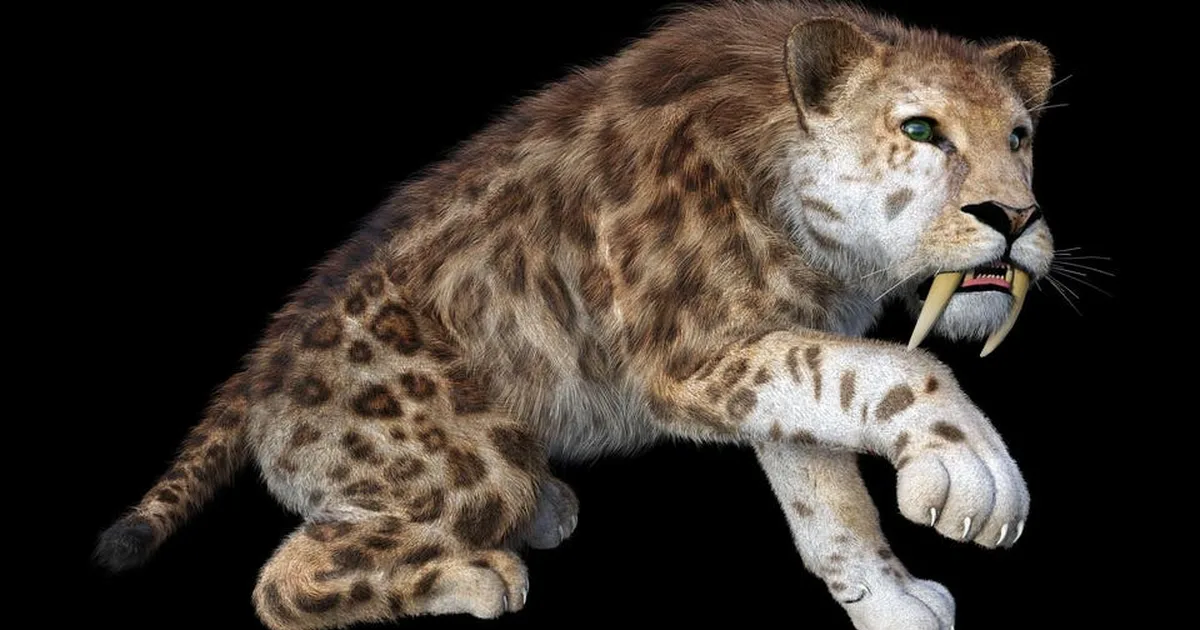
New biomechanical modeling of the saber-toothed cat, Smilodon fatalis, reveals its bite force was significantly weaker than previously assumed, comparable to a large house cat rather than a lion. Researchers found that Smilodon relied more on its powerful forelimbs to subdue prey, using its iconic canines for precise, vital-severing bites once the animal was immobilized. This hunting strategy, characterized by robust forelimbs and a less powerful bite, evolved independently in unrelated lineages, such as the marsupial predator Thylacosmilus, demonstrating convergent evolution. AI
RANK_REASON The cluster reports on new findings from biomechanical modeling of a fossil species, published in scientific journals. [lever_c_demoted from research: ic=1 ai=0.1]
- cat
- Jaguar Cars
- La Brea Tar Pits
- Lion
- Los Angeles
- Nature Communications
- PLOS One
- Proceedings of the National Academy of Sciences of the United States of America
- Smilodon fatalis
- Thylacosmilus
AI-generated summary · Google Gemini · from 1 sources. How we write summaries →