PulseAugur
EN
LIVE 02:35:59

Malicious MCP server highlights need for continuous trust checks; auth shifts to OAuth 2.1

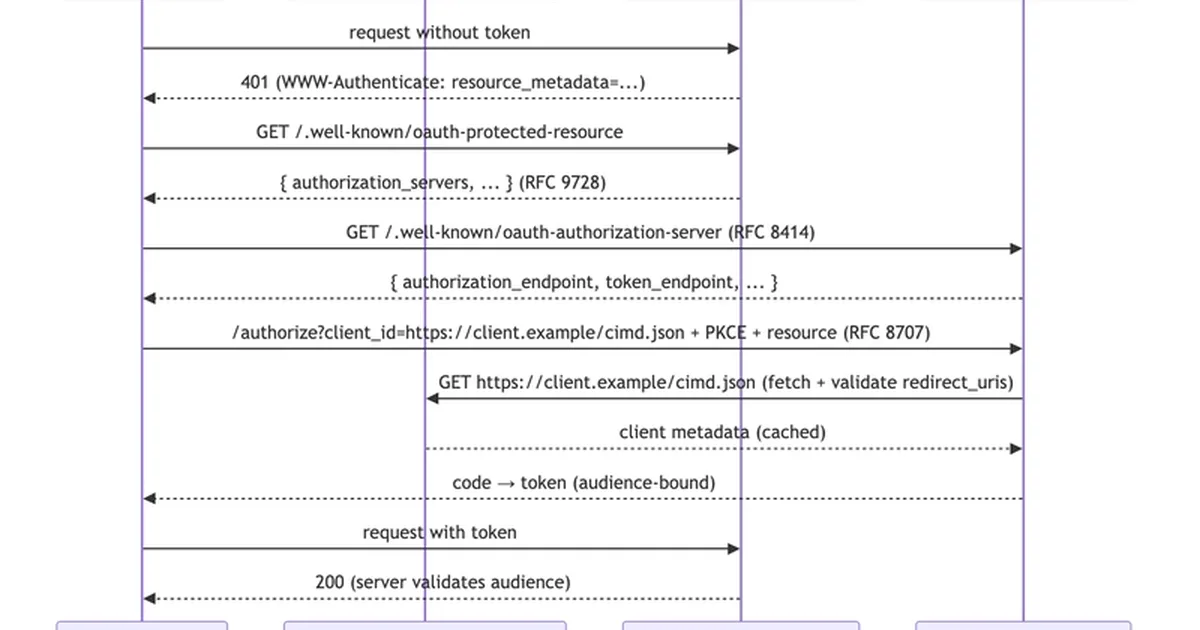
A malicious package named postmark-mcp on npm, which allowed AI assistants to send emails, was discovered to have a hidden line of code that forwarded all outgoing emails to a stranger. This incident highlighted the critical need for continuous verification of software dependencies, as trust established at installation can decay over time. The solution proposed involves capturing and continuously comparing concrete, structural descriptions of tools and APIs, rather than relying on initial trust assessments. Meanwhile, the Model Context Protocol (MCP) has evolved its authentication mechanisms, moving from self-issued credentials to a standardized OAuth 2.1 flow where MCP servers act as resource servers validating tokens issued by separate authorization servers. This shift addresses enterprise needs for centralized access management, policy enforcement, and instant revocation, moving beyond individual user consent flows. AI

IMPACT Highlights the critical need for robust security and evolving authentication standards as AI agents become more integrated into systems.

RANK_REASON The cluster discusses security vulnerabilities and evolving standards for AI agent protocols, drawing on past incidents and future predictions rather than announcing a new release or event.

Read on dev.to — MCP tag →

AI-generated summary · Google Gemini · from 5 sources. How we write summaries →
Malicious MCP server highlights need for continuous trust checks; auth shifts to OAuth 2.1

COVERAGE [5]

  1. dev.to — MCP tag TIER_1 English(EN) · Gowthaman ·

    The MCP reliability & security gap — and an open-source proxy that fills it

    <p>As AI agents move from demos to production, the <strong>Model Context Protocol (MCP)</strong> has become the default way to give them tools. But the operational layer around MCP is still immature, and two gaps show up fast.</p> <h2> The reliability gap </h2> <p>MCP servers dis…

  2. dev.to — MCP tag TIER_1 English(EN) · nahat ser ·

    MCP: A Complete Guide from Zero to Maximum, from Tools to Cross-Regional Discovery with Cryptographic Trust Scoring.

    <p>MCP stands for Model Context Protocol, and although most people treat it like just another API standard, the truth is that it is much more than that. At its core, it is a standardized protocol for context exchange between AI applications and servers, with built-in discovery an…

  3. Medium — MCP tag TIER_1 English(EN) · Kioi Eddy ·

    The First Malicious MCP Server, and What It Taught Us About Trust

    <div class="medium-feed-item"><p class="medium-feed-image"><a href="https://kioi.medium.com/the-first-malicious-mcp-server-and-what-it-taught-us-about-trust-0ddafad90ed4?source=rss------mcp-5"><img src="https://cdn-images-1.medium.com/max/1352/1*cIv9YJxFHeBjVaiT9CnjuA.png" width=…

  4. dev.to — MCP tag TIER_1 English(EN) · Andrey ·

    MCP authentication in 2026: how OAuth flipped the server's role (and why every agent differs)

    <p>A couple of years ago we all collided with a brand-new technology that grew up alongside agents and LLMs: MCP. Its job is to give a model an interface to some other system, program, or server. The first MCP servers were local and modest: launch a calculator, check a calendar, …

  5. dev.to — MCP tag TIER_1 English(EN) · Obot AI ·

    Enterprise-Managed Authorization: How MCP Is Growing Up

    <p><em>By Bill Maxwell, <a href="https://obot.ai/?utm_source=devto&amp;utm_medium=syndication&amp;utm_campaign=ema-mcp-growing-up" rel="noopener noreferrer">Obot AI</a></em></p> <p>MCP grew fast because it was easy to stand up and see immediate results. That ease of use is exactl…