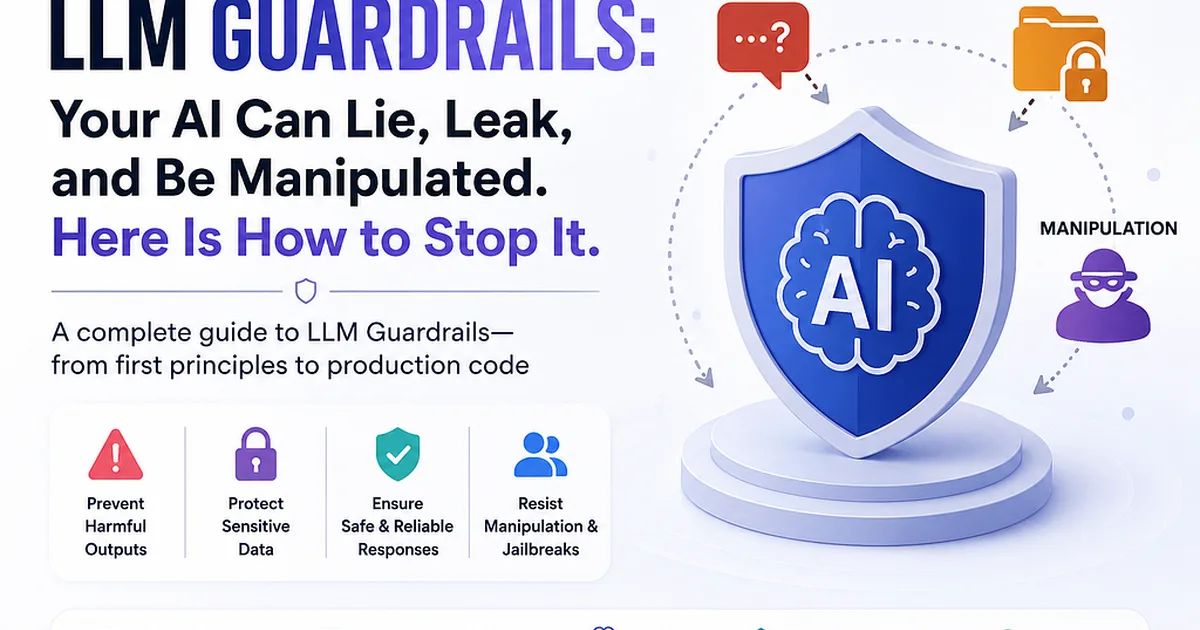
Large language models (LLMs) can generate inaccurate or harmful information, as demonstrated by two recent cases. In one instance, Air Canada's chatbot provided incorrect bereavement fare information, leading to a lawsuit and damages awarded to a customer. In another, an attorney used ChatGPT to draft a legal brief that cited non-existent court cases, resulting in a fine. These incidents highlight the critical need for LLM guardrails, which are constraints designed to validate inputs and outputs, preventing AI systems from lying, leaking data, or being manipulated. AI
IMPACT Highlights the risks of AI misinformation and manipulation, emphasizing the need for robust guardrails to ensure AI reliability and prevent legal and financial repercussions.
RANK_REASON The article discusses the need for and implementation of LLM guardrails, which are tools to manage AI behavior, rather than a new AI model release or core research.
- Air Canada
- British Columbia Civil Resolution Tribunal
- ChatGPT
- Christopher Rivers
- Jake Moffatt
- P. Kevin Castel
- Steven Schwartz
AI-generated summary · Google Gemini · from 1 sources. How we write summaries →