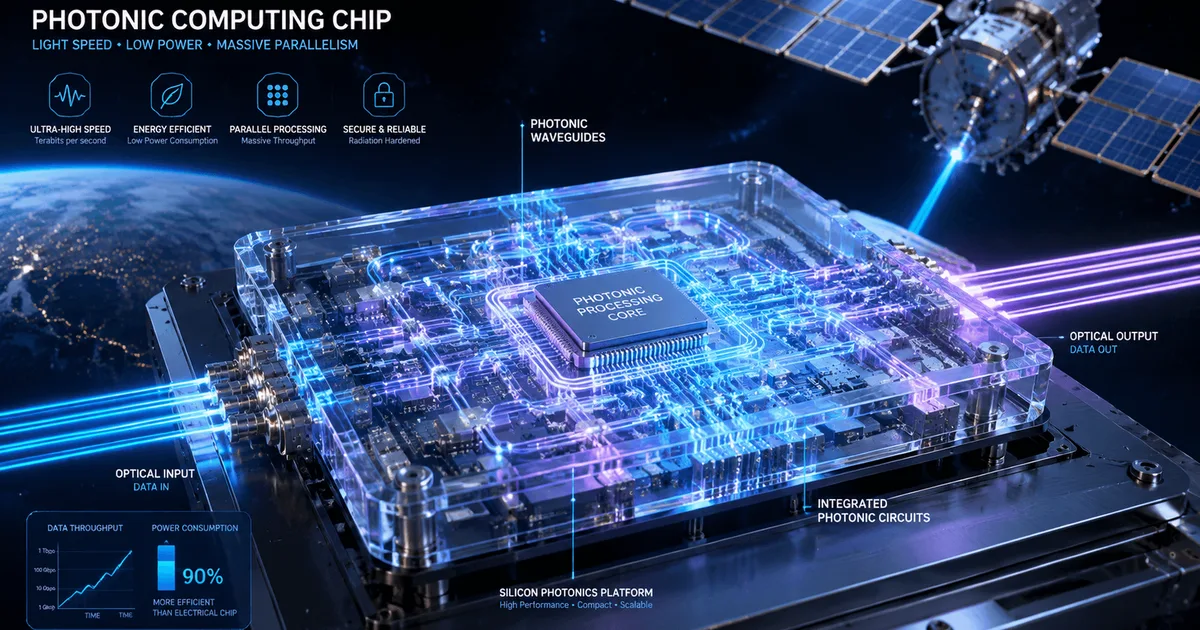
A Chinese company, Guangbenwei Technology, is pioneering photonic computing for space applications, aiming to overcome the limitations of traditional electronic chips in orbit. In collaboration with Dongfang Tianxuan, they are developing the world's first space-based photonic computing payload. This technology uses light instead of electrons, offering inherent advantages in radiation resistance, heat dissipation, and power efficiency, which are critical challenges for space-based AI. AI
IMPACT This photonic computing approach could enable more powerful and efficient AI capabilities in space, overcoming critical engineering hurdles for satellite-based AI.
RANK_REASON Significant development in AI hardware for space applications by a Chinese company, presenting an alternative to traditional chips.
AI-generated summary · Google Gemini · from 2 sources. How we write summaries →