PulseAugur
EN
LIVE 15:16:56

OAuth client identification methods DCR and CIMD explained

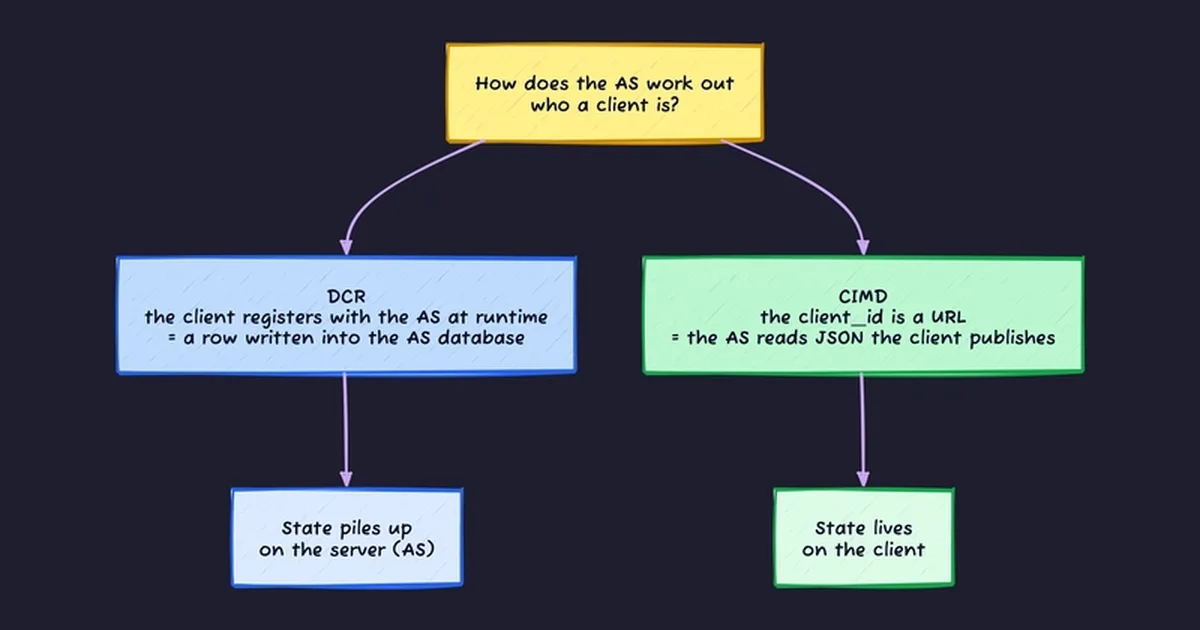
The article discusses two methods for handling client identification in OAuth, particularly in decentralized systems where traditional pre-registration is impractical. Dynamic Client Registration (DCR) automates the registration process via an API, allowing clients to register themselves with an authorization server at runtime. Client ID Metadata Documents (CIMD), on the other hand, use a client ID that is an HTTPS URL, with the authorization server fetching metadata directly from that URL without needing to store it. AI

RANK_REASON Article explains technical concepts related to OAuth protocols.

Read on dev.to — MCP tag →

AI-generated summary · Google Gemini · from 1 sources. How we write summaries →
OAuth client identification methods DCR and CIMD explained

How we ranked this

Signal score
0 / 100
Composite score across the factors below. Higher = stronger signal that this story matters right now.
Newsworthiness bucket
Commentary
Article explains technical concepts related to OAuth protocols.
Source corroboration
Single-source cluster
Only one publisher covered this so far. Single-source stories can still rank when the publisher is high-authority, but they lack cross-source corroboration.
Topics
other
Editorial topic classification. Feeds into how the story surfaces on /topic/<slug> hub pages and into the per-entity coverage mix.
AI-industry relevance
Low
Off-topic or adjacent — cluster remains reachable but doesn't surface in AI-industry rankings.
Story freshness
92 days old
Aged out of breaking-news scoring windows; ranking reflects the durable signal from the full source set.

Full methodology in our editorial standards.

COVERAGE [1]

  1. dev.to — MCP tag TIER_1 English(EN) · kt ·

    The Day client_id Becomes a URL: Client ID Metadata Documents vs Dynamic Client Registration (DCR)

    <h2> The "who is this client?" problem </h2> <p>In OAuth, the part that bites you is often not user authentication but <strong>client authentication</strong>.</p> <p>An OAuth authorization flow has three parties: the <strong>user</strong> who owns the resource, the <strong>author…