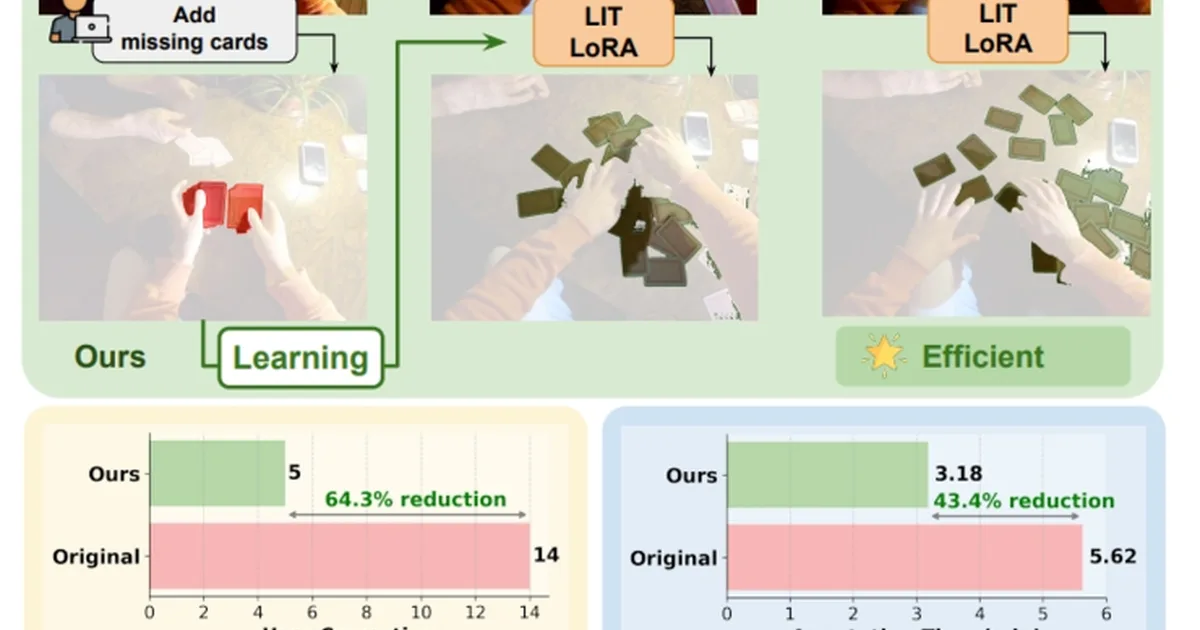
Computer vision research is shifting from optimizing performance on benchmarks to enabling models to understand the world under imperfect conditions. Recent work presented around CVPR 2026 challenges fundamental assumptions about visual systems, such as whether models must be static, targets predefined, information complete, or inputs structured. Innovations like interactive training for video segmentation and training-free in-context segmentation demonstrate models that can learn from feedback and adapt to new objectives without explicit retraining. AI
IMPACT New research directions challenge core assumptions in computer vision, potentially leading to more adaptable and robust AI systems capable of real-world understanding.
RANK_REASON The cluster discusses new research directions and papers presented around CVPR 2026, focusing on paradigm shifts in computer vision.
- Adobe Research
- Cornell University
- CVPR 2026
- DINOv3
- INSID3
- LIT-LoRA
- Match-and-Fuse
- MegaDepth-X
- Politecnico di Torino
- TU Darmstadt
- TU Munich
- Weizmann Institute of Science
AI-generated summary · Google Gemini · from 1 sources. How we write summaries →