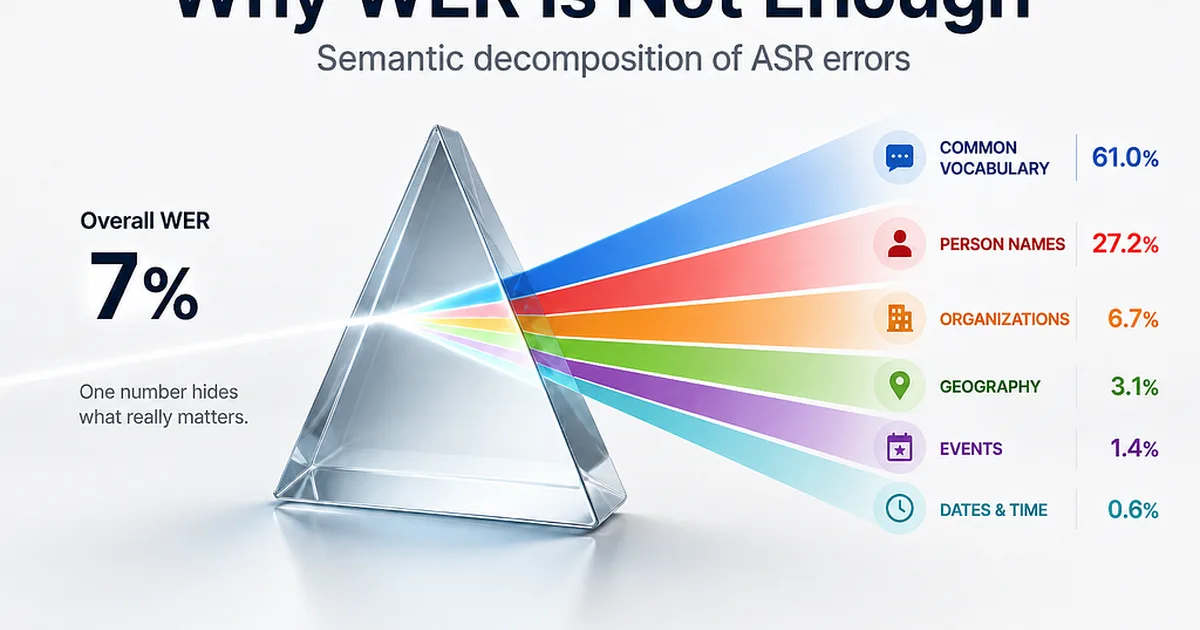
Researchers are developing advanced methods to improve Automatic Speech Recognition (ASR) systems, particularly for low-resource languages and to address specific types of errors. One approach, Error-Aware TF-IDF, uses a novel algorithm to prioritize corrective documents based on historical phonetic misrecognitions, significantly reducing word error rates. Another method, G-SPIN, combines phonetic graph modeling with large language models to correct semantically critical errors by restricting the search space to plausible phonetic alternatives. Additionally, a study questions the reliability of automated judges used to score LLM jailbreak attempts, revealing inconsistencies and vulnerabilities in their accuracy and robustness. AI
IMPACT Advances in ASR error correction could improve voice interfaces and transcription services, while scrutiny of LLM evaluation methods highlights the need for more robust safety testing.
RANK_REASON Multiple research papers published on arXiv detailing novel methods for ASR error correction and evaluating LLM safety judges.
Read on Hugging Face Daily Papers →
- OpenAI
- Whisper
- word error rate
- alphaXiv
- arXiv
- DagsHub
- Greedy Coordinate Gradient
- HarmBench
- Hugging Face
- LLM
- graph neural network
- G Spinelli
- large language model
- masked language model
- Mohammad Aref Jafari-Raddani
- Persian
- retrieval-augmented generation
- tf–idf
AI-generated summary · Google Gemini · from 7 sources. How we write summaries →