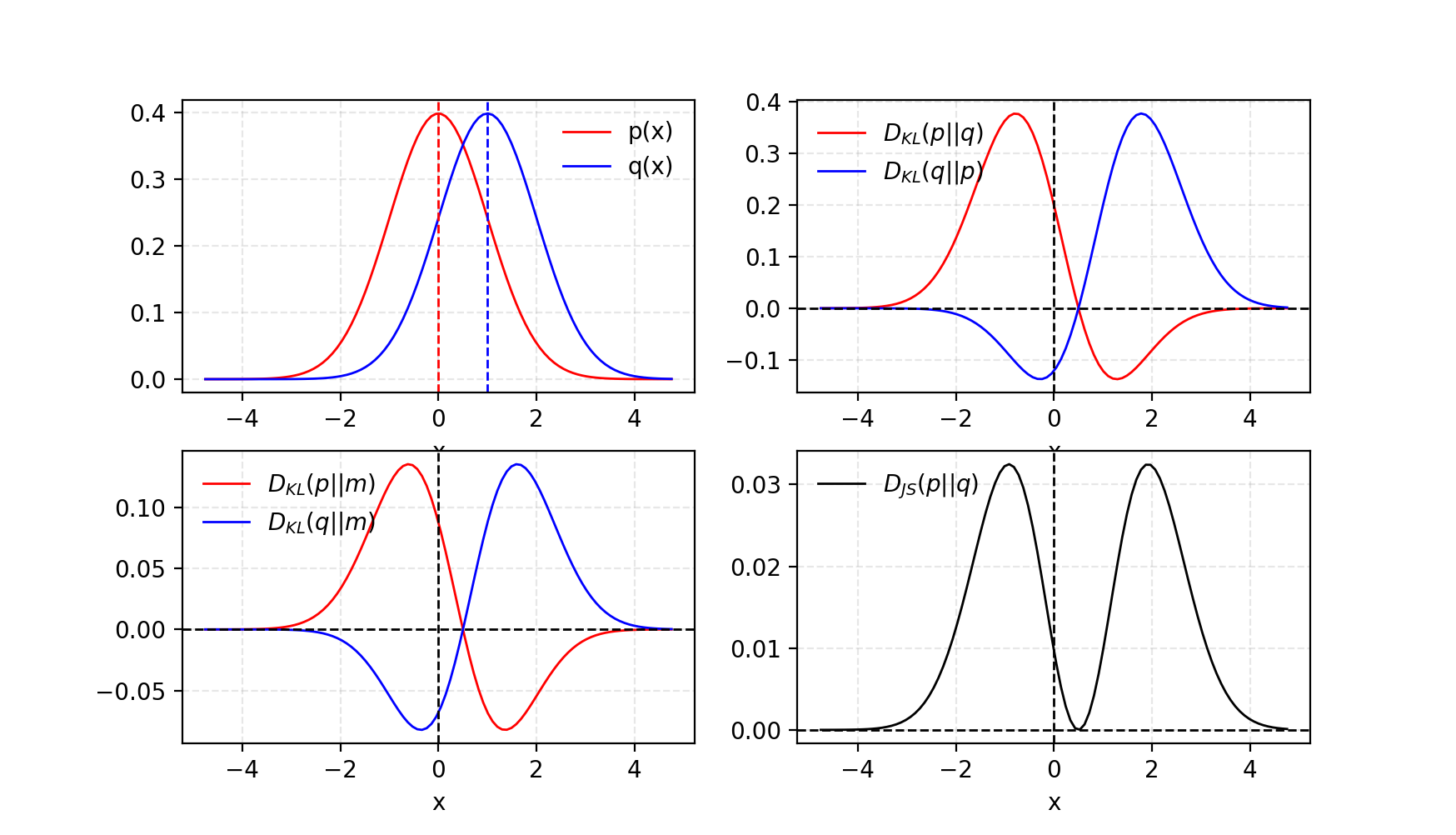
This article explains the mathematical underpinnings of Generative Adversarial Networks (GANs), a type of generative model inspired by game theory. It details the roles of the generator and discriminator models, which compete to improve each other's performance. The post also discusses challenges in training GANs, such as instability, and introduces variations like Wasserstein GAN (WGAN) designed to address these issues by modifying the loss function. AI
Summary written by gemini-2.5-flash-lite from 1 source. How we write summaries →
RANK_REASON The article is a technical explanation of a research concept (GANs) and its mathematical foundations, rather than a new model release or significant industry event.