PulseAugur
LIVE 11:54:25
research · [2 sources] ·
0
research

Lilian Weng explores extending language models to process visual data

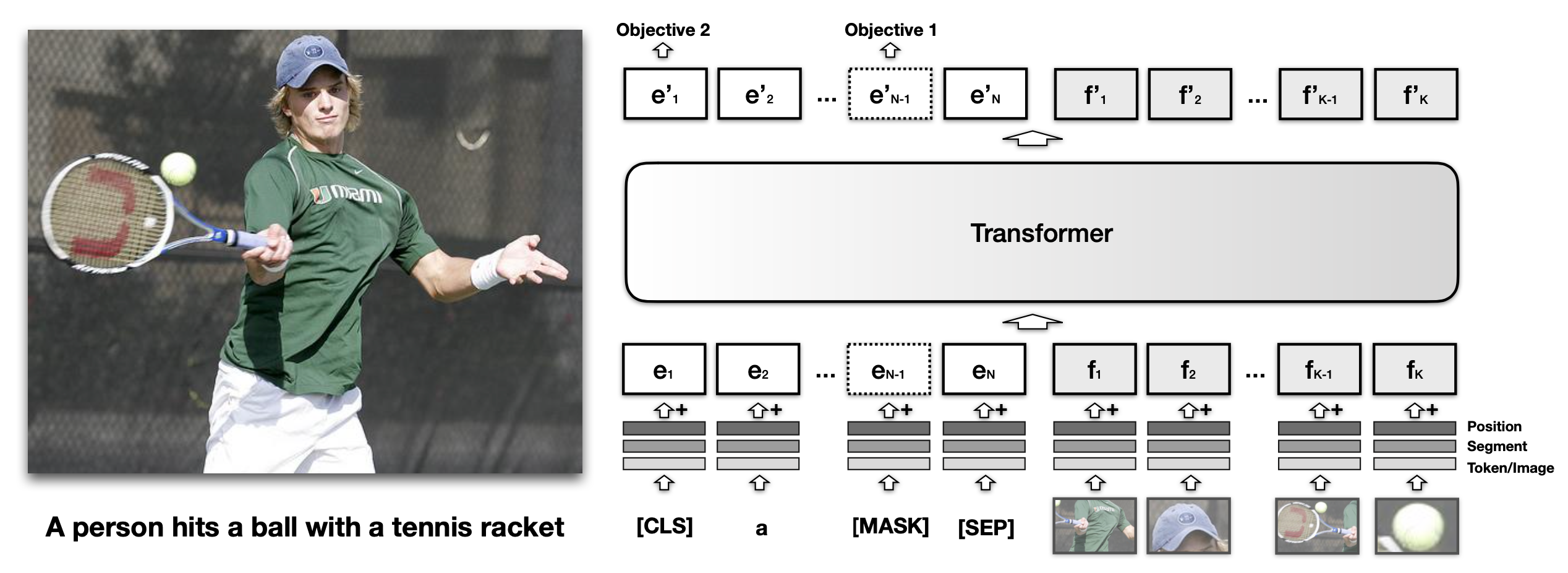
Lilian Weng's blog post details the evolution of generalized language models, focusing on how they are extended to process visual information. Early approaches like VisualBERT fused image patches with text tokens, using self-attention to align visual and textual data for tasks such as image captioning. More recent models like SimVLM treat encoded images as prefixes for language models, leveraging large datasets for pre-training. These methods aim to create unified models capable of understanding and generating content across both visual and textual modalities. AI

Summary written by gemini-2.5-flash-lite from 2 sources. How we write summaries →

RANK_REASON The cluster summarizes research papers and blog posts detailing advancements in generalized visual language models.
Read on Lil'Log (Lilian Weng) →

Lilian Weng explores extending language models to process visual data

COVERAGE [2]

  1. Lil'Log (Lilian Weng) TIER_1 ·

    Generalized Visual Language Models

    <p>Processing images to generate text, such as image captioning and visual question-answering, has been studied for years. Traditionally such systems rely on an object detection network as a vision encoder to capture visual features and then produce text via a text decoder. Given…

  2. Lil'Log (Lilian Weng) TIER_1 ·

    Generalized Language Models

    <!-- As a follow up of word embedding post, we will discuss the models on learning contextualized word vectors, as well as the new trend in large unsupervised pre-trained language models which have achieved amazing SOTA results on a variety of language tasks. --> <p><span class="…