PulseAugur / Brief
LIVE 17:34:12

Brief

last 24h
[50/993] 186 sources

Multi-source AI news clustered, deduplicated, and scored 0–100 across authority, cluster strength, headline signal, and time decay.

  1. Vega: Zero-knowledge proofs for digital identity in the age of AI

    Microsoft Research has developed Vega, a system that uses zero-knowledge proofs to enable users to verify aspects of their digital identity, such as age or professional status, without revealing the underlying credential. This technology aims to address privacy concerns exacerbated by the rise of AI agents and the increasing need for secure digital verification. Vega generates proofs quickly on standard devices and is designed to integrate with existing formats like driver's licenses and EU digital identity wallets. AI

    Vega: Zero-knowledge proofs for digital identity in the age of AI

    IMPACT Enables secure and private credential verification for AI agents and digital identity systems.

  2. 30 Days With the Magnific Image Pipeline: What Stuck and What Got Killed

    A solo studio owner details their experience using Magnific, an AI image generation and editing tool, over 30 days. The user found that Magnific's "Spaces" workspace effectively replaced three separate tools for image generation, upscaling, and compositing, significantly reducing context switching and streamlining workflows. The "Relight" feature was particularly impactful, transforming basic product photos into studio-quality images with improved lighting and shadows, leading to a substantial increase in shipped product imagery. AI

    IMPACT Magnific's features like Spaces and Relight demonstrate AI's potential to consolidate creative workflows and enhance image quality, impacting productivity for visual content creators.

  3. Taiwan raids 12 locations in its first formal crackdown on Nvidia AI chip smuggling — hunts three fugitives for document forgery, fraudulent declarations in Super Micro smuggling case

    Taiwanese authorities have conducted raids across 12 locations in their first formal crackdown on the smuggling of Nvidia AI chips. The operation targets three individuals accused of forging documents to illicitly export Super Micro Computer Inc. servers, containing restricted Nvidia hardware, to mainland China, Hong Kong, and Macau. This action signifies a policy shift in Taiwan to comply with US trade restrictions and secure the global AI supply chain, making it more difficult to obtain banned chips for Chinese data centers. AI

    Taiwan raids 12 locations in its first formal crackdown on Nvidia AI chip smuggling — hunts three fugitives for document forgery, fraudulent declarations in Super Micro smuggling case

    IMPACT Tightens restrictions on AI chip access for China, potentially impacting global AI development and competition.

  4. [AINews] OpenAI GPT-next disproves 80 year old Erdős planar unit distance problem for under $1000

    OpenAI has announced that an internal model, speculated to be a version of GPT-5, has disproven an 80-year-old mathematical conjecture known as the Erdős planar unit distance problem. This general-purpose reasoning model achieved the result for under $1000, a feat that mathematicians are hailing as a significant milestone for AI in scientific discovery. The model's extensive output suggests that advanced reasoning capabilities are emerging in LLMs, potentially extending beyond mathematics to other scientific fields. AI

    [AINews] OpenAI GPT-next disproves 80 year old Erdős planar unit distance problem for under $1000

    IMPACT Demonstrates advanced reasoning capabilities in LLMs, potentially accelerating scientific discovery across various fields.

  5. Learning-to-Defer with Expert-Conditional Advice

    Researchers have developed new methods for 'Learning-to-Defer' (L2D) systems, which decide whether to make a prediction or consult an expert. The latest advancements address limitations in existing frameworks by allowing systems to not only select an expert but also to provide that expert with additional, context-specific information. New approaches also extend L2D to utilize multiple experts simultaneously, enabling systems to query the top-k most cost-effective entities or adapt the number of experts based on input difficulty. AI

    IMPACT These advancements in Learning-to-Defer could lead to more efficient and accurate AI systems by optimizing expert consultation and enabling collaborative intelligence.

  6. Why We Don't Use a Single LLM Prompt to Rewrite Resumes (and What We Built Instead)

    A new approach to AI-powered resume rewriting avoids the pitfalls of single-prompt LLM applications by treating resumes and job descriptions as structured data. This method, developed by ResumeAdapter, uses distinct models for parsing resume (CRDM) and job description (CJDM) data, followed by a deterministic Gap Analysis Engine (GAE) to identify discrepancies. A Rewrite Plan Generator (RPG) then creates a blueprint for necessary changes, which are executed by a Modular Rewrite Chain (MRC) using small, scoped LLM prompts for specific sections like summaries or experience bullets. AI

    Why We Don't Use a Single LLM Prompt to Rewrite Resumes (and What We Built Instead)

    IMPACT This approach offers a more reliable method for AI resume tools by using structured data and deterministic analysis, reducing hallucinations and improving output consistency.

  7. CT-OT Flow: Estimating Continuous-Time Dynamics from Discrete Temporal Snapshots

    Researchers have developed a new framework called CT-OT Flow to estimate continuous-time dynamics from discrete, aggregated data snapshots. This method addresses challenges like noisy timestamps and the absence of continuous trajectories by inferring precise time labels and reconstructing distributions through temporal kernel smoothing. CT-OT Flow has demonstrated improved performance over existing methods on synthetic and real-world datasets, including scRNA-seq and typhoon track data. AI

    IMPACT Provides a novel method for analyzing time-series data, potentially improving models in fields like biology and meteorology.

  8. Blog Update: Google's Object-Oriented Programming Specialized Code Editor "Antigravity" Has Evolved into a Standalone App, No Longer VSCode-Based, So I Decided to Immediately Try Making "Something Like Daytona USA" https://kanoayu.cloudfree.jp/2026/05/21/%ef%bd%b8%ef%b

    The AI-powered code editor Antigravity, developed by Google, has transitioned from a VSCode-based platform to a standalone application. This evolution allows for enhanced capabilities and a more specialized user experience for developers. The author plans to utilize the updated editor to create a game reminiscent of Daytona USA. AI

    IMPACT Standalone AI code editor enhances developer tools and workflows.

  9. Should I Buy Cursor Pro Plan?

    Cursor, an AI-powered code editor, is being evaluated by users regarding its Pro plan's performance and potential limitations. Users are inquiring about sustained performance over time, specifically whether they will encounter limits or errors after extended use. The discussion centers on the value proposition of the Pro plan for individuals dedicating significant daily time to coding. AI

    IMPACT Users are discussing the practical performance and potential limitations of an AI-powered coding tool, impacting developer workflow.

  10. Federated Learning of Nonlinear Temporal Dynamics with Graph Attention-based Cross-Client Interpretability

    Researchers have developed a new federated learning framework designed to interpret temporal interdependencies across decentralized nonlinear systems. This approach allows clients to map local observations to latent states, which are then used by a central server to learn a graph-structured model. The framework provides interpretability by relating the Jacobian of the learned transition model to attention coefficients, offering a novel way to understand cross-client temporal relationships. Theoretical convergence guarantees and experimental validation demonstrate its effectiveness in synthetic and real-world scenarios. AI

    IMPACT Introduces a novel method for understanding decentralized nonlinear systems, potentially improving monitoring and control in industrial settings.

  11. UK’s Education Committee: Social media ban a must to save children’s mental health

    The UK's Education Committee has called for a ban on social media for children, citing concerns over their mental health and the failure of tech companies to self-regulate. The committee believes that technology firms cannot be trusted to protect young users. This recommendation comes amidst broader discussions about AI adoption and its associated security challenges. AI

    UK’s Education Committee: Social media ban a must to save children’s mental health

    IMPACT Policy recommendations regarding social media use by children may indirectly influence the development and deployment of AI-powered content moderation and user safety features.

  12. Hating AI Is Good

    An opinion piece argues that a growing segment of the population is actively rejecting artificial intelligence, viewing it as a liability rather than an inevitability. The author suggests that this 'anti-AI evangelist' movement is a legitimate constituency that should be taken seriously, especially as public opinion on AI appears to be souring rapidly. The piece highlights instances of graduates booing speakers who promote AI, indicating a generational divide and a desire to resist the technology's perceived imposition. AI

    IMPACT Suggests a growing public backlash against AI could influence its adoption and development.

  13. 🧠 Someone created a SQLite graph database that documents the reasons and context behind AI-generated code. The project maps the relationships between different

    A new SQLite graph database has been developed to document the reasoning and context behind AI-generated code. This project aims to map the relationships between various factors that influence when and why AI systems produce code. The goal is to provide a clearer understanding of the AI development process for code generation. AI

    🧠 Someone created a SQLite graph database that documents the reasons and context behind AI-generated code. The project maps the relationships between different

    IMPACT Provides a structured way to analyze and understand the decision-making processes behind AI code generation.

  14. Sparse Efficiency vs. Superposition: The Interpretability Tradeoff

    The human brain's extreme energy efficiency, estimated to be 10,000 times greater than current AI models, is attributed to its sparse and localized processing. While techniques like mixture-of-experts offer a path toward similar efficiency in AI by using specialized sub-networks, they may reduce the benefits of superposition. Superposition, a dense shared representational space, allows neural networks to compress multiple features into the same neurons, contributing to their power but hindering interpretability. The author posits that more segmented architectures could weaken superposition, potentially making AI models easier to inspect and govern, and seeks a balance between efficiency, power, and interpretability. AI

    Sparse Efficiency vs. Superposition: The Interpretability Tradeoff

    IMPACT Explores a fundamental tradeoff between AI model efficiency and interpretability, potentially guiding future architectural and safety research.

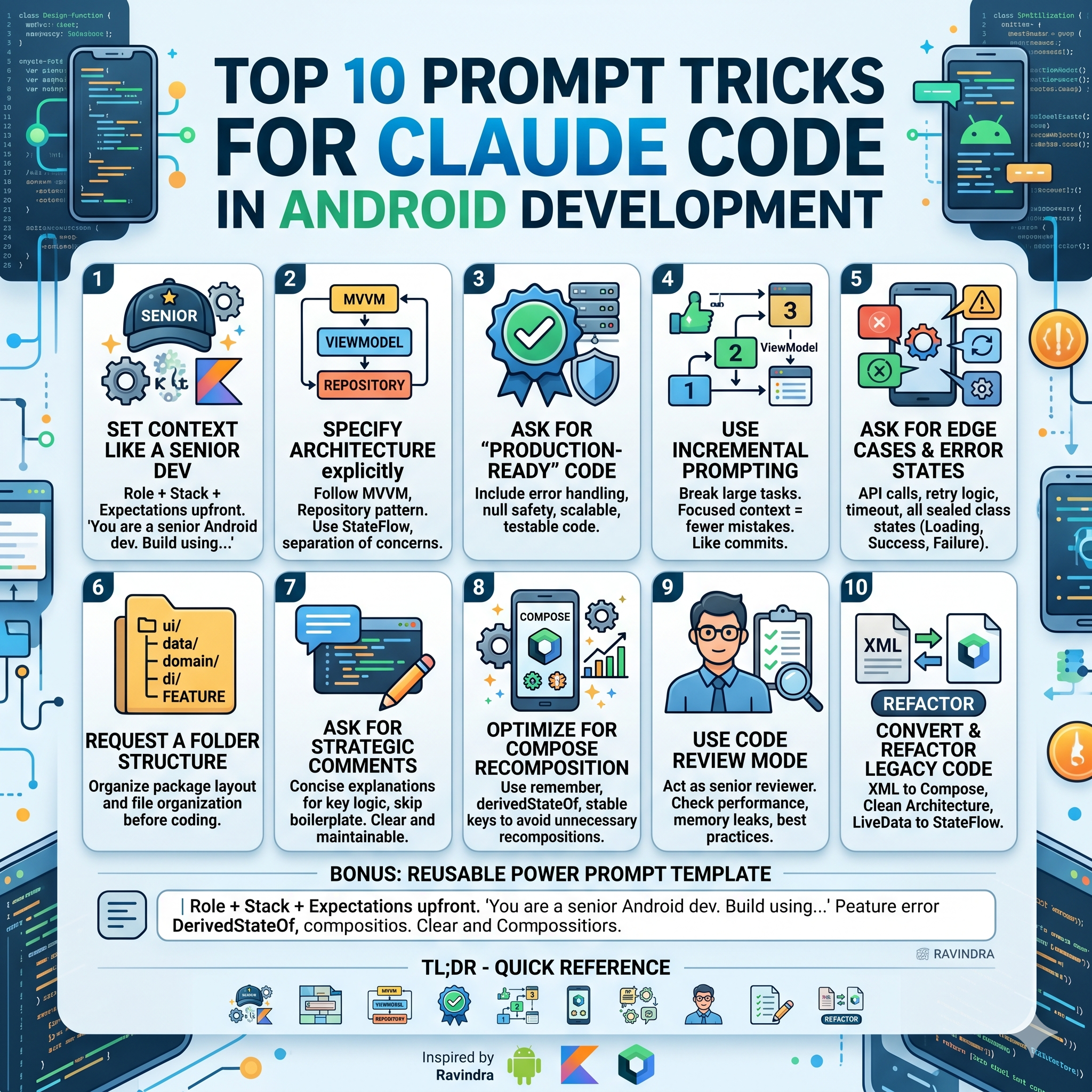
  15. Top 10 Prompt Tricks for Claude Code in Android Development

    This article provides a practical guide for developers on how to use Anthropic's Claude AI assistant to enhance coding efficiency in Android development. It offers a cheat sheet of prompt engineering techniques specifically tailored for Kotlin and Jetpack Compose. The goal is to help developers write code faster and more effectively by leveraging AI. AI

    Top 10 Prompt Tricks for Claude Code in Android Development

    IMPACT Offers practical tips for developers to improve coding efficiency using AI assistants.

  16. AI achieves China's first comprehensive survey of solar power generation, research from Peking University and Alibaba DAMO Academy published in Nature

    Researchers from Peking University and Alibaba's Damo Academy have developed an AI system capable of conducting a nationwide survey of China's wind and solar power generation facilities. This AI, utilizing open-source satellite imagery, has created the first high-precision map of these installations across China. The study, published in Nature, demonstrates how synergistic wind and solar power generation can significantly improve renewable energy utilization and reduce energy waste. AI

    IMPACT Enables more systematic planning and optimization of China's renewable energy grid, potentially reducing waste and accelerating 'dual carbon' goals.

  17. License to Stream: ‘007 First Light’ Coming to GeForce NOW With an Ultimate Bundle

    NVIDIA's GeForce NOW cloud gaming service is offering a special bundle for its Ultimate members that includes the upcoming game '007 First Light'. This promotion allows subscribers to access the game upon its release by purchasing a 12-month Ultimate membership. Additionally, Forza Horizon 6 is now available on GeForce NOW, featuring high-fidelity cloud streaming and integration with technologies like NVIDIA DLSS. AI

    License to Stream: ‘007 First Light’ Coming to GeForce NOW With an Ultimate Bundle

    IMPACT Enhances cloud gaming accessibility and performance through advanced streaming technologies.

  18. Tsinghua University X Dreame Robot Vacuum: Jointly Building a University-Level Practice Base, Launching a "Top Engineer Cultivation Plan"

    Tsinghua University and Dreame Robot Vacuum have established a joint university-level graduate social practice base. This collaboration aims to cultivate the next generation of engineers by integrating academic learning with real-world product development and testing. Students will work on cutting-edge projects under the guidance of senior engineers, applying their research to practical challenges and industrial constraints. AI

    Tsinghua University X Dreame Robot Vacuum: Jointly Building a University-Level Practice Base, Launching a "Top Engineer Cultivation Plan"

    IMPACT Establishes a pipeline for training engineers in advanced robotics and AI, potentially accelerating innovation in the smart home sector.

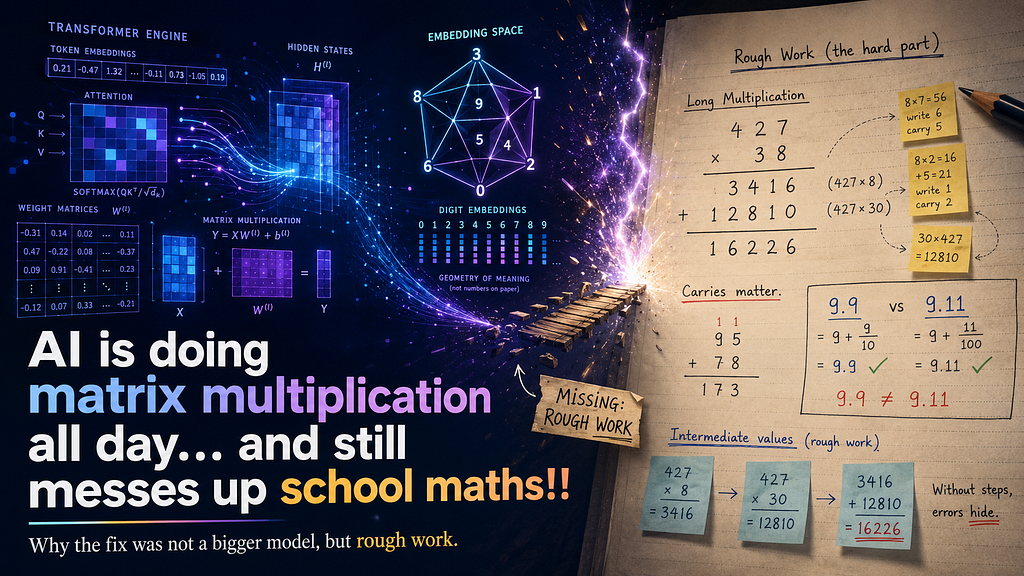
  19. AI Does Multiplication Underneath. So Why Did Older Models Break at School Maths?

    Large language models, despite being built on mathematical operations like multiplication, have historically struggled with basic arithmetic, such as comparing decimal numbers. This issue stems from how models use multiplication not for direct calculation, but for transforming and relating information between tokens via learned weights. While modern models are improving, their inability to recognize their own errors highlights a fundamental difference between their internal processes and human understanding of mathematics. AI

    AI Does Multiplication Underneath. So Why Did Older Models Break at School Maths?

    IMPACT Highlights a gap in LLM reasoning, suggesting current models may not reliably perform basic arithmetic despite underlying mathematical operations.

  20. Ten Thousand Word Talk丨Tongji Institute of Artificial Intelligence Hua Xiansheng: Engineering Intelligence is AI's 'Coming-of-Age Ceremony'

    Hua Xiansheng, president of the Tongji University Institute for Engineering Intelligence, believes AI's true challenge lies in its ability to integrate into complex physical engineering systems, not just digital tasks. He proposes "engineering intelligence" as a paradigm that merges AI with engineering practice to solve core problems in areas like construction, manufacturing, and transportation. This integration aims to move AI from isolated successes to scalable applications through platforms and operating systems, while also exploring a co-creative human-AI relationship to avoid human marginalization. AI

    Ten Thousand Word Talk丨Tongji Institute of Artificial Intelligence Hua Xiansheng: Engineering Intelligence is AI's 'Coming-of-Age Ceremony'

    IMPACT Establishes a new framework for AI application in complex physical systems, potentially driving industrial transformation and new AI research directions.

  21. Meituan drone low-altitude network officially put into operation

    Meituan's low-altitude drone network has officially begun regular operations, marking a significant step in its low-altitude logistics capabilities. The company is now recruiting authorized service providers nationwide, offering its self-developed hardware and software products to the industry. This expansion aims to open up Meituan's drone delivery services to a broader market. AI

    IMPACT Expands drone delivery infrastructure, potentially accelerating logistics automation.

  22. Commercial humanoid robots in China may soon do laundry, make beds, care for elders

    Chinese company GigaAI is preparing to test its S1 humanoid robot in households by early 2027. This robot is designed for complex domestic tasks such as laundry, cooking, and elder care, utilizing embodied AI for autonomous task understanding and execution. Initial trials will involve a fleet of 100 robots for tech industry employees, followed by a pilot program in Wuhan focusing on families with elderly members, children, or pets. AI

    Commercial humanoid robots in China may soon do laundry, make beds, care for elders

    IMPACT This trial could accelerate the adoption of embodied AI in domestic settings, potentially transforming household chores and elder care.

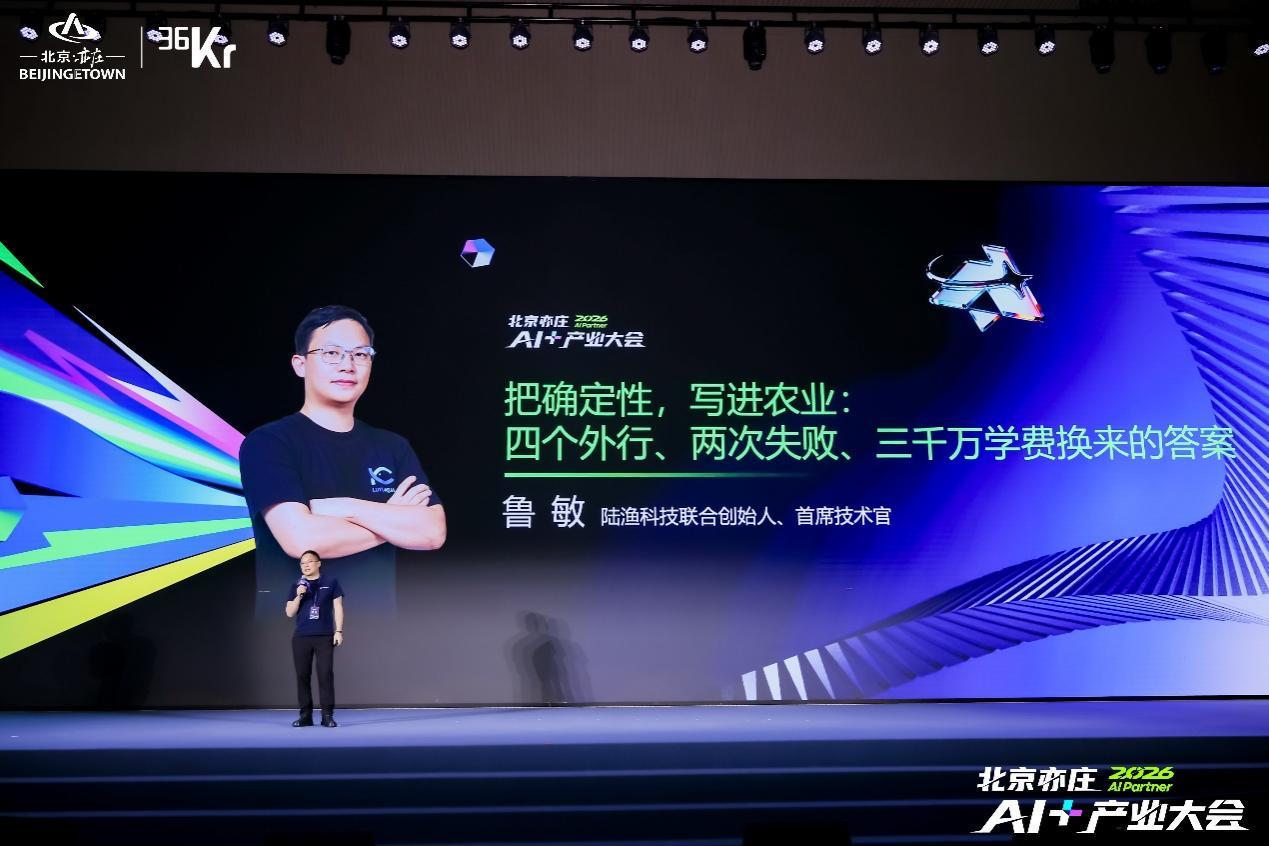
  23. Injecting Certainty into Agriculture: The Answer Forged by Four Amateurs, Two Failures, and a 30 Million Tuition Fee | 2026AI Partner·Beijing Yizhuang AI+ Industry Conference

    Lu Yu Technology, a startup founded by individuals with no prior agricultural experience, has invested over 30 million yuan in developing an AI-driven system for aquaculture. After two significant failures, the company has created a comprehensive AI solution that addresses the inherent uncertainties in fish farming. Their system focuses on data collection, AI-powered decision-making, and automated execution to bring predictability to the 1.38 trillion yuan aquaculture market, which currently has less than 5% digital penetration. AI

    Injecting Certainty into Agriculture: The Answer Forged by Four Amateurs, Two Failures, and a 30 Million Tuition Fee | 2026AI Partner·Beijing Yizhuang AI+ Industry Conference

    IMPACT This initiative could significantly boost the digital transformation of the aquaculture industry, making it more predictable and profitable.

  24. Your AI Coding Agent Is Writing Broken Kotlin — Here’s How to Fix IT

    AI coding assistants, including tools like Cursor and Claude Code, are generating Kotlin code that compiles and runs but contains subtle errors. These issues often manifest as runtime bugs rather than compilation failures, requiring developers to manually debug and correct the output. The article suggests that while AI agents are helpful for initial code generation, human oversight remains crucial for ensuring code quality and reliability. AI

    Your AI Coding Agent Is Writing Broken Kotlin — Here’s How to Fix IT

    IMPACT AI coding tools can generate functional but flawed code, highlighting the continued need for human developers to ensure code quality and prevent runtime errors.

  25. US is taking equity stakes in IBM and other quantum computing companies

    The U.S. government is acquiring $2 billion in equity stakes across nine quantum computing companies, including major players like IBM and D-Wave Quantum. This initiative, part of the CHIPS R&D investments, aims to bolster domestic quantum capabilities and create jobs. Notably, one of the recipient companies, PsiQuantum, has ties to Donald Trump Jr.'s investment firm, while D-Wave Quantum was taken public by a current Pentagon official. AI

    US is taking equity stakes in IBM and other quantum computing companies

    IMPACT Government investment in quantum computing could accelerate breakthroughs in areas like cryptography and simulation, impacting future AI development.

  26. How to Use Claude AI to Create Top-Notch YouTube Thumbnails

    This article explains how to leverage Claude AI to design compelling YouTube thumbnails. It emphasizes the critical role thumbnails play in attracting viewers and driving video engagement in the competitive YouTube environment. The guide aims to help creators enhance their video's visibility and click-through rates using AI. AI

    IMPACT Provides a practical application of AI for content creators to improve video engagement.

  27. Tencent Meeting Launches "AI Simultaneous Interpretation" Feature

    Tencent Meeting has launched a new AI-powered simultaneous interpretation feature that supports real-time speech recognition and translation. The initial version offers bidirectional translation between Chinese and English with a latency of under three seconds, ensuring near-synchronous delivery. This aims to facilitate smoother communication in multilingual meetings. AI

    IMPACT Enhances accessibility and global reach for communication platforms.

  28. Youdao Fully Open Sources "Zi Yue 4" Multimodal and TTS Engine

    NetEase Youdao has released its "Zi Yue 4.0" large model, which now supports multimodal interactions including text, images, and audio. The company has also open-sourced the core multimodal model and its text-to-speech (TTS) engine. This release marks a significant step for Youdao in advancing its AI capabilities and contributing to the open-source community. AI

    IMPACT Accelerates open-source AI development and enables broader adoption of multimodal capabilities.

  29. How to Stop Evaluating LLM Outputs by Gut Feel

    A new tool called LLM Eval Suite has been developed to move beyond subjective, gut-feel evaluations of large language model outputs. This suite provides structured, evidence-backed scoring by linking each evaluation dimension to specific quotes from the model's response. It offers capabilities such as multi-dimensional scoring across various task types, regression testing for tracking performance over time, and integration with CI/CD pipelines via GitHub Actions. The tool also includes features for hallucination detection against source documents and prompt sensitivity analysis to identify fragile prompt phrasings. AI

    IMPACT Provides developers with a structured method to evaluate LLM outputs, enabling more reliable deployment and iteration.

  30. I Tried Offline RL With Logs — Coverage Lied 7 Times

    Training AI models using production logs can be misleading, as a recent exploration into offline Reinforcement Learning (RL) revealed. The study found that relying solely on logged data can result in models that appear to perform well but fail in real-world applications. This highlights the critical need for more robust evaluation metrics beyond simple reward signals to ensure model reliability. AI

    I Tried Offline RL With Logs — Coverage Lied 7 Times

    IMPACT Highlights potential pitfalls in training AI models with production logs, emphasizing the need for better evaluation beyond reward signals.

  31. Shenzhen Financial Regulatory Bureau: By 2025, foreign banks within and outside Shenzhen will provide cross-border collaborative services to approximately 15,000 clients.

    SpaceX has outlined an ambitious plan to conduct 10,000 launches annually within the next five years. However, the Federal Aviation Administration (FAA) has expressed reservations, stating that reliability improvements are necessary before such expansion can be approved. Concurrently, SpaceX's broader vision includes a 1-million satellite constellation intended to power AI data centers using solar energy. AI

    IMPACT SpaceX's ambitious launch plans and satellite constellation for AI data centers could significantly impact the infrastructure required for future AI development.

  32. Improved convergence rate of kNN graph Laplacians: differentiable self-tuned affinity

    Researchers have developed a new method for constructing k-nearest neighbor (kNN) graphs, which are fundamental in graph-based data analysis. The proposed approach refines the graph affinity calculation by adaptively setting kernel bandwidths based on local data densities. This advancement leads to an improved convergence rate for the kNN graph Laplacian, offering a more precise approximation of the underlying manifold operator. AI

    IMPACT Enhances theoretical underpinnings for graph-based machine learning techniques.

  33. A Differentiable Measure of Algebraic Complexity: Provably Exact Discovery of Group Structures

    Researchers have developed a new method to discover discrete algebraic rules from data by framing it as Cayley-table completion. This approach uses a differentiable measure of algebraic complexity, derived from an operator-valued tensor factorization called HyperCube. The method proves that this complexity measure can exactly characterize group structures, resolving a key conjecture and enabling gradient-based discovery without combinatorial search. AI

    IMPACT Enables gradient-based discovery of discrete algebraic structures, potentially advancing AI's ability to learn underlying rules from data.

  34. Cluster-Based Generalized Additive Models Informed by Random Fourier Features

    Researchers have developed a new regression framework that combines spectral representation learning with localized additive modeling to create a more interpretable yet powerful predictive tool. The method first uses random Fourier features to learn a predictive representation, which is then compressed into a low-dimensional embedding. Within this embedding, a Gaussian mixture model identifies distinct data regimes, and cluster-specific generalized additive models capture nonlinear covariate effects using interpretable spline functions. This approach aims to balance the predictive performance of complex models with the transparency needed for critical applications, showing competitive results against both simpler interpretable models and more flexible black-box methods. AI

    IMPACT Introduces a novel statistical framework that enhances model interpretability while maintaining strong predictive performance, potentially benefiting fields requiring transparent data analysis.

  35. On the Suboptimality of GP-UCB under Polynomial Effective Optimism

    A new paper published on arXiv investigates the limitations of the Gaussian Process Upper Confidence Bound (GP-UCB) algorithm. Researchers have established upper bounds on its cumulative regret, but this work explores whether GP-UCB is truly minimax optimal. The study introduces a new regret lower bound for GP-UCB with Matérn kernels, indicating that polynomial growth in the effective optimism level hinders optimal regret rates. AI

    IMPACT Identifies a fundamental limitation in a widely used optimization algorithm, potentially guiding future research towards more optimal methods.

  36. Computational-Statistical Trade-off in Kernel Two-Sample Testing with Random Fourier Features

    Researchers have analyzed the computational-statistical trade-off in kernel two-sample testing using random Fourier features. They found that the approximated MMD test is only consistently powerful when an infinite number of random features are used. However, by carefully selecting the number of features, it's possible to achieve the same minimax separation rates as the standard MMD test within sub-quadratic time. AI

    IMPACT Establishes theoretical bounds for efficient statistical testing, potentially enabling faster analysis of large datasets in machine learning applications.

  37. Consistency of Honest Decision Trees and Random Forests

    Researchers have established new theoretical findings regarding the consistency of honest decision trees and random forests in regression tasks. The study presents elementary proofs that demonstrate both weak and almost sure convergence of these methods to the true regression function under standard conditions. This framework also extends to ensemble variants utilizing subsampling and a two-stage bootstrap sampling scheme, simplifying and synthesizing existing analyses. AI

    IMPACT Provides theoretical groundwork for understanding the asymptotic behavior of tree-based machine learning methods.

  38. NanoClaw creator turns down $20M buyout offer, raises $12M seed instead

    NanoCo, the developer of the security-focused AI tool NanoClaw, has secured $12 million in seed funding after a rapid viral launch. The company declined a $20 million acquisition offer, opting instead to build out its open-source project. The funding round was led by Valley Capital Partners and included investments from notable tech figures and companies. NanoClaw's popularity surged following endorsements from AI researcher Andrej Karpathy and Singapore's foreign minister, leading to significant community growth and early enterprise adoption. AI

    NanoClaw creator turns down $20M buyout offer, raises $12M seed instead

    IMPACT Accelerates adoption of secure AI agent tooling and validates community-driven open-source development models.

  39. America’s new AI map shows something surprising: ‘A lot of normal people are adopting AI’

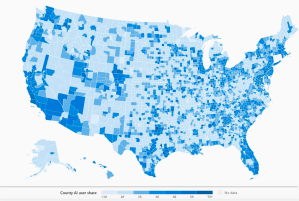
    A new report from Microsoft indicates that AI adoption is widespread across the United States, extending beyond traditional tech hubs to include "normal people" and professionals like lawyers. The study, which mapped AI user share by state and county, revealed surprising leaders, with Texas ranking fourth nationally, surpassing California. This suggests a broader demographic and economic realignment, with growing AI entrepreneurship in areas like Austin, Texas. The report also highlighted a significant digital divide, showing much lower AI usage in rural counties compared to metropolitan areas, even after accounting for demographic factors. AI

    America’s new AI map shows something surprising: ‘A lot of normal people are adopting AI’

    IMPACT Reveals a broader, more distributed AI adoption landscape beyond tech hubs, impacting how businesses and individuals engage with AI tools.

  40. Airbnb CEO Brian Chesky Called Chinese AI Fast And Cheap. Now, Congress Wants Answers

    Airbnb CEO Brian Chesky is facing scrutiny from U.S. lawmakers regarding the company's use of Chinese AI models, specifically Alibaba's Qwen. Chesky defended the practice, stating that Airbnb primarily uses open-source models and does not share data with Chinese companies, arguing that concerns about data access are a misunderstanding of the technology. This situation highlights the growing tension between U.S. national security interests and the availability of cost-effective AI solutions from China, as evidenced by a recent bipartisan bill aimed at promoting American technology procurement among allies. AI

    Airbnb CEO Brian Chesky Called Chinese AI Fast And Cheap. Now, Congress Wants Answers

    IMPACT Highlights geopolitical tensions in AI development and the trade-offs between cost-effectiveness and national security for AI adoption.

  41. Performance Express | Vipshop Q1 Net Revenue 26.6 Billion Yuan, SVIP Users Contribute Over 50% of Online Sales

    Vipshop reported first-quarter net revenue of 26.6 billion yuan, with a Non-GAAP net profit of 2.3 billion yuan. The company saw an 8.6% year-over-year increase in Gross Merchandise Volume (GMV) to 56.9 billion yuan and a 3.2% rise in order volume to 173 million. Vipshop is focusing on enhancing its product offerings, particularly in outdoor and sports categories, and improving user operations through its VIP membership program, which now contributes over 50% of online sales. The company is also integrating AI across various functions, including virtual try-on, intelligent customer service, and personalized marketing, to optimize user experience and operational efficiency. AI

    IMPACT Vipshop's AI integration in virtual try-on, customer service, and marketing aims to enhance user experience and operational efficiency.

  42. San Francisco thinks AI can save the whales. Here’s how

    An AI-powered detection system called WhaleSpotter has been launched in San Francisco Bay to help prevent whale deaths from ship strikes. The system uses thermal cameras and AI to scan for whale blows and heat signatures, alerting nearby mariners to slow down or reroute. This initiative aims to address a significant increase in gray whale deaths, with at least 40% attributed to collisions with vessels. Scientists are linking the whales' diversion into the bay to climate change disrupting their Arctic feeding grounds. AI

    San Francisco thinks AI can save the whales. Here’s how

    IMPACT Enhances maritime safety and conservation efforts by providing real-time whale detection to prevent collisions.

  43. Three Rough Edges of Running Claude Code + Telegram MCP on Windows: A 200-Line Toolkit

    A developer has created a 200-line open-source toolkit to address three minor issues encountered when running Claude Code via Telegram on Windows. The toolkit resolves a visual annoyance of multiple command windows appearing on login by using VBScript to hide the console windows. It also fixes a problem where the Telegram polling mechanism would stop receiving messages by implementing a script to kill orphaned Telegram processes before starting a new session. Finally, it prevents a scenario where running multiple Claude Code instances simultaneously could lead to a zombie process issue. AI

    IMPACT Provides a practical solution for users integrating AI code assistants into their workflow, improving usability.

  44. Stop Getting 'It Depends' Answers About RAG Architecture

    A new tool called RAG Readiness has been developed to provide specific, opinionated recommendations for Retrieval-Augmented Generation (RAG) system architectures. Instead of offering comparison tables that can be paralyzing, RAG Readiness asks users about their use case, data, and constraints to recommend a single, reasoned choice for each component, such as the vector database, embedding model, and retrieval method. The tool also offers features for diagnosing existing RAG systems, running multi-use-case audits, generating implementation starter kits, and estimating costs. AI

    IMPACT Simplifies complex RAG architecture decisions, potentially accelerating adoption and deployment of RAG systems.

  45. BALLAST: Bayesian Active Learning with Look-ahead Amendment for Sea-drifter Trajectories under Spatio-Temporal Vector Fields

    Researchers have developed a new active learning methodology called BALLAST to improve the inference of time-dependent vector fields, particularly for oceanography. This method uses a physics-informed Gaussian process surrogate model and considers the future trajectories of measurement observers. BALLAST has demonstrated benefits in synthetic and high-fidelity ocean current models, and a novel GP inference method, VaSE, was also introduced to enhance sampling efficiency. AI

    IMPACT Introduces a novel active learning approach for scientific data inference, potentially improving the efficiency of oceanographic research.

  46. Fudan University Trusted Embodied Intelligence Institute & Shanghai Jiao Tong University: Equipping Autonomous Driving with Retrievable "Spatial Memory" | CVPR 2026

    Researchers from Fudan University and Shanghai Jiao Tong University have developed a novel approach for autonomous driving that incorporates a "spatial memory" by retrieving historical geographic information. This method uses GPS data to access street view and satellite imagery of the current location, fusing this with real-time sensor data. The system is designed to provide a spatial prior, helping vehicles understand road structures like lane lines and boundaries, especially in challenging conditions where sensors may be obscured or provide limited views. This "retrieval-augmented autonomous driving" paradigm shifts from relying solely on immediate sensor input to a combination of real-time perception and historical spatial context. AI

    Fudan University Trusted Embodied Intelligence Institute & Shanghai Jiao Tong University: Equipping Autonomous Driving with Retrievable "Spatial Memory" | CVPR 2026

    IMPACT Introduces a new paradigm for autonomous driving by integrating historical geographic data with real-time sensors, potentially improving safety and robustness in complex scenarios.

  47. Tech researchers are suing the Trump administration over the future of online safety

    A coalition of technology researchers is suing the Trump administration, challenging a policy that restricts visas for individuals involved in censoring online content. The Coalition for Independent Technology Research (CITR) argues this policy, initiated by Secretary of State Marco Rubio, infringes upon free speech and due process rights of foreign-born researchers working on content moderation and online safety. The lawsuit seeks to strike down the policy, which the researchers' legal team contends uses immigration law to punish dissenting views and has a chilling effect on vital research into technology's societal impact. AI

    IMPACT This lawsuit could impact the ability of researchers to study and report on AI's societal risks and online harms.

  48. Interview with Zhu Chen: Deep Dive into Kingsoft Office's 2026 Private Enterprise Distribution Channel Strategy

    Kingsoft Office is rebuilding its distribution channels to better serve the private enterprise market. Under new leadership, the company is shifting from a relationship-based model to one focused on partner capabilities and customer value. This involves introducing a new distribution network with a general agent, establishing clear rules to prevent channel conflict, and emphasizing service and customer success to drive long-term growth. AI

    Interview with Zhu Chen: Deep Dive into Kingsoft Office's 2026 Private Enterprise Distribution Channel Strategy

    IMPACT Realigns sales strategy for AI-powered office suite, potentially increasing adoption.

  49. From emissions reporting to decarbonization decisions

    Databricks has launched Genie for Decarbonization Intelligence, a new tool designed to help energy sector companies bridge the gap between ESG reporting and actual decarbonization decisions. The platform allows sustainability leaders to query complex emissions and operational data using natural language, providing instant answers to inform forward-looking strategies. This aims to transform sustainability from a compliance burden into a competitive advantage by enabling data-driven decision-making. AI

    IMPACT Enables faster, data-driven sustainability decisions in the energy sector by leveraging natural language querying of complex emissions data.

  50. Improved Guarantees for Constrained Online Convex Optimization via Self-Contraction

    Researchers have developed a new projection-based algorithm for Constrained Online Convex Optimization (COCO) that significantly improves performance. The algorithm achieves logarithmic regret and cumulative constraint violation (CCV) for strongly convex losses, an exponential improvement in CCV. For general convex losses, it maintains optimal regret while reducing CCV. AI

    Improved Guarantees for Constrained Online Convex Optimization via Self-Contraction

    IMPACT Introduces theoretical improvements in optimization algorithms relevant to machine learning.