PulseAugur / Brief
LIVE 22:30:52

Brief

last 24h
[50/838] 186 sources

Multi-source AI news clustered, deduplicated, and scored 0–100 across authority, cluster strength, headline signal, and time decay.

  1. Google Confirms 2 Critical New Flaws—How To Jump The Update Queue

    Google has confirmed two critical security vulnerabilities in its Chrome browser, identified as CVE-2026-9111 and CVE-2026-9110. These flaws affect WebRTC and the Chrome user interface, respectively. While Google is rolling out an automatic update over the coming days and weeks, users can manually initiate the update by navigating to Help > About Google Chrome within the browser. AI

    Google Confirms 2 Critical New Flaws—How To Jump The Update Queue

    IMPACT Minimal direct impact on AI operations; focuses on web browser security.

  2. Agent JIT Compilation for Latency-Optimizing Web Agent Planning and Scheduling

    Researchers have developed agent just-in-time (JIT) compilation to optimize web agent planning and scheduling, significantly reducing latency and improving accuracy. This new approach compiles natural language task descriptions into executable code, allowing for LLM calls, tool usage, and parallelization. The system includes a JIT-Planner for generating and validating code plans, and a JIT-Scheduler for exploring parallelization strategies using Monte Carlo estimation. Tests across five web applications showed a 10.4x speedup and 28% accuracy increase over existing methods, with the scheduler providing an additional 2.4x speedup and 9% accuracy improvement. AI

    IMPACT This new JIT compilation method for web agents promises faster and more accurate task automation, potentially improving user experience and efficiency in web-based AI applications.

  3. Leveraging LLMs for Grammar Adaptation: A Study on Metamodel-Grammar Co-Evolution

    Researchers have developed a new method using Large Language Models (LLMs) to automatically adapt grammars following metamodel evolution in model-driven engineering. This LLM-based approach learns adaptations from previous versions, outperforming traditional rule-based methods in consistency and output similarity on smaller datasets. While effective for complex grammar scenarios, the study found LLMs struggled with adaptation consistency on very large grammars, indicating limitations for large-scale applications. AI

    IMPACT LLM-based grammar adaptation shows potential for automating complex software engineering tasks, though scalability remains a challenge.

  4. torchtune: PyTorch native post-training library

    A new PyTorch-native library called torchtune has been introduced to simplify the post-training phase for large language models. This library focuses on modularity and direct access to PyTorch components, aiming to facilitate efficient fine-tuning, experimentation, and deployment. Torchtune is designed to be highly flexible for research iteration and has demonstrated competitive performance and memory efficiency compared to existing frameworks like Axolotl and Unsloth. AI

    IMPACT Provides a flexible, PyTorch-native framework for LLM fine-tuning, potentially accelerating research and reproducible LLM development.

  5. roto 2.0: The Robot Tactile Olympiad

    Researchers have introduced roto 2.0, a new benchmark for tactile-based reinforcement learning in robotics. This benchmark utilizes GPU parallelism and focuses on end-to-end "blind" manipulation tasks across four different robotic morphologies. The team demonstrated a significant performance improvement, with their agents achieving 13 Baoding ball rotations in 10 seconds, which is substantially faster than existing methods. By open-sourcing the environments and baseline models, they aim to lower the entry barrier for researchers in this field. AI

    IMPACT Introduces a standardized benchmark to accelerate research and development in tactile-based robotic manipulation.

  6. Ordering Matters: Rank-Aware Selective Fusion for Blended Emotion Recognition

    Researchers have developed a novel framework for recognizing blended emotions by selectively fusing information from multiple pre-extracted video and audio encoders. This rank-aware approach uses an attention-based gating module to identify and combine the most informative encoders, improving accuracy in distinguishing subtle and overlapping multimodal cues. The system also incorporates unsupervised domain adaptation to enhance robustness and was recognized with a second-place ranking in the BlEmoRE challenge. AI

    IMPACT Introduces a novel method for improving the accuracy and robustness of AI systems designed for nuanced emotion recognition.

  7. AttriStory: Fine-grained Attribute Realization for Visual Storytelling with Diffusion Models

    Researchers have introduced AttriStory, a new benchmark and method for improving fine-grained attribute realization in visual storytelling generated by diffusion models. The system addresses the challenge of ensuring specific attributes like clothing color and textures are accurately depicted across narrative scenes. AttriStory utilizes a plug-and-play latent optimization module and a novel AttriLoss objective to guide the diffusion model during the early stages of image generation, enhancing attribute control without altering existing story generation pipelines. AI

    AttriStory: Fine-grained Attribute Realization for Visual Storytelling with Diffusion Models

    IMPACT Enhances control over specific visual details in AI-generated narratives, moving towards more precise attribute-driven storytelling.

  8. Save hundreds of dollars on these fantastic Best Buy Memorial Day PC deals — Nvidia RTX 50-series laptops and OLED gaming monitors, among hefty hardware discounts

    Best Buy is holding a Memorial Day sale through May 25th, offering significant discounts on PC hardware. The sale features deals on gaming laptops and OLED monitors, with notable price reductions on models equipped with Nvidia RTX 50-series GPUs and Apple's M5 and M4 chips. Specific offers include discounts on PNY RTX 5060 graphics cards, various MacBook Air models, and high-refresh-rate gaming monitors from Samsung. AI

    Save hundreds of dollars on these fantastic Best Buy Memorial Day PC deals — Nvidia RTX 50-series laptops and OLED gaming monitors, among hefty hardware discounts

    IMPACT Limited direct impact for AI operators; focuses on consumer hardware discounts.

  9. iTryOn: Mastering Interactive Video Virtual Try-On with Spatial-Semantic Guidance

    Researchers have introduced iTryOn, a new framework designed to enhance interactive virtual try-on experiences in videos. This system addresses the limitations of current methods by enabling subjects to actively interact with their clothing, a feature previously overlooked. iTryOn utilizes a video diffusion Transformer with a multi-level interaction injection mechanism, incorporating a 3D hand prior for spatial guidance and global/action captions for semantic understanding. AI

    IMPACT Enables more dynamic and controllable virtual try-on experiences by allowing active garment interaction.

  10. Role Prompting: How to Assign Personas to Get Expert Results — Prompt to Profit · Day 3 of 30

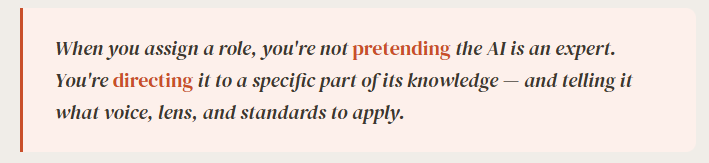
    This article explains the technique of role prompting, which involves assigning specific personas to AI models to elicit more expert and tailored results. By defining a detailed persona with a title, experience, and lens, users can guide the AI to access specific knowledge domains and thinking frameworks, moving beyond generic outputs. The piece provides examples of effective role prompts and outlines common mistakes to avoid when implementing this strategy. AI

    Role Prompting: How to Assign Personas to Get Expert Results — Prompt to Profit · Day 3 of 30

    IMPACT Enhances user control over AI outputs by enabling more specific and expert-level responses through detailed persona assignment.

  11. AIGaitor: Privacy-preserving and cloud-free motion analysis for everyone, using edge computing

    Researchers have developed AIGaitor, a novel system for motion analysis that operates entirely on a smartphone, eliminating the need for cloud processing. This approach addresses key barriers in clinical motion capture, such as cost, complexity, and privacy concerns, as identified by rehabilitation clinicians. AIGaitor utilizes on-device neural accelerators to perform markerless monocular motion capture and deep-learning analysis, achieving processing times comparable to cloud-based systems. AI

    IMPACT Enables accessible, private, and low-cost motion analysis for clinical and personal use via consumer smartphones.

  12. HiRes: Inspectable Precedent Memory for Reaction Condition Recommendation

    Researchers have developed HiRes, a new system for recommending chemical reaction conditions that integrates learned representations with a k-NN retrieval layer. This approach provides both accurate predictions and the specific chemical precedents that justify them. HiRes achieves state-of-the-art performance on the USPTO-Condition dataset for catalyst, solvent, and reagent selection, outperforming previous models and demonstrating statistically significant gains over purely parametric methods. AI

    IMPACT Enhances AI's utility in chemical synthesis planning by providing interpretable and accurate reaction condition recommendations.

  13. Teaching AI Through Benchmark Construction: QuestBench as a Course-Based Practice for Accountable Knowledge Work

    Researchers have developed QuestBench, a new benchmark designed to teach students how to evaluate AI systems by having them construct verification tasks. This approach exposes students to the complexities of AI-era knowledge work, encouraging them to define what constitutes a trustworthy AI-generated answer. Evaluations on QuestBench, which covers 14 humanities and social science domains, revealed significant failure rates for current AI systems, with even the top performer, GPT-5.5, achieving only a 57.58% pass rate on student-designed questions. AI

    IMPACT Highlights the limitations of current AI in nuanced knowledge domains, suggesting a need for improved evaluation methods beyond simple task completion.

  14. VBFDD-Agent for Electric Vehicle Battery Fault Detection and Diagnosis: Descriptive Text Modeling of Battery Digital Signals

    Researchers have developed VBFDD-Agent, a novel system designed for detecting and diagnosing faults in electric vehicle batteries. This agent utilizes a descriptive text modeling approach, transforming raw battery data into natural language descriptions to create a specialized corpus. By integrating this corpus with maintenance manuals and large language model reasoning, VBFDD-Agent provides structured diagnostic results and actionable maintenance recommendations, enhancing human-AI collaboration in battery health management. AI

    VBFDD-Agent for Electric Vehicle Battery Fault Detection and Diagnosis: Descriptive Text Modeling of Battery Digital Signals

    IMPACT Introduces a new method for AI-driven diagnostics in electric vehicles, potentially improving safety and maintenance efficiency.

  15. SpineContextResUNet: A Computationally Efficient Residual UNet for Spine CT Segmentation

    Researchers have developed SpineContextResUNet, a new 3D Residual U-Net architecture designed for efficient segmentation of spinal CT scans. This model addresses the high computational demands of existing methods by using a lightweight Context Block with parallel multi-dilated convolutions, avoiding the need for resource-intensive Transformers or RNNs. SpineContextResUNet achieves high accuracy on public benchmarks and demonstrates viable inference performance on commodity hardware, making it suitable for point-of-care diagnostics and edge devices. AI

    SpineContextResUNet: A Computationally Efficient Residual UNet for Spine CT Segmentation

    IMPACT Enables more accessible AI-driven medical diagnostics on low-resource hardware.

  16. From Compliance Burden To Competitive Advantage: Rethinking GRC In The Tokenized Economy

    Governance, Risk, and Compliance (GRC) frameworks are often seen as operational costs, but a new approach embeds governance directly into system architecture. This shift from reactive controls to proactive design is particularly relevant in payment tokenization, where downstream processes like refunds and disputes still often rely on sensitive data. By redesigning these workflows to use token-based relationships instead of sensitive identifiers, privacy exposure can be significantly reduced while improving audit accuracy. AI

    From Compliance Burden To Competitive Advantage: Rethinking GRC In The Tokenized Economy

    IMPACT Proposes a new architectural approach for GRC that could improve efficiency and security in financial systems, particularly with tokenization.

  17. Google Significantly Updates Movie Production Tool "Flow" and Music Production Tool "Flow Music", Introducing Gemini Omni, Adding AI Agents, Custom Tool Creation Features, and a New Mobile App https://fed.brid.gy/r/https://gigazine.net/news/20260520-fl

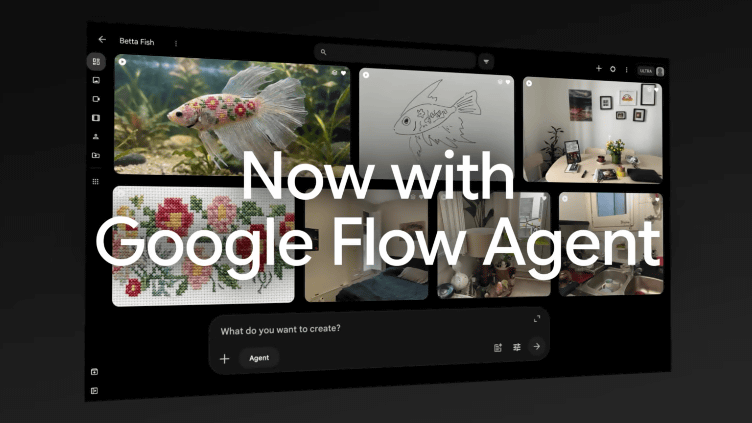
    Google DeepMind has announced Gemini Omni, a new family of multimodal generative models, integrated into its AI-powered creative tools Flow and Flow Music. The updates to Flow include AI agents for creative assistance, the ability to create custom tools using natural language, and enhanced video generation and editing capabilities with Gemini Omni. Flow Music also receives updates for finer music editing and music video generation, with both tools now available as mobile applications. AI

    Google Significantly Updates Movie Production Tool "Flow" and Music Production Tool "Flow Music", Introducing Gemini Omni, Adding AI Agents, Custom Tool Creation Features, and a New Mobile App https://fed.brid.gy/r/https://gigazine.net/news/20260520-fl

    IMPACT Enhances creative workflows by integrating advanced AI agents and models for video and music production.

  18. PACD-Net: Pseudo-Augmented Contrastive Distillation for Glycemic Control Estimation from SMBG

    Researchers have developed PACD-Net, a novel self-supervised framework designed to estimate glycemic control metrics from sparse self-monitoring of blood glucose (SMBG) data. This approach uses pseudo-SMBG samples as teacher signals and contrastive learning to ensure consistent representations across different sampling patterns. The model, which employs a hybrid Swin Transformer-CNN backbone, demonstrates superior accuracy and stability compared to existing methods for estimating Time Above Range, Time in Range, and Time Below Range from real-world SMBG data, particularly under extremely sparse conditions. AI

    PACD-Net: Pseudo-Augmented Contrastive Distillation for Glycemic Control Estimation from SMBG

    IMPACT Offers a practical tool for interpreting clinical SMBG data and a generalizable method for learning from sparse sensor data.

  19. Closed Loop Dynamic Driving Data Mixture for Real-Synthetic Co-Training

    Researchers have developed AutoScale, a novel closed-loop system designed to optimize the mixture of real and synthetic data for training autonomous driving models. This system dynamically adjusts the data mixture based on performance feedback, addressing the challenges of scene bias and inefficient data utilization in current co-training methods. AutoScale employs Graph Regularized AutoEncoder for scene representation and Cluster-aware Gradient Ascent for reweighting, demonstrating improved performance with fewer synthetic samples under budget constraints. AI

    IMPACT This approach could lead to more efficient and effective training of autonomous driving systems by optimizing data usage.

  20. Draw2Think: Harnessing Geometry Reasoning through Constraint Engine Interaction

    Researchers have developed Draw2Think, a new framework that enhances geometric reasoning in vision-language models by interacting with the GeoGebra constraint engine. This system uses a Propose-Draw-Verify loop to externalize hypotheses onto an executable canvas, ensuring geometric accuracy and allowing for auditable checks on both model construction and engine measurements. Draw2Think significantly improves the accuracy of geometric problem-solving and rendering scores on various benchmarks. AI

    Draw2Think: Harnessing Geometry Reasoning through Constraint Engine Interaction

    IMPACT Improves geometric reasoning capabilities in vision-language models, potentially leading to more accurate AI systems for tasks involving spatial understanding.

  21. The SpaceX IPO is a referendum on Elon Musk and his plan to colonize Mars

    SpaceX has filed for an Initial Public Offering (IPO) with plans to raise approximately $75 billion, which would be one of the largest stock sales in history. The company reported significant operational losses last year, with its Starlink business heavily subsidizing other ventures like its rocket launches and xAI. The prospectus details ambitious goals, including establishing a permanent human colony on Mars, with Elon Musk's compensation tied to achieving these milestones and substantial market capitalization targets. AI

    The SpaceX IPO is a referendum on Elon Musk and his plan to colonize Mars

    IMPACT SpaceX's IPO could fund ambitious AI projects like xAI, potentially accelerating AI development and space-based AI infrastructure.

  22. A Non-Reference Diffusion-Based Restoration Framework for Landsat 7 ETM+ SLC-off Imagery in Antarctica

    Researchers have developed DiffGF, a novel framework designed to restore corrupted Landsat 7 satellite imagery from Antarctica. This method utilizes a diffusion-based approach in latent and pixel spaces, eliminating the need for external reference data, which is often unavailable or unreliable for the rapidly changing Antarctic landscape. A new dataset, SLCANT, was created to train and evaluate DiffGF, demonstrating its effectiveness in high-fidelity image restoration and its utility in downstream applications like crevasse segmentation. AI

    IMPACT Enables better utilization of historical satellite data for environmental monitoring and research in challenging regions.

  23. Sketch2MinSurf: Vision-Language Guided Generation of Editable Minimal Surfaces from Hand-Drawn Sketches

    Researchers have developed Sketch2MinSurf, a novel framework for generating editable 3D minimal surfaces from hand-drawn sketches. This approach combines vision-language guidance with geometric optimization, addressing the challenges of non-Euclidean surface representation and topological consistency. The system utilizes a spatial-topological encoding and a specialized loss function to ensure both accurate reconstruction and coherent topology, producing artifact-free, editable manifolds suitable for design workflows. AI

    Sketch2MinSurf: Vision-Language Guided Generation of Editable Minimal Surfaces from Hand-Drawn Sketches

    IMPACT Enables more intuitive and direct creation of complex 3D models for design and art applications.

  24. MTR-Suite: A Framework for Evaluating and Synthesizing Conversational Retrieval Benchmarks

    Researchers have developed MTR-Suite, a new framework designed to improve the evaluation and creation of conversational retrieval benchmarks. This suite includes MTR-Eval, an LLM-based tool for identifying alignment gaps in existing benchmarks, and MTR-Pipeline, a multi-agent system that generates high-fidelity dialogues at a significantly reduced cost. The framework also introduces MTR-Bench, a comprehensive benchmark that simulates real-world conversational challenges like topic switching and verbosity, offering enhanced discriminative power for retrieval-augmented generation systems. AI

    MTR-Suite: A Framework for Evaluating and Synthesizing Conversational Retrieval Benchmarks

    IMPACT MTR-Suite aims to improve the evaluation and creation of benchmarks for retrieval-augmented generation systems, potentially leading to more accurate and robust AI assistants.

  25. OcclusionFormer: Arranging Z-Order for Layout-Grounded Image Generation

    Researchers have developed OcclusionFormer, a new framework designed to improve image generation models by explicitly handling object occlusion. This is achieved by introducing a Z-order priority system and utilizing volume rendering to composite instances. The framework is supported by a new dataset, SA-Z, which includes detailed occlusion ordering and pixel-level annotations to train and evaluate the model's ability to manage overlapping objects. AI

    IMPACT Improves image generation by enabling models to accurately represent object layering and occlusion.

  26. TASTE: A Designer-Annotated Multi-Dimensional Preference Dataset for AI-Generated Graphic Design

    Researchers have introduced TASTE, a new dataset designed to improve AI-generated graphic design by incorporating multi-dimensional preferences from professional designers. Unlike previous datasets that used single-verdict comparisons, TASTE captures evaluations across criteria like typography, color, and layout. The dataset reveals that current text-to-image models and existing evaluation metrics do not significantly outperform random chance in aligning with designer preferences, highlighting a gap in AI's understanding of design aesthetics. AI

    TASTE: A Designer-Annotated Multi-Dimensional Preference Dataset for AI-Generated Graphic Design

    IMPACT Highlights a gap in AI's ability to capture nuanced design aesthetics, potentially guiding future model development and evaluation.

  27. Text Analytics Evaluation Framework: A Case Study on LLMs and Social Media

    A new evaluation framework has been developed to assess the capabilities of large language models (LLMs) in analyzing social media data. This framework, comprising 470 curated questions, was applied to Twitter datasets for tasks like sentiment analysis and hate speech detection. The study found that LLM performance significantly degrades with increasing input scale, especially beyond 500 instances and for numerical tasks, highlighting architectural limitations for quantitative analysis of large text collections. AI

    IMPACT Highlights critical architectural bottlenecks in current LLMs for quantitative analysis over large text collections.

  28. Heartbeat-Bound Hierarchical Credentials: Cryptographic Revocation for AI Agent Swarms

    Researchers have developed a new cryptographic protocol called Heartbeat-Bound Hierarchical Credentials (HBHC) to address the safety gap in autonomous AI agent swarms. This protocol binds credential validity to periodic liveness proofs from parent agents, enabling rapid revocation without requiring network connectivity to a central authority. Experiments with GPT-4o-mini agent swarms demonstrated a significant reduction in the 'zombie agent' window, with zero post-revocation tool calls observed even under prompt injection attacks. AI

    Heartbeat-Bound Hierarchical Credentials: Cryptographic Revocation for AI Agent Swarms

    IMPACT Enhances AI agent safety by enabling rapid revocation of credentials, preventing unauthorized actions from 'zombie agents'.

  29. https:// winbuzzer.com/2026/05/21/opena i-eyes-friday-ipo-filing-september-debut-in-view-xcxwbn/ OpenAI appears to be moving toward a confidential IPO filing th

    OpenAI is reportedly preparing to file for its initial public offering, with some reports suggesting the filing could occur within days. The company is aiming for a potential public debut as early as September. This move signifies a major step for the AI research lab as it transitions towards becoming a publicly traded entity. AI

    https:// winbuzzer.com/2026/05/21/opena i-eyes-friday-ipo-filing-september-debut-in-view-xcxwbn/ OpenAI appears to be moving toward a confidential IPO filing th

    IMPACT Prepares the market for a significant influx of capital into the AI sector and potentially increases public access to AI company investments.

  30. LLM Rules and Instructions for Accurate, Relatable and Reliable Responses

    This article discusses how to improve Large Language Model (LLM) outputs by focusing on three key areas: accuracy, relatability, and reliability. It suggests customizing instructions and rules to guide the LLM, aiming to reduce user frustration and enhance the quality of generated responses. The goal is to achieve more predictable and useful interactions with AI. AI

    LLM Rules and Instructions for Accurate, Relatable and Reliable Responses

    IMPACT Provides guidance for users to better interact with and leverage AI tools for improved outcomes.

  31. Declarative Data Services: Structured Agentic Discovery for Composing Data Systems

    Researchers have developed Declarative Data Services (DDS), a new architecture designed to improve how AI agents discover and compose data systems. Traditional agentic discovery methods struggle with the complexity and heterogeneity of data backends. DDS addresses this by using a layered contract system that breaks down the search into smaller, manageable sub-searches, enabling more consistent convergence on functional data stacks. AI

    Declarative Data Services: Structured Agentic Discovery for Composing Data Systems

    IMPACT Introduces a structured approach to agentic discovery for data systems, potentially improving AI's ability to compose complex data backends.

  32. Beyond Semantic Similarity: A Two-Phase Non-Parametric Retrieval Workflow for Corporate Credit Underwriting

    Researchers have developed a novel two-phase retrieval system designed to improve corporate credit underwriting by addressing the limitations of standard RAG pipelines. This new workflow separates candidate retrieval from utility ranking, using an adaptive controller and an LLM-as-a-Judge to prioritize passages based on analytical usefulness rather than just semantic similarity. Deployed on-premise for data governance, the system has been shown to drastically reduce document review times for analysts, from hours to minutes, by preserving structural fidelity across various document types. AI

    Beyond Semantic Similarity: A Two-Phase Non-Parametric Retrieval Workflow for Corporate Credit Underwriting

    IMPACT This new retrieval workflow could significantly accelerate decision-making in document-intensive fields like corporate credit underwriting.

  33. DriveMA: Rethinking Language Interfaces in Driving VLAs with One-Step Meta-Actions

    Researchers have introduced DriveMA, a new approach for driving vision-language-action models that replaces complex natural language reasoning with simpler, one-step meta-actions. This method addresses bottlenecks in annotation, model complexity, and inference latency associated with traditional reasoning-centric interfaces. DriveMA achieves new state-of-the-art results on the Waymo End-to-End Driving Challenge, demonstrating the effectiveness of its action-centric supervised training and reinforcement learning framework. AI

    IMPACT Simplifies driving AI interfaces, potentially improving efficiency and scalability for autonomous vehicle development.

  34. MONET: A Massive, Open, Non-redundant and Enriched Text-to-image dataset

    Researchers have introduced MONET, a new open dataset designed to facilitate text-to-image model training. The dataset comprises approximately 104.9 million image-text pairs, meticulously curated through stages of filtering, deduplication, and re-captioning. MONET aims to lower the barriers for large-scale, reproducible research in text-to-image generation by providing a high-quality, enriched corpus. AI

    IMPACT Provides a large, open dataset to accelerate research and development in text-to-image generation models.

  35. IndusAgent: Reinforcing Open-Vocabulary Industrial Anomaly Detection with Agentic Tools

    Researchers have introduced IndusAgent, a novel framework designed to enhance open-vocabulary industrial anomaly detection using agentic tools. This system addresses limitations in multimodal large language models by integrating domain-specific reasoning and external tools for clearer visual interpretation. IndusAgent utilizes a structured dataset, Indus-CoT, and a reinforcement learning objective to optimize anomaly classification, localization, and efficient tool usage, achieving state-of-the-art zero-shot performance across multiple benchmarks. AI

    IndusAgent: Reinforcing Open-Vocabulary Industrial Anomaly Detection with Agentic Tools

    IMPACT Enhances zero-shot anomaly detection capabilities in industrial settings, potentially improving quality control and reducing manual inspection needs.

  36. How I Stopped Arguing with LLMs and Built a Zero-Hallucination Engineering Loop

    A software engineer has developed a novel engineering loop designed to eliminate hallucinations when using large language models (LLMs) for coding. This approach aims to prevent the common issue of LLMs generating incorrect or nonsensical code, particularly for complex projects beyond simple APIs or standard UI components. The system focuses on creating a more reliable and trustworthy interaction between developers and AI coding assistants. AI

    IMPACT Offers a method for developers to improve the reliability of AI-generated code, reducing common errors and hallucinations.

  37. OlmoEarth v1.1: A more efficient family of models

    Allen AI has released OlmoEarth v1.1, an updated family of models designed for processing satellite imagery more efficiently. These new models reduce compute costs by up to 3x for inference and require 1.7x fewer GPU hours for training, while maintaining performance on remote sensing tasks. The efficiency gains are achieved by optimizing the tokenization process for transformer-based architectures, specifically by merging resolution-based tokens without significant performance degradation. AI

    OlmoEarth v1.1: A more efficient family of models

    IMPACT Offers significant cost reductions for satellite imagery analysis, potentially enabling wider adoption of AI for environmental monitoring and mapping.

  38. PiG-Avatar: Hierarchical Neural-Field-Guided Gaussian Avatars

    Researchers have introduced PiG-Avatar, a novel method for generating realistic 3D avatars. This approach decouples avatar geometry from body template surfaces, allowing for more accurate representation of complex clothing and non-rigid movements. PiG-Avatar utilizes a neural field to guide Gaussian representations, enabling real-time rendering and achieving state-of-the-art quality on benchmarks. AI

    PiG-Avatar: Hierarchical Neural-Field-Guided Gaussian Avatars

    IMPACT Enables more realistic and dynamic 3D avatar generation, potentially impacting virtual reality, gaming, and digital content creation.

  39. Why Performance Has Become The New Currency In Advertising

    The advertising industry is shifting its focus from traditional input-based metrics to measurable outcomes, with performance now serving as the central currency. This transformation is largely driven by artificial intelligence, which is accelerating execution, enhancing precision, and raising expectations for tangible business results. As AI becomes more integrated into marketing processes, it enables continuous iteration and real-time optimization, allowing campaigns to adapt dynamically to performance data. AI

    Why Performance Has Become The New Currency In Advertising

    IMPACT AI is fundamentally reshaping advertising by enabling real-time performance measurement and continuous campaign optimization.

  40. GSA-YOLO: A High-Efficiency Framework via Structured Sparsity and Adaptive Knowledge Distillation for Real-Time X-ray Security Inspection

    Researchers have developed GSA-YOLO, a new lightweight framework designed for real-time X-ray security inspection. This model, based on YOLOv8n, incorporates structured sparsity and adaptive knowledge distillation to improve detection accuracy and inference speed. GSA-YOLO integrates Group Lasso, Sparse Structure Selection, and an Adaptive Knowledge Distillation mechanism to enhance feature representation and reduce model size. Evaluations on the HiXray and PIDray datasets show GSA-YOLO achieves a leading inference speed of 189.62 FPS with reduced computational cost, alongside improved mAP50:95 scores compared to the baseline. AI

    GSA-YOLO: A High-Efficiency Framework via Structured Sparsity and Adaptive Knowledge Distillation for Real-Time X-ray Security Inspection

    IMPACT This new framework offers improved speed and accuracy for X-ray security inspections, potentially enhancing threat detection capabilities.

  41. Why AI-Generated Code Starts Breaking Down as Products Scale

    AI-generated code, while useful for initial development, often falters when products scale due to limitations in understanding complex system architecture and long-term maintainability. Tools like Cursor AI and GitHub Copilot can produce code that is syntactically correct but may lack the robustness and foresight required for large-scale applications. Developers must carefully review and refactor AI-generated code to ensure it meets production standards and can be effectively maintained over time. AI

    Why AI-Generated Code Starts Breaking Down as Products Scale

    IMPACT AI-generated code requires careful oversight for scalability and long-term maintainability in production environments.

  42. Hot Chinese concept stocks fall in pre-market US trading, Nio rises over 7%

    Chinese electric vehicle stocks experienced a mixed performance in pre-market trading, with NIO showing a significant gain of over 7% while other major companies like Netease, Alibaba, and Bilibili saw declines. In related news, XPeng's chairman, He Xiaopeng, indicated that the large-scale deployment of Robotaxis is expected to progress faster overseas than in China. He also revealed that XPeng's GX model will be the first to feature supervised L4 autonomous driving capabilities, which will later be integrated into other models. AI

    IMPACT Provides insight into the pace of autonomous vehicle deployment and market sentiment for EV manufacturers.

  43. Garmin Cirqa Price May Be Far Higher Than Expected

    A Ukrainian retailer has listed the unannounced Garmin Cirqa wearable for approximately $450, a price significantly higher than its expected competitors like the Whoop and Fitbit Air. However, the retailer is not a major Garmin dealer, and its pricing for other Garmin models is also inflated compared to U.S. market rates. This suggests the listed price may not accurately reflect the Cirqa's final cost, especially given its screen-free design and the availability of similar devices at lower price points. AI

    Garmin Cirqa Price May Be Far Higher Than Expected

    IMPACT This is a product pricing leak for a wearable device, with minimal direct impact on AI operators.

  44. I realized I was only using half of what Claude Code has to offer

    A user has discovered lesser-known features within Claude Code, a tool for software development. The author highlights the utility of the `/rc` command, which enables smartphone control of a PC-based Claude Code session, allowing for development tasks to be managed remotely. Additionally, the article emphasizes the importance of the `/init` command for establishing project context and the CLAUDE.md file for persistent instructions, noting that these features significantly improve Claude Code's understanding and performance. AI

    IMPACT Highlights advanced usage patterns for AI coding assistants, potentially improving developer productivity.

  45. OpenAI to provide security-focused AI "GPT-5.5-Cyber" to Japanese government and some companies – ITmedia AI+ https://www.yayafa.com/2805170/ #AgenticAi #AI #ArtificialGeneralIntelligence #ArtificialIntell

    OpenAI is reportedly providing a specialized AI model, GPT-5.5-Cyber, to the Japanese government and select companies. This AI is designed for security applications. Separately, Dell is expanding its AI factory capabilities with NVIDIA, integrating desktop AI agents and strengthening its partnership with Mistral AI. AI

    OpenAI to provide security-focused AI "GPT-5.5-Cyber" to Japanese government and some companies – ITmedia AI+ https://www.yayafa.com/2805170/ #AgenticAi #AI #ArtificialGeneralIntelligence #ArtificialIntell

    IMPACT This cluster highlights specialized AI applications and infrastructure build-outs, indicating a trend towards tailored AI solutions and expanded hardware capabilities.

  46. Design for Manufacturing: A Manufacturability Knowledge-Integrated Reinforcement Learning Framework for Free-Form Pipe Routing in Aeroengines

    Researchers have developed a new reinforcement learning framework called FPRO to optimize pipe routing in aeroengines, integrating manufacturing knowledge directly into the design process. This approach represents pipe paths using curvature and torsion profiles, with manufacturing constraints applied to these parameters. The framework uses proximal policy optimization to generate paths that are then translated into fabrication instructions for a six-axis bending machine, demonstrating improved manufacturability and design accuracy compared to existing methods. AI

    Design for Manufacturing: A Manufacturability Knowledge-Integrated Reinforcement Learning Framework for Free-Form Pipe Routing in Aeroengines

    IMPACT This framework could streamline the design and manufacturing of complex aeroengine components by integrating AI-driven optimization with domain-specific knowledge.

  47. View Transitions API: 5 Patterns I Use Across RAXXO Sites in 2026

    The View Transitions API allows developers to create smooth visual transitions between different states or pages within web applications. This API enables features like animated content swaps and shared element morphing, enhancing the user experience by making interfaces feel more polished and expensive. With widespread browser support, developers can implement these transitions with minimal JavaScript, leveraging the browser's compositor for efficient animations. AI

    IMPACT Minimal direct impact on AI operators; focuses on web development tooling.

  48. Built a workflow tool for AI coders. Took 3 months. Here's what it actually does.

    A new tool called Herb has been developed to help AI coders manage their prompts and rules. It allows users to tag and search their AI coding instructions, preventing the loss of effective prompts into old chat histories. A key feature is a community library where developers can share and import working prompts, aiming to streamline the AI coding process. AI

    IMPACT Provides AI coders with a centralized system for managing and sharing effective prompts and rules, potentially improving productivity.

  49. A Case for Agentic Tuning: From Documentation to Action in PostgreSQL

    Researchers have developed a new system called PerfEvolve that aims to improve database tuning by moving beyond static documentation. This system equips AI agents with executable skills to dynamically verify versions, profile workloads, and optimize multiple parameters simultaneously. In tests on PostgreSQL using TPC-C and TPC-H benchmarks, PerfEvolve demonstrated a performance improvement of up to 35.2% compared to traditional documentation-based tuning methods. AI

    A Case for Agentic Tuning: From Documentation to Action in PostgreSQL

    IMPACT Enhances database performance and efficiency through AI-driven optimization, potentially reducing manual tuning efforts.

  50. Singapore Airlines faces narrow window to gain market share from Gulf rivals

    Singapore Airlines is strategically increasing its long-haul flights to Europe, aiming to capture market share from Gulf rivals like Emirates and Qatar Airways. This move is enabled by the airline's strong financial position, effective fuel hedging, and the current disruptions affecting other carriers due to Middle East conflict and high fuel prices. Analysts suggest this presents a limited opportunity for Singapore Airlines to solidify its presence as a premium alternative for Asia-Europe travel. AI

    Singapore Airlines faces narrow window to gain market share from Gulf rivals

    IMPACT Minimal direct impact on AI operators; this is a strategic business move within the airline industry.