PulseAugur / Brief
LIVE 20:59:35

Brief

last 24h
[50/943] 186 sources

Multi-source AI news clustered, deduplicated, and scored 0–100 across authority, cluster strength, headline signal, and time decay.

  1. Designing Conversations with the Dead: How People Engage with Generative Ghosts

    A new research paper explores user interactions with "generative ghosts," AI systems trained on data from deceased individuals. The study, involving 16 participants, compared two design choices: "representation" (AI speaking in the third person about the deceased) and "reincarnation" (AI speaking as the deceased in the first person). Participants favored the "reincarnation" mode for its immediacy but expressed concerns about over-reliance, while "representation" was preferred for memory engagement, though users often engaged in dialogue regardless of framing. The research highlights that affective resonance was prioritized over factual accuracy, and that factors like tone and language shape these collaborative interactions. AI

    IMPACT Explores user engagement with AI systems designed to mimic deceased individuals, highlighting the prioritization of emotional connection over factual accuracy in these novel human-AI interactions.

  2. The Devil is in the Condition Numbers: Why is GLU Better than non-GLU Structure?

    A new paper analyzes the effectiveness of Gated Linear Units (GLU) in large language models, finding that they improve training speed by reshaping the neural tangent kernel (NTK) spectrum. Researchers observed that GLU structures lead to a smaller condition number and faster convergence, a phenomenon sometimes resulting in loss-crossing between GLU and non-GLU models. However, the study also indicated that GLU's benefit is primarily in optimization acceleration rather than reducing the generalization gap. AI

    The Devil is in the Condition Numbers: Why is GLU Better than non-GLU Structure?

    IMPACT Explains a key architectural advantage of modern LLMs, potentially guiding future model design for faster training.

  3. Conflict-Aware Additive Guidance for Flow Models under Compositional Rewards

    Researchers have developed a new method called Conflict-Aware Additive Guidance ($g^ ext{car}$) to improve the control and fidelity of generative models, particularly when dealing with multiple, potentially conflicting, constraints. This technique addresses issues where combining constraints can lead to deviations from the natural data distribution. $g^ ext{car}$ dynamically detects and resolves these gradient conflicts, demonstrating effectiveness across various applications including image editing and decision-making for planning and control, while maintaining efficient computation. AI

    Conflict-Aware Additive Guidance for Flow Models under Compositional Rewards

    IMPACT Enhances control and fidelity in generative models for complex, multi-constraint tasks.

  4. PACD-Net: Pseudo-Augmented Contrastive Distillation for Glycemic Control Estimation from SMBG

    Researchers have developed PACD-Net, a novel self-supervised framework designed to estimate glycemic control metrics from sparse self-monitoring of blood glucose (SMBG) data. This approach uses pseudo-SMBG samples as teacher signals and contrastive learning to ensure consistent representations across different sampling patterns. The model, which employs a hybrid Swin Transformer-CNN backbone, demonstrates superior accuracy and stability compared to existing methods for estimating Time Above Range, Time in Range, and Time Below Range from real-world SMBG data, particularly under extremely sparse conditions. AI

    PACD-Net: Pseudo-Augmented Contrastive Distillation for Glycemic Control Estimation from SMBG

    IMPACT Offers a practical tool for interpreting clinical SMBG data and a generalizable method for learning from sparse sensor data.

  5. STAR-IOD: Scale-decoupled Topology Alignment with Pseudo-label Refinement for Remote Sensing Incremental Object Detection

    Researchers have developed STAR-IOD, a new framework designed to improve incremental object detection in remote sensing imagery. This method addresses challenges like intra-class scale variations and missing annotations, which hinder knowledge transfer and preservation in existing detectors. STAR-IOD utilizes a Subspace-decoupled Topology Distillation module for structural knowledge transfer and a Clustering-driven Pseudo-label Generator to accurately distinguish targets from background noise. The framework also introduces two new datasets, DIOR-IOD and DOTA-IOD, and demonstrates superior performance over state-of-the-art approaches. AI

    STAR-IOD: Scale-decoupled Topology Alignment with Pseudo-label Refinement for Remote Sensing Incremental Object Detection

    IMPACT Introduces novel techniques for incremental object detection in remote sensing, potentially improving autonomous systems and data analysis in this domain.

  6. Lowering the Barrier to IREX Participation: Open-Source Algorithms, Toolkit, and Benchmarking for Iris Recognition

    Researchers have introduced two novel open-source iris recognition algorithms, TripletIris and ArcIris, designed to lower participation barriers for the IREX X program. The paper details Python and IREX-compliant C++ implementations, enabling broader assessment of open-source solutions. Additionally, it provides open-source tools for iris segmentation and circle estimation, facilitating the development and integration of new recognition methods. AI

    Lowering the Barrier to IREX Participation: Open-Source Algorithms, Toolkit, and Benchmarking for Iris Recognition

    IMPACT Provides open-source tools and algorithms that could accelerate research and development in iris recognition systems.

  7. How to Build Marcus's Algebraic Mind: Algebro-Deterministic Substrate over Galois Fields

    Researchers have developed a new hyperdimensional computing architecture called PyVaCoAl/VaCoAl, which is built around the XOR-and-shift operation over Galois Fields. This architecture aims to fulfill Gary Marcus's three core requirements for cognitive architectures: operations over variables, recursively structured representations, and a distinction between individuals and kinds. The system demonstrates reversible variable binding, non-commutative compositional bundling for distinguishing sentence structures, and address-space separation, potentially offering a functional neural substrate that more closely aligns with Marcus's specifications than previous approaches. AI

    IMPACT Proposes a novel computational substrate that could enable more sophisticated AI architectures, potentially addressing limitations in current models.

  8. Resolving Long-Tail Ambiguity in Unsupervised 3D Point Cloud Segmentation with Language Priors

    Researchers have developed LangTail, a new framework designed to improve unsupervised 3D point cloud segmentation by addressing the issue of long-tail ambiguity. This problem occurs when minor object classes are overlooked in favor of dominant ones during the segmentation process. LangTail integrates semantic knowledge from language models to create a more balanced understanding of categories, which is then used to guide the segmentation, leading to better identification of underrepresented classes. Experiments show significant improvements in mean Intersection over Union (mIoU) scores on benchmark datasets. AI

    Resolving Long-Tail Ambiguity in Unsupervised 3D Point Cloud Segmentation with Language Priors

    IMPACT Enhances representation of minority classes in 3D data, potentially improving AI's understanding of complex environments.

  9. This Archivist Has Saved 175,000 Articles from 30 Years of Writing about Magic: The Gathering

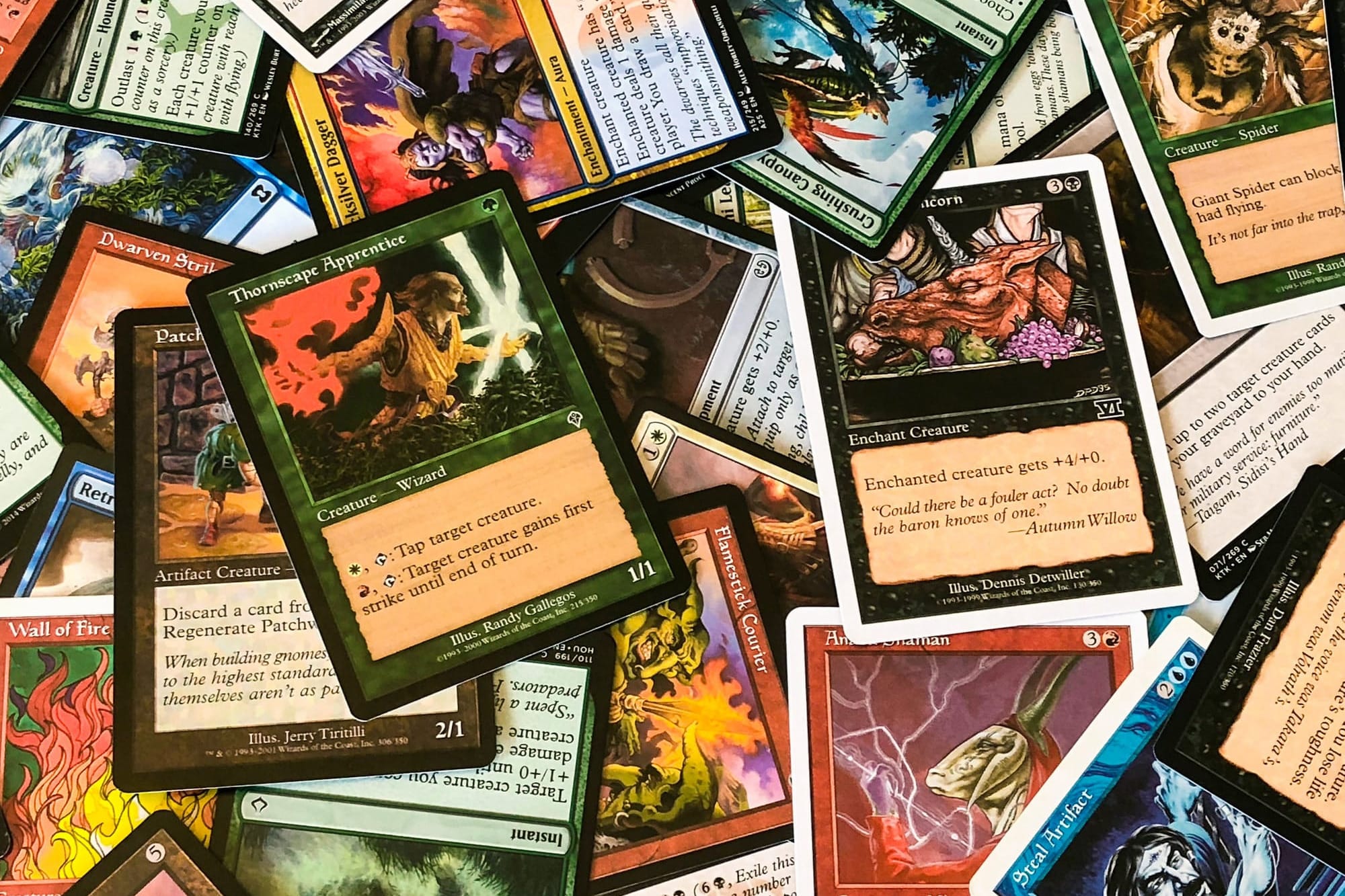
    Gregor Stocks, a software engineer, has launched the Library of Leng, a searchable database dedicated to preserving articles about the game Magic: The Gathering. The project aims to combat internet churn by archiving old usenet posts, website content, and publisher announcements that are often lost over time. Stocks developed custom tools to parse the varied and often unformatted data from the early internet, and the response from the Magic community and authors has been overwhelmingly positive. AI

    This Archivist Has Saved 175,000 Articles from 30 Years of Writing about Magic: The Gathering

    IMPACT Niche archival project with minimal direct impact on AI operations.

  10. Findings of the Fifth Shared Task on Multilingual Coreference Resolution: Expanding Datasets for Long-Range Entities

    The Fifth Shared Task on Multilingual Coreference Resolution, held at the CODI-CRAC 2026 workshop, focused on systems that can identify mentions and cluster coreferential chains, particularly those spanning long distances across text. This year's task incorporated five new datasets and two additional languages, utilizing the CorefUD v1.4 collection which spans 19 languages. While traditional systems still outperformed, the ten participating systems, including four LLM-based approaches, showed significant promise for future advancements in the field. AI

    IMPACT LLMs show promise in long-range coreference resolution, potentially improving natural language understanding in complex texts.

  11. Classification of Single and Mixed Partial Discharges under Switching Voltage Using an AWA-CNN Framework

    Researchers have developed a novel Amplitude-Width-Area (AWA) pattern representation to analyze partial discharge (PD) pulses under switching-voltage excitation. This method maps PD pulses into visual patterns using amplitude, width, and area, enabling the distinction of six different PD source conditions. Convolutional Neural Network (CNN) models, specifically InceptionV3 and ResNet-18, achieved over 96% accuracy in classifying these sources, significantly outperforming a Random Forest baseline. AI

    IMPACT Introduces a new visual representation for PD pulses, enabling higher accuracy classification of electrical faults using CNNs.

  12. Early High-Frequency Injection for Geometry-Sensitive OOD Detection

    Researchers have developed a new method called Early High-Frequency Injection (EIHF) to improve out-of-distribution (OOD) detection in computer vision models. EIHF works by injecting high-frequency information into the input data before it's processed by the first convolution layer, without altering the training objective. This approach enhances the model's ability to distinguish between in-distribution and out-of-distribution data, particularly for geometry-sensitive tasks, by reshaping feature geometry and reducing overlap in scores. Experiments on CIFAR-100 and ImageNet-100 datasets showed promising results, including improved false positive rates and area under the receiver operating characteristic curve. AI

    Early High-Frequency Injection for Geometry-Sensitive OOD Detection

    IMPACT Improves the robustness of computer vision models to unseen data, potentially enhancing reliability in real-world applications.

  13. Data-Efficient Neural Operator Training via Physics-Based Active Learning

    Researchers have developed a new active learning technique called physics-based acquisition to improve the efficiency of training neural operators. This method uses the partial differential equation residual to intelligently select the most informative data samples for training. Experiments on the 1D Burgers and 2D Navier-Stokes equations demonstrate that this approach significantly reduces data requirements compared to random sampling and matches state-of-the-art data efficiency while incorporating physics into the model's understanding. AI

    IMPACT This method could significantly reduce the computational cost and data requirements for training neural operators, accelerating their adoption in scientific simulations.

  14. Holistic Reliability Propagation: Decoupling Annotation and Prediction for Robust Noisy-Label

    Researchers have developed a new method called Holistic Reliability Propagation (HRP) to improve learning with noisy labels in multimedia classification. HRP decouples the reliability of external annotations from model predictions, estimating separate weights for each. This approach uses bilevel meta-learning to produce two scalars, alpha for given labels and beta for pseudo-labels, which are then routed to different objectives. HRP has demonstrated improved accuracy over existing methods, particularly at high noise rates. AI

    Holistic Reliability Propagation: Decoupling Annotation and Prediction for Robust Noisy-Label

    IMPACT This research offers a novel approach to enhance the robustness of AI models when trained on imperfect datasets, potentially improving performance in real-world applications with noisy data.

  15. SCRIBE: Diagnostic Evaluation and Rich Transcription Models for Indic ASR

    Researchers have introduced SCRIBE, a new diagnostic framework designed to improve automatic speech recognition (ASR) for Indic languages. Unlike traditional Word Error Rate (WER) metrics, SCRIBE categorizes errors into lexical, punctuation, numeral, and domain-entity types, offering a more nuanced evaluation. This framework, along with open-weight rich transcription models for Hindi, Malayalam, and Kannada, aims to make ASR correction more cost-effective and accurate, especially for agglutinative languages. AI

    SCRIBE: Diagnostic Evaluation and Rich Transcription Models for Indic ASR

    IMPACT Improves ASR accuracy and diagnostic capabilities for under-resourced languages, potentially accelerating their adoption in voice-enabled applications.

  16. Stimulus symmetries can confound representational similarity analyses

    A new research paper highlights how symmetries in network inputs can mislead representational similarity analyses (RSMs). These symmetries can make different network configurations appear functionally equivalent, yet produce distinct RSMs that reflect different representational geometries. The study demonstrates this issue in networks trained on image data, where latent symmetries can lead to sparse, drifting codes and consequently, drifting RSMs. The findings underscore the difficulties in comparing nonlinear neural codes when functionally equivalent representations are not simply rotational. AI

    IMPACT Highlights potential pitfalls in analyzing neural network representations, impacting research methodology.

  17. SAVER: Selective As-Needed Vision Evidence for Multimodal Information Extraction

    Researchers have developed SAVER, a novel framework designed to improve multimodal information extraction from social media posts. This system selectively uses visual evidence only when necessary, preventing computational waste and the amplification of misleading visual cues. SAVER employs a Conformal Groundability Gate to determine the relevance of images and a submodular selector to choose the most pertinent subset for analysis, ultimately enhancing accuracy while reducing processing load and latency. AI

    SAVER: Selective As-Needed Vision Evidence for Multimodal Information Extraction

    IMPACT This research introduces a more efficient approach to multimodal information extraction, potentially improving the accuracy and speed of AI systems analyzing social media content.

  18. Contradiction Graphs Determine VC Dimension

    Researchers have introduced a novel method using contradiction graphs to determine the VC dimension of binary concept classes. This approach establishes that the order-m contradiction graph, G_m(H), can ascertain if the VC dimension of H is at least m. The full sequence of these graphs, (G_m(H)) for m >= 1, precisely determines the exact VC dimension, resolving a long-standing question in the field. AI

    Contradiction Graphs Determine VC Dimension

    IMPACT Introduces a theoretical framework for understanding concept classes, potentially impacting machine learning theory and algorithm design.

  19. US jobless claims fall as lay-offs remain low despite economic uncertainty

    New jobless claims in the US decreased to 209,000 for the week ending May 16, falling below analyst expectations. This decline indicates a continued trend of low lay-offs, contributing to a stable but somewhat stagnant labor market. Despite a low unemployment rate of 4.3%, the market is characterized by a 'low-hire, low-fire' dynamic, making it challenging for those out of work to find new positions. AI

    US jobless claims fall as lay-offs remain low despite economic uncertainty
  20. The Plan For FEMA Reform, Less People In D.C.,More Responsibility For States

    A FEMA reform plan proposes a significant shift towards a more state-centered disaster response system. The plan, developed by the FEMA Review Council appointed by President Trump, aims to make FEMA less of an operator and more of a funder and coordinator. This would involve raising the threshold for federal disaster declarations, potentially leading to fewer federal involvements in moderate disasters and placing more responsibility on states and local governments for recovery efforts. AI

    The Plan For FEMA Reform, Less People In D.C.,More Responsibility For States
  21. LLM Rules and Instructions for Accurate, Relatable and Reliable Responses

    This article discusses how to improve Large Language Model (LLM) outputs by focusing on three key areas: accuracy, relatability, and reliability. It suggests customizing instructions and rules to guide the LLM, aiming to reduce user frustration and enhance the quality of generated responses. The goal is to achieve more predictable and useful interactions with AI. AI

    LLM Rules and Instructions for Accurate, Relatable and Reliable Responses

    IMPACT Provides guidance for users to better interact with and leverage AI tools for improved outcomes.

  22. DIVE: Embedding Compression via Self-Limiting Gradient Updates

    Researchers have developed DIVE, a new method for compressing high-dimensional embeddings from large language models to reduce storage and computational costs in vector search systems. Unlike previous methods that overfit with scarce labeled data, DIVE uses a self-limiting triplet loss to bound perturbations and a contrastive loss to provide dense self-supervised gradients. This approach reportedly outperforms existing compression adapters across multiple datasets and compression ratios, with an open-source implementation available. AI

    DIVE: Embedding Compression via Self-Limiting Gradient Updates

    IMPACT This new embedding compression technique could significantly reduce the resource requirements for deploying and scaling vector search systems, making LLM-powered applications more efficient.

  23. Automatic Discovery of Disease Subgroups by Contrasting with Healthy Controls

    Researchers have developed a new method called Deep UCSL for identifying distinct subgroups within patient populations by contrasting them with healthy controls. This approach uses a deep feature extractor to learn a representation space that isolates disease-specific factors, ignoring common variations shared with healthy individuals. The method optimizes a novel loss function through an Expectation-Maximization strategy and has shown quantitative improvements in subgroup quality on both synthetic and real medical imaging datasets. AI

    IMPACT Introduces a novel contrastive learning approach for more precise disease subgroup identification in medical imaging.

  24. Let EEG Models Learn EEG

    Researchers have developed a new framework called Just EEG Transformer (JET) for generating high-fidelity electroencephalogram (EEG) data. Unlike previous methods that use discrete denoising objectives, JET models EEG as continuous temporal sequences, better capturing the inherent dynamics and spectral structure of neural activity. This approach allows JET to preserve long-range temporal dependencies and generate more realistic signals, achieving over 40% reduction in TS-FID compared to existing baselines across multiple benchmarks. AI

    IMPACT Enables more realistic EEG data generation, potentially accelerating research in neural modeling and brain-computer interfaces.

  25. Vision Transformers and Convolutional Neural Networks for Land Use Scene Classification

    A new research paper compares the effectiveness of Vision Transformers (ViTs) and Convolutional Neural Networks (CNNs) for land use scene classification using remote sensing imagery. The study evaluated AlexNet and ViT on the UC Merced Land Use and EuroSAT datasets, analyzing metrics like accuracy, precision, recall, and F1-score. Results indicate that CNNs are more robust with limited data and strong local textures, while ViTs excel at capturing global spatial relationships with sufficient training data, though they require more computational resources. AI

    IMPACT Provides insights for selecting appropriate deep learning models for remote sensing land use classification tasks.

  26. Score-Based Causal Discovery of Latent Variable Causal Models

    Researchers have developed novel score-based methods for discovering causal structures that include latent variables. These methods aim to overcome limitations of existing constraint-based approaches, such as order dependency and error propagation. The new techniques offer identifiability guarantees and provide a unified view of various constraint-based methods by characterizing degrees of freedom for observed variables. AI

    Score-Based Causal Discovery of Latent Variable Causal Models

    IMPACT Introduces new methods for causal discovery, potentially improving AI's ability to understand complex systems with unobserved factors.

  27. FedCoE: Bridging Generalization and Personalization via Federated Coordinated Dual-level MoEs

    Researchers have introduced FedCoE, a novel framework for Federated Learning that aims to balance global generalization with local personalization. Unlike traditional methods that struggle with non-IID data or overfit to local information, FedCoE utilizes a dual-level Mixture-of-Experts approach. This system maintains independent global expert models and uses a shared gating network to manage client-expert correlations, preventing expert drift. FedCoE also includes an adaptive mechanism to help new clients quickly utilize global experts without extensive local training, showing significant accuracy improvements in both general and cold-start scenarios. AI

    IMPACT Introduces a new method to improve federated learning performance, potentially enabling more robust and personalized AI models in distributed environments.

  28. IndusAgent: Reinforcing Open-Vocabulary Industrial Anomaly Detection with Agentic Tools

    Researchers have introduced IndusAgent, a novel framework designed to enhance open-vocabulary industrial anomaly detection using agentic tools. This system addresses limitations in multimodal large language models by integrating domain-specific reasoning and external tools for clearer visual interpretation. IndusAgent utilizes a structured dataset, Indus-CoT, and a reinforcement learning objective to optimize anomaly classification, localization, and efficient tool usage, achieving state-of-the-art zero-shot performance across multiple benchmarks. AI

    IndusAgent: Reinforcing Open-Vocabulary Industrial Anomaly Detection with Agentic Tools

    IMPACT Enhances zero-shot anomaly detection capabilities in industrial settings, potentially improving quality control and reducing manual inspection needs.

  29. DarkShake-DVS: Event-based Human Action Recognition under Low-light andShaking Camera Conditions

    Researchers have introduced DarkShake-DVS, a new benchmark dataset designed for human action recognition in challenging low-light and high-motion scenarios. The dataset includes over 18,000 real-world clips captured with synchronized IMU data to address limitations in existing event-based vision research. They also propose EIS-HAR, a novel method that combines motion compensation with a hybrid architecture for improved spatiotemporal feature extraction and action recognition. AI

    DarkShake-DVS: Event-based Human Action Recognition under Low-light andShaking Camera Conditions

    IMPACT Introduces a new benchmark and method to improve AI's ability to recognize actions in challenging real-world conditions.

  30. Symmetrization of Loss Functions for Robust Training of Neural Networks in the Presence of Noisy Labels

    Researchers have developed a new method for training neural networks that is more robust to errors in labeled data. This approach, called symmetrization of loss functions, theoretically guarantees better performance when dealing with noisy labels. The study introduces specific multi-class loss functions, including SGCE and alpha-MAE, which interpolate between existing methods and offer control over smoothness, showing competitive results on benchmarks. AI

    Symmetrization of Loss Functions for Robust Training of Neural Networks in the Presence of Noisy Labels

    IMPACT Introduces a novel technique to improve the reliability of machine learning models trained on imperfect datasets.

  31. How I Stopped Arguing with LLMs and Built a Zero-Hallucination Engineering Loop

    A software engineer has developed a novel engineering loop designed to eliminate hallucinations when using large language models (LLMs) for coding. This approach aims to prevent the common issue of LLMs generating incorrect or nonsensical code, particularly for complex projects beyond simple APIs or standard UI components. The system focuses on creating a more reliable and trustworthy interaction between developers and AI coding assistants. AI

    IMPACT Offers a method for developers to improve the reliability of AI-generated code, reducing common errors and hallucinations.

  32. Local-sensitive connectivity filter (ls-cf): A post-processing unsupervised improvement of the frangi, hessian and vesselness filters for multimodal vessel segmentation

    Researchers have developed a new unsupervised method called the local-sensitive connectivity filter (LS-CF) to improve the segmentation of retinal blood vessels. This technique enhances existing filters like the Frangi filter by addressing discontinuities and ensuring pixel-level continuity. The LS-CF demonstrated superior performance on several multimodal datasets, outperforming state-of-the-art approaches in accuracy on the OSIRIX and IOSTAR datasets, and showing competitive results on DRIVE, STARE, and CHASE-DB. AI

    IMPACT Introduces a novel unsupervised method for medical image analysis, potentially improving diagnostic accuracy in ophthalmology.

  33. RePCM: Region-Specific and Phenotype-Adaptive Bi-Ventricular Cardiac Motion Synthesis

    Researchers have developed a novel method called RePCM for synthesizing cardiac motion from a single end-diastolic frame. This approach addresses limitations in traditional methods that often oversmooth data by creating models optimized for global patterns. RePCM utilizes a two-stage process: first, a reconstruction network and clustering identify region-specific motion descriptors, and second, a specialized module enforces synchronized region exchange within a conditional VAE to preserve localized dynamics. The system also incorporates a phenotype-adaptive prior to model inter-disease variability, showing improved geometric and functional metrics across multiple datasets. AI

    IMPACT This new method could improve the analysis of regional cardiac function and disease-specific dynamics by enabling more accurate motion synthesis from limited data.

  34. LER-YOLO: Reliability-Aware Expert Routing for Misaligned RGB-Infrared UAV Detection

    Researchers have developed LER-YOLO, a novel framework designed to improve the detection of small unmanned aerial vehicles using misaligned RGB and infrared imagery. The system incorporates an Uncertainty-Aware Target Alignment module to estimate spatial reliability and guide expert selection. This reliability-guided approach adaptively chooses experts for cross-modal fusion, effectively suppressing unreliable data and enhancing detection accuracy. AI

    LER-YOLO: Reliability-Aware Expert Routing for Misaligned RGB-Infrared UAV Detection

    IMPACT Enhances drone detection capabilities by improving the fusion of multi-modal sensor data.

  35. Corrected Integrated Laplace Approximation for Bayesian Inference in Latent Gaussian Models

    Researchers have developed a new method to correct errors in Bayesian inference for latent Gaussian models. The proposed importance sampling scheme improves the accuracy of approximate posteriors derived from integrated Laplace approximation (ILA). This correction is crucial as ILA can sometimes produce significantly different results from the true posterior, impacting subsequent analyses. AI

    Corrected Integrated Laplace Approximation for Bayesian Inference in Latent Gaussian Models

    IMPACT Improves accuracy of statistical models used in machine learning, potentially leading to more reliable downstream AI applications.

  36. Why Performance Has Become The New Currency In Advertising

    The advertising industry is shifting its focus from traditional input-based metrics to measurable outcomes, with performance now serving as the central currency. This transformation is largely driven by artificial intelligence, which is accelerating execution, enhancing precision, and raising expectations for tangible business results. As AI becomes more integrated into marketing processes, it enables continuous iteration and real-time optimization, allowing campaigns to adapt dynamically to performance data. AI

    Why Performance Has Become The New Currency In Advertising

    IMPACT AI is fundamentally reshaping advertising by enabling real-time performance measurement and continuous campaign optimization.

  37. SR-Ground: Image Quality Grounding for Super-Resolved Content

    Researchers have introduced SR-Ground, a new dataset designed to improve image quality assessment for super-resolved images. This dataset features pixel-level annotations for various artifact types introduced by modern super-resolution models. By training models on SR-Ground, researchers have shown improved performance in identifying and even reducing these artifacts, demonstrating practical applications for the dataset. AI

    IMPACT This dataset could lead to more reliable and interpretable image quality assessment for AI-generated images, improving user trust and downstream applications.

  38. Divide and Contrast: Learning Robust Temporal Features without Augmentation

    Researchers have developed a new unsupervised framework called Divide and Contrast (Di-COT) for learning robust temporal features from time-series data without relying on data augmentation. Di-COT works by contrasting informative substructures within data windows, rather than individual timesteps, which allows for efficient and meaningful contrast while avoiding false positives. This method has demonstrated state-of-the-art performance across various tasks including classification and clustering on multiple large-scale datasets and benchmarks, while also significantly reducing training time. AI

    IMPACT Introduces a novel unsupervised learning method for time-series data that improves efficiency and performance on downstream tasks.

  39. On the limits and opportunities of AI reviewers: Reviewing the reviews of Nature-family papers with 45 expert scientists

    A new study evaluated AI reviewers on Nature-family papers, finding that while they can outperform top human reviewers in identifying correct, significant, and well-evidenced criticisms, they also exhibit distinct weaknesses. The research involved 45 scientists annotating over 2,900 criticisms from human and AI reviews. While AI reviewers like GPT-5.2, Gemini 3.0 Pro, and Claude Opus 4.5 showed strengths in accuracy and identifying unique issues, they also demonstrated limitations in specialized knowledge, handling multiple files, and an overly critical stance on minor points, suggesting they are best used as complements to human reviewers. AI

    On the limits and opportunities of AI reviewers: Reviewing the reviews of Nature-family papers with 45 expert scientists

    IMPACT AI reviewers show promise in scientific critique but require human oversight, potentially speeding up peer review.

  40. Hot Chinese concept stocks fall in pre-market US trading, Nio rises over 7%

    Chinese electric vehicle stocks experienced a mixed performance in pre-market trading, with NIO showing a significant gain of over 7% while other major companies like Netease, Alibaba, and Bilibili saw declines. In related news, XPeng's chairman, He Xiaopeng, indicated that the large-scale deployment of Robotaxis is expected to progress faster overseas than in China. He also revealed that XPeng's GX model will be the first to feature supervised L4 autonomous driving capabilities, which will later be integrated into other models. AI

    IMPACT Provides insight into the pace of autonomous vehicle deployment and market sentiment for EV manufacturers.

  41. AMAR: Lightweight Attention-Based Multi-User Activity Recognition from Wi-Fi CSI

    Researchers have developed AMAR, a novel framework for recognizing multiple simultaneous human activities using Wi-Fi channel state information (CSI). This attention-based system treats activity recognition as a set prediction problem, employing learnable query embeddings to detect concurrent actions from complex CSI data. AMAR utilizes an edge-cloud split architecture, with edge devices performing initial feature extraction and the cloud component handling final prediction, significantly outperforming existing methods in multi-user environments. AI

    AMAR: Lightweight Attention-Based Multi-User Activity Recognition from Wi-Fi CSI

    IMPACT This research could enable more sophisticated contactless sensing applications by improving the ability to track multiple individuals simultaneously using existing Wi-Fi infrastructure.

  42. Vibe Coders are Doing You a Favor

    The article discusses the phenomenon of "vibe coders," individuals who prioritize aesthetics and perceived trends over rigorous technical execution in software development. It suggests that while often criticized, these coders can inadvertently highlight areas where traditional development practices might be lacking or overly complex. The author encourages readers to pay attention to the underlying reasons for this approach, implying there might be valuable lessons to learn about user experience and efficient development. AI

    Vibe Coders are Doing You a Favor

    IMPACT This commentary on software development practices may offer insights into team dynamics and project management within AI development teams.

  43. Garmin Cirqa Price May Be Far Higher Than Expected

    A Ukrainian retailer has listed the unannounced Garmin Cirqa wearable for approximately $450, a price significantly higher than its expected competitors like the Whoop and Fitbit Air. However, the retailer is not a major Garmin dealer, and its pricing for other Garmin models is also inflated compared to U.S. market rates. This suggests the listed price may not accurately reflect the Cirqa's final cost, especially given its screen-free design and the availability of similar devices at lower price points. AI

    Garmin Cirqa Price May Be Far Higher Than Expected

    IMPACT This is a product pricing leak for a wearable device, with minimal direct impact on AI operators.

  44. I realized I was only using half of what Claude Code has to offer

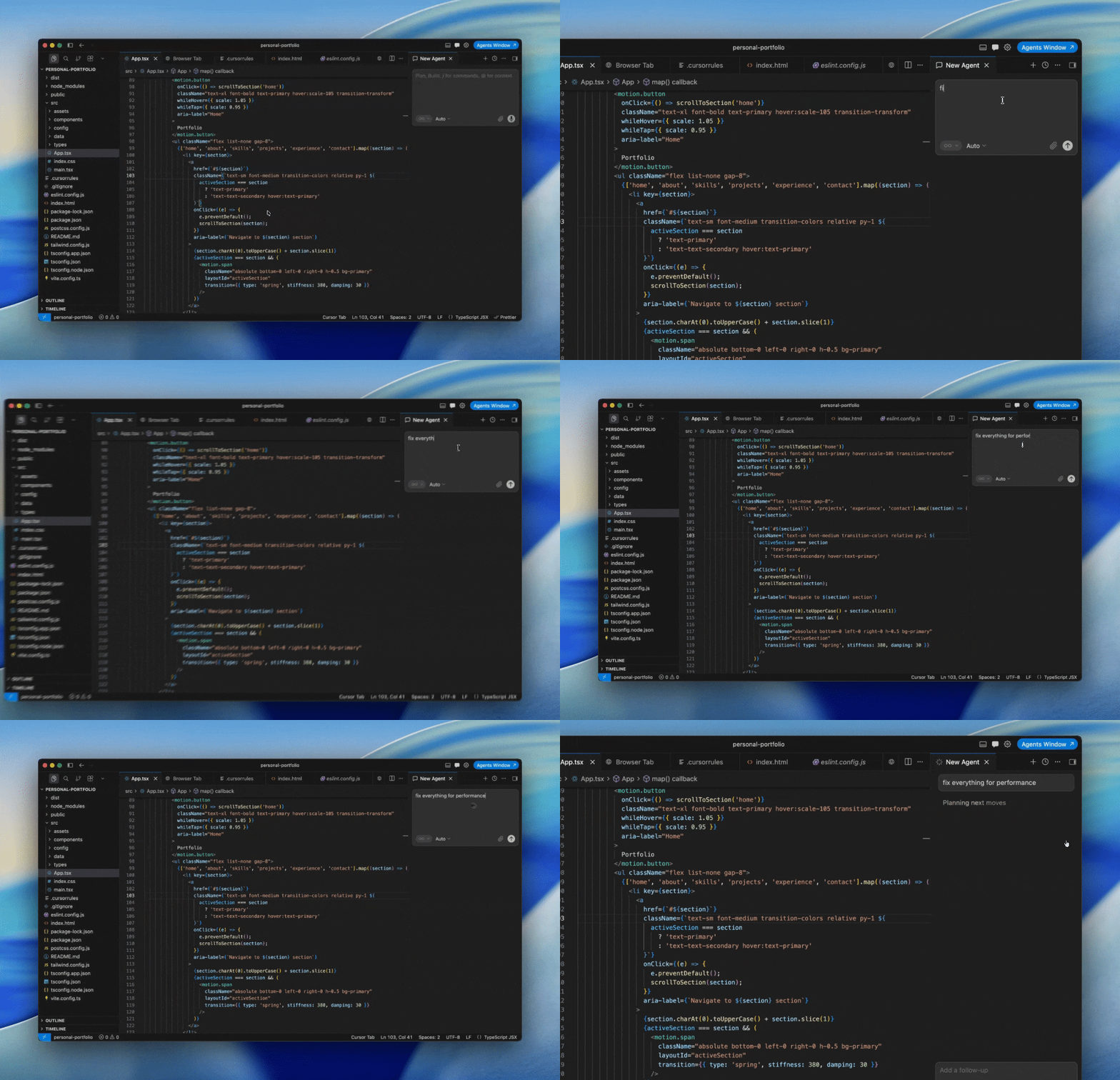
    A user has discovered lesser-known features within Claude Code, a tool for software development. The author highlights the utility of the `/rc` command, which enables smartphone control of a PC-based Claude Code session, allowing for development tasks to be managed remotely. Additionally, the article emphasizes the importance of the `/init` command for establishing project context and the CLAUDE.md file for persistent instructions, noting that these features significantly improve Claude Code's understanding and performance. AI

    IMPACT Highlights advanced usage patterns for AI coding assistants, potentially improving developer productivity.

  45. SURGE: An Event-Centric Social Media Sentiment Time Series Benchmark with Interaction Structure

    Researchers have introduced SURGE, a new benchmark dataset designed to analyze social media sentiment dynamics around public events. SURGE organizes over 800,000 posts from 67 events across five categories into time-series data, preserving the interaction structure between posts. This benchmark aims to improve opinion forecasting and crisis response by enabling the study of how post interactions influence collective dynamics and event evolution. AI

    IMPACT Provides a new dataset for training and evaluating models in social media sentiment analysis and event forecasting.

  46. Reinforcement Learning-based Control via Y-wise Affine Neural Networks: Comparative Case Studies for Chemical Processes

    Researchers have developed a new reinforcement learning (RL) approach called Y-wise Affine Neural Network (YANN-RL) for controlling chemical processes. This method aims to overcome the typical challenges of trust and lengthy training times associated with RL in this domain. By providing interpretable starting points, YANN-RL significantly reduces training time and data requirements compared to other RL algorithms and approaches the performance of nonlinear model predictive control without needing a full nonlinear model. AI

    IMPACT This new RL method could significantly reduce training time and data needs for controlling complex chemical processes.

  47. Jointly Learning Predicates and Actions Enables Zero-Shot Skill Composition

    Researchers have developed a new method called Predicate Action Skills (PACTS) that allows robots to learn and compose skills without retraining. PACTS models both the physical actions and the symbolic outcomes of these actions, enabling better generalization. This approach facilitates zero-shot skill composition through planning by using predicted outcomes to sequence and monitor task execution. AI

    Jointly Learning Predicates and Actions Enables Zero-Shot Skill Composition

    IMPACT Enables robots to learn and combine skills more flexibly, potentially accelerating the development of more adaptable robotic systems.

  48. How I Started Learning MCP with Figma and Claude as a UI/UX Designer

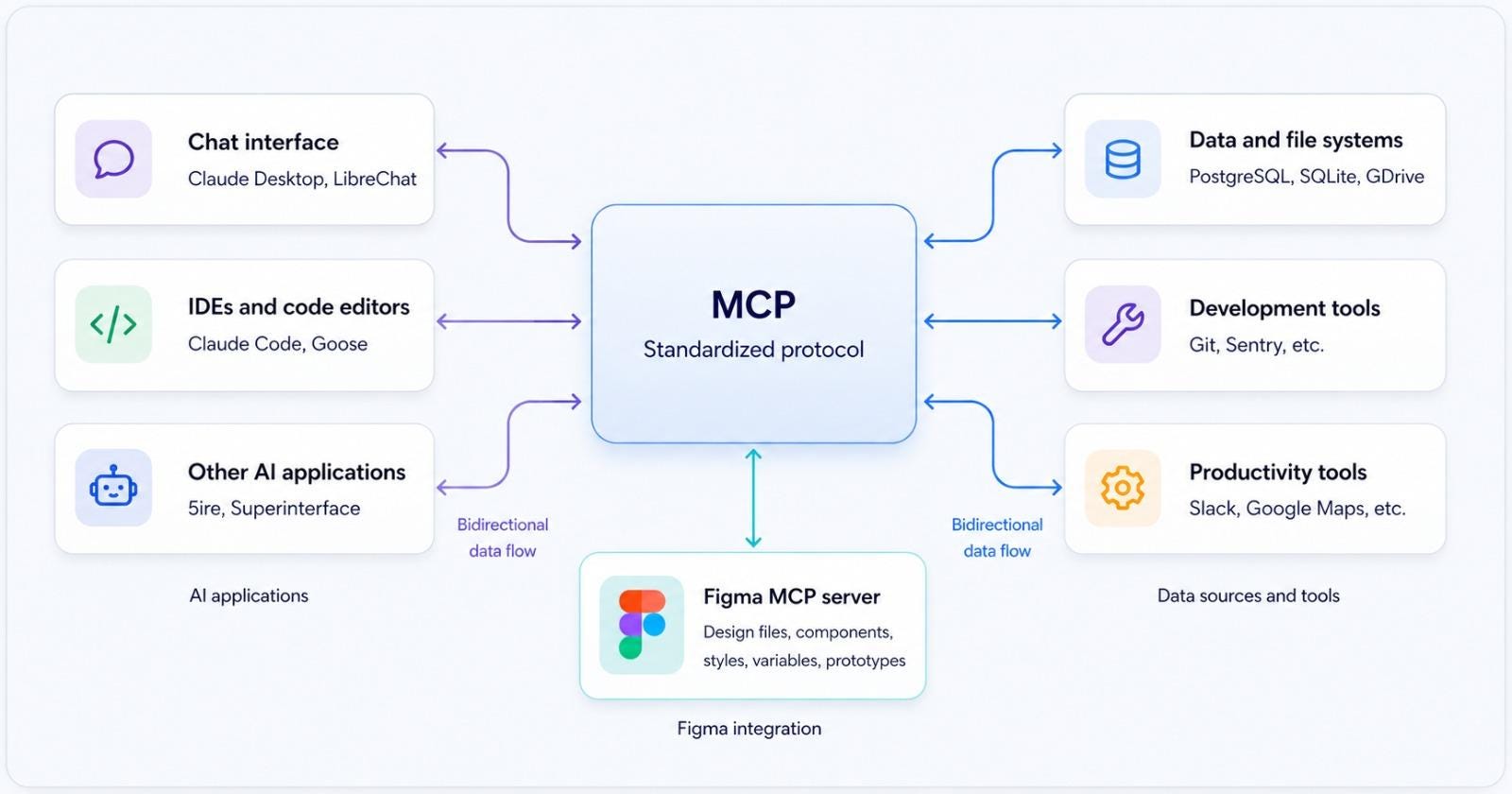
    A UI/UX designer shares their experience learning about "MCP" (Multi-modal Conversational Processing) using tools like Figma and Anthropic's Claude. The designer found Claude to be a valuable assistant in understanding and applying MCP concepts to their work. AI

    How I Started Learning MCP with Figma and Claude as a UI/UX Designer

    IMPACT Offers a user perspective on how AI assistants can aid in learning complex technical concepts.

  49. PGC: Peak-Guided Calibration for Generalizable AI-Generated Image Detection

    Researchers have developed a new framework called Peak-Guided Calibration (PGC) to improve the detection of AI-generated images. This method focuses on aggregating salient, local features using a peak-sensitive mechanism to overcome the limitations of detectors that rely solely on global image representations. PGC effectively calibrates global decisions by accentuating subtle, discriminative clues that might otherwise be lost. The framework demonstrates state-of-the-art performance, significantly improving accuracy on a new benchmark dataset, CommGen15, and setting new records on existing benchmarks. AI

    IMPACT Improves the ability to distinguish real images from AI-generated ones, crucial for combating misinformation.

  50. View Transitions API: 5 Patterns I Use Across RAXXO Sites in 2026

    The View Transitions API allows developers to create smooth visual transitions between different states or pages within web applications. This API enables features like animated content swaps and shared element morphing, enhancing the user experience by making interfaces feel more polished and expensive. With widespread browser support, developers can implement these transitions with minimal JavaScript, leveraging the browser's compositor for efficient animations. AI

    IMPACT Minimal direct impact on AI operators; focuses on web development tooling.