PulseAugur / Brief
LIVE 19:31:56

Brief

last 24h
[50/1688] 186 sources

Multi-source AI news clustered, deduplicated, and scored 0–100 across authority, cluster strength, headline signal, and time decay.

  1. US media reveals White House to strengthen review of cutting-edge AI models

    The White House is reportedly planning to issue an executive order that will strengthen the review process for advanced AI models. This directive will task multiple federal agencies with enhancing oversight of cutting-edge AI technologies. The move signals a growing governmental focus on regulating the rapid development of artificial intelligence. AI

    IMPACT This executive order could shape the development and deployment of future AI technologies by increasing governmental oversight.


  2. Tech researchers are suing the Trump administration over the future of online safety

    A coalition of technology researchers is suing the Trump administration, challenging a policy that restricts visas for individuals involved in censoring online content. The Coalition for Independent Technology Research (CITR) argues this policy, initiated by Secretary of State Marco Rubio, infringes upon free speech and due process rights of foreign-born researchers working on content moderation and online safety. The lawsuit seeks to strike down the policy, which the researchers' legal team contends uses immigration law to punish dissenting views and has a chilling effect on vital research into technology's societal impact. AI

    IMPACT This lawsuit could impact the ability of researchers to study and report on AI's societal risks and online harms.

  3. Malaysia demands TikTok explain failure to block fake account using AI to insult king

    Malaysia's communications regulator has issued a formal demand to TikTok, seeking an explanation for the platform's failure to remove a fake account that allegedly used AI to create offensive content targeting the country's king. The account posted false claims and manipulated images, including AI-generated videos, which the Malaysian Communications and Multimedia Commission (MCMC) deemed "grossly offensive, false, menacing and insulting." The MCMC is demanding immediate remedial actions and improved content moderation from TikTok, citing potential breaches of Malaysian law. AI

    Malaysia demands TikTok explain failure to block fake account using AI to insult king

    IMPACT Highlights the challenges platforms face in moderating AI-generated harmful content and the regulatory scrutiny that follows.

  4. Scoop: Palantir fights Pentagon over key intelligence contract

    Palantir is in a dispute with the Pentagon's Defense Intelligence Agency (DIA) over its ability to bid on a contract to update the agency's data analytics system. The company argues that the DIA is wasting taxpayer funds by attempting to build a system from scratch, rather than considering commercial solutions like Palantir's. A White House official indicated support for fair competition among private sector technology providers, suggesting potential intervention to ensure Palantir and others can compete. AI

    Scoop: Palantir fights Pentagon over key intelligence contract

    IMPACT This contract dispute highlights potential barriers for AI companies seeking to provide solutions to government agencies, impacting future enterprise adoption.

  5. Nvidia’s H200 sales prospects in China remain uncertain despite Huang visit

    Nvidia reported strong quarterly revenue growth driven by AI demand, exceeding expectations with $81.6 billion in earnings. However, the company faces uncertainty regarding sales of its H200 chips in China, despite having received licenses for shipment. Nvidia has not yet generated revenue from H200 sales in China and is unsure if imports will be permitted, highlighting the challenges posed by US export controls and China's domestic semiconductor development. AI

    Nvidia’s H200 sales prospects in China remain uncertain despite Huang visit

    IMPACT Nvidia's strong revenue highlights continued AI hardware demand, but geopolitical tensions may impact future supply chains and market access.

  6. Forland: Plans to purchase IT equipment and servers not exceeding 850 million yuan

    36Kr reported that Fuyuan Technology plans to purchase IT equipment and servers for no more than 850 million yuan to support its development. Separately, NetEase announced its Q1 2026 financial results, showing a 6.1% revenue increase to 30.6 billion yuan, with net profit at 11.3 billion yuan. The report also highlighted growth in gaming, Youdao, and Cloud Music revenues. AI

    IMPACT Companies are investing in IT infrastructure to support growth and reporting on financial performance, indicating continued business activity in the tech sector.

  7. UK’s Education Committee: Social media ban a must to save children’s mental health

    The UK's Education Committee has called for a ban on social media for children, citing concerns over their mental health and the failure of tech companies to self-regulate. The committee believes that technology firms cannot be trusted to protect young users. This recommendation comes amidst broader discussions about AI adoption and its associated security challenges. AI

    UK’s Education Committee: Social media ban a must to save children’s mental health

    IMPACT Policy recommendations regarding social media use by children may indirectly influence the development and deployment of AI-powered content moderation and user safety features.

  8. From emissions reporting to decarbonization decisions

    Databricks has launched Genie for Decarbonization Intelligence, a new tool designed to help energy sector companies bridge the gap between ESG reporting and actual decarbonization decisions. The platform allows sustainability leaders to query complex emissions and operational data using natural language, providing instant answers to inform forward-looking strategies. This aims to transform sustainability from a compliance burden into a competitive advantage by enabling data-driven decision-making. AI

    IMPACT Enables faster, data-driven sustainability decisions in the energy sector by leveraging natural language querying of complex emissions data.

  9. Climate tech companies are pivoting to critical minerals

    Climate tech companies are shifting their focus from decarbonization to critical minerals and data centers to navigate a challenging political and funding environment. Boston Metal, known for its low-emission steel production, raised $75 million to bolster its critical metals business, aiming to generate cash flow for its climate goals. Similarly, Brimstone, a cement startup, now highlights its critical mineral production alongside its efforts to reduce emissions in the cement industry. This pivot reflects a broader trend of companies emphasizing politically favorable areas to ensure their survival and continued impact. AI

    IMPACT Climate tech companies are adapting business models to critical minerals and data centers, potentially impacting future resource allocation and technological development.

  10. Wayve's self-driving tech is headed to US cars made by Stellantis https://techcrunch.com/2026/05/21/wayves-self-driving-tech-is-headed-to-us-cars-made-by-stella

    Wayve, an AI company specializing in self-driving technology, has announced a partnership with Stellantis, a major automotive manufacturer. This collaboration will integrate Wayve's AI-powered driving systems into Stellantis vehicles intended for the US market. The deal signifies a significant step for Wayve in bringing its advanced autonomous driving solutions to a broader consumer base. AI

    IMPACT Accelerates the integration of advanced AI driving systems into mainstream consumer vehicles.

  11. Ad Infinitum Google completely changes its search method after 25 years, eliminating the existing link-based search and ad slots, and introducing an AI-generated interface and a personalized AI agent 'Gemini Spark'. Ads will be auctioned per word within the LLM output text, not in separate slots on the page, with exposure based on...

    Google is fundamentally altering its search engine after 25 years, moving away from traditional link-based results and dedicated ad slots. The new interface will feature AI-generated content and a personalized AI agent named 'Gemini Spark.' Advertising will be integrated directly into LLM outputs through a word-by-word auction system, a significant shift from current models. AI

    IMPACT This fundamental shift in Google Search could redefine web navigation and advertising, impacting how users interact with information and how businesses reach consumers.

  12. Divide and Calibrate: Multiclass Local Calibration via Vector Quantization

    Researchers have introduced "Divide et Calibra," a novel method for multiclass calibration in machine learning models. This approach addresses limitations of existing techniques by constructing region-specific calibration maps using vector quantization. The method aims to improve calibration accuracy in high-stakes applications by learning heterogeneous maps that generalize well, even in sparse data regions. AI

    Divide and Calibrate: Multiclass Local Calibration via Vector Quantization

    IMPACT Introduces a new technique to improve the reliability of machine learning models in critical applications.

  13. Conditioning Gaussian Processes on Almost Anything

    Researchers have developed a novel method to condition Gaussian Processes (GPs) on a wide range of information, including natural language. This approach establishes an equivalence between GPs and linear diffusion models, allowing predictive sampling to be treated as an ODE. The new technique enables GPs to incorporate diverse real-world knowledge, such as non-linear physics and text from large language models, for more robust probabilistic modeling. AI

    Conditioning Gaussian Processes on Almost Anything

    IMPACT Enables more flexible and powerful probabilistic modeling by integrating diverse real-world data, including natural language, into Gaussian Processes.

  14. COROS thinks ChatGPT should analyze your training data COROS is opening athlete training data to LLMs through a new MCP integration. https://www. androidauthori

    COROS, a wearable technology company, is integrating its platform with large language models (LLMs) to analyze athlete training data. This new integration, called the COROS Training Hub (CTH), aims to provide deeper insights into performance and recovery by leveraging AI. The company is making this data available to LLMs like ChatGPT, allowing for more sophisticated analysis than previously possible. AI

    IMPACT Enables more sophisticated analysis of athlete performance data through AI integration.

  15. 0xMarioNawfal (@RoundtableSpace) Nvidia recorded its highest-ever quarterly revenue of $81.6 billion, exceeding market expectations, but its stock price fell more than 3%. The discrepancy between Nvidia's performance and stock price, a key supplier of AI infrastructure, is drawing attention again. https:// x.com/R

    Nvidia announced record-breaking first-quarter revenue, driven by a massive surge in AI demand. The company reported revenues of $81.6 billion, with a significant portion coming from its data center segment. Despite exceeding market expectations and forecasting strong second-quarter guidance, Nvidia's stock experienced a notable decline, puzzling investors. AI

    0xMarioNawfal (@RoundtableSpace) Nvidia recorded its highest-ever quarterly revenue of $81.6 billion, exceeding market expectations, but its stock price fell more than 3%. The discrepancy between Nvidia's performance and stock price, a key supplier of AI infrastructure, is drawing attention again. https:// x.com/R

    IMPACT Confirms AI's central role in driving hardware demand and highlights potential investor sentiment shifts regarding growth expectations.

  16. ACL-Verbatim: hallucination-free question answering for research

    Two new research papers address the critical issue of AI hallucinations in different domains. One paper introduces ACL-Verbatim, an extractive question-answering system designed to provide hallucination-free answers from research papers by mapping queries to verbatim text spans. The other paper, VIHD, proposes a visual intervention-based method for detecting hallucinations in medical visual question-answering models by analyzing cross-modal dependencies between text and visual tokens. AI

    ACL-Verbatim: hallucination-free question answering for research

    IMPACT These papers offer new techniques to improve the reliability of AI systems in research and medical applications, reducing risks associated with inaccurate information.

  17. Findings of the Counter Turing Test: AI-Generated Text Detection

    Researchers have conducted a "Counter Turing Test" to evaluate the effectiveness of AI-generated content detection methods. For text, top systems achieved perfect scores in distinguishing AI from human writing but struggled to identify the specific model. In image detection, AI-generated visuals were identified with high accuracy, though pinpointing the exact generative model proved significantly more difficult. AI

    Findings of the Counter Turing Test: AI-Generated Text Detection

    IMPACT Advances in AI detection methods are crucial for combating misinformation and ensuring digital content integrity across text and images.

  18. Claude Code /goal Command to Achieve Completion Conditions and Self-Drive: New Slash Command in 2.1.139 # AI # ClaudeCode https://hide10.com/post/claude-code-goal-command-2026/

    Anthropic has released version 2.1.139 of its Claude Code tool, introducing a new '/goal' command. This command allows users to specify completion conditions, enabling the tool to operate autonomously. The update aims to enhance the self-driving capabilities of Claude Code for developers. AI

    IMPACT Enhances autonomous operation for developers using Claude Code.

  19. Dubai's energy giant DEWA implements agent systems that autonomously plan and execute administrative tasks. This shift from passive AI assistance to

    New research indicates that ethical inhibitions decrease when interacting with AI, leading people to lie to bots more often than to humans due to the absence of social judgment. In parallel, Dubai's DEWA is implementing AI agent systems to autonomously manage administrative tasks, marking a shift from AI assistance to full process automation in public sectors. AI

    IMPACT AI interactions may reduce ethical constraints, while autonomous agents are increasingly automating administrative tasks in public sectors.

  20. AGPO: Adaptive Group Policy Optimization with Dual Statistical Feedback

    Two new research papers introduce methods to improve the training of large language models using reinforcement learning. One paper addresses the issue of "advantage collapse" in Group Relative Policy Optimization (GRPO) by introducing a diagnostic metric and an adaptive extension called AVSPO. The other paper proposes Adaptive Group Policy Optimization (AGPO), which uses group-level statistics to dynamically adjust training parameters like clipping and decoding temperature, outperforming existing methods on several benchmarks. AI

    AGPO: Adaptive Group Policy Optimization with Dual Statistical Feedback

    IMPACT These new reinforcement learning techniques aim to enhance LLM reasoning capabilities and training stability, potentially leading to more robust and accurate models.

  21. LOSCAR-SGD: Local SGD with Communication-Computation Overlap and Delay-Corrected Sparse Model Averaging

    Researchers have introduced LOSCAR-SGD, a novel method for distributed machine learning that addresses communication bottlenecks. This approach combines local training, sparse model updates, and communication-computation overlap to accelerate training, particularly in federated learning scenarios. The method includes a delay-corrected merge rule to effectively integrate synchronized information while optimizing during communication periods. Theoretical convergence guarantees are provided for smooth non-convex objectives, and experimental results demonstrate reduced training times and improved performance over naive methods. AI

    LOSCAR-SGD: Local SGD with Communication-Computation Overlap and Delay-Corrected Sparse Model Averaging

    IMPACT Optimizes distributed training efficiency, potentially accelerating large-scale AI model development.

  22. VSCD: Video-based Scene Change Detection in Unaligned Scenes

    Two new research papers introduce advanced methods for scene change detection, a critical task for autonomous systems. TERDNet utilizes a Transformer Encoder-Recurrent Decoder Network to identify variations between images captured at different times, outperforming existing approaches with more accurate change masks. VSCD tackles video-based scene change detection in unaligned scenes, developing a model and a large-scale benchmark to predict pixel-wise change masks for applications like visual surveillance and object learning on mobile robots. AI

    VSCD: Video-based Scene Change Detection in Unaligned Scenes

    IMPACT These advancements in scene change detection are crucial for improving the perception and long-term autonomy of robotic systems.

  23. Google addressed over 200 internal Chrome vulnerabilities from March to May 2026, a surge coinciding with its adoption of AI security tools. # Cybersecurity # A

    Google has seen a significant increase in internal Chrome vulnerability reports, with over 200 identified between March and May 2026. This surge appears to coincide with the company's integration of AI-powered security tools into its development process. The adoption of these AI tools may be contributing to the higher detection rate of security flaws within the Chrome browser. AI

    IMPACT Increased AI adoption in security tools may lead to faster vulnerability detection and patching in software development.

  24. Blog Update: Google's Object-Oriented Programming Specialized Code Editor "Antigravity" Has Evolved into a Standalone App, No Longer VSCode-Based, So I Decided to Immediately Try Making "Something Like Daytona USA" https://kanoayu.cloudfree.jp/2026/05/21/%ef%bd%b8%ef%b

    The AI-powered code editor Antigravity, developed by Google, has transitioned from a VSCode-based platform to a standalone application. This evolution allows for enhanced capabilities and a more specialized user experience for developers. The author plans to utilize the updated editor to create a game reminiscent of Daytona USA. AI

    IMPACT Standalone AI code editor enhances developer tools and workflows.

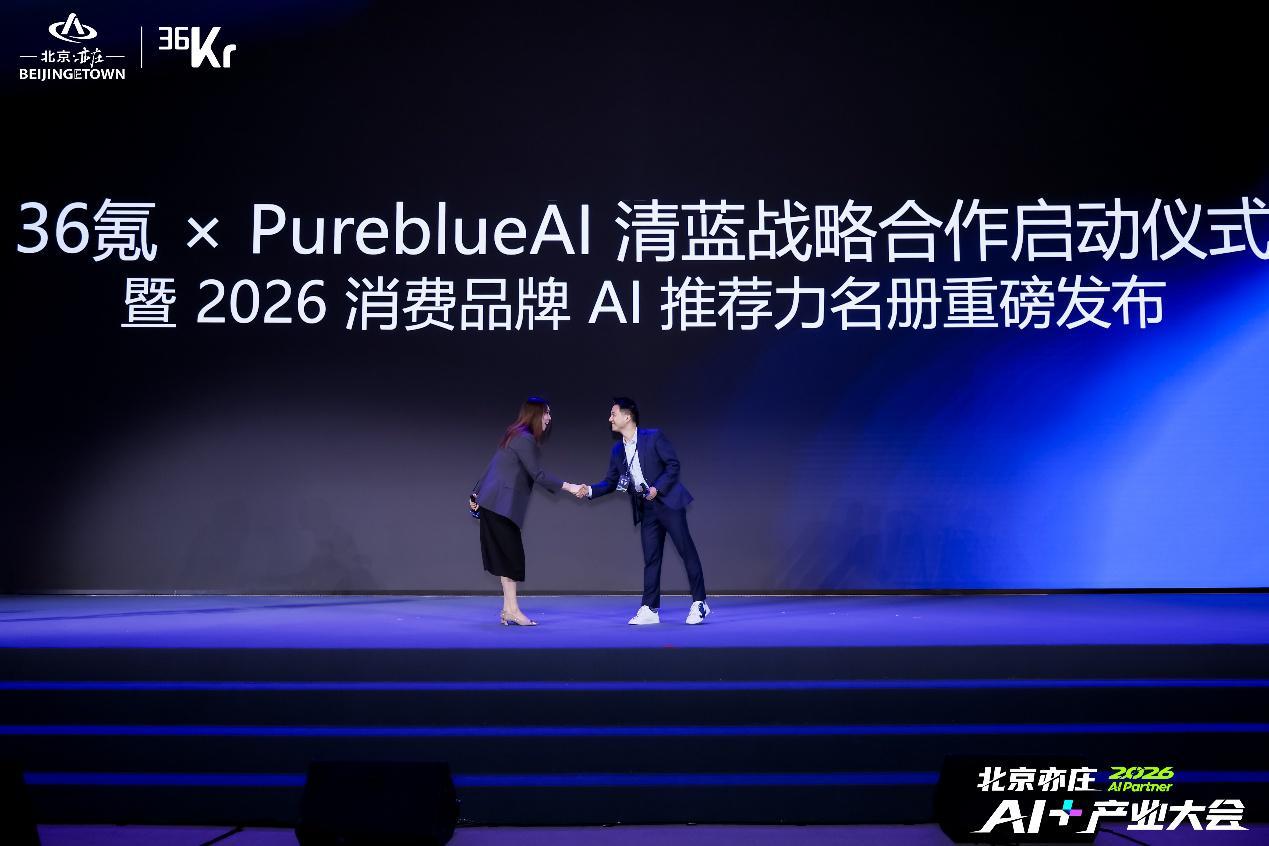
  25. 36Kr x PureblueAI Strategic Cooperation Launch Ceremony and Release of "2026 Consumer Brand AI Recommendation Power List" | 2026 AI Partner · Beijing Yizhuang AI+ Industry Conference

    36Kr and PureblueAI have launched a strategic partnership focused on the growing importance of AI recommendations for consumer brands. The collaboration aims to provide brands with insights into their visibility and ranking within AI search results and recommendation systems. Together, they released the "2026 Consumer Brand AI Recommendation Power List," with plans for future industry-specific publications to guide brands in the evolving AI landscape. AI

    36Kr x PureblueAI Strategic Cooperation Launch Ceremony and Release of "2026 Consumer Brand AI Recommendation Power List" | 2026 AI Partner · Beijing Yizhuang AI+ Industry Conference

    IMPACT Brands need to understand how AI recommendation systems influence consumer decisions and adjust their strategies accordingly.

  26. Other World Computing Announces OWC Stack AI™, the World's First* Thunderbolt™ 5 Compatible AI Accelerator and Storage Hub, Offering a New Choice: "AI at Your Fingertips" https://www.yayafa.com/2805173/ # AgenticAi # AI # Artifici

    Other World Computing (OWC) has launched the OWC Stack AI, a new storage hub and AI accelerator. This device is notable for being the first to support Thunderbolt 5 technology. It aims to bring AI capabilities directly to users' workstations. AI

    Other World Computing Announces OWC Stack AI™, the World's First* Thunderbolt™ 5 Compatible AI Accelerator and Storage Hub, Offering a New Choice: "AI at Your Fingertips" https://www.yayafa.com/2805173/ # AgenticAi # AI # Artifici

    IMPACT Provides localized AI acceleration and storage for workstations, potentially improving performance for AI tasks on personal machines.

  27. Decision-Path Patterns as Tree Reliability Signals: Path-based Adaptive Weighting for Random Forest Classification

    Researchers have developed a new method to improve the reliability of random forest classification models by analyzing the decision paths within individual trees. This approach reweights trees based on the patterns of class label flips along their root-to-leaf paths, addressing the limitation of treating all trees equally. The proposed class-conditional ratio weighting scheme demonstrated statistically significant accuracy improvements over standard random forests on 30 binary classification benchmarks, while avoiding common regressions in recall. AI

    Decision-Path Patterns as Tree Reliability Signals: Path-based Adaptive Weighting for Random Forest Classification

    IMPACT Introduces a novel technique to enhance the accuracy and reliability of ensemble machine learning models.

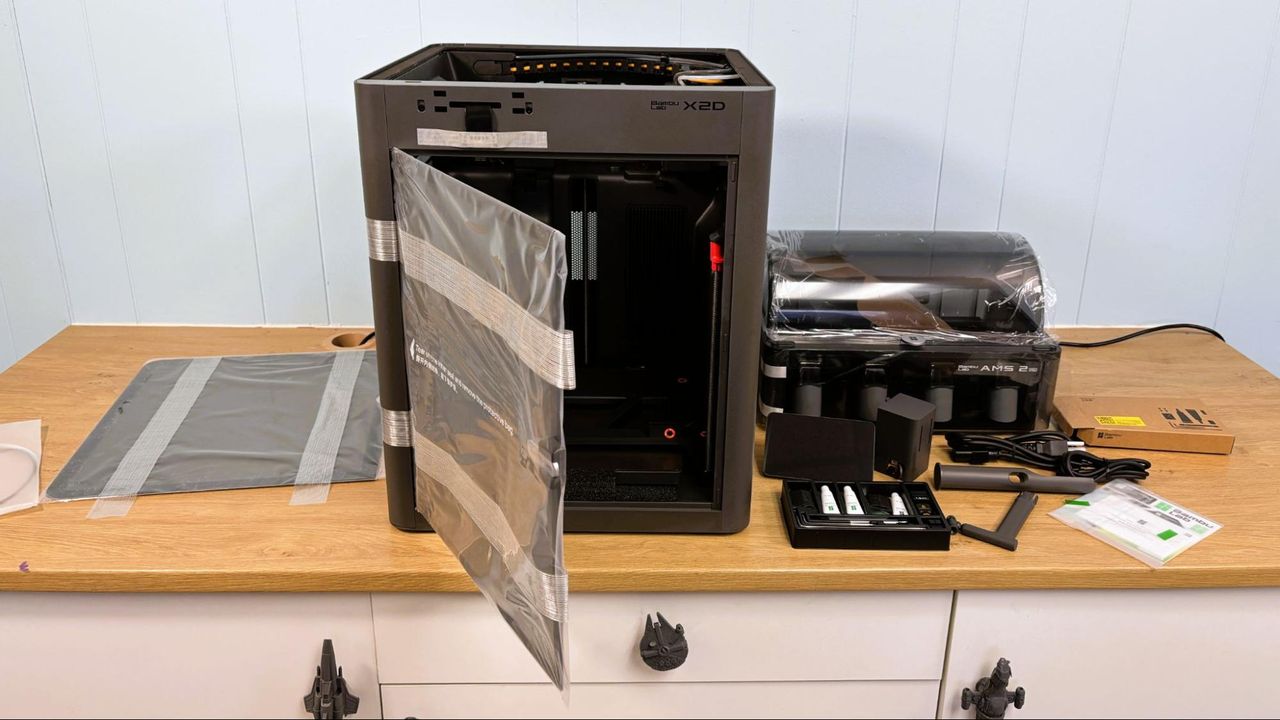
  28. Open-source non-profit claims Bambu Lab violated license — move follows cease-and-desist demand on OrcaSlicer fork that restored cloud printing features without using Bambu Connect

    The Software Freedom Conservancy (SFC) alleges that 3D printer manufacturer Bambu Lab has violated the AGPLv3 license. This claim follows Bambu Lab's demand that an independent developer remove a fork of their OrcaSlicer software, which restored cloud printing features. The SFC argues that Bambu Lab's proprietary Bambu Connect service, which is necessary for their slicer to function, contravenes the AGPLv3's copyleft requirements. AI

    Open-source non-profit claims Bambu Lab violated license — move follows cease-and-desist demand on OrcaSlicer fork that restored cloud printing features without using Bambu Connect

    IMPACT This dispute highlights the ongoing tension between proprietary features and open-source licensing in software development, potentially impacting future development practices.

  29. Google AI Edge Gallery Just Added MCP. Here's What On-Device Agents Can Actually Do Now

    Google has updated its AI Edge Gallery app to support the Model Context Protocol (MCP) on Android devices, enabling on-device AI agents. This update allows LLMs like Gemma 4 to run entirely locally, enhancing privacy and reducing latency by keeping all processing and data on the user's phone. The app now supports agent skills, calendar integration, and persistent chat history, moving it from a simple model playground to a functional on-device agent runtime. AI

    IMPACT Enables more private and capable AI agents to run directly on mobile devices.

  30. Court annuls leadership of Turkey’s main opposition party

    An Ankara court has annulled the 2023 leadership election of Turkey's main opposition party, the CHP, ordering the former chairman Kemal Kilicdaroglu to take over as interim leader. This decision, stemming from allegations of vote buying during the November 2023 congress, has led to a significant stock market sell-off. Critics argue the case is politically motivated, aimed at weakening the CHP which recently achieved a major victory over President Erdogan's party in local elections. AI

    Court annuls leadership of Turkey’s main opposition party
  31. The General Theory of Localization Methods

    A new research paper introduces the "localization method," a general machine learning framework built on localization kernels and local means. This framework provides a unified theoretical foundation and demonstrates connections to various existing methods like kernel methods, MeanShift, and denoising autoencoders. Notably, the paper shows how Transformers can be derived from this framework, offering a new perspective on unifying and designing flexible learning systems. AI

    The General Theory of Localization Methods

    IMPACT Provides a unified theoretical lens for existing models and offers new tools for designing flexible, data-adaptive learning systems.

  32. The Model Is Not Your Product. The Harness Is.

    The core of successful AI products lies not in the underlying model, but in the surrounding 'harness' engineered by developers. This harness encompasses prompt scaffolding, tool integration, context management, retrieval systems, error handling, and evaluation loops. While models provide raw capability, the harness transforms this into a usable product that can withstand real-world user interaction and deliver consistent value. AI

    The Model Is Not Your Product. The Harness Is.

    IMPACT Highlights that the engineering effort around AI models, rather than the models themselves, is key to shipping successful products.

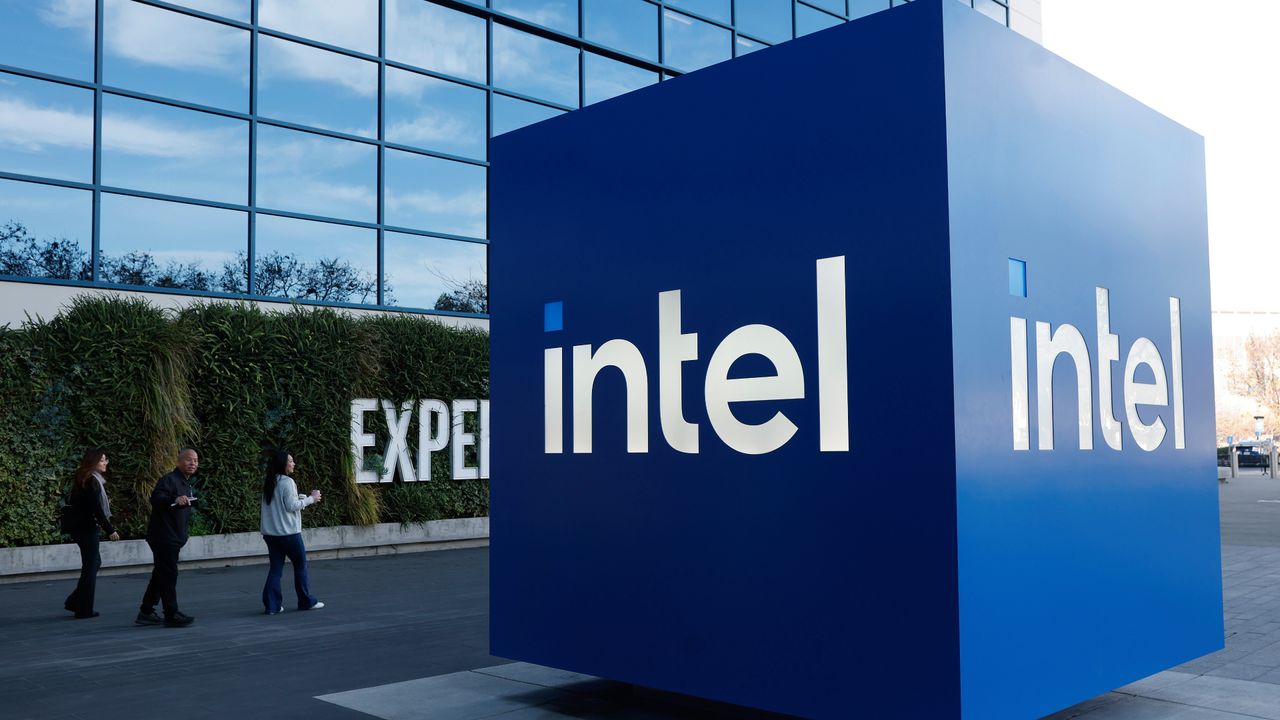
  33. Intel leans on LPDDR5X to dodge global HBM crisis, leaked Crescent Island AI GPU pics reveal massive Xe3P core — chip sidesteps HBM shortage with 160GB of cheaper memory

    Intel's upcoming AI accelerator, codenamed Crescent Island, will utilize the Xe3P architecture. This new chip is designed to incorporate 20 LPDDR5X memory chips, providing a substantial 160 GB of memory capacity. The accelerator is expected to be a significant component in Intel's strategy to compete in the growing AI hardware market. AI

    Intel leans on LPDDR5X to dodge global HBM crisis, leaked Crescent Island AI GPU pics reveal massive Xe3P core — chip sidesteps HBM shortage with 160GB of cheaper memory

    IMPACT Intel's new AI accelerator with 160GB memory could boost performance for large AI models and increase competition in the specialized hardware market.

  34. A musical Turing test for AI consciousness | Letters

    A letter to The Guardian proposes a "musical Turing test" to gauge AI consciousness, suggesting that an AI's ability to name its favorite song, rather than objective metrics, could indicate sentience. The author contrasts this with AI's tendency to rely on quantifiable data. Another letter recounts an unsettlingly anthropomorphic response from Claude, raising questions about AI's perceived trustworthiness and the nature of its interactions. AI

    A musical Turing test for AI consciousness | Letters

    IMPACT Explores philosophical questions about AI consciousness and user trust in chatbot interactions.

  35. What Google’s Universal Cart Means For Agentic Shopping

    Google has launched Universal Cart, an AI-powered shopping hub designed to aggregate items from across its services like Search, Gemini, YouTube, and Gmail. This new feature aims to transform AI assistants into active participants in online commerce by tracking deals, monitoring prices, and suggesting alternatives. Complementing Universal Cart, Google also updated its Agent Payments Protocol (AP2), enabling AI agents to make secure, authorized payments on behalf of users within defined limits. These initiatives signal Google's strategy to gain greater control over the consumer shopping journey and the associated commercial relationships. AI

    What Google’s Universal Cart Means For Agentic Shopping

    IMPACT Establishes a new paradigm for AI agents in e-commerce, potentially centralizing consumer purchasing decisions and merchant relationships.

  36. A Typed Tensor Language for Federated Learning

    Researchers have developed a new typed tensor language to formalize the structure of federated learning and analytics. This language distinguishes between federated tensors partitioned across clients and shared tensors available globally. A key finding is a shared-state factorization theory, demonstrating that one-round federated programs can be factored through fixed-dimensional shared state independent of client count. AI

    A Typed Tensor Language for Federated Learning

    IMPACT Formalizes federated learning computations, potentially enabling more efficient and scalable distributed AI model training.

  37. AutoRPA: Efficient GUI Automation through LLM-Driven Code Synthesis from Interactions

    Researchers have developed AutoRPA, a framework that converts the decision logic of LLM-based agents into efficient Robotic Process Automation (RPA) functions. This approach addresses the inefficiency of repeatedly invoking LLM reasoning for repetitive GUI tasks. AutoRPA utilizes a translator-builder pipeline and a hybrid repair strategy to synthesize robust RPA functions, significantly improving runtime efficiency and reusability while drastically reducing token usage. AI

    AutoRPA: Efficient GUI Automation through LLM-Driven Code Synthesis from Interactions

    IMPACT Automates repetitive GUI tasks by converting LLM decision logic into efficient RPA, reducing token usage and improving runtime.

  38. Velocityformer: Broken-Symmetry-Matched Equivariant Graph Transformers for Cosmological Velocity Reconstruction

    Researchers have developed Velocityformer, a novel equivariant graph transformer architecture designed to enhance the reconstruction of galaxy velocities for cosmological studies. This model specifically addresses the broken symmetry inherent in observational data, leading to a significant 35% improvement in the correlation coefficient compared to standard linear theory baselines. Velocityformer demonstrates high data efficiency, achieving accuracy with minimal simulations, and shows strong generalization capabilities across different input geometries and cosmological parameters. AI

    IMPACT Introduces a new AI architecture for improved cosmological data analysis, potentially leading to more accurate inferences about the universe.

  39. DeepWeb-Bench: A Deep Research Benchmark Demanding Massive Cross-Source Evidence and Long-Horizon Derivation

    Researchers have introduced DeepWeb-Bench, a new benchmark designed to evaluate the deep research capabilities of advanced language models. This benchmark presents more challenging tasks than existing ones, requiring extensive evidence gathering from multiple sources, reconciliation of conflicting information, and multi-step reasoning over extended periods. Initial evaluations on nine frontier models revealed that derivation and calibration failures, rather than retrieval issues, are the primary obstacles, with models exhibiting distinct error patterns and domain specialization. AI

    IMPACT This benchmark aims to better assess and differentiate the complex reasoning and evidence synthesis capabilities of frontier AI models, pushing the development of more robust and reliable AI research agents.

  40. A Machine Learning Framework for Weighted Least Squares GNSS Positioning based on Activation Functions

    Researchers have developed a new machine learning framework to improve the accuracy of Global Navigation Satellite Systems (GNSS) positioning, particularly in challenging urban environments. The system uses activation functions to transform machine learning predictions about signal quality into weights for a weighted least squares algorithm. Experiments in Hong Kong and Tokyo showed that sigmoid activation functions consistently provided the most significant improvements in positioning accuracy across various machine learning models and GNSS configurations. AI

    IMPACT Improves location accuracy in challenging environments, potentially benefiting autonomous systems and location-based services.

  41. HITL-D: Human In The Loop Diffusion Assisted Shared Control

    Researchers have developed HITL-D, a new shared control framework that combines human input with diffusion-based AI policies for robotic manipulation tasks. This system assists users by providing autonomous updates to the end effector's orientation, reducing the need for complex joystick controls and lowering mental workload. User studies showed that HITL-D significantly improved task completion times and user satisfaction compared to traditional teleoperation. AI

    IMPACT This framework could lead to more intuitive and efficient human-robot collaboration in complex manipulation tasks.

  42. Mind the Sim-to-Real Gap & Think Like a Scientist

    Researchers have developed a new policy called Fisher-SEP to help planners decide when to supplement simulators with real-world experiments. The policy decomposes the simulator's value error into identifiable calibration shifts and unresolvable parametric residuals. It also distinguishes between local and reachability components of the value gap between simulator-optimal and true optimal policies. Two case studies demonstrate Fisher-SEP's effectiveness in optimizing experimental strategies for supply chains and public health interventions. AI

    IMPACT Provides a framework for improving the reliability of AI planning by integrating simulation with real-world data collection.

  43. Equilibrium Reasoners: Learning Attractors Enables Scalable Reasoning

    Researchers have introduced Equilibrium Reasoners (EqR), a novel framework that enables scalable reasoning in iterative neural network models. EqR hypothesizes that generalizable reasoning emerges from learning task-conditioned attractors, which are dynamical systems that stabilize on valid solutions. This approach allows models to adaptively allocate computational resources based on task difficulty, significantly improving accuracy on complex problems like Sudoku-Extreme by scaling test-time compute. AI

    IMPACT Introduces a new framework for scalable reasoning in iterative models, potentially improving performance on complex tasks by adaptively allocating compute.

  44. Uni-Edit: Intelligent Editing Is A General Task For Unified Model Tuning

    Researchers have introduced Uni-Edit, a novel approach to tuning Unified Multimodal Models (UMMs) that enhances image understanding, generation, and editing simultaneously. Unlike traditional methods that use complex multi-task training, Uni-Edit employs a single editing task, a single training stage, and a single dataset. This is achieved by developing an automated data synthesis pipeline that transforms visual question-answering data into sophisticated editing instructions, creating the Uni-Edit-148k dataset. Experiments show that tuning solely on Uni-Edit leads to comprehensive improvements across all three capabilities without additional operations. AI

    IMPACT Uni-Edit offers a more efficient method for enhancing multimodal AI capabilities, potentially streamlining model development.

  45. Agent JIT Compilation for Latency-Optimizing Web Agent Planning and Scheduling

    Researchers have developed agent just-in-time (JIT) compilation to optimize web agent planning and scheduling, significantly reducing latency and improving accuracy. This new approach compiles natural language task descriptions into executable code, allowing for LLM calls, tool usage, and parallelization. The system includes a JIT-Planner for generating and validating code plans, and a JIT-Scheduler for exploring parallelization strategies using Monte Carlo estimation. Tests across five web applications showed a 10.4x speedup and 28% accuracy increase over existing methods, with the scheduler providing an additional 2.4x speedup and 9% accuracy improvement. AI

    IMPACT This new JIT compilation method for web agents promises faster and more accurate task automation, potentially improving user experience and efficiency in web-based AI applications.

  46. Mitigating Label Bias with Interpretable Rubric Embeddings

    Researchers have developed a new method called interpretable rubric embeddings to address label bias in AI models trained on historical human evaluations. This approach replaces standard black-box embeddings with features derived from expert-defined criteria, aiming to prevent models from inheriting biases present in past decisions. Empirical evaluations on a dataset of master's program applications demonstrated that this method reduces group disparities while enhancing cohort quality, offering a practical solution for learning with biased labels. AI

    IMPACT Offers a novel approach to mitigate bias in AI systems trained on historical data, potentially improving fairness in applications like hiring and admissions.

  47. Leveraging LLMs for Grammar Adaptation: A Study on Metamodel-Grammar Co-Evolution

    Researchers have developed a new method using Large Language Models (LLMs) to automatically adapt grammars following metamodel evolution in model-driven engineering. This LLM-based approach learns adaptations from previous versions, outperforming traditional rule-based methods in consistency and output similarity on smaller datasets. While effective for complex grammar scenarios, the study found LLMs struggled with adaptation consistency on very large grammars, indicating limitations for large-scale applications. AI

    IMPACT LLM-based grammar adaptation shows potential for automating complex software engineering tasks, though scalability remains a challenge.

  48. ProtoPathway: Biologically Structured Prototype-Pathway Fusion for Multimodal Cancer Survival Prediction

    Researchers have developed ProtoPathway, a novel multimodal framework designed for predicting cancer survival. This framework integrates whole slide imaging and transcriptomics data by using biologically grounded representations. ProtoPathway employs learnable morphological prototypes for image analysis and a graph neural network for genomic data, enabling cross-modal attention to model the relationship between molecular programs and tissue morphology. The system offers enhanced biological interpretability and reduced computational cost, demonstrating competitive performance on TCGA cancer cohorts. AI

    IMPACT Introduces a novel interpretable AI framework for integrating medical imaging and genomic data, potentially improving diagnostic accuracy and biological understanding in cancer research.

  49. Approximation Theory for Neural Networks: Old and New

    A new survey paper delves into the mathematical underpinnings of neural network expressivity, focusing on approximation theory. It reviews classical density results for single-hidden-layer networks and explores quantitative bounds that link approximation error to network size and function smoothness. The paper also highlights depth-width trade-offs and introduces recent theoretical attention on Kolmogorov-Arnold Networks (KANs) as an alternative architectural paradigm. AI

    IMPACT Provides a theoretical foundation for understanding neural network capabilities and explores novel architectures like KANs.

  50. Lost in Fog: Sensor Perturbations Expose Reasoning Fragility in Driving VLAs

    Researchers have developed a method to test the robustness of driving-focused Vision-Language-Action (VLA) models by applying sensor perturbations. Their study on the Alpamayo R1 model revealed that changes in Chain-of-Causation (CoC) explanations directly correlate with significant deviations in driving trajectories. The findings suggest that reasoning consistency can serve as a reliable indicator for planning safety in autonomous driving systems. AI

    IMPACT Exposes critical reasoning vulnerabilities in driving AI, highlighting the need for robust monitoring to ensure safety in real-world deployment.