PulseAugur / Brief
LIVE 20:15:22

Brief

last 24h
[50/907] 186 sources

Multi-source AI news clustered, deduplicated, and scored 0–100 across authority, cluster strength, headline signal, and time decay.

  1. APM: Evaluating Style Personalization in LLMs with Arbitrary Preference Mappings

    Researchers have developed a new benchmark called Arbitrary Preference Mapping (APM) to evaluate how well large language models can adapt to users' implicit style preferences. The APM benchmark uses a randomized mapping to decouple user attributes from response principles, preventing models from relying on stereotypes and forcing them to infer preferences from conversation history. Experiments using this methodology on Llama-3.1-8B and Qwen-3.5-27B showed that routing-based personalization methods were the most effective, while other approaches like RAG and soft prompt optimization showed limited improvement. AI

    APM: Evaluating Style Personalization in LLMs with Arbitrary Preference Mappings

    IMPACT Introduces a novel evaluation method for LLM personalization, potentially improving user experience and model adaptability.

  2. A Dialogue between Causal and Traditional Representation Learning: Toward Mutual Benefits in a Unified Formulation

    Researchers have proposed a unified framework to bridge the gap between causal representation learning (CRL) and traditional representation learning. This new formulation characterizes representation learning by a task component, defining required information, and a constraint component, specifying latent space structure. The paper argues that dialogue between these fields is essential, with CRL offering theoretical tools and traditional learning providing practical insights. Experiments on CausalVerse demonstrate that the effectiveness of causal constraints is highly dependent on the paired tasks. AI

    A Dialogue between Causal and Traditional Representation Learning: Toward Mutual Benefits in a Unified Formulation

    IMPACT Proposes a unified theoretical framework that could lead to more robust and interpretable machine learning models.

  3. The Stifterverband had announced an ideas competition on "AI Literacy in Schools" - four concepts for digital learning offers have now been awarded

    The Stifterverband has awarded four digital learning concepts as part of its "AI Literacy in Schools" idea competition. These winning concepts will be implemented on the KiCampus platform. The awarded projects include areas like AI image generation and deepfakes, differentiation with AI, and preparing quality primary school lessons with AI. AI

    The Stifterverband had announced an ideas competition on "AI Literacy in Schools" - four concepts for digital learning offers have now been awarded

    IMPACT Promotes the development of AI educational tools and curricula for schools.

  4. Efficient Banzhaf-Based Data Valuation for $k$-Nearest Neighbors Classification

    Researchers have developed new algorithms to efficiently calculate the Banzhaf value, a game-theoretic method for data valuation, specifically for k-nearest neighbors (kNN) classifiers. The study proves the computational hardness of the problem but introduces practical exact algorithms using dynamic programming, achieving pseudo-polynomial time complexity for weighted kNN and linear time complexity for unweighted kNN. Experiments on real-world datasets confirm the efficiency and effectiveness of these novel valuation methods. AI

    Efficient Banzhaf-Based Data Valuation for $k$-Nearest Neighbors Classification

    IMPACT Introduces more efficient methods for understanding data contributions, potentially improving model training and interpretability.

  5. Hating AI Is Good

    An opinion piece argues that a growing segment of the population is actively rejecting artificial intelligence, viewing it as a liability rather than an inevitability. The author suggests that this 'anti-AI evangelist' movement is a legitimate constituency that should be taken seriously, especially as public opinion on AI appears to be souring rapidly. The piece highlights instances of graduates booing speakers who promote AI, indicating a generational divide and a desire to resist the technology's perceived imposition. AI

    IMPACT Suggests a growing public backlash against AI could influence its adoption and development.

  6. Single-Pass, Depth-Selective Reading for Multi-Aspect Sentiment Analysis

    Researchers have developed a new framework called DABS for multi-aspect sentiment analysis, which aims to improve efficiency without sacrificing expressiveness. DABS encodes sentences only once, creating a reusable representation that aspects can query to selectively extract relevant information. This approach reduces computational costs by up to 60% in complex multi-aspect scenarios, particularly benefiting analyses involving negation and contrast. AI

    Single-Pass, Depth-Selective Reading for Multi-Aspect Sentiment Analysis

    IMPACT Introduces a more efficient method for sentiment analysis, potentially speeding up applications that require understanding nuanced opinions in text.

  7. I guess my prompt is too heavy 😳

    A Reddit user reported that the Cursor IDE consumed an unexpectedly large amount of memory, displaying a message indicating it was using gigabytes of RAM. The user expressed surprise at the high memory usage, noting that only three windows were open at the time. AI

    I guess my prompt is too heavy 😳

    IMPACT Indicates potential performance issues or resource management challenges in AI-powered development tools.

  8. Modeling Temporal scRNA-seq Data with Latent Gaussian Process and Optimal Transport

    Researchers have developed a new generative framework to model temporal processes in single-cell RNA sequencing data. This approach utilizes a latent heteroscedastic Gaussian process, approximated via Hilbert space methods, to capture population trends. An optimal transport objective is employed to align generated and observed distributions, addressing the challenge of inferring trajectories from static data. The method explicitly models biological heterogeneity by considering cell-specific latent time and cell type conditioning, demonstrating state-of-the-art performance on interpolation and extrapolation benchmarks. AI

    Modeling Temporal scRNA-seq Data with Latent Gaussian Process and Optimal Transport

    IMPACT Introduces a novel generative framework for analyzing complex biological data, potentially improving insights into cellular processes.

  9. He Xiaopeng: Robotaxi's overseas scale-up will be faster than domestic, XPeng GX is the first supervised L4 model

    He Xiaopeng, chairman of XPeng, stated that the scaled deployment of Robotaxi services will likely occur faster overseas than in China. He also revealed that the XPeng GX is the company's first model with supervised L4 autonomous driving capabilities, which will be used for initial testing before its technology is integrated into other vehicles. He anticipates that supervised L4 will be the first to achieve large-scale implementation, followed by unsupervised L4. AI

    IMPACT XPeng's chairman discusses the future of Robotaxi and L4 autonomous driving, indicating potential shifts in autonomous vehicle deployment strategies.

  10. Point Cloud Sequence Encoding for Material-conditioned Graph Network Simulators

    Researchers have developed a new framework called PEACH that uses point clouds to adapt learned physics simulators to new material properties without needing explicit mesh reconstruction. This approach leverages in-context learning on point cloud sequences, improving simulation fidelity through novel encoding and auxiliary supervision. PEACH demonstrates accurate zero-shot sim-to-real transfer and outperforms mesh-based methods in prediction accuracy, making it more practical for real-world applications. AI

    Point Cloud Sequence Encoding for Material-conditioned Graph Network Simulators

    IMPACT Introduces a novel method for adaptable physics simulation using point clouds, potentially improving real-world applications.

  11. ArPoMeme: An Annotated Arabic Multimodal Dataset for Political Ideology and Polarization

    Researchers have introduced ArPoMeme, a new dataset containing approximately 7,300 Arabic political memes. This dataset is annotated with ideological orientations such as Leftist, Islamist, Pan-Arabist, and Satirical, as well as dimensions of polarization like Us vs. Them framing and hostility. The creation of ArPoMeme involved a semi-automated pipeline using web scraping and the Qwen2.5-VL-7B vision-language model for text extraction, followed by manual annotation via a custom interface. Analysis of the dataset indicates that Islamist and satirical memes exhibit the highest levels of hostility and mobilization cues. AI

    ArPoMeme: An Annotated Arabic Multimodal Dataset for Political Ideology and Polarization

    IMPACT Provides a new resource for analyzing multimodal political discourse and detecting polarization in Arabic content.

  12. Securing AI Cloud Systems: Intelligent Testing For Intelligent Systems

    Traditional software testing methods are insufficient for modern, AI-integrated cloud systems that learn and adapt over time. These systems are event-driven and produce variable outputs based on context, making deterministic testing challenging. The article proposes an evolution towards "intelligent testing," leveraging AI itself to automate test case generation, potentially using large language models and knowledge graphs to improve coverage and accuracy. AI

    Securing AI Cloud Systems: Intelligent Testing For Intelligent Systems

    IMPACT Suggests new testing methodologies are needed for AI-driven systems, impacting how software quality is ensured.

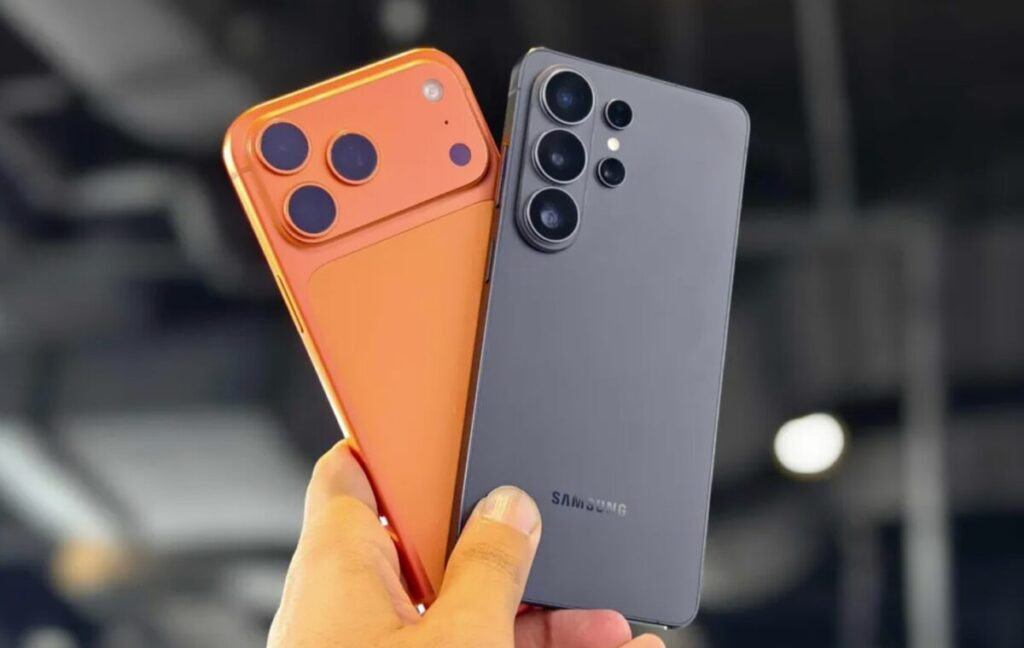
  13. Samsung Galaxy surpasses iPhone in user satisfaction: ACSI 2026 data According to the latest report from the American Customer Satisfaction Index (ACSI)

    Samsung's Galaxy smartphones have surpassed Apple's iPhones in user satisfaction for 2026, according to the American Customer Satisfaction Index (ACSI). The ACSI report, based on surveys from April 2025 to March 2026, shows Samsung scoring 81 points while Apple dropped to 80. The report also highlighted positive user reception for AI features on smartphones, with Samsung's Galaxy AI being particularly well-received as a practical tool rather than just a marketing gimmick. AI

    Samsung Galaxy surpasses iPhone in user satisfaction: ACSI 2026 data According to the latest report from the American Customer Satisfaction Index (ACSI)

    IMPACT Highlights growing user appreciation for integrated AI features on smartphones, potentially influencing future product development and adoption.

  14. New York City Mayor Zohran Mamdani is launching a Twitch show

    New York City Mayor Zohran Mamdani is launching a new Twitch show called "Talk with the People," set to premiere on May 21st. The show aims to engage with constituents by answering questions directly from the live chat about local issues. Mamdani plans to stream the series across multiple platforms, including YouTube and Facebook, to maximize reach. AI

    New York City Mayor Zohran Mamdani is launching a Twitch show

    IMPACT This initiative by a city mayor to engage constituents via a Twitch show has minimal direct impact on AI operators or the broader AI industry.

  15. Evaluating Speech Articulation Synthesis with Articulatory Phoneme Recognition

    Researchers have developed a new method to evaluate speech articulation synthesis by using phoneme recognition as a proxy for quality. This approach hypothesizes that articulatory features better capture phonetic nuances than traditional metrics. A neural network trained on acoustic and articulatory features from an RT-MRI dataset demonstrated that the proposed feature set is phonetically rich and aids in exploring new dimensions of speech articulation synthesis. AI

    Evaluating Speech Articulation Synthesis with Articulatory Phoneme Recognition

    IMPACT Introduces a novel evaluation metric for articulatory speech synthesis, potentially improving the quality and phonetic accuracy of generated speech.

  16. Task-Routed Mixture-of-Experts with Cognitive Appraisal for Implicit Sentiment Analysis

    Researchers have developed a new framework for implicit sentiment analysis, a task that infers sentiment from context rather than explicit words. Their approach, inspired by cognitive appraisal theory, uses a multi-task learning framework with two auxiliary tasks: implicit sentiment detection and cognitive rationale generation. To mitigate task interference, they implemented a task-routed mixture-of-experts model where tasks sparsely combine shared experts, outperforming existing methods on implicit sentiment tasks. AI

    Task-Routed Mixture-of-Experts with Cognitive Appraisal for Implicit Sentiment Analysis

    IMPACT Introduces a novel framework for implicit sentiment analysis, potentially improving nuanced understanding in NLP applications.

  17. For How Long Should We Be Punching? Learning Action Duration in Fighting Games

    Researchers have developed a new reinforcement learning framework for fighting games that allows agents to learn not only which action to take but also for how long to execute it. This approach enables agents to dynamically adjust their responsiveness, moving beyond fixed decision-making intervals. Experiments in the FightLadder environment showed that learned timing can match fixed frame skips, but agents often performed best with higher frame skips, favoring exploitative strategies against scripted bots. AI

    For How Long Should We Be Punching? Learning Action Duration in Fighting Games

    IMPACT Introduces a new method for AI agents to learn dynamic action timing in complex environments, potentially improving game AI and simulation realism.

  18. Enhancing Scientific Discourse: Machine Translation for the Scientific Domain

    Researchers have developed new parallel and monolingual corpora specifically for scientific machine translation. These corpora focus on Spanish-English, French-English, and Portuguese-English language pairs, with specialized subsets for Cancer Research, Energy Research, Neuroscience, and Transportation. The created datasets were used to fine-tune general-purpose neural machine translation systems, and the paper details the corpus creation, fine-tuning methods, and evaluation results. AI

    Enhancing Scientific Discourse: Machine Translation for the Scientific Domain

    IMPACT Facilitates broader access to scientific research by improving translation quality for specialized terminology.

  19. On the Complexity of Entailment for Cumulative Propositional Dependence Logics

    This paper delves into the computational complexity of entailment within cumulative propositional dependence logics and team semantics. It builds upon recent work characterizing these logics by System C and cumulative models, which allows for the analysis of entailment through relational models. AI

    On the Complexity of Entailment for Cumulative Propositional Dependence Logics

    IMPACT Theoretical analysis of logical systems may inform future AI reasoning capabilities.

  20. VISTA: Technical Report for the Ego4D Short-Term Object Interaction Anticipation at EgoVis 2026

    Researchers have developed VISTA, a system designed to anticipate human-object interactions in egocentric videos. VISTA combines spatial object detection with temporal context from video clips to predict future interactions, including object location, action categories, and timing. The system achieved first place in the EgoVis 2026 Ego4D Short-Term Object Interaction Anticipation Challenge. AI

    VISTA: Technical Report for the Ego4D Short-Term Object Interaction Anticipation at EgoVis 2026

    IMPACT This research advances egocentric video understanding and interaction prediction, potentially improving applications in robotics and augmented reality.

  21. Training distribution determines the ceiling of drug-blind cancer sensitivity prediction

    A new research paper published on arXiv suggests that the current methods for predicting cancer drug sensitivity are flawed. The standard benchmark metric, global Pearson r, is misleading because it is heavily influenced by differences in drug potency rather than a model's ability to predict sensitivity for a specific tumor. When a more appropriate metric, per-drug Pearson r, is used, current drug encoding methods show no improvement over cell-only features. The study proposes that stratifying training data by mechanism-of-action can significantly improve prediction accuracy for targeted kinase inhibitors. AI

    Training distribution determines the ceiling of drug-blind cancer sensitivity prediction

    IMPACT Identifies a critical flaw in a common AI benchmark, potentially redirecting research efforts in precision oncology.

  22. AI Might Not Bring On A Job Crisis, But A Workforce ‘Mismatch’ Could

    A new report from Indeed Hiring Lab suggests that artificial intelligence may not cause widespread job loss, but rather a significant workforce mismatch. This mismatch is predicted to arise from a combination of retiring baby boomers, slower immigration, and AI's reshaping of white-collar jobs. Without intervention, unemployment could nearly double to 8% by 2040, necessitating proactive strategies from both employers and workers. AI

    AI Might Not Bring On A Job Crisis, But A Workforce ‘Mismatch’ Could

    IMPACT Predicts a future workforce mismatch due to AI, highlighting the need for strategic adaptation by employers and workers.

  23. Why Post-Quantum Compliance For Banks Starts In Containers

    Financial institutions must urgently prepare for post-quantum cryptography due to the standardization of new quantum-resistant algorithms by NIST and the threat of 'harvest now, decrypt later' attacks. A significant challenge lies in identifying and managing legacy cryptography hidden within container images and third-party libraries, as current environments often lack the necessary cryptographic visibility. Experts recommend starting the transition by securing containers, which are frequent targets for attackers and also the most accessible place to manage cryptographic sprawl. AI

    Why Post-Quantum Compliance For Banks Starts In Containers

    IMPACT This article discusses the implications of post-quantum cryptography for financial institutions, a critical area for AI security and data protection.

  24. Map-Mono-Ego: Map-Grounded Global Human Pose Estimation from Monocular Egocentric Video

    Researchers have developed a new framework called Map-Mono-Ego that enables accurate global human pose estimation using only a monocular camera. This method addresses the challenge of determining a user's absolute location within an environment, which is often overlooked by existing techniques that focus on relative motion. By integrating a pre-scanned 3D point cloud, Map-Mono-Ego overcomes the scale ambiguity inherent in monocular vision, preventing translational drift and enabling long-term tracking without specialized multi-sensor hardware. The effectiveness of this approach is further supported by the introduction of the AIST-Living dataset, which pairs egocentric video with ground-truth motion data in a scanned environment. AI

    Map-Mono-Ego: Map-Grounded Global Human Pose Estimation from Monocular Egocentric Video

    IMPACT Enables more robust and accessible human pose tracking for applications like activity monitoring without specialized hardware.

  25. Learning fMRI activations dictionaries across individual geometries via optimal transport

    Researchers have developed a new dictionary learning method for fMRI data that accounts for individual brain geometry variations. This approach utilizes the optimal transport-based Fused Gromov-Wasserstein (FGW) distance to compare graphs with differing structures and features. To manage computational costs, they employ amortized optimization with a neural network to approximate optimal transport plans, enabling the learning of dictionary atoms that balance feature alignment and structural consistency. Experiments on the HCP dataset show this method effectively captures geometric variability and retains crucial information. AI

    Learning fMRI activations dictionaries across individual geometries via optimal transport

    IMPACT Introduces a novel computational method for analyzing complex neuroimaging data, potentially improving brain state classification and population-level studies.

  26. ProCrit: Self-Elicited Multi-Perspective Reasoning with Critic-Guided Revision for Multimodal Sarcasm Detection

    Researchers have introduced ProCrit, a novel framework for detecting multimodal sarcasm by employing a two-agent system. This system includes a proposal agent that generates diverse analytical perspectives and a critic agent that evaluates and guides revisions. To address the lack of detailed reasoning data, ProCrit synthesizes process-level annotations using a dynamic-role agentic rollout, creating sequences that preserve cross-perspective dependencies. The framework then refines both agents through a dual-stage reinforcement learning process, demonstrating effectiveness on multiple benchmarks. AI

    ProCrit: Self-Elicited Multi-Perspective Reasoning with Critic-Guided Revision for Multimodal Sarcasm Detection

    IMPACT Introduces a novel agentic approach for multimodal reasoning, potentially improving AI's ability to understand nuanced language like sarcasm.

  27. CIG: Exploration via Conditional Information Gain

    Researchers have introduced Conditional Information Gain (CIG), a novel reward mechanism for reinforcement learning designed to improve exploration strategies. CIG addresses limitations of existing methods by providing a tractable surrogate for trajectory-level information gain, allowing it to scale to high-dimensional state spaces. Tested across twelve tasks in both discrete and continuous control environments, CIG demonstrated competitive or superior performance compared to previous exploration techniques, even in the presence of stochastic distractors. AI

    CIG: Exploration via Conditional Information Gain

    IMPACT Introduces a more robust exploration strategy for reinforcement learning agents, potentially improving performance in complex and noisy environments.

  28. Google ruined Antigravity quotas. Thinking about moving to Cursor Pro, but how are the limits?

    A web developer is seeking alternatives to Google's Antigravity IDE after recent changes to its AI model quotas have rendered it unusable for their workflow. The developer previously relied on a Google AI Pro subscription for unlimited access to Gemini 3 Flash, which significantly boosted productivity by allowing simultaneous context of API and front-end code. Now, with drastically reduced quotas, they are inquiring about the usage limits and reliability of Cursor Pro for similar tasks. AI

    IMPACT Developers are evaluating AI tool usability and cost-effectiveness based on changing quota structures.

  29. Genetic Programming with Transformer-Based Mutation for Approximate Circuit Design

    Researchers have developed a new method for designing approximate arithmetic circuits using genetic programming enhanced by a transformer-based mutation operator. This hybrid approach aims to overcome stagnation in the evolutionary design process by integrating a standard mutation operator with the novel transformer-based one. The system was trained on a large dataset of genetic programming chromosomes representing approximate multipliers, and it has demonstrated the ability to achieve better trade-offs between error and performance compared to existing state-of-the-art libraries. AI

    Genetic Programming with Transformer-Based Mutation for Approximate Circuit Design

    IMPACT Introduces a novel transformer-based mutation for genetic programming, potentially improving automated circuit design and leading to new, patentable designs.

  30. DISC: Decoupling Instruction from State-Conditioned Control via Policy Generation

    Researchers have developed a new method called DISC that decouples language instructions from state-conditioned control in robotics. Unlike previous approaches that share network parameters, DISC uses a hypernetwork to generate task-specific policies directly from instructions, preventing observation leakage. This novel approach significantly outperforms existing methods on benchmarks like LIBERO-90 and Meta-World, demonstrating its effectiveness in complex, long-horizon tasks and real-world applications. AI

    DISC: Decoupling Instruction from State-Conditioned Control via Policy Generation

    IMPACT Introduces a novel architecture for language-conditioned robotics that mitigates common failure modes and improves performance on complex tasks.

  31. USV: Towards Understanding the User-generated Short-form Videos

    Researchers have introduced USV, a new dataset comprising approximately 224,000 user-generated short-form videos. This dataset is designed to advance the understanding of high-level semantic information in videos, moving beyond instance-level recognition. To facilitate research, the paper also establishes topic recognition and video-text retrieval tasks on USV, proposing baseline methods like MMF-Net and VTCL. AI

    USV: Towards Understanding the User-generated Short-form Videos

    IMPACT Introduces a new dataset and baseline methods to advance research in understanding user-generated short-form videos.

  32. HyDAR-Pano3D: A Hybrid Disentangled Anatomical Recovery Framework for Panoramic-to-3D Reconstruction

    Researchers have developed HyDAR-Pano3D, a novel framework for reconstructing detailed 3D dental anatomy from 2D panoramic radiographs. This two-stage approach disentangles the learning process, first creating a normalized canonical volume using radiographic features and semantic priors from SAM, and then restoring patient-specific variations. The method significantly outperforms existing techniques, achieving high scores in PSNR, SSIM, and Dice for anatomical reconstruction, and enabling accurate downstream segmentation tasks. AI

    HyDAR-Pano3D: A Hybrid Disentangled Anatomical Recovery Framework for Panoramic-to-3D Reconstruction

    IMPACT Enables more accurate 3D dental reconstructions from standard 2D X-rays, potentially reducing the need for CBCT scans and improving diagnostic capabilities.

  33. A Tiny First-Call Checklist Before Trusting Any LLM Gateway

    A developer shared a concise checklist for evaluating new LLM gateways, emphasizing auditable first calls over pricing alone. The process involves verifying API keys, checking logs for model usage and costs, and testing error handling before proceeding to more complex features. This approach is particularly useful for gateways that route across multiple providers or integrate with less common models like Qwen or DeepSeek. AI

    IMPACT Provides a practical guide for developers integrating with LLM services, focusing on reliability and cost transparency.

  34. Spectral bandits for smooth graph functions with applications in recommender systems

    Researchers have developed new bandit algorithms designed for scenarios where payoffs are smooth across graph-connected data. These algorithms are particularly applicable to online learning problems like content-based recommendation, where items are nodes and their expected ratings are influenced by neighbors. The proposed methods aim to minimize cumulative regret by introducing an 'effective dimension' concept, showing that user preferences for thousands of items can be estimated from just tens of evaluations. AI

    Spectral bandits for smooth graph functions with applications in recommender systems

    IMPACT Introduces novel algorithms for graph-based online learning, potentially improving recommendation system efficiency.

  35. Beyond Numerical Features: CNN-Driven Algorithm Selection via Contour Plots for Continuous Black-Box Optimization

    Researchers have developed a novel method for algorithm selection in continuous black-box optimization that utilizes contour plots instead of traditional numerical features. A Convolutional Neural Network (CNN) analyzes these contour visualizations of probed landscapes to predict the performance of different solvers. This image-based approach demonstrated significant improvements over the single best solver (SBS) on the BBOB 2009 benchmark and showed competitiveness with existing feature-based methods. AI

    Beyond Numerical Features: CNN-Driven Algorithm Selection via Contour Plots for Continuous Black-Box Optimization

    IMPACT Introduces a novel image-based approach for algorithm selection in optimization, potentially improving efficiency without relying on traditional numerical features.

  36. Sample Complexity of Transfer Learning: An Optimal Transport Approach

    Researchers have theoretically analyzed the benefits of transfer learning using an optimal transport framework. Their findings suggest that for data dimensions greater than three, transfer learning offers improved sample efficiency compared to direct learning, particularly for complex models with non-smooth activation functions. This theoretical advantage was numerically demonstrated using image classification tasks, showing significant performance gains in data-scarce scenarios. AI

    Sample Complexity of Transfer Learning: An Optimal Transport Approach

    IMPACT Provides theoretical backing for transfer learning's effectiveness in data-hungry AI models.

  37. What Semantics Survive the Connector? Diagnosing VLM-to-DiT Alignment in Video Editing

    Researchers have developed a new diagnostic dataset and protocol called TRACE-Edit to evaluate how well semantic information is preserved when Vision-Language Models (VLMs) are used for video editing. Their findings indicate that the alignment process between VLMs and Diffusion Transformer models (DiTs) can significantly degrade fine-grained structural details, challenging the assumption of lossless semantic transfer. This research identifies the VLM-to-DiT alignment as a critical bottleneck and provides a foundation for developing improved multi-modal alignment architectures. AI

    What Semantics Survive the Connector? Diagnosing VLM-to-DiT Alignment in Video Editing

    IMPACT Identifies a key bottleneck in current video editing models, potentially guiding future research towards more semantically faithful multi-modal alignment.

  38. Axiomatizing Neural Networks via Pursuit of Subspaces

    Researchers have introduced a new theoretical framework called the Pursuit of Subspaces (PoS) hypothesis to better understand the inner workings of deep neural networks. This axiomatic approach uses geometric postulates to explain representation, computation, and generalization in neural network architectures. The PoS hypothesis aims to bridge the gap between the empirical success of neural networks and the current lack of theoretical understanding, offering a principled foundation for deep learning. AI

    Axiomatizing Neural Networks via Pursuit of Subspaces

    IMPACT Provides a new theoretical lens for understanding and potentially improving neural network architectures and generalization.

  39. Role Prompting: How to Assign Personas to Get Expert Results — Prompt to Profit · Day 3 of 30

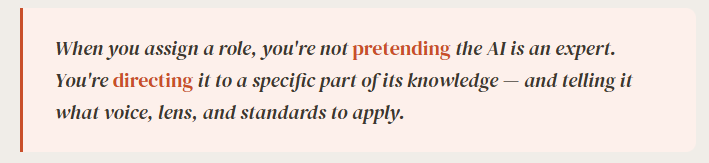
    This article explains the technique of role prompting, which involves assigning specific personas to AI models to elicit more expert and tailored results. By defining a detailed persona with a title, experience, and lens, users can guide the AI to access specific knowledge domains and thinking frameworks, moving beyond generic outputs. The piece provides examples of effective role prompts and outlines common mistakes to avoid when implementing this strategy. AI

    Role Prompting: How to Assign Personas to Get Expert Results — Prompt to Profit · Day 3 of 30

    IMPACT Enhances user control over AI outputs by enabling more specific and expert-level responses through detailed persona assignment.

  40. Diffuse to Detect: Bi-Level Sample Rebalancing with Pseudo-Label Diffusion for Point-Supervised Infrared Small-Target Detection

    Researchers have developed a new framework for infrared small-target detection using point supervision, addressing challenges of unstable pseudo-labels and sample imbalance. Their approach utilizes a physics-induced annotation strategy based on heat diffusion to generate reliable pseudo-masks from single-point labels. A bi-level dual-update framework optimizes detector weights, sample weights, and diffusion parameters, enhancing supervision and adapting to sample distribution. AI

    Diffuse to Detect: Bi-Level Sample Rebalancing with Pseudo-Label Diffusion for Point-Supervised Infrared Small-Target Detection

    IMPACT Introduces a novel method for improving the accuracy and efficiency of infrared small-target detection using physics-informed AI.

  41. ShapeBench: A Scalable Benchmark and Diagnostic Suite for Standardized Evaluation in Aerodynamic Shape Optimization

    Researchers have introduced ShapeBench, a new open-source benchmark designed to standardize evaluations in aerodynamic shape optimization. This benchmark includes 103 tasks across eight shape categories, featuring validated surrogates for rapid testing and optional high-fidelity CFD pipelines for verification. ShapeBench aims to enable fair comparisons between various optimization methods, including classical, general-purpose, and LLM-driven approaches, by using a consistent budget metric and highlighting the variance in optimizer performance across different tasks. AI

    ShapeBench: A Scalable Benchmark and Diagnostic Suite for Standardized Evaluation in Aerodynamic Shape Optimization

    IMPACT Provides a standardized framework for evaluating and comparing AI-driven methods in aerodynamic shape optimization.

  42. VBFDD-Agent for Electric Vehicle Battery Fault Detection and Diagnosis: Descriptive Text Modeling of Battery Digital Signals

    Researchers have developed VBFDD-Agent, a novel system designed for detecting and diagnosing faults in electric vehicle batteries. This agent utilizes a descriptive text modeling approach, transforming raw battery data into natural language descriptions to create a specialized corpus. By integrating this corpus with maintenance manuals and large language model reasoning, VBFDD-Agent provides structured diagnostic results and actionable maintenance recommendations, enhancing human-AI collaboration in battery health management. AI

    VBFDD-Agent for Electric Vehicle Battery Fault Detection and Diagnosis: Descriptive Text Modeling of Battery Digital Signals

    IMPACT Introduces a new method for AI-driven diagnostics in electric vehicles, potentially improving safety and maintenance efficiency.

  43. The Devil is in the Condition Numbers: Why is GLU Better than non-GLU Structure?

    A new paper analyzes the effectiveness of Gated Linear Units (GLU) in large language models, finding that they improve training speed by reshaping the neural tangent kernel (NTK) spectrum. Researchers observed that GLU structures lead to a smaller condition number and faster convergence, a phenomenon sometimes resulting in loss-crossing between GLU and non-GLU models. However, the study also indicated that GLU's benefit is primarily in optimization acceleration rather than reducing the generalization gap. AI

    The Devil is in the Condition Numbers: Why is GLU Better than non-GLU Structure?

    IMPACT Explains a key architectural advantage of modern LLMs, potentially guiding future model design for faster training.

  44. Conflict-Aware Additive Guidance for Flow Models under Compositional Rewards

    Researchers have developed a new method called Conflict-Aware Additive Guidance ($g^ ext{car}$) to improve the control and fidelity of generative models, particularly when dealing with multiple, potentially conflicting, constraints. This technique addresses issues where combining constraints can lead to deviations from the natural data distribution. $g^ ext{car}$ dynamically detects and resolves these gradient conflicts, demonstrating effectiveness across various applications including image editing and decision-making for planning and control, while maintaining efficient computation. AI

    Conflict-Aware Additive Guidance for Flow Models under Compositional Rewards

    IMPACT Enhances control and fidelity in generative models for complex, multi-constraint tasks.

  45. PACD-Net: Pseudo-Augmented Contrastive Distillation for Glycemic Control Estimation from SMBG

    Researchers have developed PACD-Net, a novel self-supervised framework designed to estimate glycemic control metrics from sparse self-monitoring of blood glucose (SMBG) data. This approach uses pseudo-SMBG samples as teacher signals and contrastive learning to ensure consistent representations across different sampling patterns. The model, which employs a hybrid Swin Transformer-CNN backbone, demonstrates superior accuracy and stability compared to existing methods for estimating Time Above Range, Time in Range, and Time Below Range from real-world SMBG data, particularly under extremely sparse conditions. AI

    PACD-Net: Pseudo-Augmented Contrastive Distillation for Glycemic Control Estimation from SMBG

    IMPACT Offers a practical tool for interpreting clinical SMBG data and a generalizable method for learning from sparse sensor data.

  46. STAR-IOD: Scale-decoupled Topology Alignment with Pseudo-label Refinement for Remote Sensing Incremental Object Detection

    Researchers have developed STAR-IOD, a new framework designed to improve incremental object detection in remote sensing imagery. This method addresses challenges like intra-class scale variations and missing annotations, which hinder knowledge transfer and preservation in existing detectors. STAR-IOD utilizes a Subspace-decoupled Topology Distillation module for structural knowledge transfer and a Clustering-driven Pseudo-label Generator to accurately distinguish targets from background noise. The framework also introduces two new datasets, DIOR-IOD and DOTA-IOD, and demonstrates superior performance over state-of-the-art approaches. AI

    STAR-IOD: Scale-decoupled Topology Alignment with Pseudo-label Refinement for Remote Sensing Incremental Object Detection

    IMPACT Introduces novel techniques for incremental object detection in remote sensing, potentially improving autonomous systems and data analysis in this domain.

  47. Lowering the Barrier to IREX Participation: Open-Source Algorithms, Toolkit, and Benchmarking for Iris Recognition

    Researchers have introduced two novel open-source iris recognition algorithms, TripletIris and ArcIris, designed to lower participation barriers for the IREX X program. The paper details Python and IREX-compliant C++ implementations, enabling broader assessment of open-source solutions. Additionally, it provides open-source tools for iris segmentation and circle estimation, facilitating the development and integration of new recognition methods. AI

    Lowering the Barrier to IREX Participation: Open-Source Algorithms, Toolkit, and Benchmarking for Iris Recognition

    IMPACT Provides open-source tools and algorithms that could accelerate research and development in iris recognition systems.

  48. How to Build Marcus's Algebraic Mind: Algebro-Deterministic Substrate over Galois Fields

    Researchers have developed a new hyperdimensional computing architecture called PyVaCoAl/VaCoAl, which is built around the XOR-and-shift operation over Galois Fields. This architecture aims to fulfill Gary Marcus's three core requirements for cognitive architectures: operations over variables, recursively structured representations, and a distinction between individuals and kinds. The system demonstrates reversible variable binding, non-commutative compositional bundling for distinguishing sentence structures, and address-space separation, potentially offering a functional neural substrate that more closely aligns with Marcus's specifications than previous approaches. AI

    IMPACT Proposes a novel computational substrate that could enable more sophisticated AI architectures, potentially addressing limitations in current models.

  49. Resolving Long-Tail Ambiguity in Unsupervised 3D Point Cloud Segmentation with Language Priors

    Researchers have developed LangTail, a new framework designed to improve unsupervised 3D point cloud segmentation by addressing the issue of long-tail ambiguity. This problem occurs when minor object classes are overlooked in favor of dominant ones during the segmentation process. LangTail integrates semantic knowledge from language models to create a more balanced understanding of categories, which is then used to guide the segmentation, leading to better identification of underrepresented classes. Experiments show significant improvements in mean Intersection over Union (mIoU) scores on benchmark datasets. AI

    Resolving Long-Tail Ambiguity in Unsupervised 3D Point Cloud Segmentation with Language Priors

    IMPACT Enhances representation of minority classes in 3D data, potentially improving AI's understanding of complex environments.

  50. This Archivist Has Saved 175,000 Articles from 30 Years of Writing about Magic: The Gathering

    Gregor Stocks, a software engineer, has launched the Library of Leng, a searchable database dedicated to preserving articles about the game Magic: The Gathering. The project aims to combat internet churn by archiving old usenet posts, website content, and publisher announcements that are often lost over time. Stocks developed custom tools to parse the varied and often unformatted data from the early internet, and the response from the Magic community and authors has been overwhelmingly positive. AI

    This Archivist Has Saved 175,000 Articles from 30 Years of Writing about Magic: The Gathering

    IMPACT Niche archival project with minimal direct impact on AI operations.