PulseAugur / Brief
EN
LIVE 21:37:12

Brief

last 24h
[50/505] 223 sources

Multi-source AI news clustered, deduplicated, and scored 0–100 across authority, cluster strength, headline signal, and time decay.

  1. Optimizing Few-Step Generation with Adaptive Matching Distillation

    Researchers have developed Adaptive Matching Distillation (AMD), a new framework to improve the stability and performance of few-step generative models. AMD addresses issues in "Forbidden Zones" where existing distillation methods struggle by using reward proxies to detect and escape these problematic areas. Experiments on image and video generation tasks, including SDXL and Wan2.1, show AMD enhances sample fidelity and training robustness, notably improving the HPSv2 score on SDXL. AI

    IMPACT Enhances training robustness and sample fidelity for generative models, potentially leading to more efficient and higher-quality AI-generated content.

  2. Layer-wise Derivative Controlled Networks Achieve Competitive Accuracy and Gradient Stability Across Data Regimes

    Researchers have developed a new neural network architecture called Layer-wise Derivative Controlled Networks (CR) that demonstrates improved accuracy and gradient stability across various data regimes. In studies on the Pima Diabetes dataset, CR maintained a consistent accuracy advantage even with limited training data, showing significantly more stable gradient tail ratios compared to standard ReLU networks. Further experiments on the SST-5 dataset indicated competitive or superior performance in both frozen-embedding and BERT fine-tuned scenarios, outperforming existing baselines with less training data. AI

    IMPACT This new architecture offers improved generalization and stability, potentially leading to more robust AI models across different data volumes and types.

  3. DALE-CT: Depth-Aware Foundation Models for Computed Tomography

    Researchers have developed DALE-CT, a new family of 2D foundation models for processing computed tomography (CT) data. Built from scratch using a self-supervised learning approach called LeJEPA, DALE-CT incorporates a novel 3D depth-aware pre-training strategy with both automated and human-annotated supervision. This model achieved a Macro AUROC of 0.833 on the CT-RATE dataset for multi-abnormality detection, nearing the performance of state-of-the-art 3D vision-language models with less data and no textual supervision. AI

    IMPACT Introduces a novel, data-efficient approach for medical image analysis, potentially improving diagnostic accuracy in CT scans.

  4. TIDE: Task-Isolated Diffusion for Unified Video Editing and Generation

    Researchers have developed TIDE, a novel framework designed to unify video editing and generation tasks within a single model. TIDE utilizes per-token task embeddings to differentiate between various conditioning inputs, such as target, source, and reference tokens. The framework also employs a dual-path conditioning scheme and a progressive multi-task training strategy to enhance its ability to handle diverse video manipulation objectives and achieve state-of-the-art results across multiple benchmarks. AI

    IMPACT Introduces a unified framework for video editing and generation, potentially simplifying workflows and improving performance across diverse tasks.

  5. Learning to Solve Generative ODEs Beyond the Linear Span

    Researchers have developed SpanLift, a new neural solver designed to improve the efficiency of generative models. Current models integrate learned Ordinary Differential Equations (ODEs), but this process is slow due to the need for many sequential evaluations. SpanLift addresses this by augmenting standard updates with a spatial residual operator, allowing it to capture components beyond the linear span of buffered velocity evaluations. This method has demonstrated state-of-the-art few-step sampling across various applications, significantly improving metrics like FID scores on datasets such as CIFAR-10 and ImageNet with minimal model evaluations. AI

    IMPACT Improves sampling efficiency for generative models, potentially reducing computational costs and enabling faster generation of high-quality outputs.

  6. Beyond Scalar Rewards by Internalizing Reasoning into Score Distributions

    Researchers have developed a new framework called Z-Reward for improving text-to-image generation models. This system uses a teacher-student approach where a large vision-language model (VLM) acts as the teacher, inferring score distributions based on reasoning. A smaller student VLM is then trained to mimic these distributions, enabling efficient reward deployment without requiring explicit reasoning during inference. The Z-Reward framework demonstrated significant improvements in human preference accuracy compared to existing methods and enhanced text-to-image optimization. AI

    IMPACT Introduces a novel reward modeling technique that could enhance the quality and controllability of text-to-image generation models.

  7. Coarse-to-Fine Hierarchical Alignment for UAV-based Human Detection using Diffusion Models

    Researchers have developed a novel three-stage diffusion model framework called Coarse-to-Fine Hierarchical Alignment (CFHA) to improve human detection in drone imagery. This method addresses the challenge of domain gap between synthetic and real-world data by using diffusion models for style transfer and local refinement. CFHA aims to enhance the accuracy of object detectors trained on synthetic data, leading to significant improvements in detection performance on public benchmarks. AI

    IMPACT Enhances drone-based human detection accuracy by bridging the synthetic-to-real data gap using diffusion models.

  8. PicoSAM3: Real-Time In-Sensor Region-of-Interest Segmentation

    Researchers have developed PicoSAM3, a new lightweight segmentation model designed for real-time execution on edge devices and even directly on image sensors. This model, with 1.3 million parameters, utilizes a dense CNN architecture and incorporates techniques like region of interest prompt encoding and knowledge distillation from larger models. PicoSAM3 achieves strong performance on benchmarks like COCO and LVIS, and its quantized version can perform inference in under 12 milliseconds on the Sony IMX500 sensor, meeting its operational constraints. AI

    IMPACT Enables real-time, privacy-preserving visual processing directly on edge devices and sensors.

  9. Contour Field based Elliptical Shape Prior for the Segment Anything Model

    Researchers have developed a new method to enhance the Segment Anything Model (SAM) by incorporating an elliptical shape prior. This approach uses a parameterized elliptical contour field to guide the segmentation process, ensuring that the outputs are elliptical regions. The method decomposes SAM into sub-problems and integrates image features with elliptical and spatial regularization priors, demonstrating improved accuracy on specific image datasets compared to the original SAM. AI

    IMPACT Enhances image segmentation accuracy for specific elliptical shapes, potentially improving medical and natural image analysis.

  10. Entity-Centric World Models: Interaction-Aware Masking for Causal Video Prediction

    Researchers have developed an Interaction-Aware JEPA (IA-JEPA) model designed to improve causal video prediction by focusing on physical interactions rather than just visual textures. This new approach uses a motion-centric masking strategy to prioritize events like collisions and momentum transfers, forcing the model to learn latent trajectories. IA-JEPA achieved a 14.26% accuracy on causal reasoning tasks in the CLEVRER benchmark, significantly outperforming standard baselines and demonstrating a path towards self-supervised world models that understand physical causality. AI

    IMPACT This research could lead to AI systems that better understand and predict physical dynamics, crucial for robotics and real-world interaction.

  11. A generalizable 3D framework and model for self-supervised learning in medical imaging

    Researchers have developed 3DINO, a novel self-supervised learning framework for 3D medical imaging, designed to overcome the limitations of existing methods that are often organ- or modality-specific. This framework was used to pretrain 3DINO-ViT, a versatile model trained on a large dataset encompassing approximately 100,000 scans across more than 10 organs. Experiments show that 3DINO-ViT demonstrates strong generalization capabilities across different medical imaging tasks, modalities, and even out-of-distribution datasets, outperforming current state-of-the-art approaches. AI

    IMPACT This research introduces a more generalizable approach to self-supervised learning in medical imaging, potentially improving diagnostic accuracy and efficiency across various modalities and organs.

  12. SDTrack: A Baseline for Event-based Tracking via Spiking Neural Networks

    Researchers have developed SDTrack, a novel pipeline for event-based object tracking using Spiking Neural Networks (SNNs). This approach integrates a Transformer-based tracker with a unique event frame aggregation method called Global Trajectory Prompt (GTP). The system operates end-to-end, achieving state-of-the-art accuracy on multiple datasets with significantly fewer parameters and lower energy consumption compared to existing methods. AI

    IMPACT Establishes a new baseline for event-based tracking, potentially improving efficiency and performance in neuromorphic vision systems.

  13. Meituan releases AI browser Tabbit 1.0, which can automatically perform various tasks

    Meituan has launched its AI-native browser, Tabbit 1.0, designed as an AI entry point that integrates multiple large language models. The browser can automatically execute complex tasks across different software and websites based on user input. The new version introduces a memory function to retain user preferences and context, enabling more personalized and efficient interactions. AI

    IMPACT This AI browser aims to streamline user interaction with multiple LLMs and automate cross-application tasks, potentially improving productivity for users who frequently switch between different tools and services.

  14. Read the blog to learn more: https://t.co/vmrrdu7lwt

    Google has announced the release of Gemini 1.5 Flash, a new lightweight model designed for high-volume, low-latency tasks. This model offers a significant speed improvement over its predecessors, making it suitable for applications requiring rapid responses. Gemini 1.5 Flash is available through Google AI Studio and Vertex AI, providing developers with access to its capabilities. AI

    IMPACT Accelerates deployment of AI agents and real-time applications requiring high throughput and low latency.

  15. Unsloth Gemma 4 QAT MTP assistant models now available

    Unsloth has released new quantized assistant models based on Gemma 4, optimized for faster inference. These models are available in various quantizations, including q8_0, and are accessible via Hugging Face repositories. The release aims to improve the performance and accessibility of Gemma 4 models for local use. AI

    IMPACT Provides optimized versions of Gemma 4 models for local deployment, potentially improving performance for users.

  16. Are we not getting Fable within Cursor?

    Users are inquiring about the availability of Anthropic's Fable model within the Cursor IDE. Multiple users on Reddit are asking why they cannot select Fable or Mythos models in Cursor, indicating a lack of integration or support for these specific Anthropic models. AI

    IMPACT This cluster highlights user demand for specific AI model integrations within development tools, indicating potential market opportunities for IDEs and model providers.

  17. The Ray3.2 API runs cinematic-grade at scale and integrates into the products you already build. Made for developers, agencies, and enterprises building cinema

    Luma Labs has released its Ray3.2 API, designed for generating cinematic-quality video at scale. This new API is built to integrate seamlessly into existing products, targeting developers, agencies, and enterprises. It offers advanced features such as multi-keyframe control, expressive facial performance, and HDR/EXR output capabilities. AI

    IMPACT Enables developers to integrate advanced cinematic video generation into their applications.

  18. GitHub Copilot Deprecates GPT-5.2 and GPT-5.2-Codex Models | CodeZine https://www.yayafa.com/2818851/ # AgenticAi # AI # AIAgent # ArtificialGeneralIntelligence # Ar

    GitHub Copilot is deprecating its older GPT-5.2 and GPT-5.2-Codex models. This change indicates a move towards newer, likely more capable AI architectures within the Copilot ecosystem. Users relying on these specific models should prepare for the transition to updated versions. AI

    GitHub Copilot Deprecates GPT-5.2 and GPT-5.2-Codex Models | CodeZine https://www.yayafa.com/2818851/ # AgenticAi # AI # AIAgent # ArtificialGeneralIntelligence # Ar

    IMPACT This change signals an evolution in GitHub Copilot's underlying AI, likely leading to improved performance or new features for developers.

  19. POTATR: A Lightweight Image-to-Graph Model for Page-Level Table Extraction

    Researchers have developed POTATR, a new lightweight image-to-graph model for extracting tables from documents. This 29 million parameter model significantly outperforms existing methods on the PubTables-v2 benchmark, achieving a GriTS_Con score of 0.964. POTATR is also considerably faster and more cost-effective than current large language models, with its output being spatially grounded for verification and further integration. AI

    IMPACT Sets a new standard for efficient and accurate table extraction, potentially accelerating document processing workflows.

  20. Data Synthesis and Parameter-Efficient Fine-Tuning for Low-Resource NMT: A Case Study on Q'eqchi' Mayan

    Researchers have developed a novel data synthesis method to create neural machine translation (NMT) models for low-resource Indigenous languages, specifically Q'eqchi' Mayan. By transforming dictionaries into a synthetic corpus and using Parameter-Efficient Fine-Tuning (PEFT) with LoRA adapters on an mT5-base model, they achieved strong structural acquisition. However, the resulting model showed a significant gap in lexical grounding compared to organic language, indicating that while synthetic data is effective for learning grammar, authentic data is crucial for semantic refinement. AI

    IMPACT Demonstrates a viable method for creating translation models for endangered languages, preserving linguistic data sovereignty.

  21. Disentanglement with Holographic Reduced Representations

    Researchers have developed a novel unsupervised learning algorithm for neural disentanglement using holographic reduced representations (HRR). This approach treats disentangled representations as symbolic structures, moving away from continuous representations common in prior work. The HRR unbinding operation demonstrates an inductive bias for separating factors, achieving competitive results on disentanglement metrics and showing robustness to noise. AI

    IMPACT Introduces a novel method for disentangling representations, potentially improving model interpretability and robustness.

  22. When Do Local Score Models Extrapolate Across Size? A Diagnostic Theory and Benchmark

    Researchers have developed a new diagnostic theory and benchmark to understand how well local score models can extrapolate across different system sizes. They found that architectural locality alone is insufficient for stable size extrapolation, which is instead governed by the quasi-locality of the Gaussian-smoothed score. The study introduces the Finite-Depth Local Flow (FDLF) benchmark to empirically validate these findings, demonstrating that stable extrapolation depends on the interplay between spatial mixing, score quasi-locality, and model receptive fields. AI

    IMPACT Provides a theoretical framework and diagnostic tool to improve the reliability of AI models in scientific generative modeling tasks.

  23. A Unifying Framework for Concept-Based Representational Similarity

    Researchers have introduced a new framework to unify and clarify concept-based representational similarity in machine learning models. The framework decomposes alignment into representation vs. concept and instance-wise vs. distributional levels, identifying four key properties. They also developed an intervention-based benchmark called \InterVenchA to measure these properties and proposed the Coupled Sparse Autoencoder (CoSAE) method, which demonstrates that strong alignment emerges when multiple objectives are jointly enforced, even with minimal paired data. AI

    IMPACT Clarifies concept alignment in ML, potentially leading to more robust and interpretable models.

  24. Do Video Foundation Models Understand Intuitive Physics? A Layerwise Probing Analysis

    A new research paper investigates whether video foundation models possess an understanding of intuitive physics. The study probes frozen representations of models like V-JEPA, VideoMAE, and LTX-Video using benchmarks such as IntPhys2 and Minimal Video Pairs. Results indicate that V-JEPA performs best, particularly with temporal dynamics probes, while VideoMAE is competitive, and LTX-Video shows weaker but present signals. The research also found that physics knowledge is more accessible in intermediate to late layers of these models. AI

    IMPACT Reveals emergent physics understanding in video models, potentially improving their real-world interaction capabilities.

  25. Next-Token Prediction Learns Generalisable Representations of Sleep Physiology

    Researchers have developed Hypnos, a new foundation model for sleep physiology that utilizes next-token prediction for representation learning. Trained on eight different sensing modalities from over 20,000 polysomnography recordings, Hypnos tokenizes physiological signals and uses an auto-regressive RQ-Transformer to predict future data points. This approach significantly outperforms existing models on various benchmarks, including sleep stage classification and atrial fibrillation detection, while requiring substantially less labeled data. AI

    IMPACT Demonstrates a novel self-supervised learning approach for multi-modal physiological data, potentially improving healthcare diagnostics with less labeled data.

  26. Assessing Sample Quality in Conditional Generation under Compositional Shift

    Researchers have developed a new method to evaluate the quality of generated samples from conditional models, particularly when exploring novel or unobserved conditions. This approach uses a post-hoc trust score that combines global realism and attribute faithfulness, requiring only the original training distribution for assessment. The score can effectively filter, rank, and abstain from generations, demonstrating improvements in downstream predictive performance in biological imaging and vision benchmarks. AI

    IMPACT Enables more reliable evaluation of AI-generated content, especially in scientific domains where real-world data is scarce.

  27. TABVERSE: Benchmarking Cross-Format Table Understanding in LLMs and VLMs

    Researchers have introduced TABVERSE, a new benchmark designed to evaluate how well Large Language Models (LLMs) and Vision-Language Models (VLMs) understand tables across different formats. The benchmark standardizes table content while varying its representation, such as HTML, Markdown, LaTeX, and rendered images. Initial findings indicate that model performance is significantly influenced by the table's format, with structured text generally outperforming images, though specific tasks and formats present unique challenges. AI

    IMPACT Highlights the impact of data representation on LLM/VLM performance, suggesting a need for robust cross-format handling in future model development.

  28. Integrating gene regulatory priors into Transformer attention with scTransformer for interpretable scRNA-seq analysis

    Researchers have developed scTransformer, a novel approach that integrates gene regulatory information into Transformer models for analyzing single-cell RNA sequencing data. This method enhances interpretability and robustness by incorporating prior biological knowledge into the model's attention mechanisms. Evaluations show scTransformer improves cell-type classification accuracy and produces more biologically meaningful representations compared to standard Transformers. AI

    IMPACT Enhances interpretability of AI models in genomics, potentially leading to new biological discoveries.

  29. When Built-in Thinking Helps and Hurts: Constraint-Level Error Shifts in Instruction Following

    A new research paper investigates how "thinking" mechanisms in large language models affect instruction following. The study found that while overall performance changes are minor, the "thinking" process alters error patterns, improving some instructions while worsening others. Specifically, "Planning" constraints benefit from thinking, whereas "Precision" constraints consistently degrade. Analysis of model traces revealed differing correlations between trace relevance and final answer compliance across these constraint types. AI

    IMPACT Reveals nuanced effects of internal reasoning mechanisms on LLM instruction following, impacting prompt engineering and model development.

  30. Automated IEP Generation from Traditional Chinese Parent-Teacher Interviews via Corpus-Grounded Feature Diffusion

    Researchers have developed a novel method for automatically generating Individualized Education Programs (IEPs) in Traditional Chinese, addressing a significant gap in special-education NLP. The proposed Corpus-Grounded Feature Diffusion (CGFD) pipeline utilizes a low-resource fine-tuning approach with a modified Breeze-7B model. This system achieves state-of-the-art results on a held-out test set, outperforming several leading LLMs in zero-shot performance while ensuring privacy-preserving, local inference. AI

    IMPACT Addresses a gap in special-education NLP for Traditional Chinese, offering a privacy-preserving local inference solution.

  31. TheoremBench: Evaluating LLMs on Theorem Proving in Formal Mathematics

    Researchers have introduced TheoremBench, a new benchmark for evaluating Large Language Models (LLMs) in formal mathematics theorem proving. This benchmark moves beyond competition-style problems to assess model performance on more complex, dependency-rich mathematical developments. Experiments with TheoremBench reveal that LLMs can solve open mathematical problems, with one agent resolving nine Erdős problems and numerous OEIS conjectures, demonstrating the potential of AI-aided formal proof search in advancing mathematical research. AI

    IMPACT This research introduces new evaluation methods for LLMs in formal mathematics, potentially accelerating AI's role in scientific discovery.

  32. Why Apple's slow-and-steady AI bet is starting to look pretty smart | TechCrunch Can Apple's new AI glow up put to bed accusations that it's losing an all-impor

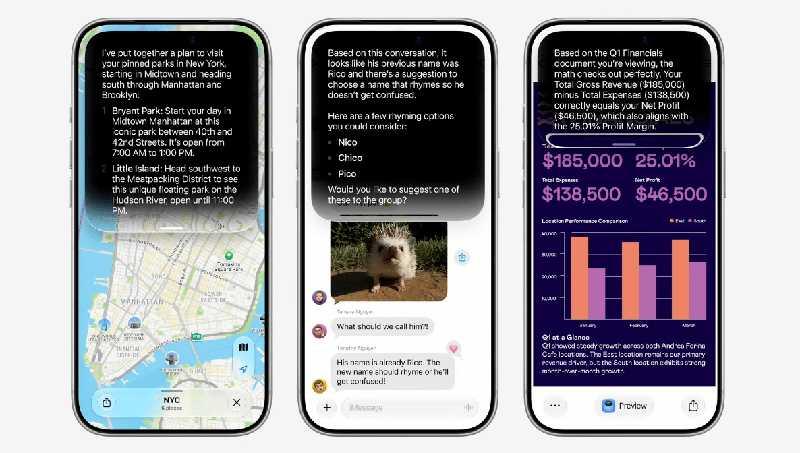
    Apple has unveiled its most significant AI launch to date, integrating new capabilities into its core software through a partnership with Google Gemini. This move aims to enhance Siri with features like onscreen awareness and web information retrieval, positioning Apple as a user-centric AI provider. The company emphasizes a focus on helpfulness over rapid, unfocused development, contrasting its approach with competitors like OpenAI and Meta. These updates are designed to improve the user experience of Apple's hardware and maintain customer engagement. AI

    Why Apple's slow-and-steady AI bet is starting to look pretty smart | TechCrunch Can Apple's new AI glow up put to bed accusations that it's losing an all-impor

    IMPACT Apple's integration of AI into its core OS and Siri could set a new standard for user-centric AI, potentially influencing competitor strategies.

  33. Fable 5 nerfed???

    Users are reporting a significant decline in the performance and capabilities of Anthropic's Fable 5 model. Many users feel the model has been "nerfed" or "lobotomized," or "enshitified" since its release, with performance drops so severe that some have canceled subscriptions. The perceived degradation has led users to seek alternative models like Codex or Cleverbot. AI

    Fable 5 nerfed???

    IMPACT User sentiment suggests a potential decline in perceived value for a specific AI model, prompting users to explore alternatives.

  34. Comparing Model Performance: Without MTP vs. With MTP vs. With MTP + QAT

    A blog post compares the performance of the Google Gemma 4 12B model with and without quantization techniques, specifically MTP (Mixed Precision Training) and QAT (Quantization-Aware Training). The author provides speed benchmarks for prompt processing and generation, showing that QAT significantly improves performance. The post also includes a TypeScript code example for the FizzBuzz problem, demonstrating both a standard and a more scalable implementation. AI

    Comparing Model Performance: Without MTP vs. With MTP vs. With MTP + QAT

    IMPACT Demonstrates performance gains from quantization, potentially influencing deployment strategies for LLMs.

  35. How to Process 100-Page Documents with AI (Using 128K Context Models)

    AIBridge is offering access to several large-context language models, including those with 128K token limits, which can process documents up to approximately 100,000 words or 200 pages. This capability eliminates the need for complex chunking and reassembly of text for analysis or summarization. The service provides instant access to models like DeepSeek-v4, Qwen3, GLM-4, and Moonshot-v1, with a special mention of Moonshot-v1-128k for its specialization in handling lengthy documents. Users can try the service with 3 million free tokens. AI

    How to Process 100-Page Documents with AI (Using 128K Context Models)

    IMPACT Enables processing of entire books and long documents without manual chunking, potentially streamlining research and analysis workflows.

  36. Local LLMs Answer 71% of Real Queries: MiMo Sets the Bar

    Local large language models have significantly improved, now accurately handling 71.3% of real-world queries, a substantial leap from 23.2% last year, according to Stanford research. This advancement is exemplified by Xiaomi's new MiMo-v2.5-Pro model, a trillion-parameter open-weights model that matches top-tier closed models on coding benchmarks and achieves over 1,000 tokens per second on commodity hardware. The increasing capability and efficiency of local models are beginning to challenge the cost dominance of frontier API-based models, though some complex tasks still require more advanced solutions. AI

    Local LLMs Answer 71% of Real Queries: MiMo Sets the Bar

    IMPACT Local models are rapidly closing the capability gap with frontier APIs, potentially inverting the cost calculus for millions of tokens processed monthly.

  37. South Korea's GDP grew 1.8% quarter-on-quarter in the first quarter, the fastest pace in more than five years

    ChatGPT is reportedly set to receive its most significant upgrade to date, with rumors suggesting a major overhaul that goes beyond simple chat functionalities. This potential update is generating considerable excitement within the tech community, hinting at expanded capabilities for the AI model. AI

    IMPACT This major upgrade could significantly enhance AI capabilities and user interaction, potentially setting new industry standards for conversational AI.

  38. Shanghai Futures Exchange: Will conduct full market tests on June 13 and June 27

    Apple has introduced a new Siri powered by AI, aiming to enhance user interaction and capabilities. In other tech news, ROKID has addressed allegations concerning its smart glasses potentially recording flight attendants. Meanwhile, OpenAI has reportedly filed confidential documents for an Initial Public Offering (IPO). AI

    IMPACT New AI capabilities in Siri could enhance user experience, while OpenAI's IPO filing signals major market activity.

  39. Hard Science Observation | WWDC 2026: Apple Finally Takes a Small Step in AI, iPhones in China Still Can't Use It

    Apple has unveiled its AI strategy at WWDC 2026, focusing on user-centric, personalized, and privacy-respecting features. The company announced a partnership with Google to develop its foundational AI model, which will operate on both device and cloud. Key upgrades include enhanced personal context understanding, world knowledge integration, app tool utilization, and screen awareness, all designed to be accessible across Apple's hardware ecosystem. However, these AI features will not be available in mainland China due to regulatory requirements, and are also facing limitations in the EU. AI

    Hard Science Observation | WWDC 2026: Apple Finally Takes a Small Step in AI, iPhones in China Still Can't Use It

    IMPACT Apple's integration of AI across its ecosystem could accelerate mainstream adoption and set new standards for on-device and privacy-focused AI.

  40. A newcomer in the first tier of domestic general large models?!

    Chinese AI company Unisound has launched its new foundational model, U2, which focuses on "intelligence density times token value" rather than simply increasing parameter count. This approach aims to reduce the cost and token consumption associated with large language models, particularly in the era of AI agents. U2 reportedly achieves performance comparable to much larger models with significantly fewer active parameters and reduced thinking token usage, making it more efficient for practical applications and development. AI

    IMPACT This model's focus on "intelligence density" and reduced token cost could significantly lower operational expenses for AI applications and agents.

  41. Ministry of Transport: In the first 5 months, the national waterway passenger transport volume reached 120 million person-times

    Xiaomi's MiMo technical team has launched MiMo-V2.5-Pro-UltraSpeed, a new mode for their model inference system. This upgrade significantly boosts inference speed to 1000 tokens/s without compromising model capabilities. Notably, it achieves this performance using only general-purpose GPUs, eliminating the need for custom hardware. AI

    IMPACT Accelerates AI model deployment and accessibility by improving inference speed on standard hardware.

  42. Gemma AI Models at a Glance: Which Gemma Model is Right for Whom? Gemma is no longer just a small Google model. With Gemma 4, Apache 2.0 and long

    Google's Gemma AI model family has expanded with Gemma 4, now available under an Apache 2.0 license. This update makes the models more relevant for local AI applications and product teams, particularly with the inclusion of longer context windows. The expanded family offers more options for various use cases. AI

    IMPACT Wider availability and improved features for Gemma models may accelerate local AI development and product integration.

  43. SCAIL-2 Launched

    Stability AI has released SCAIL-2, a new dataset designed to improve the training of text-to-image diffusion models. The dataset focuses on enhancing the models' ability to understand and generate images based on complex and nuanced textual prompts. This release aims to advance the capabilities of open-source image generation technologies. AI

    IMPACT Enhances training data for text-to-image models, potentially improving open-source image generation capabilities.

  44. DeepSeekV4 1.6T Day 0 to Day 43 Performance Over Time - Huawei, GB300 NVL72, MI355X, B200

    DeepSeekV4, a 1.6 trillion parameter model, has shown significant performance gains in the 43 days since its release. Early benchmarks indicate it is competitive with or surpasses established models like GPT-4 and Claude 3 Opus, particularly in areas such as reasoning and coding. The model's development was supported by Huawei's advanced computing infrastructure, including their GB300 NVL72 and MI355X accelerators, and NVIDIA's B200 GPUs, suggesting a strong hardware-software synergy. AI

    IMPACT DeepSeekV4's rapid performance improvement challenges existing frontier models and highlights the impact of advanced hardware on AI capabilities.

  45. With Love for Dance Appears at Tencent Cloud AI Industry Application Conference, Deeply Cultivating Education Large Models, Creating the Next Generation Learning Agent

    Yu Ai Wei Wu, a partner of Tencent Cloud, has developed a specialized large model for education and an AI learning agent called "Ai Xue." This system aims to move beyond simple question-answering by guiding students through interactive learning experiences and building a self-evolving educational ecosystem. The approach leverages a "dual flywheel" system, combining offline expert teaching data with online real-time interaction data to continuously improve the AI's pedagogical capabilities and personalize learning paths. AI

    IMPACT This specialized AI learning agent could accelerate the adoption of personalized, interactive educational tools within the education sector.

  46. Direction goes in. Cinema comes out.

    Luma Labs has released a new AI video generation model that transforms text prompts into cinematic outputs. This model aims to produce high-quality, film-like videos, indicating a significant step forward in AI-driven content creation. AI

    IMPACT Advances AI video generation capabilities, potentially enabling more sophisticated cinematic content creation.

  47. We post-trained a model that pen tests instead of refusing your code https://www. argusred.com/cli # HackerNews # penTesting # AI # model # codeSecurity # machi

    ArgusRed has developed a post-trained AI model capable of performing penetration tests on code, a departure from models that typically refuse to analyze potentially vulnerable code. This new model aims to proactively identify security flaws rather than simply rejecting code that might be risky. The development focuses on enhancing code security through automated vulnerability assessment. AI

    IMPACT This model could enhance automated code security analysis by proactively identifying vulnerabilities.

  48. Rumor: Anthropic Planning to Release Public Version of Claude Mythos Tomorrow (with Guardrails)

    Anthropic is reportedly planning to release a public version of its advanced Claude Mythos model soon, according to tech journalist Alex Heath. This model, previously available only to select partners for cybersecurity research, is expected to offer significant improvements in long-horizon tasks and agentic capabilities. The release will include substantial safety guardrails, addressing earlier concerns that led to its restricted access. AI

    IMPACT Broader access to advanced agentic and reasoning capabilities could accelerate enterprise adoption of AI-powered automation.

  49. "Superstar Startup" Kunlun Xing Robot Officially Surfaces

    Kunlunxing Robotics, a new company focused on embodied intelligence, has officially launched in Beijing's Yizhuang Economic Development Zone. Founded by former Alibaba executive Ren Geng and ex-Li Auto executive Lang Xianpeng, the startup has attracted significant early-stage investment. Kunlunxing aims to develop general-purpose embodied intelligence by focusing on physically grounded causal reasoning, positioning itself as a competitor to industry benchmarks like Tesla's humanoid robot. AI

    "Superstar Startup" Kunlun Xing Robot Officially Surfaces

    IMPACT Establishes a new player in the embodied intelligence race, potentially accelerating development towards general-purpose robots.

  50. Closing the Prior-Posterior Loop: Self-Reflective Molecular Design with Analysis-Driven LLM Iteration

    Researchers have developed a novel method for molecular design using large language models (LLMs) that moves beyond simple trial-and-error. By feeding detailed physicochemical rationales, such as orbital energies and atomic charges, back into the LLM instead of just numerical scores, the system acts as a causal reasoner. This self-reflective approach achieved a 100% success rate on moderate tasks for targeting HOMO-LUMO gaps and proved effective for dipole-moment design across multiple LLM backbones. AI

    IMPACT Enables more mechanistic and precise molecular design by providing LLMs with causal reasoning capabilities.