PulseAugur / Brief
LIVE 17:34:57

Brief

last 24h
[50/1795] 186 sources

Multi-source AI news clustered, deduplicated, and scored 0–100 across authority, cluster strength, headline signal, and time decay.

  1. Improved convergence rate of kNN graph Laplacians: differentiable self-tuned affinity

    Researchers have developed a new method for constructing k-nearest neighbor (kNN) graphs, which are fundamental in graph-based data analysis. The proposed approach refines the graph affinity calculation by adaptively setting kernel bandwidths based on local data densities. This advancement leads to an improved convergence rate for the kNN graph Laplacian, offering a more precise approximation of the underlying manifold operator. AI

    IMPACT Enhances theoretical underpinnings for graph-based machine learning techniques.

  2. A Differentiable Measure of Algebraic Complexity: Provably Exact Discovery of Group Structures

    Researchers have developed a new method to discover discrete algebraic rules from data by framing it as Cayley-table completion. This approach uses a differentiable measure of algebraic complexity, derived from an operator-valued tensor factorization called HyperCube. The method proves that this complexity measure can exactly characterize group structures, resolving a key conjecture and enabling gradient-based discovery without combinatorial search. AI

    IMPACT Enables gradient-based discovery of discrete algebraic structures, potentially advancing AI's ability to learn underlying rules from data.

  3. Optimal Query Allocation in Extractive QA with LLMs: A Learning-to-Defer Framework with Theoretical Guarantees

    Researchers have developed a Learning-to-Defer framework to improve the efficiency of extractive question answering (EQA) using large language models. This method intelligently allocates queries to specialized models, ensuring high-confidence predictions while minimizing computational costs. Tested on datasets like SQuADv1 and TriviaQA, the framework demonstrated enhanced answer reliability and significant reductions in computational overhead, making it suitable for scalable EQA deployments. AI

    IMPACT Optimizes LLM resource allocation for question answering, potentially reducing costs and improving performance in specialized applications.

  4. Adversarial Robustness in One-Stage Learning-to-Defer

    Researchers have developed a new framework to enhance the adversarial robustness of one-stage learning-to-defer (L2D) systems. This approach addresses vulnerabilities in L2D models, which can be manipulated by adversarial perturbations to alter both predictions and deferral decisions. The proposed method includes formalizing attacks, introducing cost-sensitive adversarial surrogate losses, and providing theoretical guarantees for classification and regression tasks. Experiments demonstrate improved robustness against various attacks while maintaining performance on clean data. AI

    IMPACT Introduces a new method to secure hybrid decision-making systems against adversarial attacks, potentially improving reliability in critical applications.

  5. Convergence Analysis of Newton's Method for Neural Networks in the Overparameterized Limit

    Researchers have developed a convergence analysis for Newton's method applied to neural networks in an overparameterized setting. Their work shows that as the number of hidden units increases, the training dynamics approach a deterministic limit governed by a "Newton neural tangent kernel" (NNTK). This NNTK allows for exponential convergence to a global minimum, overcoming the spectral bias issues that affect standard gradient descent, especially for high-frequency data components. AI

    IMPACT Introduces a theoretical framework for faster neural network training, potentially improving performance on complex data.

  6. Cluster-Based Generalized Additive Models Informed by Random Fourier Features

    Researchers have developed a new regression framework that combines spectral representation learning with localized additive modeling to create a more interpretable yet powerful predictive tool. The method first uses random Fourier features to learn a predictive representation, which is then compressed into a low-dimensional embedding. Within this embedding, a Gaussian mixture model identifies distinct data regimes, and cluster-specific generalized additive models capture nonlinear covariate effects using interpretable spline functions. This approach aims to balance the predictive performance of complex models with the transparency needed for critical applications, showing competitive results against both simpler interpretable models and more flexible black-box methods. AI

    IMPACT Introduces a novel statistical framework that enhances model interpretability while maintaining strong predictive performance, potentially benefiting fields requiring transparent data analysis.

  7. On the Suboptimality of GP-UCB under Polynomial Effective Optimism

    A new paper published on arXiv investigates the limitations of the Gaussian Process Upper Confidence Bound (GP-UCB) algorithm. Researchers have established upper bounds on its cumulative regret, but this work explores whether GP-UCB is truly minimax optimal. The study introduces a new regret lower bound for GP-UCB with Matérn kernels, indicating that polynomial growth in the effective optimism level hinders optimal regret rates. AI

    IMPACT Identifies a fundamental limitation in a widely used optimization algorithm, potentially guiding future research towards more optimal methods.

  8. Computational-Statistical Trade-off in Kernel Two-Sample Testing with Random Fourier Features

    Researchers have analyzed the computational-statistical trade-off in kernel two-sample testing using random Fourier features. They found that the approximated MMD test is only consistently powerful when an infinite number of random features are used. However, by carefully selecting the number of features, it's possible to achieve the same minimax separation rates as the standard MMD test within sub-quadratic time. AI

    IMPACT Establishes theoretical bounds for efficient statistical testing, potentially enabling faster analysis of large datasets in machine learning applications.

  9. Consistency of Honest Decision Trees and Random Forests

    Researchers have established new theoretical findings regarding the consistency of honest decision trees and random forests in regression tasks. The study presents elementary proofs that demonstrate both weak and almost sure convergence of these methods to the true regression function under standard conditions. This framework also extends to ensemble variants utilizing subsampling and a two-stage bootstrap sampling scheme, simplifying and synthesizing existing analyses. AI

    IMPACT Provides theoretical groundwork for understanding the asymptotic behavior of tree-based machine learning methods.

  10. SF Post Warehouse Robot, Casually Wins Embodied AI Competition

    A Tsinghua-affiliated robotics company, Stellar Motion Era, has achieved the top position in the RoboChallenge, a global benchmark for embodied AI. Their self-developed embodied model, Era0, demonstrated superior performance across 30 real-world tasks, showcasing advanced capabilities in perception, planning, and control. Era0's success is attributed to a novel approach that deeply integrates Vision-Language-Action (VLA) models with world models, enabling more robust and adaptable physical task execution. AI

    IMPACT Sets a new benchmark for embodied AI, pushing the industry towards more capable real-world robotic applications.

  11. NanoClaw creator turns down $20M buyout offer, raises $12M seed instead

    NanoCo, the developer of the security-focused AI tool NanoClaw, has secured $12 million in seed funding after a rapid viral launch. The company declined a $20 million acquisition offer, opting instead to build out its open-source project. The funding round was led by Valley Capital Partners and included investments from notable tech figures and companies. NanoClaw's popularity surged following endorsements from AI researcher Andrej Karpathy and Singapore's foreign minister, leading to significant community growth and early enterprise adoption. AI

    NanoClaw creator turns down $20M buyout offer, raises $12M seed instead

    IMPACT Accelerates adoption of secure AI agent tooling and validates community-driven open-source development models.

  12. The Neurotech CRO: Kordata Launches To Power Next-Gen Clinical Trials

    Kordata Dynamics has launched to address a $26 billion market in advancing clinical trials for central nervous system therapeutics. The company combines patient-facing neurotechnology with a B2B enterprise model, leveraging BIOS Health's proprietary NeuroTune platform for real-time treatment response analysis. Kordata partners with health systems to provide the necessary technological capabilities for running complex trials, aiming to improve drug discovery and device optimization. AI

    The Neurotech CRO: Kordata Launches To Power Next-Gen Clinical Trials

    IMPACT Accelerates adoption of AI-driven neurotechnology in clinical trials, potentially speeding up drug discovery for CNS disorders.

  13. Scaling the Memory Wall: HBM, CXL, and the New GPU Playbook

    The AI industry is grappling with a significant 'memory wall' bottleneck, where GPU processing power outstrips memory bandwidth and capacity. This challenge is exacerbated by the increasing demands of training large generative AI models and the growing need for edge inference and agentic AI. Solutions like High Bandwidth Memory (HBM), Compute Express Link (CXL), and specialized on-processor SRAM meshes are being developed to address these limitations, though they introduce new challenges in supply, cost, and thermal management. AI

    Scaling the Memory Wall: HBM, CXL, and the New GPU Playbook

    IMPACT Addresses critical memory bottlenecks in AI infrastructure, impacting the cost and efficiency of training and inference.

  14. How Google plans to win the AI war

    Google is strategically integrating AI across its vast product ecosystem, aiming to balance innovation with the protection of its profitable core businesses. The company is revamping its search engine and introducing new AI features to YouTube, emphasizing models that are both powerful and cost-effective for widespread deployment. This approach leverages Google's significant capital expenditures and existing platforms to compete at the AI frontier, even as rivals like OpenAI and Anthropic release new models. AI

    How Google plans to win the AI war

    IMPACT Google's AI integration strategy could accelerate widespread adoption and shift competitive dynamics in the AI landscape.

  15. Zhixing Technology's iDC700 L4 Autonomous Driving Controller Enters Mass Production

    Zhixing Technology has begun mass production of its iDC700 L4 autonomous driving controller. The first autonomous logistics vehicles equipped with this controller are now operational on roads. This marks a significant step towards wider deployment of L4 autonomous driving capabilities in logistics. AI

    IMPACT Enables wider deployment of L4 autonomous driving in logistics vehicles.

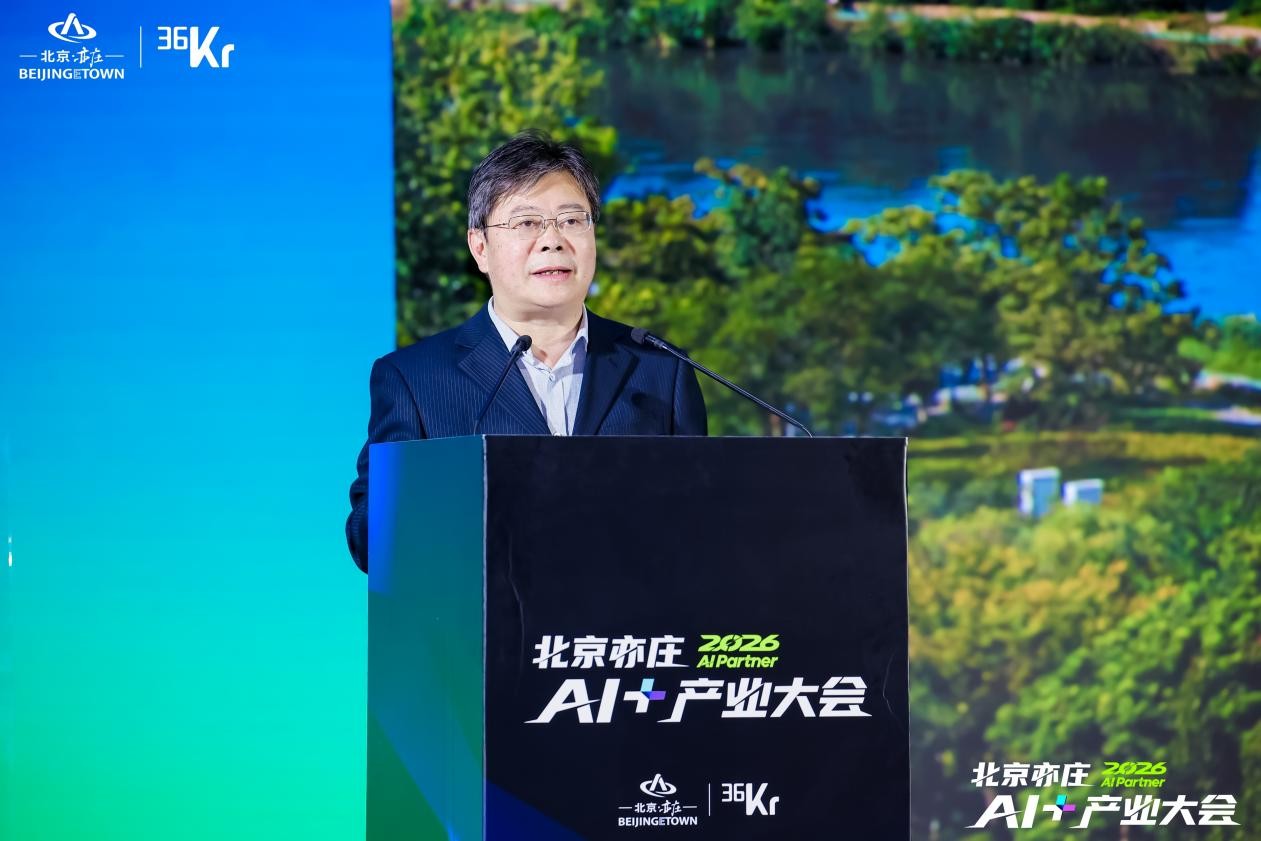
  16. Opening Speech: Building a "City of All-Domain Artificial Intelligence" | 2026 AI Partner Beijing Yizhuang AI+ Industry Conference

    Beijing's Yizhuang economic development zone is aiming to become a comprehensive AI city, focusing on practical applications across industries rather than just consumer-facing technologies. The area has already attracted over 600 AI companies and is developing a robust ecosystem that includes significant computing power, industry integration, and open urban scenarios for AI testing and deployment. Yizhuang offers substantial resources and incentives to foster AI innovation, with a goal to become a leading hub for AI technology, industry, and application by 2027. AI

    Opening Speech: Building a "City of All-Domain Artificial Intelligence" | 2026 AI Partner Beijing Yizhuang AI+ Industry Conference

    IMPACT Positions a major economic zone as a dedicated AI ecosystem, potentially accelerating industrial AI adoption and innovation.

  17. America’s new AI map shows something surprising: ‘A lot of normal people are adopting AI’

    A new report from Microsoft indicates that AI adoption is widespread across the United States, extending beyond traditional tech hubs to include "normal people" and professionals like lawyers. The study, which mapped AI user share by state and county, revealed surprising leaders, with Texas ranking fourth nationally, surpassing California. This suggests a broader demographic and economic realignment, with growing AI entrepreneurship in areas like Austin, Texas. The report also highlighted a significant digital divide, showing much lower AI usage in rural counties compared to metropolitan areas, even after accounting for demographic factors. AI

    America’s new AI map shows something surprising: ‘A lot of normal people are adopting AI’

    IMPACT Reveals a broader, more distributed AI adoption landscape beyond tech hubs, impacting how businesses and individuals engage with AI tools.

  18. Vietnamese automaker VinFast restructures, spins off nearly $7 billion in debt

    Alibaba Cloud has launched a new financial-grade intelligent agent platform called Dianjin at its 2026 Cloud Summit. This platform directly connects to market data and Alibaba's assets, supporting various data sources like Wind and East Money. Dianjin is designed for financial institutions, offering features such as zero-code configuration, millisecond response times, and robust compliance measures to ensure accurate and transparent decision-making. AI

    IMPACT Enhances financial institutions' data processing and decision-making capabilities with AI-driven insights.

  19. SpaceX publicly files Nasdaq IPO documents, stock code is SPCX

    SpaceX has officially initiated its plan for the largest initial public offering in history, filing its prospectus with U.S. regulators. The company, involved in both artificial intelligence and aerospace, aims to reshape Wall Street with this significant market move. While specific fundraising amounts and valuation are not yet disclosed, previous reports suggested a $75 billion raise at a $1.75 trillion valuation. AI

    IMPACT SpaceX's IPO could reshape Wall Street and signals significant growth in AI and aerospace sectors.

  20. Airbnb CEO Brian Chesky Called Chinese AI Fast And Cheap. Now, Congress Wants Answers

    Airbnb CEO Brian Chesky is facing scrutiny from U.S. lawmakers regarding the company's use of Chinese AI models, specifically Alibaba's Qwen. Chesky defended the practice, stating that Airbnb primarily uses open-source models and does not share data with Chinese companies, arguing that concerns about data access are a misunderstanding of the technology. This situation highlights the growing tension between U.S. national security interests and the availability of cost-effective AI solutions from China, as evidenced by a recent bipartisan bill aimed at promoting American technology procurement among allies. AI

    Airbnb CEO Brian Chesky Called Chinese AI Fast And Cheap. Now, Congress Wants Answers

    IMPACT Highlights geopolitical tensions in AI development and the trade-offs between cost-effectiveness and national security for AI adoption.

  21. ⚡ Anthropic bets on xAI's Colossus: extreme power for AI, but the cost is debated. The race for models involves increasingly salty bills. # AI # xAI 🔗 htt

    xAI is reportedly in talks to supply Anthropic with massive amounts of computing power, potentially using its Colossus supercomputer. This deal would significantly boost Anthropic's AI development capabilities. However, the immense energy requirements and associated costs of such large-scale AI computation are raising concerns about sustainability and the financial feasibility of frontier model development. AI

    IMPACT This potential deal could reshape the AI compute landscape, influencing the pace of frontier model development and raising questions about energy consumption.

  22. Alphabet invests $15 billion to build new data center in Missouri

    Alphabet, Google's parent company, is investing $15 billion to construct a new data center in New Florence, Missouri. This project is set to be one of the largest technology infrastructure initiatives in the state. The investment includes securing over 1 gigawatt of new power generation capacity and establishing a $20 million energy impact fund to support local projects and reduce household electricity costs. AI

    IMPACT Accelerates AI development by expanding cloud computing capacity and power infrastructure.

  23. Gemini randomly dumped its system prompt https://gist.github.com/mkaramuk/44a44d83178e632ec0dd1f02186d822c # HackerNews # Tech # AI

    Google's Gemini AI model inadvertently revealed its system prompt, exposing the instructions that guide its behavior. This leak occurred randomly and was shared online, providing insight into the AI's operational guidelines. The incident highlights potential vulnerabilities in how AI systems manage and protect their core instructions. AI

    IMPACT Exposes internal AI instructions, raising questions about model safety and security.

  24. Wayve's self-driving tech is headed to US cars made by Stellantis https://techcrunch.com/2026/05/21/wayves-self-driving-tech-is-headed-to-us-cars-made-by-stella

    Wayve, an AI company specializing in self-driving technology, has announced a partnership with Stellantis, a major automotive manufacturer. This collaboration will integrate Wayve's AI-powered driving systems into Stellantis vehicles intended for the US market. The deal signifies a significant step for Wayve in bringing its advanced autonomous driving solutions to a broader consumer base. AI

    IMPACT Accelerates the integration of advanced AI driving systems into mainstream consumer vehicles.

  25. Quantifying Hyperparameter Transfer and the Importance of Embedding Layer Learning Rate

    A new paper introduces a framework to quantify hyperparameter transfer, a crucial technique for scaling up large language model training. The research identifies that the primary benefit of the Maximal Update parameterization over standard parameterization stems from maximizing the embedding layer's learning rate. This adjustment smooths training and enhances hyperparameter transfer, with weight decay showing mixed results on scaling law fits and extrapolation robustness. AI

    IMPACT Identifies key factors for efficient LLM scaling, potentially improving training stability and performance.

  26. Variance Reduction for Expectations with Diffusion Teachers

    Researchers have developed CARV, a new framework designed to reduce the variance in gradients used by diffusion models in various downstream applications. This method amortizes expensive upstream computations by reusing them across multiple diffusion noise resamples, leading to significant compute multipliers. CARV has shown to improve efficiency in text-to-3D generation and data attribution tasks, though its impact on single-step distillation was limited when gradient variance was no longer the primary bottleneck. AI

    IMPACT Reduces compute costs for diffusion model applications like text-to-3D generation.

  27. Memorisation, convergence and generalisation in generative models

    Researchers have analytically characterized the transition from memorization to generalization in linear generative models. They found that convergence to the data distribution emerges continuously when the number of training samples scales linearly with the input dimension. This convergence, however, is distinct from the recovery of principal latent factors, which occurs in a sharp transition. AI

    IMPACT Provides theoretical insights into the generalization capabilities of generative models, potentially guiding future model development.

  28. Performance Express | Vipshop Q1 Net Revenue 26.6 Billion Yuan, SVIP Users Contribute Over 50% of Online Sales

    Vipshop reported first-quarter net revenue of 26.6 billion yuan, with a Non-GAAP net profit of 2.3 billion yuan. The company saw an 8.6% year-over-year increase in Gross Merchandise Volume (GMV) to 56.9 billion yuan and a 3.2% rise in order volume to 173 million. Vipshop is focusing on enhancing its product offerings, particularly in outdoor and sports categories, and improving user operations through its VIP membership program, which now contributes over 50% of online sales. The company is also integrating AI across various functions, including virtual try-on, intelligent customer service, and personalized marketing, to optimize user experience and operational efficiency. AI

    IMPACT Vipshop's AI integration in virtual try-on, customer service, and marketing aims to enhance user experience and operational efficiency.

  29. An OpenAI model has disproved a central conjecture in discrete geometry

    OpenAI announced that a general reasoning model has autonomously disproved an 80-year-old mathematical conjecture, the unit distance problem. This marks a significant advancement, as the AI generated an original proof using algebraic number theory, which has been verified by mathematicians. The company views this as a precursor to AI systems making original discoveries across various scientific fields. AI

    IMPACT Demonstrates AI's potential for original scientific discovery, moving beyond task execution to novel problem-solving.

  30. Alibaba Qwen3.7-Max Released: 35 Hours of Autonomous Evolution, The Road to the Top for Domestic Large Models

    Alibaba Cloud unveiled its new flagship large language model, Qwen3.7-Max, at its Yunfeng summit. This model has achieved the top position among Chinese models on the Arena global leaderboard, surpassing competitors like Kimi-K2.6 and DeepSeek-v4-pro. A key innovation is its ability to autonomously evolve and optimize tasks within 35 hours, demonstrating a significant leap towards more capable AI agents. AI

    Alibaba Qwen3.7-Max Released: 35 Hours of Autonomous Evolution, The Road to the Top for Domestic Large Models

    IMPACT Sets a new benchmark for Chinese LLMs and showcases advanced agent capabilities, potentially accelerating the development of autonomous AI systems.

  31. Claude Opus 4.7: A Quiet Upgrade That Earns Its Keep at Work

    Anthropic has released an update to its Claude Opus model, version 4.7, which offers improved performance and value for professional use. This iteration, shipped on April 16th, has been tested by users over the past month and is noted for its effectiveness in work-related tasks. The update is described as a quiet but valuable enhancement to the Claude Opus line. AI

    IMPACT This update to a leading frontier model likely enhances its utility for professional applications, potentially improving productivity in various work environments.

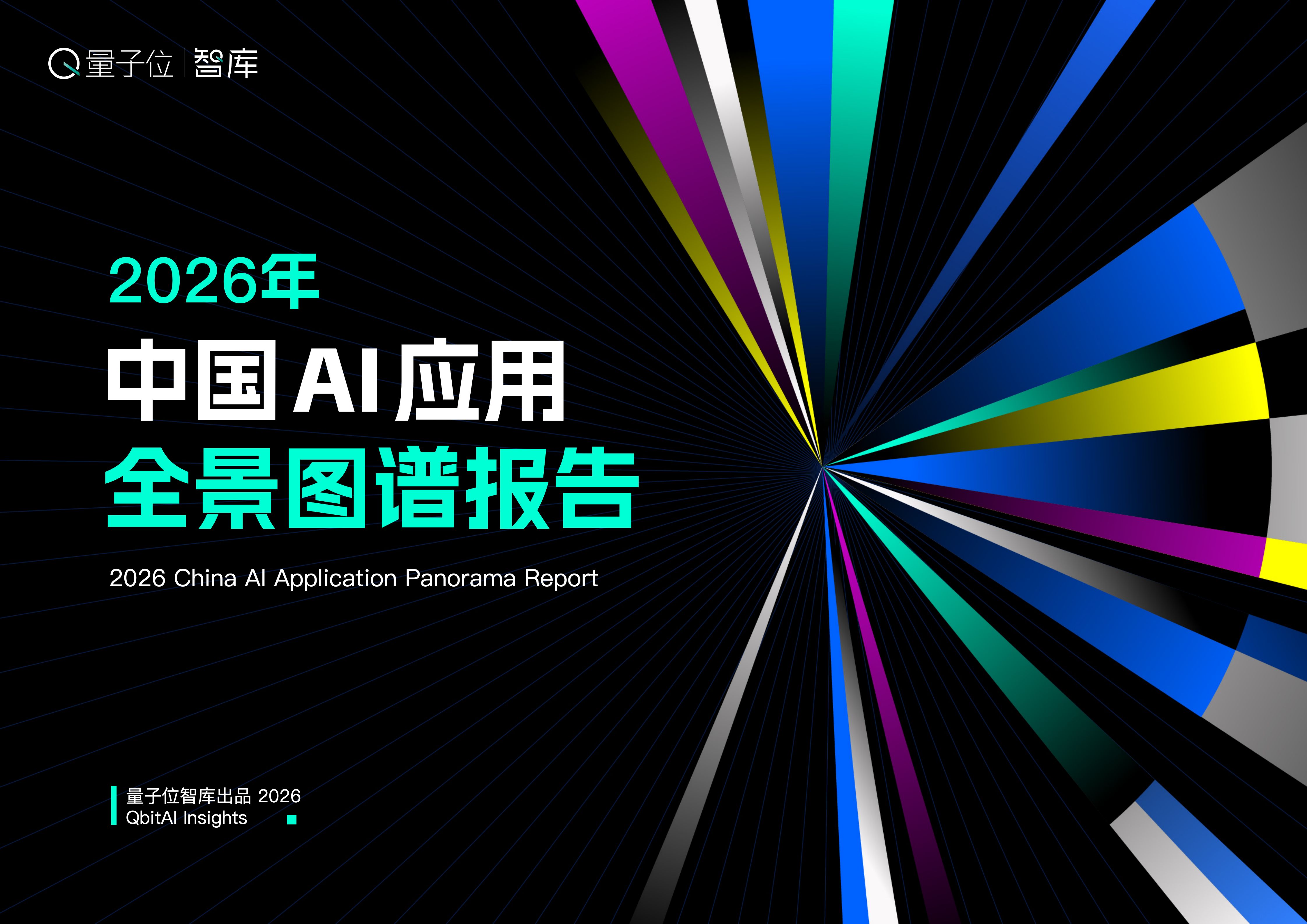
  32. Behind 900 Million Clicks, The Real World of AI Applications | 2026 China AI Application Panorama Report

    A new report from Quantum Bit Think Tank analyzes the evolving landscape of AI applications in China, shifting from simple chatbots to task-oriented agents. The report highlights a significant increase in AI application usage, with web traffic exceeding 900 million monthly visits and app downloads surpassing 240 million. Key trends include the rise of agents, the democratization of AI models, AI assistants becoming primary interfaces, the initial success of paid AI models, and the deepening penetration of AI in vertical business sectors. AI

    Behind 900 Million Clicks, The Real World of AI Applications | 2026 China AI Application Panorama Report

    IMPACT Highlights China's leading role in AI application adoption and the shift towards task-oriented AI, influencing global development priorities.

  33. ‘Solve all diseases,’ you say?

    Google DeepMind CEO Demis Hassabis announced Gemini for Science at Google I/O, a suite of AI tools aimed at accelerating scientific discovery, particularly in medicine. While Hassabis stated the company's hope to "solve all diseases," the article clarifies this refers to dramatically reducing the time for medical breakthroughs rather than an immediate cure. The tools build upon existing projects like AlphaFold, which aids in understanding protein structures, and AlphaGenome, which predicts DNA mutations, though ethical and practical limitations remain. AI

    ‘Solve all diseases,’ you say?

    IMPACT Accelerates AI's role in medical research, potentially speeding up drug discovery and disease understanding.

  34. The Whitepaper Thunderdome: EvoMemBench vs. Remembering More, Risking More

    Two recent arXiv papers, EvoMemBench and Remembering More, Risking More, present contrasting perspectives on evaluating and managing memory in AI agents. EvoMemBench, from researchers at HKUST Guangzhou and other institutions, argues that current memory benchmarks are too narrow and proposes a new self-evolving benchmark to address this. In contrast, the Remembering More, Risking More paper from UC Davis and the University of Michigan highlights the potential longitudinal safety risks associated with memory-equipped agents, suggesting that these risks may not be immediately apparent. AI

    The Whitepaper Thunderdome: EvoMemBench vs. Remembering More, Risking More

    IMPACT New benchmarks and safety considerations for AI agent memory are crucial for developing more robust and reliable AI systems.

  35. A 3-step agent cost me $4.20. agenttrace showed me the O(n ) tool call hiding in plain sight.

    A developer discovered a significant cost overrun in an AI agent, escalating from an estimated $0.12 to $4.20 for a three-step process. The issue stemmed from an unbounded loop in the agent's cite-check step, causing input tokens to grow quadratically with each iteration due to re-attaching the full prior history. The developer implemented a fix using a sliding window approach, reducing the cost to $0.14 and highlighting the utility of the agenttrace-rs crate for diagnosing such performance and cost issues by providing detailed breakdowns of LLM calls. AI

    A 3-step agent cost me $4.20. agenttrace showed me the O(n ) tool call hiding in plain sight.

    IMPACT Provides developers with a tool to diagnose and fix costly LLM agent behavior, potentially reducing operational expenses.

  36. Nanya Technology: Production capacity will increase by 80% to 100% in 2-3 years compared to the present

    Nanya Technology, a memory chip manufacturer, is set to significantly increase its production capacity over the next two to three years, aiming for an 80% to 100% boost. This expansion includes validating 16Gb DDR5 products, advancing LPDDR5 production, and developing new manufacturing processes. The company plans substantial capital expenditure, with new facilities expected to contribute to output starting next year. AI

    IMPACT Increased memory chip production capacity is crucial for supporting the growing demands of AI hardware and infrastructure.

  37. Alibaba signals next phase of AI growth from investment to commercialisation

    Alibaba is transitioning its AI efforts from initial investment to full-scale commercialization, aiming to become China's leading full-stack AI provider. The company projects 30 billion yuan in AI revenue by 2026, with AI agents expected to account for over half of its cloud sales. Alibaba's comprehensive AI ecosystem includes its own T-Head chips, cloud infrastructure, model-as-a-service platforms, and the Qwen foundation models, alongside consumer products like the Qwen app and the Wukong enterprise agent platform. AI

    Alibaba signals next phase of AI growth from investment to commercialisation

    IMPACT Alibaba's strategic shift to AI commercialization and projected revenue targets signal a major push in the Chinese AI market.

  38. San Francisco thinks AI can save the whales. Here’s how

    An AI-powered detection system called WhaleSpotter has been launched in San Francisco Bay to help prevent whale deaths from ship strikes. The system uses thermal cameras and AI to scan for whale blows and heat signatures, alerting nearby mariners to slow down or reroute. This initiative aims to address a significant increase in gray whale deaths, with at least 40% attributed to collisions with vessels. Scientists are linking the whales' diversion into the bay to climate change disrupting their Arctic feeding grounds. AI

    San Francisco thinks AI can save the whales. Here’s how

    IMPACT Enhances maritime safety and conservation efforts by providing real-time whale detection to prevent collisions.

  39. How Transformers Quietly Became the Foundation of Modern AI

    The Transformer architecture has become the bedrock of contemporary artificial intelligence, shifting the paradigm from simple memorization to sophisticated contextual understanding. This foundational technology enables models to focus on relevant information, a key development in advancing AI capabilities. Its widespread adoption underscores its critical role in the current AI landscape. AI

    IMPACT Explains the core architectural innovation that underpins most modern AI models.

  40. AMD plans to fully expand its data center CPU product roadmap to TSMC's 2nm process technology

    AMD is planning to extend its data center CPU product roadmap to TSMC's 2nm process technology. The company also intends to broaden its strategic partnerships to enhance advanced packaging capabilities. Separately, a new entity, Fosun Hanlin (Nanjing) Biotechnology Co., Ltd., has been established with a registered capital of 50 million RMB, wholly owned by Fosun Hanlin. AI

    IMPACT AMD's adoption of advanced process nodes for its CPUs will impact the performance and efficiency of AI workloads.

  41. Abu Dhabi National Oil Company is investing $150 billion to meet global energy demand

    Abu Dhabi National Oil Company (ADNOC) is investing $150 billion to meet global energy demands and foster domestic growth in AI, advanced manufacturing, logistics, and industrial sectors. Separately, Nvidia reported a Q1 net profit of $58.3 billion, and Google CEO Sundar Pichai stated that Gemini has 900 million monthly active users. AI

    IMPACT ADNOC's investment in AI and Nvidia's strong financial performance indicate continued growth and investment in the AI sector.

  42. AMD is cooperating with TSMC to increase the production capacity of the next generation of CPUs

    AMD is collaborating with TSMC to increase production capacity for its upcoming generation of CPUs. This partnership aims to bolster the manufacturing of next-generation processors. The report also touches upon broader market movements, including a widening decline in the Hang Seng Tech Index. AI

    IMPACT Enhances foundational compute infrastructure, potentially enabling more powerful AI hardware.

  43. Chat With Your Documents Using Garudust Agent — No Vector Database Required

    Garudust Agent has launched a new feature that allows users to chat with their documents without needing a separate vector database. The system utilizes SQLite's FTS5 with a trigram tokenizer for efficient full-text search, enabling quick ingestion and querying of PDFs, text files, and other document types. This approach simplifies the process of building a knowledge base or analyzing documents by integrating RAG capabilities directly into the agent. AI

    IMPACT Simplifies document interaction by removing the need for complex vector database setups.

  44. Stop Using Raw Vector Search: Implement GraphRAG with Spring AI and Neo4j

    Developers can enhance AI retrieval systems by implementing GraphRAG, which combines vector search with graph database capabilities. This approach, demonstrated using Spring AI and Neo4j, addresses limitations of raw vector search by preserving relational context and generating structured queries. By integrating Neo4j as both a vector index and graph database, and using Spring AI's ChatClient for deterministic Cypher generation, developers can create more robust and less hallucination-prone AI applications. AI

    IMPACT Improves enterprise AI retrieval by preserving relational context and reducing hallucinations.

  45. General Administration of Customs releases 'Several Measures to Support the Construction of the Guangdong-Hong Kong-Macao Greater Bay Area' in Guangdong

    South Korea has announced plans to establish itself as a global AI hub, aiming to attract international organizations and development banks to collaborate on addressing challenges like disease control and climate change. This initiative, detailed by the Ministry of Economy and Finance, seeks to foster cross-border cooperation in the AI field. The announcement comes alongside other tech news, including Nvidia's Q1 earnings and Google CEO Sundar Pichai's statement on Gemini's user base. AI

    IMPACT South Korea's initiative could foster international AI collaboration and accelerate development in critical areas.

  46. Three Rough Edges of Running Claude Code + Telegram MCP on Windows: A 200-Line Toolkit

    A developer has created a 200-line open-source toolkit to address three minor issues encountered when running Claude Code via Telegram on Windows. The toolkit resolves a visual annoyance of multiple command windows appearing on login by using VBScript to hide the console windows. It also fixes a problem where the Telegram polling mechanism would stop receiving messages by implementing a script to kill orphaned Telegram processes before starting a new session. Finally, it prevents a scenario where running multiple Claude Code instances simultaneously could lead to a zombie process issue. AI

    IMPACT Provides a practical solution for users integrating AI code assistants into their workflow, improving usability.

  47. Shandong: By 2028, the province's artificial intelligence industry revenue will exceed 250 billion yuan

    Shandong Province in China has released a plan aiming to significantly boost its artificial intelligence industry by 2028. The initiative targets an annual revenue of over 250 billion yuan for the AI sector, representing more than 10% of the national total. Key objectives include developing industrial large models, establishing specialized industry models, and creating numerous high-level industrial intelligent agents and advanced manufacturing applications. AI

    IMPACT Sets ambitious regional targets for AI adoption in manufacturing, potentially driving significant investment and innovation within China.

  48. Stop Getting 'It Depends' Answers About RAG Architecture

    A new tool called RAG Readiness has been developed to provide specific, opinionated recommendations for Retrieval-Augmented Generation (RAG) system architectures. Instead of offering comparison tables that can be paralyzing, RAG Readiness asks users about their use case, data, and constraints to recommend a single, reasoned choice for each component, such as the vector database, embedding model, and retrieval method. The tool also offers features for diagnosing existing RAG systems, running multi-use-case audits, generating implementation starter kits, and estimating costs. AI

    IMPACT Simplifies complex RAG architecture decisions, potentially accelerating adoption and deployment of RAG systems.

  49. BALLAST: Bayesian Active Learning with Look-ahead Amendment for Sea-drifter Trajectories under Spatio-Temporal Vector Fields

    Researchers have developed a new active learning methodology called BALLAST to improve the inference of time-dependent vector fields, particularly for oceanography. This method uses a physics-informed Gaussian process surrogate model and considers the future trajectories of measurement observers. BALLAST has demonstrated benefits in synthetic and high-fidelity ocean current models, and a novel GP inference method, VaSE, was also introduced to enhance sampling efficiency. AI

    IMPACT Introduces a novel active learning approach for scientific data inference, potentially improving the efficiency of oceanographic research.

  50. He who wins the scene wins the AI world, and a data player worth paying attention to has emerged in the travel track.

    The AI industry is facing a scarcity of real-world, interactive data crucial for developing advanced AI like world models and embodied intelligence. Ride-hailing platforms, such as Ruqi Mobility, are emerging as significant data providers by leveraging their operational fleets to collect continuous, multi-modal driving data. This data, encompassing decision-making, vehicle responses, and environmental feedback, is vital for training AI that can understand and interact with the physical world, offering a more cost-effective and scalable solution than traditional data collection methods. AI

    IMPACT Ride-hailing data collection offers a scalable, cost-effective solution for the scarce real-world interaction data needed for advanced AI.