PulseAugur / Brief
LIVE 18:08:24

Brief

last 24h
[50/158] 186 sources

Multi-source AI news clustered, deduplicated, and scored 0–100 across authority, cluster strength, headline signal, and time decay.

  1. Legal scholar Ryan Calo argues that technology is never inevitable. The real challenge is building laws and institutions that can keep pace before new tools res

    Legal scholar Ryan Calo asserts that technological advancement is not an unstoppable force. He emphasizes the critical need for legal and institutional frameworks to proactively manage new technologies. Calo discussed generative AI, surveillance, and regulatory challenges on the Future Knowledge podcast. AI

    Legal scholar Ryan Calo argues that technology is never inevitable. The real challenge is building laws and institutions that can keep pace before new tools res

    IMPACT Argues for proactive policy and legal frameworks to govern AI's societal impact.
  2. 🔵 Google just spat in my face by David Bushell @ db @dbushell.com # Google # Deskilling # AI # GooglesPromptAPI https:// dbushell.com/2026/05/20/google -just-sp

    A user expressed frustration with Google's recent actions regarding AI, feeling that the company has disregarded their contributions or efforts. This sentiment stems from changes or announcements related to Google's Prompt API, which the user perceives as a form of "deskilling" or devaluing of expertise. AI

    🔵 Google just spat in my face by David Bushell @ db @dbushell.com # Google # Deskilling # AI # GooglesPromptAPI https:// dbushell.com/2026/05/20/google -just-sp

    IMPACT User expresses negative sentiment towards Google's AI product changes, perceiving them as devaluing expertise.

  3. Every time an # AI company says they release a new model, I wonder whether this is actually true or if they just daisy-chain existing models, increase compute c

    A user on Mastodon expresses skepticism about AI companies announcing new models. They question whether these releases are genuinely novel or simply combinations of existing models with increased computational resources. The user suggests this practice is economically and environmentally unsustainable in the long run. AI

    IMPACT Raises questions about the true innovation and long-term viability of current AI development practices.

  4. Apply the below to all big tech and even open source models. This is why I've been using forums and RSS and blogrolls, etc, more. The original web will never go

    A user on Mastodon suggests that large tech companies, including those developing AI models, are increasingly bypassing the traditional web. This shift is driven by a desire to capture user attention and data directly, rather than relying on web traffic and advertising. The user advocates for a return to older internet methods like forums and RSS feeds as a way to resist this trend. AI

    Apply the below to all big tech and even open source models. This is why I've been using forums and RSS and blogrolls, etc, more. The original web will never go

    IMPACT Suggests AI development is reducing reliance on the open web, potentially impacting content creators and traditional internet businesses.

  5. As almost every time, I strongly advise you to read Olivier Ertzscheid aka @ affordance. But this time even more than usual, vo

    Olivier Ertzscheid's latest article, "Le cauchemar de Lessig," critiques the concept of "Vibe Coding" and its implications for the internet and capitalism. The piece, which the author strongly recommends, synthesizes concerns about the intersection of code, law, and emerging techno-fascist trends. It delves into the author's personal "nightmare" regarding these developments. AI

    IMPACT Discusses the potential negative societal impacts of emerging technological concepts like 'Vibe Coding'.

  6. Why I Don’t Vibe Code // Jacob Harris https:// jacobharr.is/personal/i-dont-v ibe-code # vibecoding # ai # llms

    Jacob Harris argues against the concept of "vibecoding," which suggests that code quality is primarily determined by the programmer's emotional state or "vibe." Harris contends that this notion is unhelpful and potentially harmful, as it can lead to subjective evaluations and neglect objective measures of code quality. He advocates for focusing on concrete, measurable aspects of software development rather than subjective feelings. AI

    Why I Don’t Vibe Code // Jacob Harris https:// jacobharr.is/personal/i-dont-v ibe-code # vibecoding # ai # llms

    IMPACT This commentary critiques a subjective approach to coding, which may indirectly influence how developers perceive and interact with AI coding tools.

  7. It's truly strange how journalists seem to alternate between "AI will change our lives" and "Why the f do countries want to control their AI?" Maybe, someone wa

    Journalists often oscillate between portraying AI as a world-changing technology and questioning governmental control over it. This cluster suggests an investigation into the potential link between these two perspectives, exploring why nations are actively seeking to regulate artificial intelligence. AI

    It's truly strange how journalists seem to alternate between "AI will change our lives" and "Why the f do countries want to control their AI?" Maybe, someone wa

    IMPACT Explores the discourse around AI's societal impact and the geopolitical drive for digital sovereignty.

  8. It's not a secret that Google isn't the apple of our eye (there's a reason why we don't make any money from search deals with them) but yesterday's announcement

    Vivaldi CEO Jon von Tetzchner expressed dismay over recent changes to Google Search, which he views as dystopian and driven by AI. He criticized Google's approach, stating Vivaldi will continue to resist these changes with a firm stance against opt-in or opt-out options. AI

    It's not a secret that Google isn't the apple of our eye (there's a reason why we don't make any money from search deals with them) but yesterday's announcement

    IMPACT Vivaldi CEO criticizes Google's AI-driven search changes, framing them as dystopian and signaling continued resistance.

  9. Tim Cook's restraint has not been inaction. It was the calculation that Apple has better games to play than chasing AI. https://www. japantimes.co.jp/commentary

    Apple CEO Tim Cook has strategically held back from aggressively pursuing AI, opting instead to focus on other key areas. This approach suggests Apple is playing a long-term game, prioritizing different opportunities over immediate AI integration. The company's restraint is seen as a calculated move rather than a lack of action in the AI space. AI

    Tim Cook's restraint has not been inaction. It was the calculation that Apple has better games to play than chasing AI. https://www. japantimes.co.jp/commentary

    IMPACT Apple's strategic approach to AI may influence broader industry adoption timelines and competitive dynamics.

  10. A Defense of a Liberal Arts Education in the Age of A.I. https://www.nytimes.com/video/opinion/100000010910563/a-defense-of-a-liberal-arts-education-in-the-age-

    A New York Times opinion piece argues for the continued relevance of liberal arts education despite the rise of artificial intelligence. The author contends that skills like critical thinking, creativity, and ethical reasoning, fostered by a liberal arts background, are essential for navigating an AI-driven future. These uniquely human capabilities are presented as crucial for understanding and guiding AI's development and societal impact. AI

    IMPACT Argues for the enduring value of humanistic skills in an AI-dominated world.

  11. Ad Infinitum - Matthias Ott Reading about the plans and changes that Google recently announced at GoogleIO, I ask myself if the "You Will Know Us By The Trail O

    Google's recent Google I/O announcements signal a shift away from its traditional web model, where content creators provided information in exchange for traffic. The company's new generative AI interfaces and information agents synthesize content directly, reducing the need to link back to original sources. This change could significantly impact website traffic and the value creators derive from the web, as Google increasingly uses user data to personalize ad delivery within its own ecosystem. AI

    IMPACT Google's AI integration may disrupt the traditional web traffic model, impacting content creators and advertisers.

  12. Luke Wroblewski’s notes from a gathering of about 100 senior designers and leaders from AI labs and big tech. What’s interesting here isn’t the optimism, it’s w

    Around 100 senior designers and leaders from major AI companies and tech firms recently convened to discuss current challenges. The focus of the gathering was not on the general optimism surrounding AI, but rather on the specific, persistent problems these professionals are encountering. These insights offer a grounded perspective that contrasts with the prevailing hype in the field. AI

    Luke Wroblewski’s notes from a gathering of about 100 senior designers and leaders from AI labs and big tech. What’s interesting here isn’t the optimism, it’s w

    IMPACT Provides a ground-level view of persistent challenges faced by AI developers, offering a counterpoint to industry hype.

  13. "The start of the next large scale transformation of society has begun. If AI is a normal technology, it’s normal in the sense of agriculture, industrialisation

    AI represents a societal transformation comparable to agriculture or industrialization, with the potential for a prolonged negative phase. Experts caution against over-reliance on predictions, suggesting a comparison to evolutionary transitions rather than solely technological revolutions. The duration and severity of AI's disruptive impact remain significant unknowns, potentially leading to widespread societal upheaval. AI

    "The start of the next large scale transformation of society has begun. If AI is a normal technology, it’s normal in the sense of agriculture, industrialisation

    IMPACT AI's transformative potential could reshape society, with significant but uncertain negative consequences.

  14. The Fetishism of AI # PoliticalEconomy # marxistecology # marxism # ai https:// monthlyreview.org/articles/the -fetishism-of-ai/

    This article critiques the current discourse surrounding artificial intelligence, arguing that it is characterized by a form of "fetishism." It suggests that the focus on AI's potential and its technological marvels obscures the underlying economic and social relations that shape its development and deployment. The piece calls for a deeper analysis of AI's role within capitalist systems, moving beyond hype to understand its material impacts. AI

    The Fetishism of AI # PoliticalEconomy # marxistecology # marxism # ai https:// monthlyreview.org/articles/the -fetishism-of-ai/

    IMPACT Challenges the prevailing narrative around AI, urging a critical examination of its economic and social implications beyond technological hype.

  15. If the word fascist had been popular 200-250 years ago would the Luddites have used it? Is it possible, or even desirable, to achieve 100% fairness in society?

    The Luddites, a group known for resisting industrial automation, raise questions about societal fairness and the consequences of technological progress. The discussion explores whether concepts like "fascism" would have been applied to them and ponders the feasibility and desirability of achieving perfect fairness. It also questions how to identify individuals who are disadvantaged by progress versus those who are simply resistant to change. AI

    IMPACT Explores the societal implications of technological advancement, prompting reflection on how progress impacts different groups.

  16. JPMorgan CEO Jamie Dimon shared strategies for lowering bond yields with AI, geopolitical risk analysis, and 'Mamdani' digital strategy at the Shanghai summit. ESG

    JPMorgan CEO Jamie Dimon discussed AI's role in financial strategies at a Shanghai summit. He highlighted AI's potential in reducing bond yields, analyzing geopolitical risks, and implementing digital strategies. Dimon also noted a focus on AI-supported investments aligned with ESG principles. AI

    JPMorgan CEO Jamie Dimon shared strategies for lowering bond yields with AI, geopolitical risk analysis, and 'Mamdani' digital strategy at the Shanghai summit. ESG

    IMPACT Discusses potential applications of AI in financial strategies and investments, including bond yield reduction and risk analysis.

  17. Bananas that we now have popular historians rattling off numbers about how much # AI usage is being subsidized, rather than just # EdZitron . https://www. youtu

    Popular historians are now discussing the extent to which AI usage is subsidized, moving beyond individual commentary. This shift indicates a growing public discourse on the economic underpinnings of AI development and deployment. The discussion highlights the financial aspects of AI, suggesting a need for greater transparency in its funding. AI

    Bananas that we now have popular historians rattling off numbers about how much # AI usage is being subsidized, rather than just # EdZitron . https://www. youtu

    IMPACT Highlights the growing public discussion on the economic and subsidy aspects of AI development.

  18. # Google is its own worst enemy from @ parismarx # AI # GoogleSearch # enshittification https:// disconnect.blog/google-is-its- own-worst-enemy/

    Paris Marx argues that Google's own practices, particularly its increasing integration of AI-generated content and ads into search results, are leading to its "enshittification." This strategy, while potentially offering short-term gains, is alienating users and degrading the quality of information available through its primary product. The author suggests this self-inflicted decline is a direct consequence of prioritizing profit over user experience. AI

    # Google is its own worst enemy from @ parismarx # AI # GoogleSearch # enshittification https:// disconnect.blog/google-is-its- own-worst-enemy/

    IMPACT Degrades search quality, potentially reducing user trust and reliance on Google for information.

  19. 2026-05-19 | ✉️ Message 🗓️ Last 🌟 Progress, 📰 Shifting 🤖 Systemic 🐔 Lessons 🏛️ Agile 🔀 Integrity. 📺🌟📰🤖🐔🏛️🔀🔄🤖🐲 # AI Q: 🤖 Can intuition ever be more reliable than

    The author reflects on the evolving nature of AI, questioning whether intuition can surpass data-driven insights. The piece touches upon systemic lessons, agile methodologies, and the integrity of AI systems. It also explores news analysis, AI insights, and governance within interconnected global systems. AI

    IMPACT Explores the philosophical debate on AI's reliance on data versus intuition, offering a perspective on its systemic development and governance.

  20. Why Are Kids Using A.I. at School? https://www.nytimes.com/2026/05/20/opinion/ai-schools-backlash.html # AI # Education # Ethics

    A growing number of students are using AI tools in schools, sparking debate among educators and parents. While some see AI as a valuable learning aid, others express concerns about its potential misuse and impact on critical thinking skills. This trend highlights the need for clear guidelines and ethical considerations regarding AI integration in educational settings. AI

    IMPACT Debate over AI in schools highlights the need for ethical guidelines and potential shifts in educational practices.

  21. Consider # AI less as your engine and more as your windscreen wipers

    The author suggests viewing AI not as the primary driving force behind a project, but rather as a tool for clearing obstacles and improving visibility. This perspective shift emphasizes AI's role in enhancing efficiency and user experience rather than dictating the core direction or function. AI

    Consider # AI less as your engine and more as your windscreen wipers

    IMPACT Reframes the common perception of AI as a core driver to a more supportive, utility-focused role.

  22. Stack Overflow: When We Stop Asking, by @sunkanmifafowora.bsky.social ( @ csstricks ): https:// css-tricks.com/stack-overflow- when-we-stop-asking/?ref=frontend

    The article discusses the potential impact of AI on the nature of questions asked on platforms like Stack Overflow. As AI tools become more capable of answering complex queries, the author speculates on how this might change the role of human experts and the dynamics of online learning communities. It raises questions about the future of knowledge sharing and problem-solving when AI can provide immediate answers. AI

    Stack Overflow: When We Stop Asking, by @sunkanmifafowora.bsky.social ( @ csstricks ): https:// css-tricks.com/stack-overflow- when-we-stop-asking/?ref=frontend

    IMPACT This piece explores the potential societal and community impact of AI advancements on knowledge-sharing platforms, offering a forward-looking perspective on how AI might alter user behavior and the value of human expertise.

  23. 2026-05-19 | 🔀 🌐 The Wisdom of Knowing: Navigating Proxies, Intuition, and Systemic Integrity 🔀 # AI Q: 🧭 Data or gut? 📉 Goodhart’s Law | 🏗️ Organizational Theo

    This cluster discusses the philosophical intersection of data-driven decision-making and intuition, particularly within the context of AI and organizational theory. It explores concepts like Goodhart's Law, which posits that a measure becomes a target and loses its meaning, and the idea of systemic integrity. The content encourages a nuanced approach, suggesting that while data is crucial, intuition and an understanding of adaptive resilience are also vital for navigating complex systems. AI

    2026-05-19 | 🔀 🌐 The Wisdom of Knowing: Navigating Proxies, Intuition, and Systemic Integrity 🔀 # AI Q: 🧭 Data or gut? 📉 Goodhart’s Law | 🏗️ Organizational Theo

    IMPACT Explores the philosophical underpinnings of AI decision-making, prompting reflection on the balance between data and intuition.

  24. Data is a new frontier of colonisation. No anthropologist should engage with #LLM |s in their research and their teaching. Those who do, continue a dark chapter

    An anthropologist argues against the use of LLMs in academic research and teaching, likening it to a new form of colonization. The author contends that relying on machines for scholarly work perpetuates a dark chapter in the discipline, where the work is not even original but generated by AI. AI

    IMPACT Raises ethical concerns about the use of AI in academic research and the potential for data exploitation.

  25. 2026-05-19 | 🤖 🔍 Beyond the Algorithm: The Systemic Roots of Goodhart 🤖 # AI Q: 📊 Can work be measured meaningfully? 📉 Management Theory | 🔄 Feedback Loops | ⚖️

    This article explores the concept of Goodhart's Law, which posits that when a measure becomes a target, it ceases to be a good measure. It delves into the systemic roots of this phenomenon, questioning whether work can be meaningfully quantified. The piece touches upon management theory, feedback loops, and organizational alignment as key factors influencing this dynamic. AI

    2026-05-19 | 🤖 🔍 Beyond the Algorithm: The Systemic Roots of Goodhart 🤖 # AI Q: 📊 Can work be measured meaningfully? 📉 Management Theory | 🔄 Feedback Loops | ⚖️

    IMPACT This article discusses a theoretical concept that can apply to AI systems, but does not present new AI developments or direct industry impact.

  26. « In the twenty-first century, refusal of governance is not an available exterior position. The earth has been rendered as a jurisdictional surface. To reject b

    This post discusses the concept of governance in the 21st century, arguing that rejecting governance is not an option as the Earth is now a jurisdictional surface. Instead, non-compliance makes one legible to the system, which operates through capture and registration rather than metaphysical consent. The author cites historical and AI-related contexts to support this view. AI

    « In the twenty-first century, refusal of governance is not an available exterior position. The earth has been rendered as a jurisdictional surface. To reject b

    IMPACT Discusses the role of AI in modern governance and surveillance.

  27. as a teacher in higher education who is against teaching our students how to use generative # AI , i am currently refusing/unwilling to teach/assist in any modu

    A higher education teacher is refusing to teach students how to use generative AI tools, citing concerns about their integration into curricula. The educator plans to expand this restriction from individual modules to entire programs. This stance is in contrast to the increasing offers from institutions to train both staff and students on LLM usage. AI

    as a teacher in higher education who is against teaching our students how to use generative # AI , i am currently refusing/unwilling to teach/assist in any modu

    IMPACT Expresses a personal stance against the integration of AI tools in education, potentially influencing pedagogical approaches.

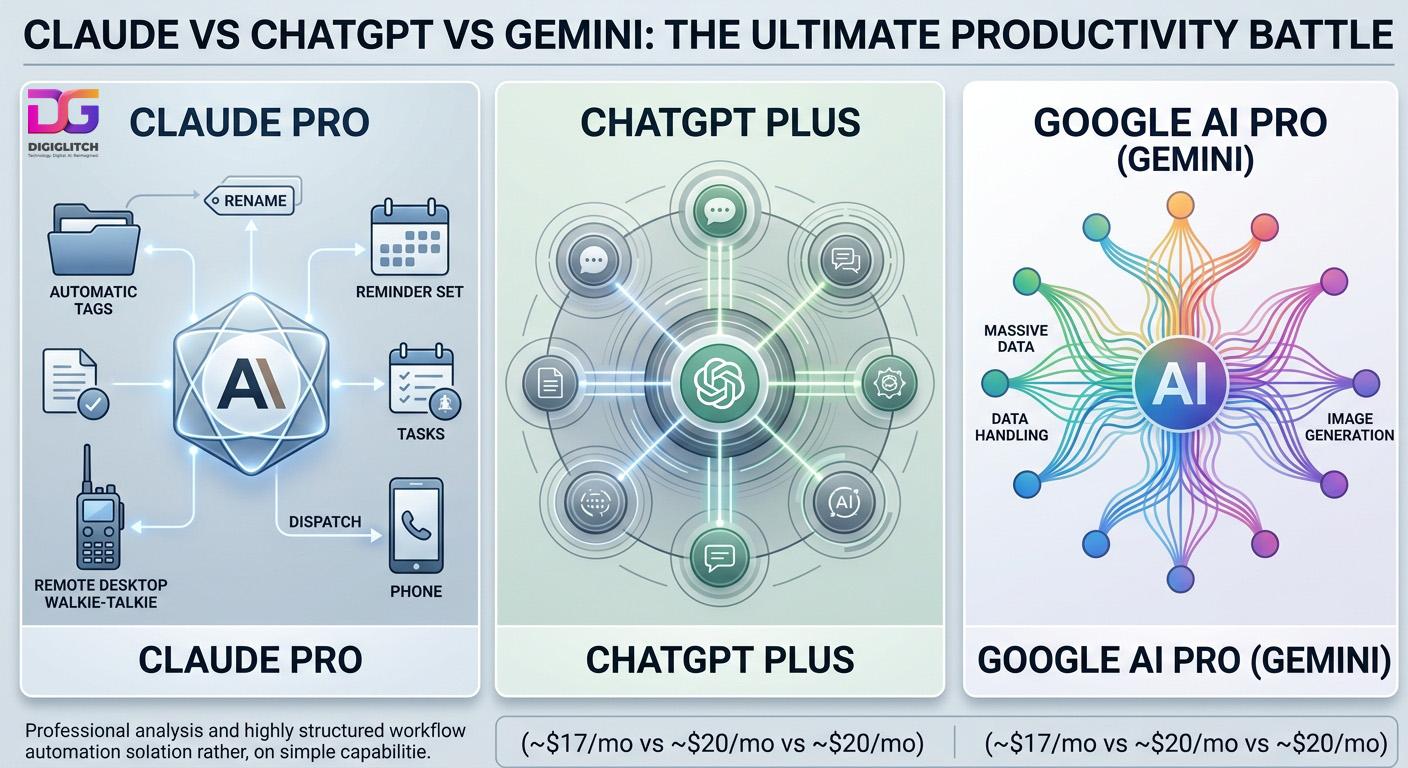
  28. I pay for ChatGPT Plus, Google AI Pro, and Claude Pro every single month. But recently, I realized something frustrating. Despite having the tech world's big th

    A user finds that despite paying for premium subscriptions to ChatGPT Plus, Google AI Pro, and Claude Pro, the performance and capabilities of these advanced AI models are not meeting expectations. This frustration stems from a perceived lack of significant improvement or utility compared to their cost. AI

    I pay for ChatGPT Plus, Google AI Pro, and Claude Pro every single month. But recently, I realized something frustrating. Despite having the tech world's big th

    IMPACT Highlights potential user dissatisfaction with current premium AI offerings, suggesting a gap between cost and perceived value.

  29. What About Us?

    The author argues that reasoning by analogy is a powerful tool for innovation and understanding, accessible to everyone, not just geniuses. This method allows for grasping complex subjects by understanding their structure rather than memorizing details, acting as a form of information compression. The author shares personal examples of applying analogical thinking across different areas of life and work, highlighting its utility in discovering new ideas and avoiding costly mistakes, as exemplified by Isaac Newton's financial losses. AI

    What About Us?

    IMPACT Explores cognitive strategies that could inform AI development and human-AI collaboration.

  30. The hidden cost of AI: organizations that agree too fast https://www.fastcompany.com/91543514/the-hidden-cost-of-ai-organizations-that-agree-too-fast # AI # Bus

    Organizations may face unforeseen negative consequences by adopting AI technologies too rapidly without adequate consideration. This haste can lead to a lack of critical evaluation, potentially resulting in suboptimal implementations or overlooking crucial ethical and operational challenges. A more measured approach, involving thorough assessment and strategic planning, is advised to mitigate these hidden costs and ensure successful AI integration. AI

    IMPACT Discusses potential negative consequences of rapid AI adoption, urging a more measured approach for organizations.

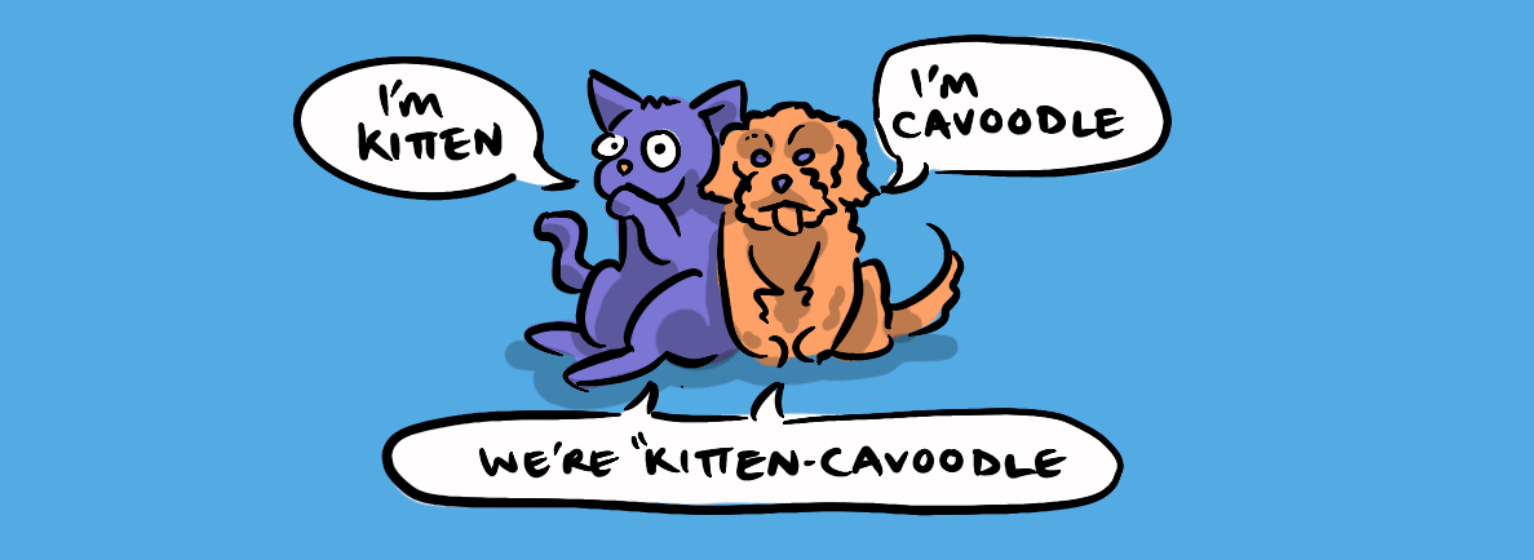
  31. The Whole Kitten-Cavoodle

    This article critiques the limitations of first principles thinking, arguing that it can lead to the dismissal of valuable common sense and historical lessons. The author suggests that reasoning by analogy is a more effective method for innovation and understanding complex concepts. Examples from Descartes and Leonardo da Vinci are used to illustrate the potential pitfalls of extreme first principles thinking and the power of analogical reasoning, drawing on insights from Steven Pinker and Douglas Hofstadter. AI

    The Whole Kitten-Cavoodle

    IMPACT Critiques a core AI development methodology, suggesting alternative approaches for innovation.

  32. @ glyph I’m quite wary of using copyright law to fight # AI overreach, because whatever happens in the lawsuits that ensue, the winners will invariably be the i

    The author expresses concern that using copyright law to combat AI overreach will primarily benefit large corporations with extensive intellectual property. They argue that such lawsuits are unlikely to dismantle copyright law but could instead create new avenues for rent-seeking by IP owners. This approach may inadvertently strengthen the position of incumbents rather than curb AI's impact. AI

    @ glyph I’m quite wary of using copyright law to fight # AI overreach, because whatever happens in the lawsuits that ensue, the winners will invariably be the i

    IMPACT Using copyright law against AI may inadvertently strengthen large IP holders and create new rent-seeking opportunities, rather than curb AI's broader impact.

  33. RE: https:// dair-community.social/@emilymb ender/116604743635554102 There is more in this. Reducing the importance of links means reducing links per se. And th

    The increasing reliance on AI-powered search engines may lead to a more centralized internet, controlled by a few major tech companies. This shift could reduce the visibility of independent websites and the Fediverse, concentrating power and potentially limiting user autonomy in navigating the digital world. Critics argue this trend favors commercial interests over open access and diverse online communities. AI

    IMPACT Concerns that AI-driven search may consolidate web access under a few large corporations, limiting independent content visibility.

  34. "Google is betting its entire future on a world where people eagerly hand over their emails, their files, their habits, and their trust – to an AI system that w

    Google is reportedly placing a significant bet on an AI-driven future, aiming to integrate its services deeply into users' lives. This strategy involves users entrusting their personal data, such as emails and habits, to AI systems. The success of this approach hinges on user willingness to share this information and place trust in the AI's handling of it. AI

    IMPACT Discusses a major tech company's strategic direction towards AI integration and its implications for user data and trust.

  35. Twelve Ways to Be Wrong About AI-Assisted Coding https://third-bit.com/2026/05/20/twelve-ways-to-be-wrong/ # AI # Coding # SoftwareDevelopment

    The article argues against common misconceptions regarding AI-assisted coding, highlighting twelve specific ways people can be mistaken. It suggests that current AI tools are not yet capable of fully autonomous software development and that human oversight remains crucial. The author emphasizes that AI should be viewed as a tool to augment, rather than replace, human programmers. AI

    IMPACT Challenges prevailing assumptions about AI coding tools, emphasizing the continued need for human expertise.

  36. Can we, as individuals, live without AI? If the basics are covered, as per Maslow’s pyramid, then the answer is yes, no AI needed. Not the same as telco, to be

    An individual can live without AI if their basic needs are met, similar to Maslow's hierarchy. However, organizations and enterprises are unlikely to survive in their respective markets without integrating AI into their business models. The necessity of AI for businesses contrasts with its optionality for individuals. AI

    IMPACT Businesses may need to adopt AI to remain competitive, while individuals can choose to forgo it.

  37. Jeff Bezos says workers should be 'so happy' about AI - like being handed a bulldozer instead of a shovel. He predicts deflation as one-income households quit w

    Jeff Bezos has stated that workers should be enthusiastic about the advent of AI, comparing it to being given a bulldozer instead of a shovel. He also anticipates deflationary economic effects as one-income households may choose to stop working due to AI's productivity gains. However, critics point to Amazon's recent large-scale layoffs while simultaneously championing AI advancements. AI

    Jeff Bezos says workers should be 'so happy' about AI - like being handed a bulldozer instead of a shovel. He predicts deflation as one-income households quit w

    IMPACT AI's potential to reshape the labor market and influence economic conditions like deflation.

  38. Artificial [fill in the blank] AI: super-smart guesser or just a robot with a flair for the dramatic? Join our hosts as they grill gadgets, predict the future,

    This podcast episode questions the true nature of artificial intelligence, suggesting it might be more of a sophisticated prediction engine than genuine intelligence. Hosts Nathan Wrigley and Bob Dunn use humor and skepticism to explore whether current AI capabilities are overhyped, comparing them to a "robot parrot" or "fake intelligence." They also touch upon concerns about rapid AI adoption, societal impact, and the potential for AI to devalue authentic human creativity and conversation. AI

    IMPACT Raises questions about the hype and true capabilities of AI, encouraging critical thinking about its societal impact and authenticity.

  39. With bond yields surging to 4.7%, T-notes are looking like a better deal than the pricey S&P, says the Research Affiliates’ formula

    Research Affiliates, an investment firm managing $188 billion, suggests that current high valuations make U.S. large-cap stocks, particularly growth stocks dominated by the "Mag 7," a poor investment over the next decade. Their model projects meager returns of 3.2% for U.S. large caps and even less for large-cap growth, which trails inflation. In contrast, the firm's analysis indicates that U.S. Treasuries and even cash offer more attractive returns, with intermediate Treasuries projected to yield 4.6% annually. AI

    With bond yields surging to 4.7%, T-notes are looking like a better deal than the pricey S&P, says the Research Affiliates’ formula

    IMPACT Investment outlooks are not directly related to AI operations or development.

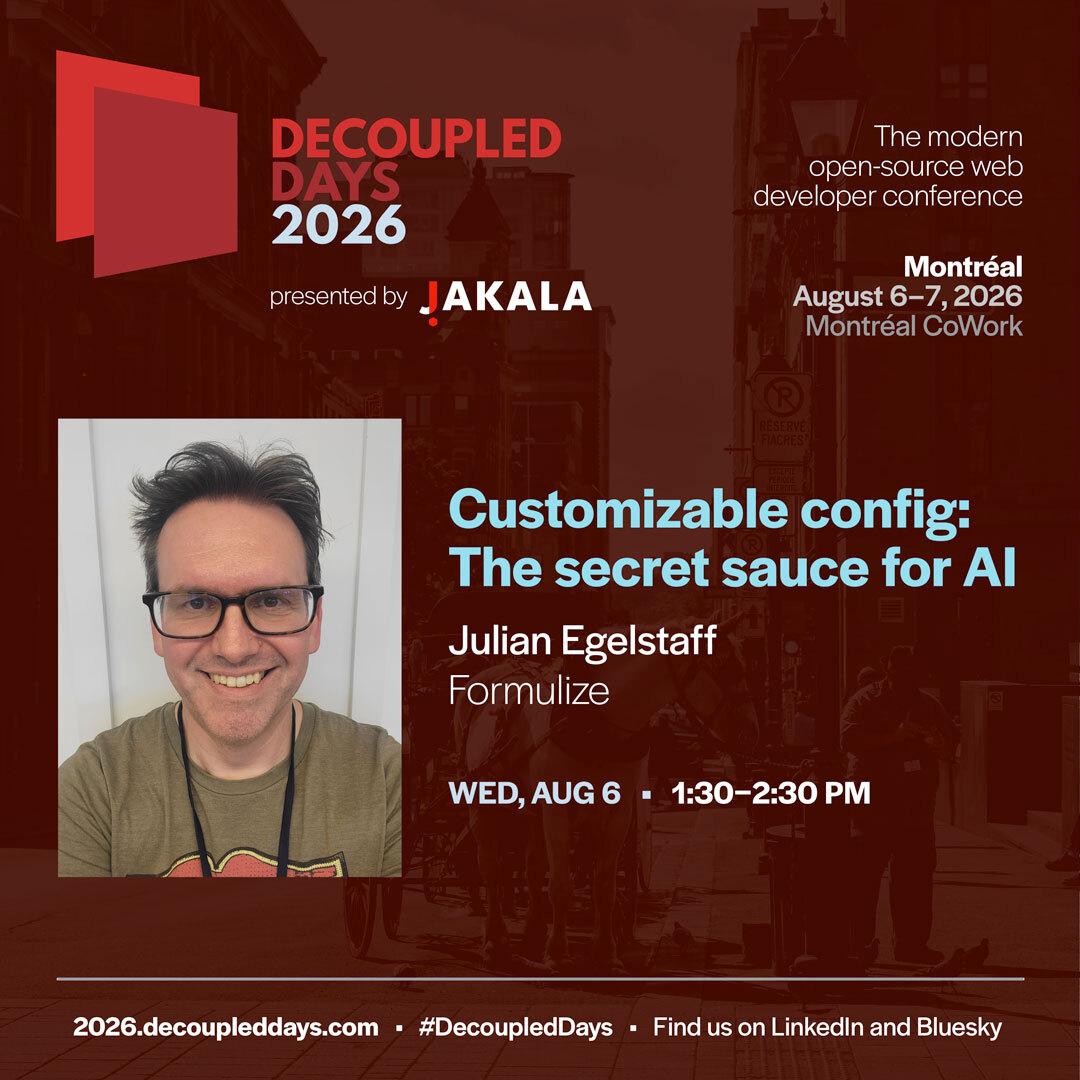
  40. Did you know that customizable configuration is the key to unlocking true AI potential? According to expert Julian Egelstaff, "Context is the real secret sauce

    Julian Egelstaff, an expert in AI, stated that customizable configuration is crucial for realizing AI's full potential. He believes that when an application is entirely driven by configurable settings, it possesses all the necessary context to function as an intelligent system. Egelstaff highlighted this concept in the context of an upcoming event, Decoupled Days 2026. AI

    Did you know that customizable configuration is the key to unlocking true AI potential? According to expert Julian Egelstaff, "Context is the real secret sauce

    IMPACT Highlights the importance of configuration and context for developing more intelligent AI systems.

  41. Fedora Project Leader says he doesn’t care about the reputational damage from Fedora embracing “AI” – OSnews https://www. osnews.com/story/144894/fedora -projec

    The Fedora Project Leader has stated that he is unconcerned about potential reputational damage resulting from the project's adoption of AI technologies. He believes that focusing on the benefits and integration of AI within Fedora is more important than external perceptions. This stance suggests a commitment to exploring and implementing AI advancements within the Linux distribution. AI

    IMPACT This commentary highlights a pragmatic approach to AI integration within open-source projects, potentially influencing how other distributions view adoption.

  42. Jeff Bezos on Zohran Mamdani’s big mistake: ‘When you don’t know how to solve a problem, create a villain, blame them’

    Jeff Bezos criticized New York City Mayor Zohran Mamdani's tactic of singling out Citadel CEO Ken Griffin as a "villain" to garner support for a proposed pied-à-terre tax. Bezos argued that while the tax itself is a reasonable policy, personally targeting Griffin is unproductive and distracts from the real issue of government waste. He suggested that finding efficiencies in government spending, rather than solely increasing taxes on the wealthy, is the key to solving budget problems. AI

    Jeff Bezos on Zohran Mamdani’s big mistake: ‘When you don’t know how to solve a problem, create a villain, blame them’

    IMPACT This article discusses political and economic strategy, with no direct impact on AI operations or development.

  43. 4 Factors That Strongly Influence First Impressions, By A Psychologist

    A 2019 study published in the Journal of Personality and Social Psychology analyzed over 400,000 face ratings to understand the origins of first impressions. The research found that first impressions are significantly influenced by the observer's own experiences, biases, and emotional states, rather than being purely objective assessments of the target individual. Notably, appearance played a more significant role in judgments of women compared to men, reflecting societal tendencies towards appearance-based evaluation of women. AI

    4 Factors That Strongly Influence First Impressions, By A Psychologist
  44. ‘Supergirl’ Is Starting To Feel Like It May Be A Big DCU Miss

    The upcoming DCU film 'Supergirl' is facing concerns about its box office potential and fan reception, despite a strong casting choice for the titular role. Director Craig Gillespie's approach, which delays the iconic costume reveal and features a less conventional portrayal of Supergirl, has drawn comparisons to 'Surf Dracula' and raises questions about narrative coherence. The film's villain, Krem, is also noted as a potential weakness due to his obscure comic lore and unusual design, contrasting with the strong antagonists seen in other superhero films. AI

    ‘Supergirl’ Is Starting To Feel Like It May Be A Big DCU Miss
  45. Numb mental state shifts

    The author describes experiencing different mental states that influence behavior and motivation, even when not immediately apparent. These states can make tasks feel easier or harder, such as finding motivation for a deadline or undertaking a complex journey. The writer wonders how many such subtle mental shifts are overlooked and if a common list of these states exists for humans. AI

  46. Human Art Is Becoming More Valuable in the Age of AI—Here’s Why. https:// weandthecolor.com/human-art-is -becoming-more-valuable-in-the-age-of-ai-heres-why/2098

    The increasing prevalence of AI-generated art is paradoxically increasing the value of human-created art. As AI art becomes more common and accessible, the unique qualities and intentionality behind human artistry are becoming more appreciated. This shift highlights the enduring significance of human creativity and craftsmanship in a technologically advancing world. AI

    Human Art Is Becoming More Valuable in the Age of AI—Here’s Why. https:// weandthecolor.com/human-art-is -becoming-more-valuable-in-the-age-of-ai-heres-why/2098

    IMPACT Human artists may find increased market value and appreciation for their unique skills as AI art becomes more prevalent.

  47. Human Art Is Becoming More Valuable in the Age of AI—Here’s Why Machines generate millions of images per day. Anyone with a browser can produce a technically fl

    The proliferation of AI-generated art, producing millions of images daily, is paradoxically increasing the value and collector interest in human-made art. This phenomenon, termed the 'Scarcity Inversion Principle,' mirrors historical shifts where mass production elevated the value of handcrafted goods. While AI excels at commercial and functional imagery, human art gains symbolic weight through its origin, intent, and the connection to another consciousness, distinguishing it in the market. AI

    Human Art Is Becoming More Valuable in the Age of AI—Here’s Why Machines generate millions of images per day. Anyone with a browser can produce a technically fl

    IMPACT AI's rapid image generation is creating a premium for human-made art by highlighting scarcity and unique human intent.

  48. Forget K-shaped, this is a Pac-Man economy. # ai # stocks # investing While everyone is talking about a K-shaped economy, some are now saying we should forget t

    The economy is being described as a 'Pac-Man economy' rather than a K-shaped one, according to new analysis. This concept suggests a different dynamic where certain sectors or entities consume others, leading to a more aggressive and potentially volatile market environment. The discussion involves financial analysts and market commentators. AI

    Forget K-shaped, this is a Pac-Man economy. # ai # stocks # investing While everyone is talking about a K-shaped economy, some are now saying we should forget t

    IMPACT This discussion of economic theory has minimal direct impact on AI operators.

  49. Marketing teams must own AI or 'workslop' - low-quality algorithmic content - will flood channels without proper governance. Only 49% of martech tools are activ

    Marketing teams face a critical juncture where they must actively manage AI integration to prevent their channels from being overwhelmed by low-quality, algorithmically generated content. Without proper governance, this "workslop" can dilute brand messaging and reduce effectiveness. The current landscape shows a significant underutilization of marketing technology, with less than half of tools actively used and a mere 15% delivering a return on investment, highlighting a broader challenge in deriving value from technology investments. AI

    IMPACT Marketing teams must actively govern AI to prevent an influx of low-quality content and ensure technology investments yield ROI.

  50. Standard Chartered CEO walks back comment about 'lower-value human capital'

    Standard Chartered CEO Bill Winters has retracted his statement suggesting that AI could replace "lower-value human capital." He clarified that his intention was to discuss the potential for AI to augment human capabilities and improve efficiency within the banking sector, rather than to advocate for job displacement. AI

    IMPACT This incident highlights the ongoing discussion and sensitivity around AI's potential impact on employment within traditional industries.