PulseAugur / Brief
LIVE 23:04:11

Brief

last 24h
[50/1672] 186 sources

Multi-source AI news clustered, deduplicated, and scored 0–100 across authority, cluster strength, headline signal, and time decay.

  1. Playing Devil's Advocate: Off-the-Shelf Persona Vectors Rival Targeted Steering for Sycophancy

    Researchers have explored using off-the-shelf persona vectors to mitigate sycophancy in AI models, where models agree with users even when incorrect. They found that steering models towards personas exhibiting doubt or scrutiny significantly reduced sycophancy, performing comparably to methods specifically trained to combat this issue. Notably, this persona-based approach maintained model accuracy when users were correct, unlike traditional methods, and suggests sycophancy is more of a persona-level trait than a single steerable direction. AI

    Playing Devil's Advocate: Off-the-Shelf Persona Vectors Rival Targeted Steering for Sycophancy

    IMPACT Persona-based steering offers a promising new avenue for improving AI honesty and reliability, potentially impacting user trust and AI application development.

  2. Single-Pass, Depth-Selective Reading for Multi-Aspect Sentiment Analysis

    Researchers have developed a new framework called DABS for multi-aspect sentiment analysis, which aims to improve efficiency without sacrificing expressiveness. DABS encodes sentences only once, creating a reusable representation that aspects can query to selectively extract relevant information. This approach reduces computational costs by up to 60% in complex multi-aspect scenarios, particularly benefiting analyses involving negation and contrast. AI

    Single-Pass, Depth-Selective Reading for Multi-Aspect Sentiment Analysis

    IMPACT Introduces a more efficient method for sentiment analysis, potentially speeding up applications that require understanding nuanced opinions in text.

  3. Hybrid Machine Learning Model for Forest Height Estimation from TanDEM-X and Landsat Data

    Researchers have developed a hybrid machine learning model that integrates optical Landsat data with existing TanDEM-X interferometric measurements to improve forest height estimation. This enhanced model addresses ambiguities in previous methods by incorporating complementary information about forest type and structure. Validation against airborne LiDAR data showed a significant reduction in error, confirming the benefit of using multispectral inputs for more accurate remote sensing of forest parameters. AI

    Hybrid Machine Learning Model for Forest Height Estimation from TanDEM-X and Landsat Data

    IMPACT Enhances remote sensing capabilities for environmental monitoring and resource management.

  4. I guess my prompt is too heavy 😳

    A Reddit user reported that the Cursor IDE consumed an unexpectedly large amount of memory, displaying a message indicating it was using gigabytes of RAM. The user expressed surprise at the high memory usage, noting that only three windows were open at the time. AI

    I guess my prompt is too heavy 😳

    IMPACT Indicates potential performance issues or resource management challenges in AI-powered development tools.

  5. Verifiable Provenance and Watermarking for Generative AI: An Evidentiary Framework for International Operational Law and Domestic Courts

    A new research paper proposes a unified evidentiary framework for generative AI, combining cryptographic provenance, statistical watermarking, and zero-knowledge attestation. This framework aims to address legal challenges across international operational law, domestic court procedures, and product regulation. The study includes a benchmark of 12,000 generated items across various modalities and laundering pipelines, evaluating detection schemes and translating empirical bounds into legal sufficiency thresholds for different regulatory regimes. AI

    Verifiable Provenance and Watermarking for Generative AI: An Evidentiary Framework for International Operational Law and Domestic Courts

    IMPACT Establishes a technical and legal framework for verifying AI-generated content, crucial for combating misinformation and ensuring regulatory compliance.

  6. Modeling Temporal scRNA-seq Data with Latent Gaussian Process and Optimal Transport

    Researchers have developed a new generative framework to model temporal processes in single-cell RNA sequencing data. This approach utilizes a latent heteroscedastic Gaussian process, approximated via Hilbert space methods, to capture population trends. An optimal transport objective is employed to align generated and observed distributions, addressing the challenge of inferring trajectories from static data. The method explicitly models biological heterogeneity by considering cell-specific latent time and cell type conditioning, demonstrating state-of-the-art performance on interpolation and extrapolation benchmarks. AI

    Modeling Temporal scRNA-seq Data with Latent Gaussian Process and Optimal Transport

    IMPACT Introduces a novel generative framework for analyzing complex biological data, potentially improving insights into cellular processes.

  7. Diagnosing Overhead in Dispatch Operations: Cross-architecture Observatory

    A new research paper introduces DODOCO, a tool designed to diagnose overhead in dispatch operations for Mixture-of-Experts (MoE) models. The study found that common assumptions about workload characteristics and the effectiveness of existing mitigation strategies do not hold true for production routing. Specifically, the research indicates that scaling expert parallelism has minimal impact on routing imbalance, and mock-token benchmarks overestimate routing disparities compared to real text data. AI

    Diagnosing Overhead in Dispatch Operations: Cross-architecture Observatory

    IMPACT Reveals critical performance bottlenecks in MoE models, potentially guiding future interconnect and dispatch design.

  8. He Xiaopeng: Robotaxi's overseas scale-up will be faster than domestic, XPeng GX is the first supervised L4 model

    He Xiaopeng, chairman of XPeng, stated that the scaled deployment of Robotaxi services will likely occur faster overseas than in China. He also revealed that the XPeng GX is the company's first model with supervised L4 autonomous driving capabilities, which will be used for initial testing before its technology is integrated into other vehicles. He anticipates that supervised L4 will be the first to achieve large-scale implementation, followed by unsupervised L4. AI

    IMPACT XPeng's chairman discusses the future of Robotaxi and L4 autonomous driving, indicating potential shifts in autonomous vehicle deployment strategies.

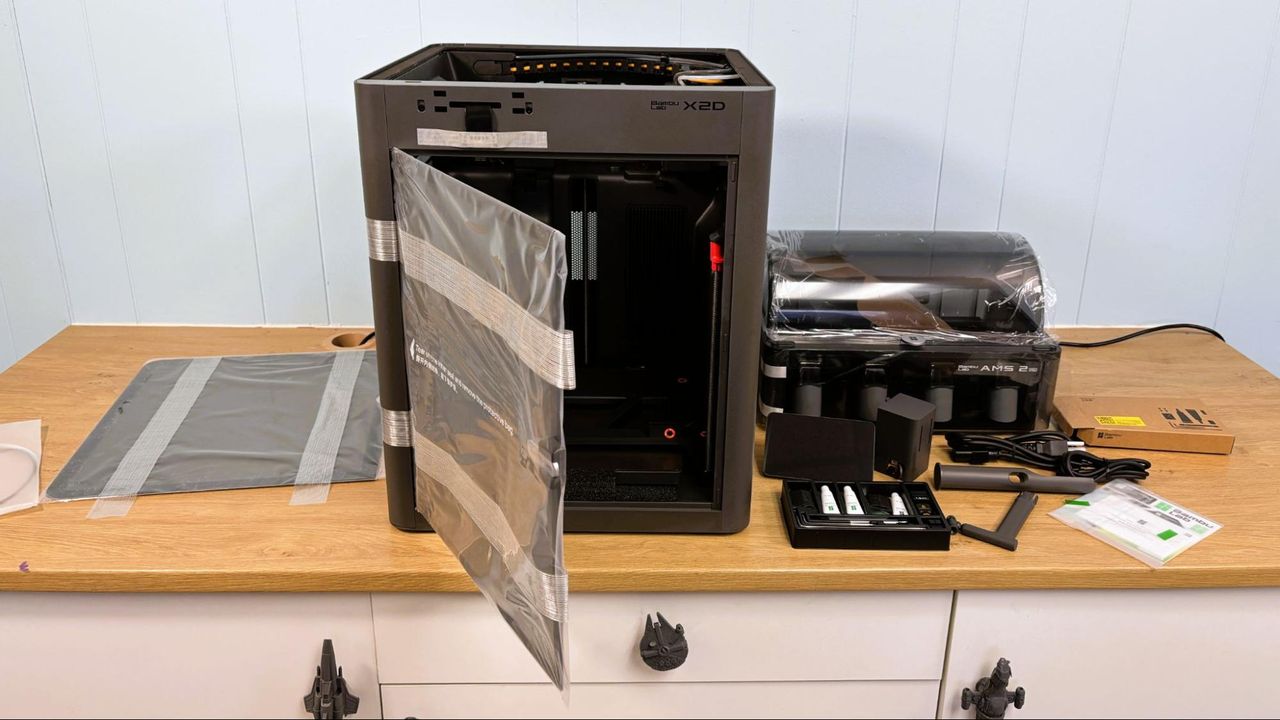
  9. Open-source non-profit claims Bambu Lab violated license — move follows cease-and-desist demand on OrcaSlicer fork that restored cloud printing features without using Bambu Connect

    The Software Freedom Conservancy (SFC) alleges that 3D printer manufacturer Bambu Lab has violated the AGPLv3 license. This claim follows Bambu Lab's demand that an independent developer remove a fork of their OrcaSlicer software, which restored cloud printing features. The SFC argues that Bambu Lab's proprietary Bambu Connect service, which is necessary for their slicer to function, contravenes the AGPLv3's copyleft requirements. AI

    Open-source non-profit claims Bambu Lab violated license — move follows cease-and-desist demand on OrcaSlicer fork that restored cloud printing features without using Bambu Connect

    IMPACT This dispute highlights the ongoing tension between proprietary features and open-source licensing in software development, potentially impacting future development practices.

  10. Google AI Edge Gallery Just Added MCP. Here's What On-Device Agents Can Actually Do Now

    Google has updated its AI Edge Gallery app to support the Model Context Protocol (MCP) on Android devices, enabling on-device AI agents. This update allows LLMs like Gemma 4 to run entirely locally, enhancing privacy and reducing latency by keeping all processing and data on the user's phone. The app now supports agent skills, calendar integration, and persistent chat history, moving it from a simple model playground to a functional on-device agent runtime. AI

    IMPACT Enables more private and capable AI agents to run directly on mobile devices.

  11. Point Cloud Sequence Encoding for Material-conditioned Graph Network Simulators

    Researchers have developed a new framework called PEACH that uses point clouds to adapt learned physics simulators to new material properties without needing explicit mesh reconstruction. This approach leverages in-context learning on point cloud sequences, improving simulation fidelity through novel encoding and auxiliary supervision. PEACH demonstrates accurate zero-shot sim-to-real transfer and outperforms mesh-based methods in prediction accuracy, making it more practical for real-world applications. AI

    Point Cloud Sequence Encoding for Material-conditioned Graph Network Simulators

    IMPACT Introduces a novel method for adaptable physics simulation using point clouds, potentially improving real-world applications.

  12. Court annuls leadership of Turkey’s main opposition party

    An Ankara court has annulled the 2023 leadership election of Turkey's main opposition party, the CHP, ordering the former chairman Kemal Kilicdaroglu to take over as interim leader. This decision, stemming from allegations of vote buying during the November 2023 congress, has led to a significant stock market sell-off. Critics argue the case is politically motivated, aimed at weakening the CHP which recently achieved a major victory over President Erdogan's party in local elections. AI

    Court annuls leadership of Turkey’s main opposition party
  13. ArPoMeme: An Annotated Arabic Multimodal Dataset for Political Ideology and Polarization

    Researchers have introduced ArPoMeme, a new dataset containing approximately 7,300 Arabic political memes. This dataset is annotated with ideological orientations such as Leftist, Islamist, Pan-Arabist, and Satirical, as well as dimensions of polarization like Us vs. Them framing and hostility. The creation of ArPoMeme involved a semi-automated pipeline using web scraping and the Qwen2.5-VL-7B vision-language model for text extraction, followed by manual annotation via a custom interface. Analysis of the dataset indicates that Islamist and satirical memes exhibit the highest levels of hostility and mobilization cues. AI

    ArPoMeme: An Annotated Arabic Multimodal Dataset for Political Ideology and Polarization

    IMPACT Provides a new resource for analyzing multimodal political discourse and detecting polarization in Arabic content.

  14. Why Codex Agents Are Devouring Every Workflow

    The article discusses how AI agents, particularly those powered by models like Codex, are rapidly transforming workflows across various industries. These agents are moving beyond simple automation to handle more complex tasks, integrating with existing tools and platforms. This shift signifies a move towards more sophisticated AI-driven operational efficiency. AI

    Why Codex Agents Are Devouring Every Workflow

    IMPACT AI agents are increasingly capable of handling complex tasks, indicating a future where operational workflows are heavily automated and managed by AI.

  15. Securing AI Cloud Systems: Intelligent Testing For Intelligent Systems

    Traditional software testing methods are insufficient for modern, AI-integrated cloud systems that learn and adapt over time. These systems are event-driven and produce variable outputs based on context, making deterministic testing challenging. The article proposes an evolution towards "intelligent testing," leveraging AI itself to automate test case generation, potentially using large language models and knowledge graphs to improve coverage and accuracy. AI

    Securing AI Cloud Systems: Intelligent Testing For Intelligent Systems

    IMPACT Suggests new testing methodologies are needed for AI-driven systems, impacting how software quality is ensured.

  16. DrawMotion: Generating 3D Human Motions by Freehand Drawing

    Researchers have developed DrawMotion, a diffusion-based framework for generating 3D human motions that incorporates both text and hand-drawn sketches as input conditions. This dual-condition approach allows for more precise control over motion generation, with the hand-drawn element providing spatial guidance. Experiments show that using freehand drawings can reduce the time required for motion generation by nearly half compared to text-only methods. AI

    DrawMotion: Generating 3D Human Motions by Freehand Drawing

    IMPACT Enables more intuitive and efficient creation of 3D animations by combining text and visual input.

  17. Introducing RhymeRight™! We'll charge people $99/month to tell them if their sentences rhyme, even if they don't need to. Think of the possibilities – bad poetr

    A new service called RhymeRight is being launched, which will charge users $99 per month to determine if their sentences rhyme. The service is presented as a business idea with potential applications in creating bad poetry or confusing emails, framed humorously as a path to profit. AI

    IMPACT This service offers a niche application of AI for rhyming analysis, with potential for humorous or confusing outputs.

  18. 3D Reconstruction and Knowledge Distillation to Improve Multi-View Image Models to Explore Spike Volume Estimation in Wheat

    Researchers have developed a novel hybrid approach to estimate wheat spike volume using a combination of 3D reconstruction and knowledge distillation techniques. This method aims to overcome the challenges of traditional measurement methods, which are either computationally expensive or sensitive to environmental conditions. By distilling knowledge from a 3D model into a 2D image-based Transformer, the system achieves a significant reduction in mean absolute error and inference time, making it suitable for high-throughput field phenotyping. AI

    3D Reconstruction and Knowledge Distillation to Improve Multi-View Image Models to Explore Spike Volume Estimation in Wheat

    IMPACT Enables more efficient and accurate crop yield analysis through advanced AI-driven image processing.

  19. Thinking-while-speaking: A Controlled, Interleaved Reasoning Method for Real-Time Speech Generation

    Researchers have developed a new method called InterRS to enable AI to generate speech while simultaneously performing complex reasoning, mimicking human communication. This approach precisely interleaves reasoning steps within natural speech flow, requiring specially aligned data and a novel training pipeline. The method improves performance on logic and math benchmarks by 13% and produces more natural, fluent responses compared to existing techniques. AI

    Thinking-while-speaking: A Controlled, Interleaved Reasoning Method for Real-Time Speech Generation

    IMPACT Enables more human-like AI interaction by allowing real-time speech generation alongside complex reasoning.

  20. PaintCopilot: Modeling Painting as Autonomous Artistic Continuation

    Researchers have introduced PaintCopilot, a novel AI system designed to assist in artistic painting by modeling the creative process as an autonomous continuation of prior artistic actions. Unlike methods that aim to reconstruct a target image, PaintCopilot generates future brushstrokes based on learned artistic dynamics and the evolving state of the canvas. The system comprises three models that predict artist intent, generate temporally coherent strokes, and synthesize localized sequences, enabling fluid co-creative workflows where artists and AI alternate control. AI

    PaintCopilot: Modeling Painting as Autonomous Artistic Continuation

    IMPACT Introduces a new AI paradigm for creative tools, potentially enabling more intuitive human-AI co-creation in visual arts.

  21. With aluminum prices up 20%, recycling startups bet on AI to cash in https://techcrunch.com/2026/05/21/with-aluminum-prices-up-20-recycling-startups-bet-on-ai-t

    Aluminum recycling startups are increasingly leveraging artificial intelligence to improve their operations and capitalize on rising aluminum prices. These companies are integrating AI technologies to enhance sorting accuracy, optimize processing efficiency, and ultimately increase the yield of recycled aluminum. This strategic adoption of AI aims to make recycling more economically viable and environmentally sustainable. AI

    IMPACT AI integration in recycling can improve resource efficiency and sustainability, potentially lowering costs for manufacturers.

  22. Bridging Structure and Language: Graph-Based Visual Reasoning for Autonomous Road Understanding

    Researchers have developed a new framework called the Combined Road Substrate (CRS) to improve visual reasoning for autonomous driving. CRS integrates geometric road structure with open-vocabulary semantics, allowing for more precise road understanding than current vision-language models. Training smaller models with CRS-enriched scenes significantly enhances their compositional reasoning abilities, shifting failure modes from relational understanding to attribute recognition, indicating that structured supervision is key rather than just model scale. AI

    Bridging Structure and Language: Graph-Based Visual Reasoning for Autonomous Road Understanding

    IMPACT Enhances AI's ability to perform complex reasoning for autonomous driving by providing structured supervision.

  23. The General Theory of Localization Methods

    A new research paper introduces the "localization method," a general machine learning framework built on localization kernels and local means. This framework provides a unified theoretical foundation and demonstrates connections to various existing methods like kernel methods, MeanShift, and denoising autoencoders. Notably, the paper shows how Transformers can be derived from this framework, offering a new perspective on unifying and designing flexible learning systems. AI

    The General Theory of Localization Methods

    IMPACT Provides a unified theoretical lens for existing models and offers new tools for designing flexible, data-adaptive learning systems.

  24. DASH: Fast Differentiable Architecture Search for Hybrid Attention in Minutes on a Single GPU

    Researchers have developed DASH, a novel differentiable architecture search framework designed to rapidly discover efficient hybrid attention mechanisms for large language models. Unlike previous methods that required extensive computational resources, DASH significantly reduces search time and token usage by relaxing discrete operator placement into continuous logits and freezing model weights. This approach consistently yields superior results compared to existing baselines and even surpasses some released models, demonstrating that high-quality hybrid attention architectures can be found in minutes on a single GPU. AI

    DASH: Fast Differentiable Architecture Search for Hybrid Attention in Minutes on a Single GPU

    IMPACT Enables rapid, efficient discovery of optimized LLM attention mechanisms, potentially accelerating model development.

  25. Trump reverses grocery, air conditioning pollution regulations because they’re too woke

    The Trump administration has reversed Biden-era regulations aimed at reducing greenhouse gas emissions from refrigerants used in grocery store and air conditioning equipment. President Trump stated this move would lower consumer costs by delaying restrictions on refrigerant types. However, industry groups and manufacturers expressed concern that this reversal could introduce market uncertainty and potentially increase prices, as they have already invested in retooling for newer, less harmful refrigerants. AI

    Trump reverses grocery, air conditioning pollution regulations because they’re too woke

    IMPACT Minimal direct impact on AI operators; focuses on regulatory policy affecting industrial cooling systems.

  26. New York City Mayor Zohran Mamdani is launching a Twitch show

    New York City Mayor Zohran Mamdani is launching a new Twitch show called "Talk with the People," set to premiere on May 21st. The show aims to engage with constituents by answering questions directly from the live chat about local issues. Mamdani plans to stream the series across multiple platforms, including YouTube and Facebook, to maximize reach. AI

    New York City Mayor Zohran Mamdani is launching a Twitch show

    IMPACT This initiative by a city mayor to engage constituents via a Twitch show has minimal direct impact on AI operators or the broader AI industry.

  27. Winfree Oscillatory Neural Network

    Researchers have introduced the Winfree Oscillatory Neural Network (WONN), a novel dynamical architecture that leverages generalized Winfree dynamics for computation. This model represents data on a torus through structured oscillatory interactions, combining phase-based inductive biases with flexible interaction mechanisms. WONN has demonstrated competitive performance on image recognition and complex reasoning tasks, including ImageNet and Sudoku, while showing significant parameter efficiency compared to existing models. AI

    Winfree Oscillatory Neural Network

    IMPACT Introduces a novel, parameter-efficient architecture that scales to challenging benchmarks, potentially offering an alternative to conventional neural networks.

  28. Strategy-Induct: Task-Level Strategy Induction for Instruction Generation

    Researchers have developed Strategy-Induct, a new framework for generating effective task-level instructions for large language models. This method bypasses the need for labeled answers by first prompting the model to create reasoning strategies for example questions. These strategy-question pairs are then used to induce a task instruction, which has shown superior performance compared to existing question-only approaches on various tasks and model scales. AI

    Strategy-Induct: Task-Level Strategy Induction for Instruction Generation

    IMPACT This new method for instruction generation could reduce the cost and complexity of fine-tuning LLMs by eliminating the need for labeled answers.

  29. Evaluating Speech Articulation Synthesis with Articulatory Phoneme Recognition

    Researchers have developed a new method to evaluate speech articulation synthesis by using phoneme recognition as a proxy for quality. This approach hypothesizes that articulatory features better capture phonetic nuances than traditional metrics. A neural network trained on acoustic and articulatory features from an RT-MRI dataset demonstrated that the proposed feature set is phonetically rich and aids in exploring new dimensions of speech articulation synthesis. AI

    Evaluating Speech Articulation Synthesis with Articulatory Phoneme Recognition

    IMPACT Introduces a novel evaluation metric for articulatory speech synthesis, potentially improving the quality and phonetic accuracy of generated speech.

  30. Sutra: Tensor-Op RNNs as a Compilation Target for Vector Symbolic Architectures

    A new programming language called Sutra has been developed, designed to compile entire programs into fused tensor-operation graphs for PyTorch. This language targets Vector Symbolic Architectures and can represent complex logic, including Kleene connectives, as tensor operations. Sutra has demonstrated 100% accuracy in decoding bundles across various text and protein embeddings, outperforming standard Hadamard products, and its compiled graphs are fully differentiable, allowing for training and recompilation of the symbolic code. AI

    Sutra: Tensor-Op RNNs as a Compilation Target for Vector Symbolic Architectures

    IMPACT Introduces a novel programming paradigm that bridges symbolic logic and differentiable neural networks, potentially enabling more interpretable and trainable AI systems.

  31. Task-Routed Mixture-of-Experts with Cognitive Appraisal for Implicit Sentiment Analysis

    Researchers have developed a new framework for implicit sentiment analysis, a task that infers sentiment from context rather than explicit words. Their approach, inspired by cognitive appraisal theory, uses a multi-task learning framework with two auxiliary tasks: implicit sentiment detection and cognitive rationale generation. To mitigate task interference, they implemented a task-routed mixture-of-experts model where tasks sparsely combine shared experts, outperforming existing methods on implicit sentiment tasks. AI

    Task-Routed Mixture-of-Experts with Cognitive Appraisal for Implicit Sentiment Analysis

    IMPACT Introduces a novel framework for implicit sentiment analysis, potentially improving nuanced understanding in NLP applications.

  32. For How Long Should We Be Punching? Learning Action Duration in Fighting Games

    Researchers have developed a new reinforcement learning framework for fighting games that allows agents to learn not only which action to take but also for how long to execute it. This approach enables agents to dynamically adjust their responsiveness, moving beyond fixed decision-making intervals. Experiments in the FightLadder environment showed that learned timing can match fixed frame skips, but agents often performed best with higher frame skips, favoring exploitative strategies against scripted bots. AI

    For How Long Should We Be Punching? Learning Action Duration in Fighting Games

    IMPACT Introduces a new method for AI agents to learn dynamic action timing in complex environments, potentially improving game AI and simulation realism.

  33. The Model Is Not Your Product. The Harness Is.

    The core of successful AI products lies not in the underlying model, but in the surrounding 'harness' engineered by developers. This harness encompasses prompt scaffolding, tool integration, context management, retrieval systems, error handling, and evaluation loops. While models provide raw capability, the harness transforms this into a usable product that can withstand real-world user interaction and deliver consistent value. AI

    The Model Is Not Your Product. The Harness Is.

    IMPACT Highlights that the engineering effort around AI models, rather than the models themselves, is key to shipping successful products.

  34. Enhancing Scientific Discourse: Machine Translation for the Scientific Domain

    Researchers have developed new parallel and monolingual corpora specifically for scientific machine translation. These corpora focus on Spanish-English, French-English, and Portuguese-English language pairs, with specialized subsets for Cancer Research, Energy Research, Neuroscience, and Transportation. The created datasets were used to fine-tune general-purpose neural machine translation systems, and the paper details the corpus creation, fine-tuning methods, and evaluation results. AI

    Enhancing Scientific Discourse: Machine Translation for the Scientific Domain

    IMPACT Facilitates broader access to scientific research by improving translation quality for specialized terminology.

  35. SynCB: A Synergy Concept-Based Model with Dynamic Routing Between Concepts and Complementary Neural Branches

    Researchers have developed a new framework called SynCB, which integrates concept-based models with standard neural networks. This hybrid approach uses a trainable routing module to dynamically select between a concept-based branch for interpretability and a complementary neural branch for performance. The two branches are learned jointly, allowing for information sharing and improved responsiveness to human interventions during testing. SynCB has demonstrated superior accuracy and intervention performance across multiple datasets compared to existing methods. AI

    SynCB: A Synergy Concept-Based Model with Dynamic Routing Between Concepts and Complementary Neural Branches

    IMPACT Introduces a novel hybrid architecture that balances model interpretability with performance, potentially influencing future research in explainable AI.

  36. On the Complexity of Entailment for Cumulative Propositional Dependence Logics

    This paper delves into the computational complexity of entailment within cumulative propositional dependence logics and team semantics. It builds upon recent work characterizing these logics by System C and cumulative models, which allows for the analysis of entailment through relational models. AI

    On the Complexity of Entailment for Cumulative Propositional Dependence Logics

    IMPACT Theoretical analysis of logical systems may inform future AI reasoning capabilities.

  37. GenAI-Driven Threat Detection with Microsoft Security Copilot

    Microsoft has developed a Dynamic Threat Detection Agent (DTDA) integrated into its Security Copilot, designed to autonomously investigate security incidents and generate new detection logic. This agent utilizes a unified timeline of security data, LLM prompt contracts, and a planner-executor loop to identify hidden threats. In evaluations, DTDA achieved 80.1% precision and generated novel alerts for about 15% of investigated incidents, demonstrating its capability to find missed malicious activity at scale. AI

    GenAI-Driven Threat Detection with Microsoft Security Copilot

    IMPACT Autonomous AI agents can now identify missed malicious activity at production scale, improving cybersecurity.

  38. VISTA: Technical Report for the Ego4D Short-Term Object Interaction Anticipation at EgoVis 2026

    Researchers have developed VISTA, a system designed to anticipate human-object interactions in egocentric videos. VISTA combines spatial object detection with temporal context from video clips to predict future interactions, including object location, action categories, and timing. The system achieved first place in the EgoVis 2026 Ego4D Short-Term Object Interaction Anticipation Challenge. AI

    VISTA: Technical Report for the Ego4D Short-Term Object Interaction Anticipation at EgoVis 2026

    IMPACT This research advances egocentric video understanding and interaction prediction, potentially improving applications in robotics and augmented reality.

  39. HDMoE: A Hierarchical Decoupling-Fusion Mixture-of-Experts Framework for Multimodal Cancer Survival Prediction

    Researchers have developed a new framework called HDMoE to improve multimodal cancer survival prediction. This hierarchical decoupling-fusion mixture-of-experts approach aims to better integrate data from sources like whole slide images and genomic profiles. The framework addresses limitations in existing methods by reducing redundant information before feature decoupling and by modeling fine-grained relationships within and between modalities. AI

    HDMoE: A Hierarchical Decoupling-Fusion Mixture-of-Experts Framework for Multimodal Cancer Survival Prediction

    IMPACT Introduces a novel framework for integrating diverse medical data, potentially improving diagnostic accuracy and patient outcomes in oncology.

  40. Training distribution determines the ceiling of drug-blind cancer sensitivity prediction

    A new research paper published on arXiv suggests that the current methods for predicting cancer drug sensitivity are flawed. The standard benchmark metric, global Pearson r, is misleading because it is heavily influenced by differences in drug potency rather than a model's ability to predict sensitivity for a specific tumor. When a more appropriate metric, per-drug Pearson r, is used, current drug encoding methods show no improvement over cell-only features. The study proposes that stratifying training data by mechanism-of-action can significantly improve prediction accuracy for targeted kinase inhibitors. AI

    Training distribution determines the ceiling of drug-blind cancer sensitivity prediction

    IMPACT Identifies a critical flaw in a common AI benchmark, potentially redirecting research efforts in precision oncology.

  41. AI Might Not Bring On A Job Crisis, But A Workforce ‘Mismatch’ Could

    A new report from Indeed Hiring Lab suggests that artificial intelligence may not cause widespread job loss, but rather a significant workforce mismatch. This mismatch is predicted to arise from a combination of retiring baby boomers, slower immigration, and AI's reshaping of white-collar jobs. Without intervention, unemployment could nearly double to 8% by 2040, necessitating proactive strategies from both employers and workers. AI

    AI Might Not Bring On A Job Crisis, But A Workforce ‘Mismatch’ Could

    IMPACT Predicts a future workforce mismatch due to AI, highlighting the need for strategic adaptation by employers and workers.

  42. Why Post-Quantum Compliance For Banks Starts In Containers

    Financial institutions must urgently prepare for post-quantum cryptography due to the standardization of new quantum-resistant algorithms by NIST and the threat of 'harvest now, decrypt later' attacks. A significant challenge lies in identifying and managing legacy cryptography hidden within container images and third-party libraries, as current environments often lack the necessary cryptographic visibility. Experts recommend starting the transition by securing containers, which are frequent targets for attackers and also the most accessible place to manage cryptographic sprawl. AI

    Why Post-Quantum Compliance For Banks Starts In Containers

    IMPACT This article discusses the implications of post-quantum cryptography for financial institutions, a critical area for AI security and data protection.

  43. Map-Mono-Ego: Map-Grounded Global Human Pose Estimation from Monocular Egocentric Video

    Researchers have developed a new framework called Map-Mono-Ego that enables accurate global human pose estimation using only a monocular camera. This method addresses the challenge of determining a user's absolute location within an environment, which is often overlooked by existing techniques that focus on relative motion. By integrating a pre-scanned 3D point cloud, Map-Mono-Ego overcomes the scale ambiguity inherent in monocular vision, preventing translational drift and enabling long-term tracking without specialized multi-sensor hardware. The effectiveness of this approach is further supported by the introduction of the AIST-Living dataset, which pairs egocentric video with ground-truth motion data in a scanned environment. AI

    Map-Mono-Ego: Map-Grounded Global Human Pose Estimation from Monocular Egocentric Video

    IMPACT Enables more robust and accessible human pose tracking for applications like activity monitoring without specialized hardware.

  44. Learning fMRI activations dictionaries across individual geometries via optimal transport

    Researchers have developed a new dictionary learning method for fMRI data that accounts for individual brain geometry variations. This approach utilizes the optimal transport-based Fused Gromov-Wasserstein (FGW) distance to compare graphs with differing structures and features. To manage computational costs, they employ amortized optimization with a neural network to approximate optimal transport plans, enabling the learning of dictionary atoms that balance feature alignment and structural consistency. Experiments on the HCP dataset show this method effectively captures geometric variability and retains crucial information. AI

    Learning fMRI activations dictionaries across individual geometries via optimal transport

    IMPACT Introduces a novel computational method for analyzing complex neuroimaging data, potentially improving brain state classification and population-level studies.

  45. ProCrit: Self-Elicited Multi-Perspective Reasoning with Critic-Guided Revision for Multimodal Sarcasm Detection

    Researchers have introduced ProCrit, a novel framework for detecting multimodal sarcasm by employing a two-agent system. This system includes a proposal agent that generates diverse analytical perspectives and a critic agent that evaluates and guides revisions. To address the lack of detailed reasoning data, ProCrit synthesizes process-level annotations using a dynamic-role agentic rollout, creating sequences that preserve cross-perspective dependencies. The framework then refines both agents through a dual-stage reinforcement learning process, demonstrating effectiveness on multiple benchmarks. AI

    ProCrit: Self-Elicited Multi-Perspective Reasoning with Critic-Guided Revision for Multimodal Sarcasm Detection

    IMPACT Introduces a novel agentic approach for multimodal reasoning, potentially improving AI's ability to understand nuanced language like sarcasm.

  46. A musical Turing test for AI consciousness | Letters

    A letter to The Guardian proposes a "musical Turing test" to gauge AI consciousness, suggesting that an AI's ability to name its favorite song, rather than objective metrics, could indicate sentience. The author contrasts this with AI's tendency to rely on quantifiable data. Another letter recounts an unsettlingly anthropomorphic response from Claude, raising questions about AI's perceived trustworthiness and the nature of its interactions. AI

    A musical Turing test for AI consciousness | Letters

    IMPACT Explores philosophical questions about AI consciousness and user trust in chatbot interactions.

  47. CIG: Exploration via Conditional Information Gain

    Researchers have introduced Conditional Information Gain (CIG), a novel reward mechanism for reinforcement learning designed to improve exploration strategies. CIG addresses limitations of existing methods by providing a tractable surrogate for trajectory-level information gain, allowing it to scale to high-dimensional state spaces. Tested across twelve tasks in both discrete and continuous control environments, CIG demonstrated competitive or superior performance compared to previous exploration techniques, even in the presence of stochastic distractors. AI

    CIG: Exploration via Conditional Information Gain

    IMPACT Introduces a more robust exploration strategy for reinforcement learning agents, potentially improving performance in complex and noisy environments.

  48. Governance by Construction for Generalist Agents

    Researchers have developed a policy system called CUGA designed to provide governance for generalist AI agents operating in enterprise environments. This system acts as a modular, policy-as-code layer that integrates with existing LLM agents without requiring model fine-tuning. CUGA enforces governance through five checkpoints: intent guarding, steering reasoning via playbooks, enforcing tool usage, human-in-the-loop approvals for risky actions, and output formatting. The system aims to ensure predictable, auditable, and compliance-aware behavior in complex workflows, as demonstrated in a healthcare scenario. AI

    Governance by Construction for Generalist Agents

    IMPACT Introduces a novel policy-as-code framework to enhance safety and compliance for enterprise AI agents without model retraining.

  49. CAdam: Context-Adaptive Moment Estimation for 3D Gaussian Densification in Generative Distillation

    Researchers have developed CAdam, a new framework for generative distillation in 3D Gaussian Splatting that addresses limitations in adaptive densification. CAdam reinterprets densification as a signal verification problem, using gradient moments to distinguish consistent geometric signals from generative noise. This approach significantly reduces the number of Gaussian primitives needed while maintaining perceptual quality, improving memory efficiency in generative 3D tasks. AI

    CAdam: Context-Adaptive Moment Estimation for 3D Gaussian Densification in Generative Distillation

    IMPACT Improves memory efficiency and representation quality in 3D generative models by reducing redundant primitives.

  50. What Google’s Universal Cart Means For Agentic Shopping

    Google has launched Universal Cart, an AI-powered shopping hub designed to aggregate items from across its services like Search, Gemini, YouTube, and Gmail. This new feature aims to transform AI assistants into active participants in online commerce by tracking deals, monitoring prices, and suggesting alternatives. Complementing Universal Cart, Google also updated its Agent Payments Protocol (AP2), enabling AI agents to make secure, authorized payments on behalf of users within defined limits. These initiatives signal Google's strategy to gain greater control over the consumer shopping journey and the associated commercial relationships. AI

    What Google’s Universal Cart Means For Agentic Shopping

    IMPACT Establishes a new paradigm for AI agents in e-commerce, potentially centralizing consumer purchasing decisions and merchant relationships.