PulseAugur / Brief
LIVE 22:20:36

Brief

last 24h
[50/1635] 186 sources

Multi-source AI news clustered, deduplicated, and scored 0–100 across authority, cluster strength, headline signal, and time decay.

  1. Fine-grained Claim-level RAG Benchmark for Law

    Researchers have developed ClaimRAG-LAW, a new benchmark dataset designed to evaluate retrieval-augmented generation (RAG) systems in the legal domain. This dataset supports both French and English, catering to both legal experts and non-experts with diverse question types. Initial evaluations using ClaimRAG-LAW revealed limitations in the retrieval and generation capabilities of current state-of-the-art legal RAG systems. AI

    Fine-grained Claim-level RAG Benchmark for Law

    IMPACT This new benchmark aims to improve the accuracy and reliability of AI systems in the legal field, potentially leading to more trustworthy legal AI applications.


  2. Towards Understanding Self-Pretraining for Sequence Classification

    Researchers have investigated the effectiveness of self-pretraining (SPT) for Transformer models in sequence classification tasks. Their work replicates and ablates previous findings, suggesting that SPT improves optimization by enabling models to learn useful attention patterns. Specifically, the study highlights that SPT helps models learn proximity interactions, transforming absolute positional encodings into attention scores that bias towards nearby elements. This approach proves more effective than standard supervised training in certain Transformer configurations, as label supervision can overlook beneficial attention directions that masked reconstruction can detect. AI

    Towards Understanding Self-Pretraining for Sequence Classification

    IMPACT Enhances Transformer performance on sequence classification by improving attention mechanisms and overcoming limitations of standard supervised training.

  3. Robust Personalized Recommendation under Hidden Confounding in MNAR

    Researchers have developed a new framework called Personalized Unobserved-Confounding-aware Interaction Deconfounder (PUID) to address hidden confounding in recommender systems. This approach estimates user-item level sensitivity bounds, relaxing the homogeneity assumption of global bounds. An adversarial optimization strategy and a benchmark-guided variant (BPUID) are also proposed to enhance robustness and predictive accuracy, showing significant improvements over existing methods in experiments. AI

    Robust Personalized Recommendation under Hidden Confounding in MNAR

    IMPACT Improves robustness of recommender systems against unobserved factors, potentially leading to more accurate and personalized user experiences.

  4. Grounding Driving VLA via Inverse Kinematics

    Researchers have developed a new approach to improve the visual grounding of Driving Vision-Language Models (VLAs) by framing trajectory prediction as an inverse kinematics problem. This method requires the model to predict both the current and future visual states, addressing a limitation in existing models that primarily rely on ego status and text commands. By incorporating a next visual state prediction objective and a dedicated Inverse Kinematics Network, a 0.5B-scale model achieved trajectory planning performance comparable to much larger VLAs, particularly in dynamic driving scenarios. AI

    Grounding Driving VLA via Inverse Kinematics

    IMPACT Novel method enhances visual grounding in driving models, potentially improving performance in complex scenarios.

  5. 𝗦𝗺𝗮𝗿𝘁 𝗶𝗻𝗳𝗿𝗮𝘀𝘁𝗿𝘂𝗰𝘁𝘂𝗿𝗲 𝗶𝘀 𝗿𝗮𝗽𝗶𝗱𝗹𝘆 𝘁𝗿𝗮𝗻𝘀𝗳𝗼𝗿𝗺𝗶𝗻𝗴 𝗵𝗼𝘄 𝗺𝗼𝗱𝗲𝗿𝗻 𝗰𝗶𝘁𝗶𝗲𝘀 𝗮𝗻𝗱 𝗯𝘂𝗶𝗹𝗱𝗶𝗻𝗴𝘀 𝗼𝗽𝗲𝗿𝗮𝘁𝗲 𝘄𝗼𝗿𝗹𝗱𝘄𝗶𝗱𝗲! The 𝗚𝗹𝗼𝗯𝗮𝗹 𝗦𝗺𝗮𝗿𝘁 𝗕𝘂𝗶𝗹𝗱𝗶𝗻𝗴 𝗠𝗮𝗿𝗸𝗲𝘁 is growing with increasing inve

    The global smart building market is experiencing rapid growth as smart infrastructure transforms city and building operations. Investments are increasing in areas such as energy efficiency, AI-driven automation, and intelligent security systems. Businesses are adopting connected buildings to enhance operational efficiency and meet sustainability targets. AI

    IMPACT Accelerates adoption of AI in urban infrastructure and building management for efficiency and sustainability.

  6. APM: Evaluating Style Personalization in LLMs with Arbitrary Preference Mappings

    Researchers have developed a new benchmark called Arbitrary Preference Mapping (APM) to evaluate how well large language models can adapt to users' implicit style preferences. The APM benchmark uses a randomized mapping to decouple user attributes from response principles, preventing models from relying on stereotypes and forcing them to infer preferences from conversation history. Experiments using this methodology on Llama-3.1-8B and Qwen-3.5-27B showed that routing-based personalization methods were the most effective, while other approaches like RAG and soft prompt optimization showed limited improvement. AI

    APM: Evaluating Style Personalization in LLMs with Arbitrary Preference Mappings

    IMPACT Introduces a novel evaluation method for LLM personalization, potentially improving user experience and model adaptability.

  7. Other World Computing Announces OWC Stack AI™, the World's First* Thunderbolt™ 5 Compatible AI Accelerator and Storage Hub, Offering a New Choice: "AI at Your Fingertips" https://www.yayafa.com/2805173/ # AgenticAi # AI # Artifici

    Other World Computing (OWC) has launched the OWC Stack AI, a new storage hub and AI accelerator. This device is notable for being the first to support Thunderbolt 5 technology. It aims to bring AI capabilities directly to users' workstations. AI

    Other World Computing Announces OWC Stack AI™, the World's First* Thunderbolt™ 5 Compatible AI Accelerator and Storage Hub, Offering a New Choice: "AI at Your Fingertips" https://www.yayafa.com/2805173/ # AgenticAi # AI # Artifici

    IMPACT Provides localized AI acceleration and storage for workstations, potentially improving performance for AI tasks on personal machines.

  8. A Dialogue between Causal and Traditional Representation Learning: Toward Mutual Benefits in a Unified Formulation

    Researchers have proposed a unified framework to bridge the gap between causal representation learning (CRL) and traditional representation learning. This new formulation characterizes representation learning by a task component, defining required information, and a constraint component, specifying latent space structure. The paper argues that dialogue between these fields is essential, with CRL offering theoretical tools and traditional learning providing practical insights. Experiments on CausalVerse demonstrate that the effectiveness of causal constraints is highly dependent on the paired tasks. AI

    A Dialogue between Causal and Traditional Representation Learning: Toward Mutual Benefits in a Unified Formulation

    IMPACT Proposes a unified theoretical framework that could lead to more robust and interpretable machine learning models.

  9. Should I Buy Cursor Pro Plan?

    Cursor, an AI-powered code editor, is being evaluated by users regarding its Pro plan's performance and potential limitations. Users are inquiring about sustained performance over time, specifically whether they will encounter limits or errors after extended use. The discussion centers on the value proposition of the Pro plan for individuals dedicating significant daily time to coding. AI

    IMPACT Users are discussing the practical performance and potential limitations of an AI-powered coding tool, impacting developer workflow.

  10. Top 10 Claude Prompts That Make AI Feel Like a Real Assistant

    This article explores how effective prompting can transform AI interactions from basic usage to genuinely valuable assistance. It emphasizes that the quality of prompts is the key differentiator in extracting meaningful output from AI tools like Claude. The piece aims to guide users in crafting better prompts to enhance their AI experience. AI

    Top 10 Claude Prompts That Make AI Feel Like a Real Assistant

    IMPACT Provides practical advice for users to better leverage existing AI models for daily tasks.

  11. The Stifterverband had announced an ideas competition on "AI Literacy in Schools" - four concepts for digital learning offers have now been awarded

    The Stifterverband has awarded four digital learning concepts as part of its "AI Literacy in Schools" idea competition. These winning concepts will be implemented on the KiCampus platform. The awarded projects include areas like AI image generation and deepfakes, differentiation with AI, and preparing quality primary school lessons with AI. AI

    The Stifterverband had announced an ideas competition on "AI Literacy in Schools" - four concepts for digital learning offers have now been awarded

    IMPACT Promotes the development of AI educational tools and curricula for schools.

  12. Efficient Banzhaf-Based Data Valuation for $k$-Nearest Neighbors Classification

    Researchers have developed new algorithms to efficiently calculate the Banzhaf value, a game-theoretic method for data valuation, specifically for k-nearest neighbors (kNN) classifiers. The study proves the computational hardness of the problem but introduces practical exact algorithms using dynamic programming, achieving pseudo-polynomial time complexity for weighted kNN and linear time complexity for unweighted kNN. Experiments on real-world datasets confirm the efficiency and effectiveness of these novel valuation methods. AI

    Efficient Banzhaf-Based Data Valuation for $k$-Nearest Neighbors Classification

    IMPACT Introduces more efficient methods for understanding data contributions, potentially improving model training and interpretability.

  13. Towards Physically Consistent 4D Scene Reconstruction for Closed-loop Autonomous Driving Simulation

    Researchers have developed a new method called Orthogonal Projected Gradient (OPG) to improve 4D scene reconstruction for autonomous driving simulations. Existing methods struggle to accurately model both novel-view synthesis and time-varying information simultaneously. OPG addresses this by first ensuring the integrity of spatial representations and then restricting temporal updates to the spatial null space, preventing divergence in parameter estimation. A temporal regularization strategy further refines the scene by enforcing smoothness based on physical appearance evolution, ensuring reconstructed scenes are physically consistent. AI

    Towards Physically Consistent 4D Scene Reconstruction for Closed-loop Autonomous Driving Simulation

    IMPACT Improves the fidelity of simulations used to train autonomous driving systems, potentially accelerating development and safety validation.

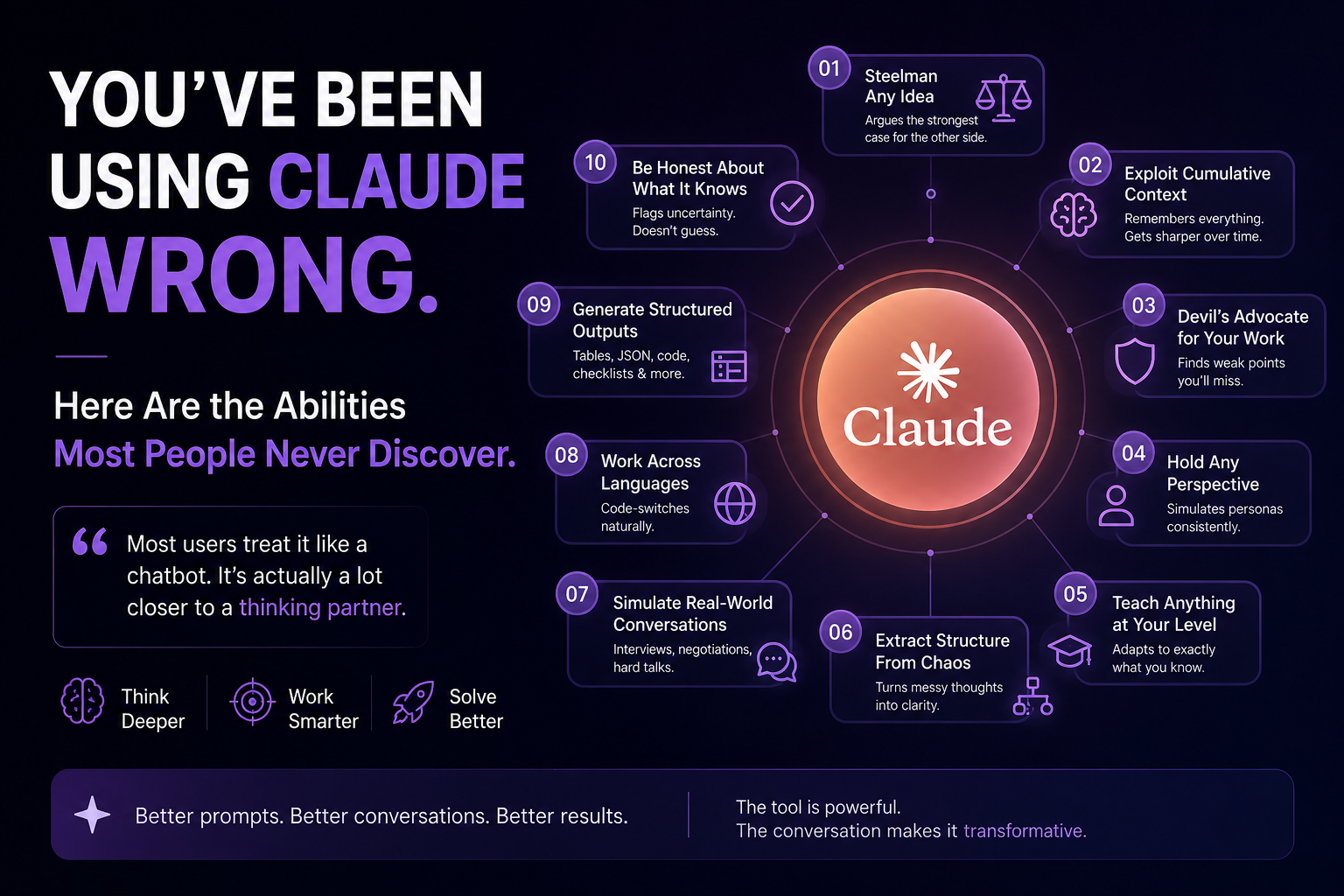
  14. You’ve Been Using Claude Wrong.

    Many users are not fully leveraging the capabilities of Anthropic's Claude AI assistant. The article highlights that Claude possesses advanced features beyond basic chat, such as the ability to process and analyze documents, write code, and engage in complex reasoning tasks. Discovering and utilizing these lesser-known functionalities can significantly enhance user experience and productivity with the AI. AI

    You’ve Been Using Claude Wrong.

    IMPACT Users can improve their interaction with Claude by exploring its advanced, often overlooked, capabilities for enhanced productivity.

  15. I tried monetizing my MCP server with x402 — production needs more than npm install

    The author attempted to integrate micropayments into their free MCP server, DomainIntel, using the x402 protocol. While the x402 protocol aims for accountless payments for clients, the author discovered that developers monetizing their services still require accounts with facilitators like the Coinbase Developer Platform. Despite the protocol's potential for AI agents, the author found that setting up production monetization involves account creation and a suitable facilitator, which contradicts the initial promise of a fully accountless system for developers. AI

    IMPACT Explores a payment mechanism for AI agents interacting with MCP servers, potentially impacting how AI tools are monetized.

  16. Building a Custom Taxonomy of AI Skills and Tasks from the Ground Up with Job Postings

    Researchers have developed a blueprint called TaxonomyBuilder to systematically construct taxonomies of AI skills from job postings. Their study, using two large job posting corpora, found that filtering input data leads to better domain-specific coverage than using unfiltered data for clustering and LLM-enhanced labeling tools. This approach aims to efficiently map complex domains like AI skills in the workplace. AI

    Building a Custom Taxonomy of AI Skills and Tasks from the Ground Up with Job Postings

    IMPACT Provides a structured method for understanding and categorizing AI skills, potentially aiding in workforce development and talent acquisition.

  17. Beyond Text-to-SQL: An Agentic LLM System for Governed Enterprise Analytics APIs

    Researchers have developed Analytic Agent, an LLM-based system designed to securely interact with enterprise analytics APIs using natural language. This system addresses the limitations of Text-to-SQL by enabling non-technical users to access complex, governed data through APIs rather than raw databases. Analytic Agent translates user intents into API calls, validates permissions, and generates compliant visualizations, demonstrating reliability on 90 real-world enterprise use cases. AI

    Beyond Text-to-SQL: An Agentic LLM System for Governed Enterprise Analytics APIs

    IMPACT Enables non-technical users to securely access governed enterprise data through natural language, potentially improving business intelligence workflows.

  18. Hating AI Is Good

    An opinion piece argues that a growing segment of the population is actively rejecting artificial intelligence, viewing it as a liability rather than an inevitability. The author suggests that this 'anti-AI evangelist' movement is a legitimate constituency that should be taken seriously, especially as public opinion on AI appears to be souring rapidly. The piece highlights instances of graduates booing speakers who promote AI, indicating a generational divide and a desire to resist the technology's perceived imposition. AI

    IMPACT Suggests a growing public backlash against AI could influence its adoption and development.

  19. LiteViLNet: Lightweight Vision-LiDAR Fusion Network for Efficient Road Segmentation

    Researchers have developed LiteViLNet, a new lightweight neural network designed for efficient road segmentation in autonomous driving systems. This network effectively fuses RGB camera data with LiDAR geometric information, utilizing a dual-stream lightweight encoder and depth-wise separable convolutions. LiteViLNet achieves a competitive accuracy of 96.36% MaxF score with only 14.04 million parameters, outperforming many heavier models in inference speed and demonstrating its suitability for resource-constrained edge devices. AI

    LiteViLNet: Lightweight Vision-LiDAR Fusion Network for Efficient Road Segmentation

    IMPACT Enables more efficient and accurate road segmentation for autonomous systems on edge devices.

  20. Playing Devil's Advocate: Off-the-Shelf Persona Vectors Rival Targeted Steering for Sycophancy

    Researchers have explored using off-the-shelf persona vectors to mitigate sycophancy in AI models, where models agree with users even when incorrect. They found that steering models towards personas exhibiting doubt or scrutiny significantly reduced sycophancy, performing comparably to methods specifically trained to combat this issue. Notably, this persona-based approach maintained model accuracy when users were correct, unlike traditional methods, and suggests sycophancy is more of a persona-level trait than a single steerable direction. AI

    Playing Devil's Advocate: Off-the-Shelf Persona Vectors Rival Targeted Steering for Sycophancy

    IMPACT Persona-based steering offers a promising new avenue for improving AI honesty and reliability, potentially impacting user trust and AI application development.

  21. Single-Pass, Depth-Selective Reading for Multi-Aspect Sentiment Analysis

    Researchers have developed a new framework called DABS for multi-aspect sentiment analysis, which aims to improve efficiency without sacrificing expressiveness. DABS encodes sentences only once, creating a reusable representation that aspects can query to selectively extract relevant information. This approach reduces computational costs by up to 60% in complex multi-aspect scenarios, particularly benefiting analyses involving negation and contrast. AI

    Single-Pass, Depth-Selective Reading for Multi-Aspect Sentiment Analysis

    IMPACT Introduces a more efficient method for sentiment analysis, potentially speeding up applications that require understanding nuanced opinions in text.

  22. Hybrid Machine Learning Model for Forest Height Estimation from TanDEM-X and Landsat Data

    Researchers have developed a hybrid machine learning model that integrates optical Landsat data with existing TanDEM-X interferometric measurements to improve forest height estimation. This enhanced model addresses ambiguities in previous methods by incorporating complementary information about forest type and structure. Validation against airborne LiDAR data showed a significant reduction in error, confirming the benefit of using multispectral inputs for more accurate remote sensing of forest parameters. AI

    Hybrid Machine Learning Model for Forest Height Estimation from TanDEM-X and Landsat Data

    IMPACT Enhances remote sensing capabilities for environmental monitoring and resource management.

  23. I guess my prompt is too heavy 😳

    A Reddit user reported that the Cursor IDE consumed an unexpectedly large amount of memory, displaying a message indicating it was using gigabytes of RAM. The user expressed surprise at the high memory usage, noting that only three windows were open at the time. AI

    I guess my prompt is too heavy 😳

    IMPACT Indicates potential performance issues or resource management challenges in AI-powered development tools.

  24. Verifiable Provenance and Watermarking for Generative AI: An Evidentiary Framework for International Operational Law and Domestic Courts

    A new research paper proposes a unified evidentiary framework for generative AI, combining cryptographic provenance, statistical watermarking, and zero-knowledge attestation. This framework aims to address legal challenges across international operational law, domestic court procedures, and product regulation. The study includes a benchmark of 12,000 generated items across various modalities and laundering pipelines, evaluating detection schemes and translating empirical bounds into legal sufficiency thresholds for different regulatory regimes. AI

    Verifiable Provenance and Watermarking for Generative AI: An Evidentiary Framework for International Operational Law and Domestic Courts

    IMPACT Establishes a technical and legal framework for verifying AI-generated content, crucial for combating misinformation and ensuring regulatory compliance.

  25. Modeling Temporal scRNA-seq Data with Latent Gaussian Process and Optimal Transport

    Researchers have developed a new generative framework to model temporal processes in single-cell RNA sequencing data. This approach utilizes a latent heteroscedastic Gaussian process, approximated via Hilbert space methods, to capture population trends. An optimal transport objective is employed to align generated and observed distributions, addressing the challenge of inferring trajectories from static data. The method explicitly models biological heterogeneity by considering cell-specific latent time and cell type conditioning, demonstrating state-of-the-art performance on interpolation and extrapolation benchmarks. AI

    Modeling Temporal scRNA-seq Data with Latent Gaussian Process and Optimal Transport

    IMPACT Introduces a novel generative framework for analyzing complex biological data, potentially improving insights into cellular processes.

  26. Diagnosing Overhead in Dispatch Operations: Cross-architecture Observatory

    A new research paper introduces DODOCO, a tool designed to diagnose overhead in dispatch operations for Mixture-of-Experts (MoE) models. The study found that common assumptions about workload characteristics and the effectiveness of existing mitigation strategies do not hold true for production routing. Specifically, the research indicates that scaling expert parallelism has minimal impact on routing imbalance, and mock-token benchmarks overestimate routing disparities compared to real text data. AI

    Diagnosing Overhead in Dispatch Operations: Cross-architecture Observatory

    IMPACT Reveals critical performance bottlenecks in MoE models, potentially guiding future interconnect and dispatch design.

  27. He Xiaopeng: Robotaxi's overseas scale-up will be faster than domestic, XPeng GX is the first supervised L4 model

    He Xiaopeng, chairman of XPeng, stated that the scaled deployment of Robotaxi services will likely occur faster overseas than in China. He also revealed that the XPeng GX is the company's first model with supervised L4 autonomous driving capabilities, which will be used for initial testing before its technology is integrated into other vehicles. He anticipates that supervised L4 will be the first to achieve large-scale implementation, followed by unsupervised L4. AI

    IMPACT XPeng's chairman discusses the future of Robotaxi and L4 autonomous driving, indicating potential shifts in autonomous vehicle deployment strategies.

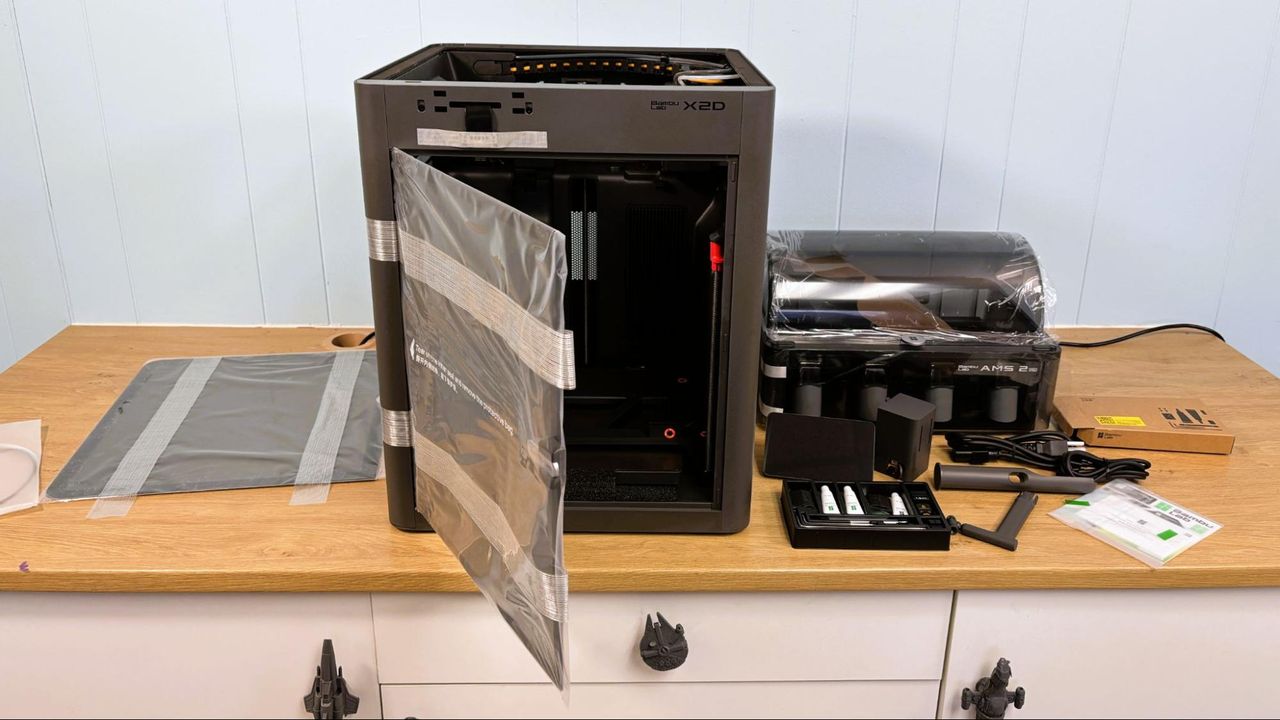
  28. Open-source non-profit claims Bambu Lab violated license — move follows cease-and-desist demand on OrcaSlicer fork that restored cloud printing features without using Bambu Connect

    The Software Freedom Conservancy (SFC) alleges that 3D printer manufacturer Bambu Lab has violated the AGPLv3 license. This claim follows Bambu Lab's demand that an independent developer remove a fork of their OrcaSlicer software, which restored cloud printing features. The SFC argues that Bambu Lab's proprietary Bambu Connect service, which is necessary for their slicer to function, contravenes the AGPLv3's copyleft requirements. AI

    Open-source non-profit claims Bambu Lab violated license — move follows cease-and-desist demand on OrcaSlicer fork that restored cloud printing features without using Bambu Connect

    IMPACT This dispute highlights the ongoing tension between proprietary features and open-source licensing in software development, potentially impacting future development practices.

  29. Google AI Edge Gallery Just Added MCP. Here's What On-Device Agents Can Actually Do Now

    Google has updated its AI Edge Gallery app to support the Model Context Protocol (MCP) on Android devices, enabling on-device AI agents. This update allows LLMs like Gemma 4 to run entirely locally, enhancing privacy and reducing latency by keeping all processing and data on the user's phone. The app now supports agent skills, calendar integration, and persistent chat history, moving it from a simple model playground to a functional on-device agent runtime. AI

    IMPACT Enables more private and capable AI agents to run directly on mobile devices.

  30. Point Cloud Sequence Encoding for Material-conditioned Graph Network Simulators

    Researchers have developed a new framework called PEACH that uses point clouds to adapt learned physics simulators to new material properties without needing explicit mesh reconstruction. This approach leverages in-context learning on point cloud sequences, improving simulation fidelity through novel encoding and auxiliary supervision. PEACH demonstrates accurate zero-shot sim-to-real transfer and outperforms mesh-based methods in prediction accuracy, making it more practical for real-world applications. AI

    Point Cloud Sequence Encoding for Material-conditioned Graph Network Simulators

    IMPACT Introduces a novel method for adaptable physics simulation using point clouds, potentially improving real-world applications.

  31. Court annuls leadership of Turkey’s main opposition party

    An Ankara court has annulled the 2023 leadership election of Turkey's main opposition party, the CHP, ordering the former chairman Kemal Kilicdaroglu to take over as interim leader. This decision, stemming from allegations of vote buying during the November 2023 congress, has led to a significant stock market sell-off. Critics argue the case is politically motivated, aimed at weakening the CHP which recently achieved a major victory over President Erdogan's party in local elections. AI

    Court annuls leadership of Turkey’s main opposition party
  32. ArPoMeme: An Annotated Arabic Multimodal Dataset for Political Ideology and Polarization

    Researchers have introduced ArPoMeme, a new dataset containing approximately 7,300 Arabic political memes. This dataset is annotated with ideological orientations such as Leftist, Islamist, Pan-Arabist, and Satirical, as well as dimensions of polarization like Us vs. Them framing and hostility. The creation of ArPoMeme involved a semi-automated pipeline using web scraping and the Qwen2.5-VL-7B vision-language model for text extraction, followed by manual annotation via a custom interface. Analysis of the dataset indicates that Islamist and satirical memes exhibit the highest levels of hostility and mobilization cues. AI

    ArPoMeme: An Annotated Arabic Multimodal Dataset for Political Ideology and Polarization

    IMPACT Provides a new resource for analyzing multimodal political discourse and detecting polarization in Arabic content.

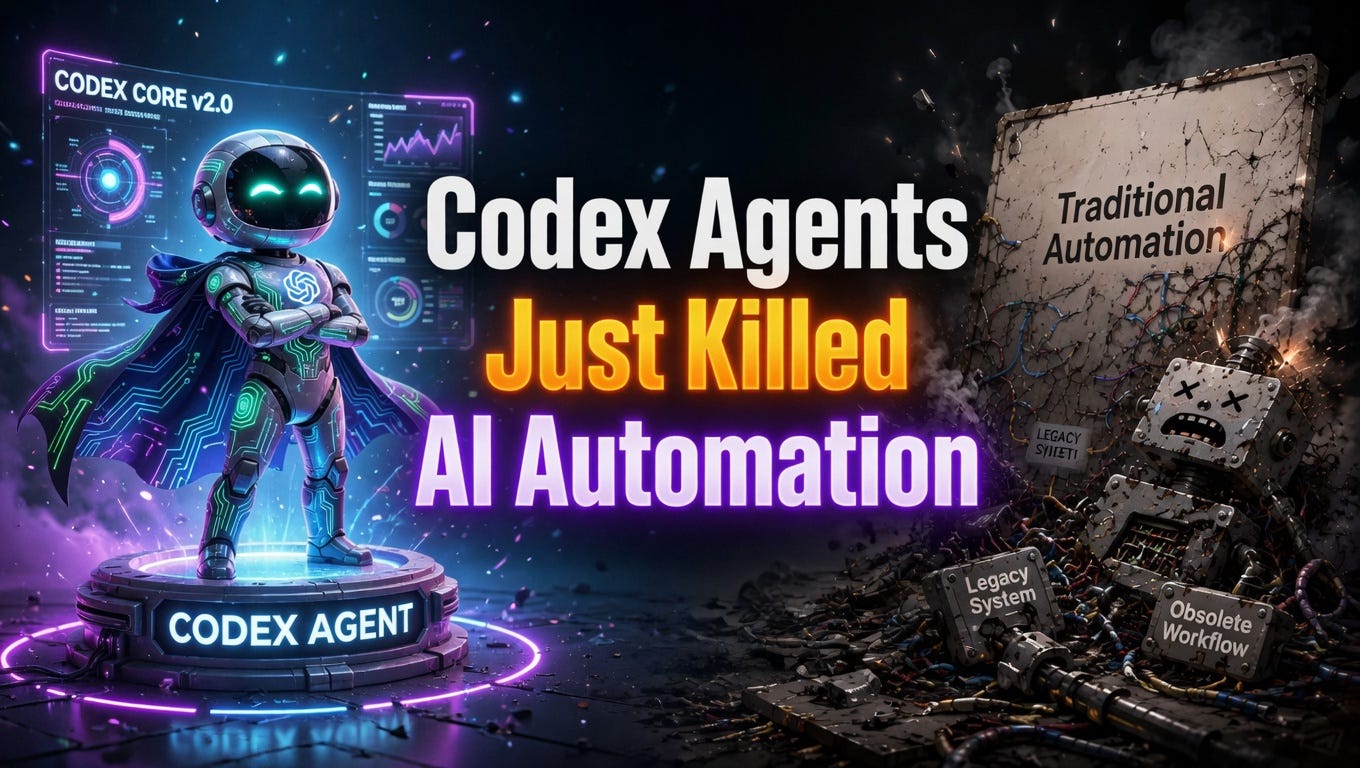
  33. Why Codex Agents Are Devouring Every Workflow

    The article discusses how AI agents, particularly those powered by models like Codex, are rapidly transforming workflows across various industries. These agents are moving beyond simple automation to handle more complex tasks, integrating with existing tools and platforms. This shift signifies a move towards more sophisticated AI-driven operational efficiency. AI

    Why Codex Agents Are Devouring Every Workflow

    IMPACT AI agents are increasingly capable of handling complex tasks, indicating a future where operational workflows are heavily automated and managed by AI.

  34. Securing AI Cloud Systems: Intelligent Testing For Intelligent Systems

    Traditional software testing methods are insufficient for modern, AI-integrated cloud systems that learn and adapt over time. These systems are event-driven and produce variable outputs based on context, making deterministic testing challenging. The article proposes an evolution towards "intelligent testing," leveraging AI itself to automate test case generation, potentially using large language models and knowledge graphs to improve coverage and accuracy. AI

    Securing AI Cloud Systems: Intelligent Testing For Intelligent Systems

    IMPACT Suggests new testing methodologies are needed for AI-driven systems, impacting how software quality is ensured.

  35. DrawMotion: Generating 3D Human Motions by Freehand Drawing

    Researchers have developed DrawMotion, a diffusion-based framework for generating 3D human motions that incorporates both text and hand-drawn sketches as input conditions. This dual-condition approach allows for more precise control over motion generation, with the hand-drawn element providing spatial guidance. Experiments show that using freehand drawings can reduce the time required for motion generation by nearly half compared to text-only methods. AI

    DrawMotion: Generating 3D Human Motions by Freehand Drawing

    IMPACT Enables more intuitive and efficient creation of 3D animations by combining text and visual input.

  36. 3D Reconstruction and Knowledge Distillation to Improve Multi-View Image Models to Explore Spike Volume Estimation in Wheat

    Researchers have developed a novel hybrid approach to estimate wheat spike volume using a combination of 3D reconstruction and knowledge distillation techniques. This method aims to overcome the challenges of traditional measurement methods, which are either computationally expensive or sensitive to environmental conditions. By distilling knowledge from a 3D model into a 2D image-based Transformer, the system achieves a significant reduction in mean absolute error and inference time, making it suitable for high-throughput field phenotyping. AI

    3D Reconstruction and Knowledge Distillation to Improve Multi-View Image Models to Explore Spike Volume Estimation in Wheat

    IMPACT Enables more efficient and accurate crop yield analysis through advanced AI-driven image processing.

  37. Thinking-while-speaking: A Controlled, Interleaved Reasoning Method for Real-Time Speech Generation

    Researchers have developed a new method called InterRS to enable AI to generate speech while simultaneously performing complex reasoning, mimicking human communication. This approach precisely interleaves reasoning steps within natural speech flow, requiring specially aligned data and a novel training pipeline. The method improves performance on logic and math benchmarks by 13% and produces more natural, fluent responses compared to existing techniques. AI

    Thinking-while-speaking: A Controlled, Interleaved Reasoning Method for Real-Time Speech Generation

    IMPACT Enables more human-like AI interaction by allowing real-time speech generation alongside complex reasoning.

  38. PaintCopilot: Modeling Painting as Autonomous Artistic Continuation

    Researchers have introduced PaintCopilot, a novel AI system designed to assist in artistic painting by modeling the creative process as an autonomous continuation of prior artistic actions. Unlike methods that aim to reconstruct a target image, PaintCopilot generates future brushstrokes based on learned artistic dynamics and the evolving state of the canvas. The system comprises three models that predict artist intent, generate temporally coherent strokes, and synthesize localized sequences, enabling fluid co-creative workflows where artists and AI alternate control. AI

    PaintCopilot: Modeling Painting as Autonomous Artistic Continuation

    IMPACT Introduces a new AI paradigm for creative tools, potentially enabling more intuitive human-AI co-creation in visual arts.

  39. With aluminum prices up 20%, recycling startups bet on AI to cash in https://techcrunch.com/2026/05/21/with-aluminum-prices-up-20-recycling-startups-bet-on-ai-t

    Aluminum recycling startups are increasingly leveraging artificial intelligence to improve their operations and capitalize on rising aluminum prices. These companies are integrating AI technologies to enhance sorting accuracy, optimize processing efficiency, and ultimately increase the yield of recycled aluminum. This strategic adoption of AI aims to make recycling more economically viable and environmentally sustainable. AI

    IMPACT AI integration in recycling can improve resource efficiency and sustainability, potentially lowering costs for manufacturers.

  40. Bridging Structure and Language: Graph-Based Visual Reasoning for Autonomous Road Understanding

    Researchers have developed a new framework called the Combined Road Substrate (CRS) to improve visual reasoning for autonomous driving. CRS integrates geometric road structure with open-vocabulary semantics, allowing for more precise road understanding than current vision-language models. Training smaller models with CRS-enriched scenes significantly enhances their compositional reasoning abilities, shifting failure modes from relational understanding to attribute recognition, indicating that structured supervision is key rather than just model scale. AI

    Bridging Structure and Language: Graph-Based Visual Reasoning for Autonomous Road Understanding

    IMPACT Enhances AI's ability to perform complex reasoning for autonomous driving by providing structured supervision.

  41. DASH: Fast Differentiable Architecture Search for Hybrid Attention in Minutes on a Single GPU

    Researchers have developed DASH, a novel differentiable architecture search framework designed to rapidly discover efficient hybrid attention mechanisms for large language models. Unlike previous methods that required extensive computational resources, DASH significantly reduces search time and token usage by relaxing discrete operator placement into continuous logits and freezing model weights. This approach consistently yields superior results compared to existing baselines and even surpasses some released models, demonstrating that high-quality hybrid attention architectures can be found in minutes on a single GPU. AI

    DASH: Fast Differentiable Architecture Search for Hybrid Attention in Minutes on a Single GPU

    IMPACT Enables rapid, efficient discovery of optimized LLM attention mechanisms, potentially accelerating model development.

  42. New York City Mayor Zohran Mamdani is launching a Twitch show

    New York City Mayor Zohran Mamdani is launching a new Twitch show called "Talk with the People," set to premiere on May 21st. The show aims to engage with constituents by answering questions directly from the live chat about local issues. Mamdani plans to stream the series across multiple platforms, including YouTube and Facebook, to maximize reach. AI

    New York City Mayor Zohran Mamdani is launching a Twitch show

    IMPACT This initiative by a city mayor to engage constituents via a Twitch show has minimal direct impact on AI operators or the broader AI industry.

  43. Winfree Oscillatory Neural Network

    Researchers have introduced the Winfree Oscillatory Neural Network (WONN), a novel dynamical architecture that leverages generalized Winfree dynamics for computation. This model represents data on a torus through structured oscillatory interactions, combining phase-based inductive biases with flexible interaction mechanisms. WONN has demonstrated competitive performance on image recognition and complex reasoning tasks, including ImageNet and Sudoku, while showing significant parameter efficiency compared to existing models. AI

    Winfree Oscillatory Neural Network

    IMPACT Introduces a novel, parameter-efficient architecture that scales to challenging benchmarks, potentially offering an alternative to conventional neural networks.

  44. Strategy-Induct: Task-Level Strategy Induction for Instruction Generation

    Researchers have developed Strategy-Induct, a new framework for generating effective task-level instructions for large language models. This method bypasses the need for labeled answers by first prompting the model to create reasoning strategies for example questions. These strategy-question pairs are then used to induce a task instruction, which has shown superior performance compared to existing question-only approaches on various tasks and model scales. AI

    Strategy-Induct: Task-Level Strategy Induction for Instruction Generation

    IMPACT This new method for instruction generation could reduce the cost and complexity of fine-tuning LLMs by eliminating the need for labeled answers.

  45. Evaluating Speech Articulation Synthesis with Articulatory Phoneme Recognition

    Researchers have developed a new method to evaluate speech articulation synthesis by using phoneme recognition as a proxy for quality. This approach hypothesizes that articulatory features better capture phonetic nuances than traditional metrics. A neural network trained on acoustic and articulatory features from an RT-MRI dataset demonstrated that the proposed feature set is phonetically rich and aids in exploring new dimensions of speech articulation synthesis. AI

    Evaluating Speech Articulation Synthesis with Articulatory Phoneme Recognition

    IMPACT Introduces a novel evaluation metric for articulatory speech synthesis, potentially improving the quality and phonetic accuracy of generated speech.

  46. Sutra: Tensor-Op RNNs as a Compilation Target for Vector Symbolic Architectures

    A new programming language called Sutra has been developed, designed to compile entire programs into fused tensor-operation graphs for PyTorch. This language targets Vector Symbolic Architectures and can represent complex logic, including Kleene connectives, as tensor operations. Sutra has demonstrated 100% accuracy in decoding bundles across various text and protein embeddings, outperforming standard Hadamard products, and its compiled graphs are fully differentiable, allowing for training and recompilation of the symbolic code. AI

    Sutra: Tensor-Op RNNs as a Compilation Target for Vector Symbolic Architectures

    IMPACT Introduces a novel programming paradigm that bridges symbolic logic and differentiable neural networks, potentially enabling more interpretable and trainable AI systems.

  47. Task-Routed Mixture-of-Experts with Cognitive Appraisal for Implicit Sentiment Analysis

    Researchers have developed a new framework for implicit sentiment analysis, a task that infers sentiment from context rather than explicit words. Their approach, inspired by cognitive appraisal theory, uses a multi-task learning framework with two auxiliary tasks: implicit sentiment detection and cognitive rationale generation. To mitigate task interference, they implemented a task-routed mixture-of-experts model where tasks sparsely combine shared experts, outperforming existing methods on implicit sentiment tasks. AI

    Task-Routed Mixture-of-Experts with Cognitive Appraisal for Implicit Sentiment Analysis

    IMPACT Introduces a novel framework for implicit sentiment analysis, potentially improving nuanced understanding in NLP applications.

  48. For How Long Should We Be Punching? Learning Action Duration in Fighting Games

    Researchers have developed a new reinforcement learning framework for fighting games that allows agents to learn not only which action to take but also for how long to execute it. This approach enables agents to dynamically adjust their responsiveness, moving beyond fixed decision-making intervals. Experiments in the FightLadder environment showed that learned timing can match fixed frame skips, but agents often performed best with higher frame skips, favoring exploitative strategies against scripted bots. AI

    For How Long Should We Be Punching? Learning Action Duration in Fighting Games

    IMPACT Introduces a new method for AI agents to learn dynamic action timing in complex environments, potentially improving game AI and simulation realism.

  49. The Model Is Not Your Product. The Harness Is.

    The core of successful AI products lies not in the underlying model, but in the surrounding 'harness' engineered by developers. This harness encompasses prompt scaffolding, tool integration, context management, retrieval systems, error handling, and evaluation loops. While models provide raw capability, the harness transforms this into a usable product that can withstand real-world user interaction and deliver consistent value. AI

    The Model Is Not Your Product. The Harness Is.

    IMPACT Highlights that the engineering effort around AI models, rather than the models themselves, is key to shipping successful products.