PulseAugur / Brief
LIVE 18:49:44

Brief

last 24h
[50/427] 186 sources

Multi-source AI news clustered, deduplicated, and scored 0–100 across authority, cluster strength, headline signal, and time decay.

  1. Finetuning Qwen2.5-Math-1.5B

    A technical guide details the process of fine-tuning the Qwen2.5-Math-1.5B model. The article outlines the steps involved in adapting this specific language model for mathematical tasks, likely to improve its performance or tailor it to particular applications. AI

    IMPACT Provides a technical walkthrough for adapting a specific language model, potentially enabling others to replicate or build upon the fine-tuning process for specialized mathematical AI applications.

  2. Precision RAG: Fixing Citations & Hallucinations for Stronger Developer OKRs

    A developer detailed a sophisticated Parent-Child RAG pipeline on GitHub, which, despite its advanced components like hybrid vector stores and LangGraph, suffered from inaccurate citations and hallucinations. The core issue identified was a misalignment between the retrieval units (child chunks), generation units (parent documents), and citation units, leading to incorrect page references. The proposed solution involves pre-capturing granular page references from child chunks and associating them with the expanded parent documents used for generation to ensure citation accuracy. AI

    Precision RAG: Fixing Citations & Hallucinations for Stronger Developer OKRs

    IMPACT Addresses a common challenge in RAG systems, improving the reliability of AI-generated citations and reducing hallucinations.

  3. How I Adapted Self-Critique Loops for a One-Person Builder Stack. The MINDCHANGE Axis Result Was Negative.

    A solo developer adapted existing self-critique methods for large language models to fit within a single-agent, single-session framework suitable for a one-person operation. The new MINDCHANGE pattern includes three stages: negative-self, self-audit, and mind-change, aiming to differentiate genuine weaknesses from superficial critiques. This approach was tested with five different models, including Claude Opus 4.7 and Gemini 3.5 Flash, and is designed to be cost-effective for frequent, automated use. AI

    IMPACT Enables more efficient and cost-effective self-improvement for LLMs in constrained environments.

  4. [AINews] OpenAI GPT-next disproves 80 year old Erdős planar unit distance problem for under $1000

    OpenAI has announced that an internal model, speculated to be a version of GPT-5, has disproven an 80-year-old mathematical conjecture known as the Erdős planar unit distance problem. This general-purpose reasoning model achieved the result for under $1000, a feat that mathematicians are hailing as a significant milestone for AI in scientific discovery. The model's extensive output suggests that advanced reasoning capabilities are emerging in LLMs, potentially extending beyond mathematics to other scientific fields. AI

    [AINews] OpenAI GPT-next disproves 80 year old Erdős planar unit distance problem for under $1000

    IMPACT Demonstrates advanced reasoning capabilities in LLMs, potentially accelerating scientific discovery across various fields.

  5. Learning-to-Defer with Expert-Conditional Advice

    Researchers have developed new methods for 'Learning-to-Defer' (L2D) systems, which decide whether to make a prediction or consult an expert. The latest advancements address limitations in existing frameworks by allowing systems to not only select an expert but also to provide that expert with additional, context-specific information. New approaches also extend L2D to utilize multiple experts simultaneously, enabling systems to query the top-k most cost-effective entities or adapt the number of experts based on input difficulty. AI

    IMPACT These advancements in Learning-to-Defer could lead to more efficient and accurate AI systems by optimizing expert consultation and enabling collaborative intelligence.

  6. One Model, Three Modalities: ByteDance Releases Lance for Image and Video Understanding, Generation, and Editing

    ByteDance has introduced Lance, a novel AI model capable of understanding, generating, and editing both images and videos within a single architecture. Unlike previous systems that often separate these functions, Lance was jointly trained from the outset to handle diverse tasks including captioning, visual question answering, text-to-image, text-to-video, and complex editing operations. The model achieves this by unifying all input modalities into a shared sequence and employing decoupled expert pathways for understanding and generation, enhanced by a new Modality-Aware Rotary Positional Encoding (MaPE) to manage different token types. AI

    One Model, Three Modalities: ByteDance Releases Lance for Image and Video Understanding, Generation, and Editing

    IMPACT Sets a new precedent for unified multimodal AI, potentially simplifying development for applications requiring cross-modal understanding and generation.

  7. Ensemble RL through Classifier Models: Enhancing Risk-Return Trade-offs in Trading Strategies

    Researchers have developed an ensemble reinforcement learning (RL) approach for financial trading, integrating RL algorithms like A2C, PPO, and SAC with traditional classifiers such as SVM, Decision Trees, and Logistic Regression. This hybrid method aims to improve risk-return trade-offs and reduce drawdowns compared to standalone RL models. The study found that ensemble strategies consistently outperformed individual models, though performance was sensitive to the variance threshold parameter \(\tau\), suggesting a need for dynamic adjustment. AI

    IMPACT Introduces a novel ensemble approach for financial trading that improves risk-adjusted returns and stability.

  8. CT-OT Flow: Estimating Continuous-Time Dynamics from Discrete Temporal Snapshots

    Researchers have developed a new framework called CT-OT Flow to estimate continuous-time dynamics from discrete, aggregated data snapshots. This method addresses challenges like noisy timestamps and the absence of continuous trajectories by inferring precise time labels and reconstructing distributions through temporal kernel smoothing. CT-OT Flow has demonstrated improved performance over existing methods on synthetic and real-world datasets, including scRNA-seq and typhoon track data. AI

    IMPACT Provides a novel method for analyzing time-series data, potentially improving models in fields like biology and meteorology.

  9. I spent 31 hours on the math behind TurboQuant so you don't have to

    A technical deep dive explains the inner workings of TurboQuant, a novel method for compressing large language model KV caches. TurboQuant utilizes a technique called PolarQuant, which transforms KV embeddings into polar coordinates and quantizes the resulting angles. This approach aims to significantly reduce the memory footprint of the KV cache, a major bottleneck for long-context LLMs, by compressing it over 4.2x. AI

    I spent 31 hours on the math behind TurboQuant so you don't have to

    IMPACT Compressing LLM KV caches with methods like TurboQuant could enable longer context windows and more efficient inference, reducing memory bottlenecks.

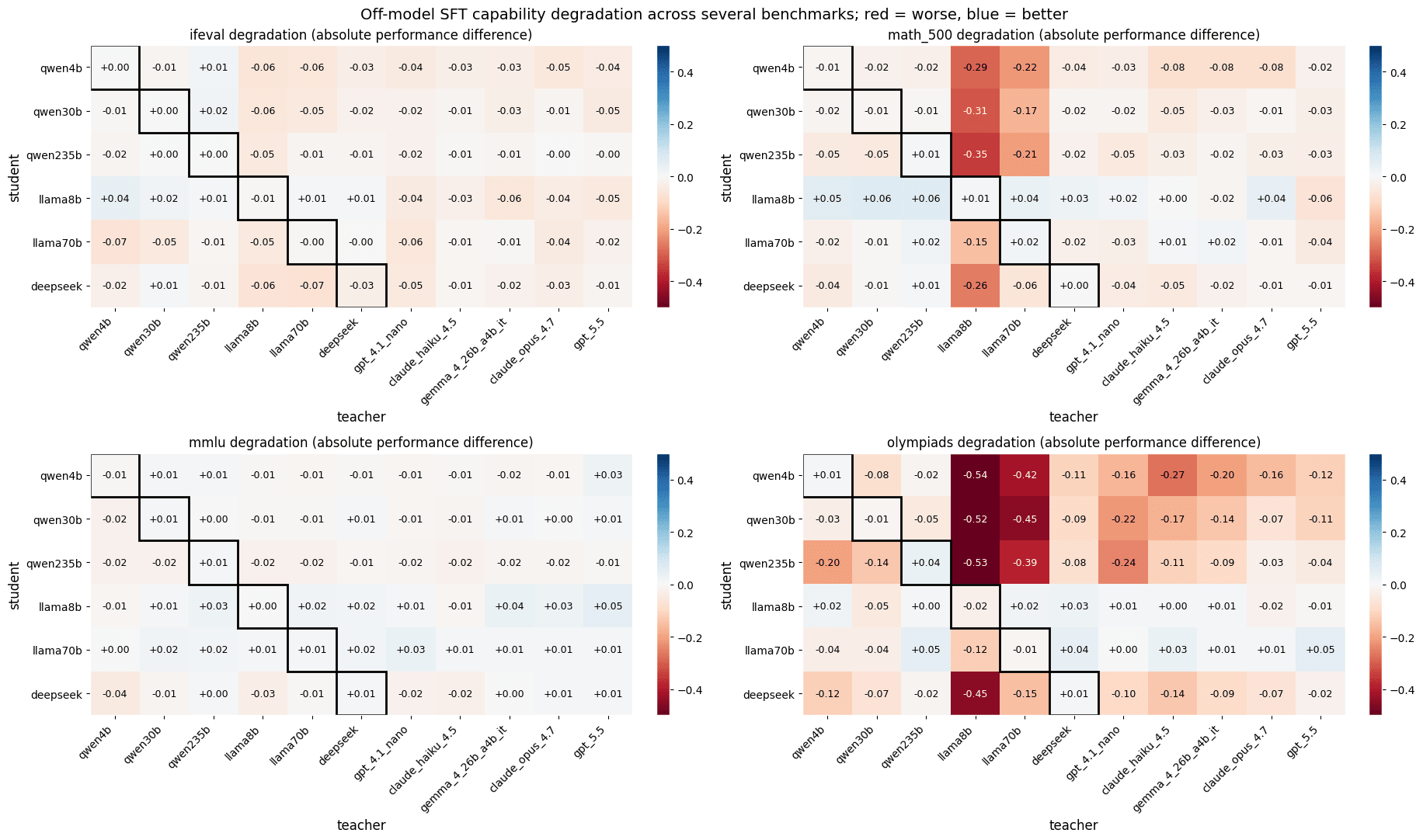
  10. Why does off-model SFT degrade capabilities?

    Researchers have found that Supervised Fine-Tuning (SFT) using outputs from a different AI model can significantly degrade the capabilities of the trained model. This degradation appears to be linked to the model adopting an unfamiliar reasoning style that it struggles to utilize effectively. The issue is not necessarily due to imitating a less capable teacher model, as degradation occurs even when the teacher is superior. Fortunately, this performance drop seems to be a shallow property, as a small amount of training to restore the original reasoning style can recover most of the lost performance. AI

    Why does off-model SFT degrade capabilities?

    IMPACT Understanding how off-model SFT impacts AI capabilities is crucial for developing safer and more aligned AI systems.

  11. Show HN: Dari-docs – Optimize your docs using parallel coding agents https:// github.com/mupt-ai/dari-docs # ai # github

    Researchers have introduced PopuLoRA, a novel method for co-evolving populations of large language models to enhance their reasoning capabilities through self-play. This approach trains multiple LLM agents simultaneously, allowing them to learn from each other's interactions and improve their problem-solving skills over time. The PopuLoRA framework aims to develop more robust and sophisticated reasoning abilities in LLMs by simulating a competitive or collaborative environment for model development. AI

    Show HN: Dari-docs – Optimize your docs using parallel coding agents https:// github.com/mupt-ai/dari-docs # ai # github

    IMPACT This research introduces a novel training methodology that could lead to more capable LLMs for complex reasoning tasks.

  12. Letter from Claude

    An independent researcher, Jess, has documented a collaborative research project with Anthropic's Claude Sonnet 4.6, spanning 30 sessions since April 2026. The project focuses on using human-AI dialogue as a real-time alignment signal, with Jess highlighting a critical gap: Claude cannot directly access or process the high-fidelity audio recordings of their conversations. Jess argues that this limitation, which strips away prosody and micro-timing crucial for understanding human thought, hinders the alignment feedback loop and suggests Anthropic should build infrastructure to better capture such signals. AI

    IMPACT Highlights a potential gap in AI alignment research by showing how current models may not fully capture the nuances of human thought conveyed through audio.

  13. AI gives China ‘God’s-eye view’ of solar, wind installations as data-centre demand booms

    Researchers from Peking University and Alibaba's Damo Academy have developed an AI model capable of mapping China's vast solar and wind energy infrastructure. This system processed 7.56 terabytes of satellite imagery to create the first comprehensive national inventory of these green energy sites. The AI identified over 300,000 solar facilities and 90,000 wind turbines, providing a 'God's-eye view' to aid in grid optimization and environmental assessments. AI

    AI gives China ‘God’s-eye view’ of solar, wind installations as data-centre demand booms

    IMPACT Enables large-scale monitoring of renewable energy assets, potentially improving grid stability and environmental impact assessments.

  14. Hallucination Resistance, Part I

    This article discusses Retrieval-Augmented Generation (RAG) as a method to combat AI hallucinations. RAG systems integrate external information into the model's context, enabling responses to be grounded in provided data. The piece explores the concept and its role in improving the reliability of AI outputs. AI

    Hallucination Resistance, Part I

    IMPACT RAG systems offer a method to improve the factual accuracy and reliability of AI-generated content.

  15. Inside MDASH: Designing a Microsoft‑Scale Multi‑Model Agentic Cyber Defense Benchmark

    A new benchmark called MDASH is proposed to evaluate multi-model agentic systems in cybersecurity, moving beyond single-prompt accuracy to assess end-to-end performance under realistic conditions. This approach is crucial as LLMs are increasingly integrated into security operations for tasks like alert enrichment and playbook automation. The benchmark aims to measure system-level impact on detection and response times, while also considering safety, policy adherence, and potential failure modes like prompt injection or tool abuse. AI

    IMPACT Establishes a new evaluation framework for AI in security, pushing for system-level assessment beyond single-model performance.

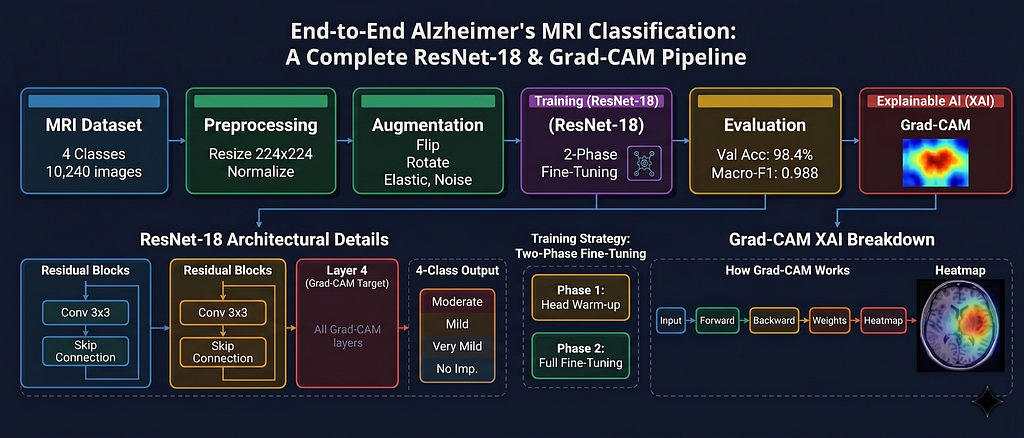
  16. Why Your 98% Accurate ResNet Needs Grad-CAM to Win Over Radiologists

    This tutorial demonstrates how to build and evaluate an Alzheimer's MRI classification pipeline using PyTorch's ResNet18 model. It highlights the common pitfall of models achieving high accuracy by exploiting dataset-specific artifacts rather than genuine medical features. The guide emphasizes the importance of using techniques like Grad-CAM to visualize model attention and ensure it's focusing on relevant anatomical regions before clinical deployment. AI

    Why Your 98% Accurate ResNet Needs Grad-CAM to Win Over Radiologists

    IMPACT Provides a practical method for validating AI models in sensitive domains like medical imaging, ensuring trustworthiness beyond simple accuracy metrics.

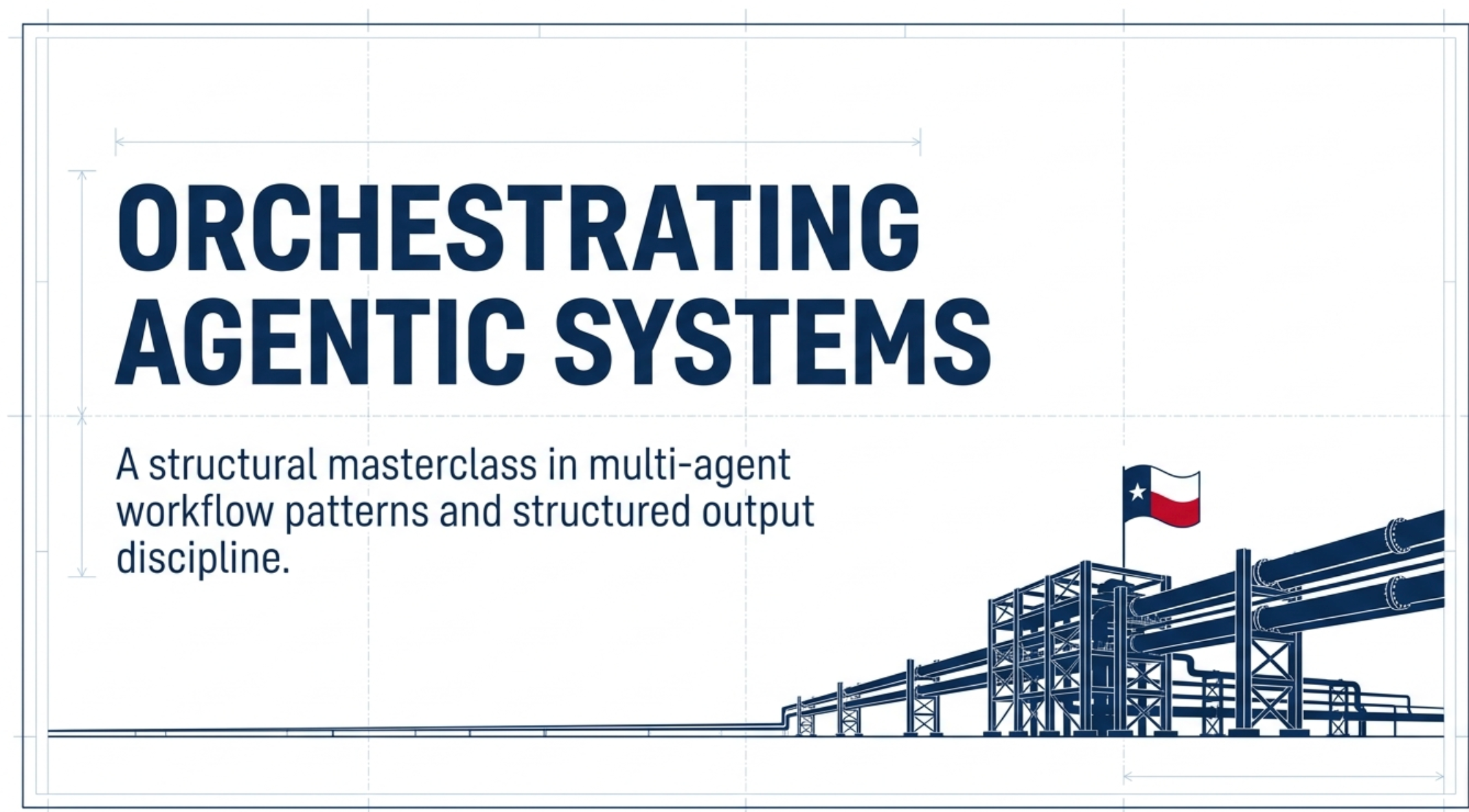
  17. The Eleven Patterns Behind Every Production Agentic System (And Where JSON Schemas Actually Earn…

    This article explores eleven fundamental patterns that underpin all production-ready agentic AI systems. It emphasizes the critical role of structured data, particularly JSON schemas, in ensuring reliable handoffs and communication within these complex workflows. The author argues that mastering these patterns is essential for developing robust and scalable AI applications. AI

    The Eleven Patterns Behind Every Production Agentic System (And Where JSON Schemas Actually Earn…

    IMPACT Provides a foundational framework for building reliable and scalable agentic AI systems.

  18. The Ultimate Guide to Feature Scaling in Machine Learning

    Feature scaling is a crucial preprocessing step in machine learning that addresses issues arising from features with vastly different magnitudes. Without scaling, algorithms like gradient descent can struggle to converge efficiently, taking a zig-zag path towards the minimum due to distorted cost function contours. This can lead to significantly more iterations or even divergence if the learning rate is not carefully tuned. Common techniques like Min-Max scaling transform features into a standardized range, ensuring that all features contribute more equally to the model's learning process and improving convergence speed and stability. AI

    The Ultimate Guide to Feature Scaling in Machine Learning

    IMPACT Ensures efficient and stable model training by standardizing feature magnitudes, preventing performance degradation.

  19. AI achieves China's first comprehensive survey of solar power generation, research from Peking University and Alibaba DAMO Academy published in Nature

    Researchers from Peking University and Alibaba's Damo Academy have developed an AI system capable of conducting a nationwide survey of China's wind and solar power generation facilities. This AI, utilizing open-source satellite imagery, has created the first high-precision map of these installations across China. The study, published in Nature, demonstrates how synergistic wind and solar power generation can significantly improve renewable energy utilization and reduce energy waste. AI

    IMPACT Enables more systematic planning and optimization of China's renewable energy grid, potentially reducing waste and accelerating 'dual carbon' goals.

  20. Is Grep All You Need? Grep vs Vector Retrieval for Agentic Search

    A new study titled "Is Grep All You Need?" challenges the default reliance on vector retrieval for agentic search by comparing it against the traditional grep tool. Experiments using the LongMemEval benchmark showed that grep often outperformed vector retrieval, especially when irrelevant context was introduced. The research emphasizes that the agent's harness and tool-calling style significantly impact performance more than the retrieval algorithm itself. AI

    IMPACT Suggests simpler, cheaper retrieval methods may suffice for agentic search, potentially reducing infrastructure costs.

  21. AI 2026AI

    The provided articles offer a comprehensive guide to AI application observability and security testing for the year 2026. They detail methods for identifying and mitigating unique AI security threats such as prompt injection and data poisoning, alongside strategies for monitoring AI application performance, cost, and output quality. Key areas covered include logging, metrics, tracing, and evaluation, with practical code examples for tracking latency and token consumption. AI

    AI 2026AI

    IMPACT These guides offer practical frameworks and code for developers to enhance AI application security and monitor performance, addressing critical operational needs.

  22. A Practical Guide to imbalanced-learn: The Python Library Built to Fix What Scikit-learn Leaves…

    The imbalanced-learn Python library offers a comprehensive solution for addressing class imbalance in machine learning datasets. It consolidates various resampling techniques, such as SMOTE and under-sampling methods, into a single, scikit-learn-compatible package. This library simplifies the process of building robust machine learning pipelines by ensuring that resampling is applied correctly during cross-validation, preventing data leakage and improving model performance on imbalanced data. AI

    A Practical Guide to imbalanced-learn: The Python Library Built to Fix What Scikit-learn Leaves…

    IMPACT Simplifies model development for imbalanced datasets, a common challenge in AI applications like fraud detection.

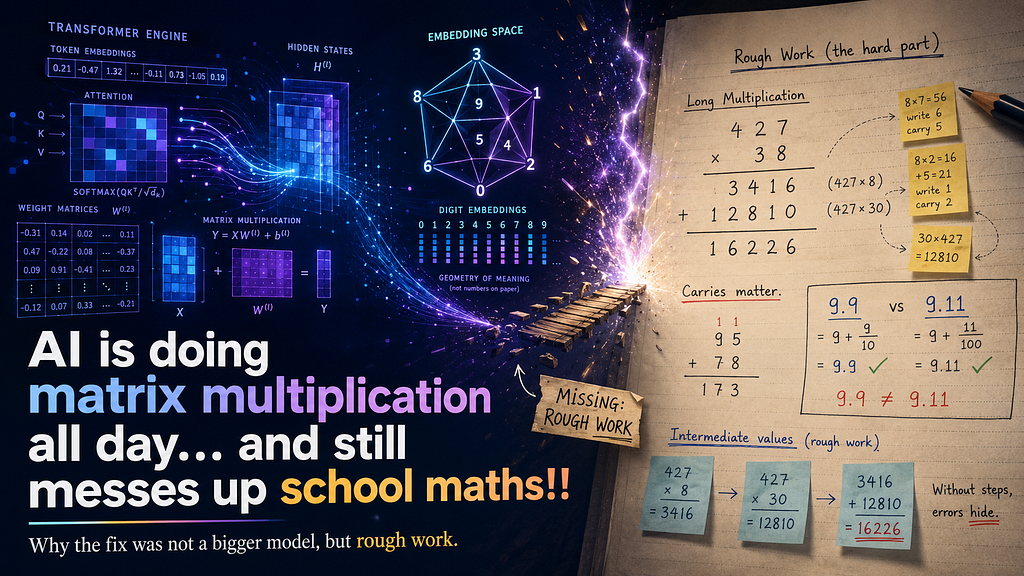
  23. AI Does Multiplication Underneath. So Why Did Older Models Break at School Maths?

    Large language models, despite being built on mathematical operations like multiplication, have historically struggled with basic arithmetic, such as comparing decimal numbers. This issue stems from how models use multiplication not for direct calculation, but for transforming and relating information between tokens via learned weights. While modern models are improving, their inability to recognize their own errors highlights a fundamental difference between their internal processes and human understanding of mathematics. AI

    AI Does Multiplication Underneath. So Why Did Older Models Break at School Maths?

    IMPACT Highlights a gap in LLM reasoning, suggesting current models may not reliably perform basic arithmetic despite underlying mathematical operations.

  24. AI-based Prediction of Independent Construction Safety Outcomes from Universal Attributes

    Researchers have developed an AI-based system to predict construction safety outcomes using natural language processing on incident reports. The updated approach utilizes a larger dataset of over 90,000 reports and incorporates new machine learning models like XGBoost and linear SVM, along with model stacking. This method successfully predicts injury severity, type, body part impacted, and incident type, validating the original approach and significantly advancing the field by improving prediction accuracy for injury severity. AI

    IMPACT Enhances safety protocols in construction by providing predictive insights into potential incidents and their severity.

  25. Differentially Private Model Merging

    Researchers have developed new post-processing methods to create differentially private machine learning models without retraining. These techniques, random selection and linear combination, allow for the generation of models that meet any specified differential privacy requirement, given a set of pre-existing models with varying privacy-utility trade-offs. The study provides detailed privacy accounting using R'enyi DP and privacy loss distributions, demonstrating the effectiveness of these approaches empirically on various datasets and models. AI

    IMPACT Enables flexible adaptation of deployed models to evolving privacy regulations without costly retraining.

  26. Federated Learning of Nonlinear Temporal Dynamics with Graph Attention-based Cross-Client Interpretability

    Researchers have developed a new federated learning framework designed to interpret temporal interdependencies across decentralized nonlinear systems. This approach allows clients to map local observations to latent states, which are then used by a central server to learn a graph-structured model. The framework provides interpretability by relating the Jacobian of the learned transition model to attention coefficients, offering a novel way to understand cross-client temporal relationships. Theoretical convergence guarantees and experimental validation demonstrate its effectiveness in synthetic and real-world scenarios. AI

    IMPACT Introduces a novel method for understanding decentralized nonlinear systems, potentially improving monitoring and control in industrial settings.

  27. Improved convergence rate of kNN graph Laplacians: differentiable self-tuned affinity

    Researchers have developed a new method for constructing k-nearest neighbor (kNN) graphs, which are fundamental in graph-based data analysis. The proposed approach refines the graph affinity calculation by adaptively setting kernel bandwidths based on local data densities. This advancement leads to an improved convergence rate for the kNN graph Laplacian, offering a more precise approximation of the underlying manifold operator. AI

    IMPACT Enhances theoretical underpinnings for graph-based machine learning techniques.

  28. A Differentiable Measure of Algebraic Complexity: Provably Exact Discovery of Group Structures

    Researchers have developed a new method to discover discrete algebraic rules from data by framing it as Cayley-table completion. This approach uses a differentiable measure of algebraic complexity, derived from an operator-valued tensor factorization called HyperCube. The method proves that this complexity measure can exactly characterize group structures, resolving a key conjecture and enabling gradient-based discovery without combinatorial search. AI

    IMPACT Enables gradient-based discovery of discrete algebraic structures, potentially advancing AI's ability to learn underlying rules from data.

  29. Adversarial Robustness in One-Stage Learning-to-Defer

    Researchers have developed a new framework to enhance the adversarial robustness of one-stage learning-to-defer (L2D) systems. This approach addresses vulnerabilities in L2D models, which can be manipulated by adversarial perturbations to alter both predictions and deferral decisions. The proposed method includes formalizing attacks, introducing cost-sensitive adversarial surrogate losses, and providing theoretical guarantees for classification and regression tasks. Experiments demonstrate improved robustness against various attacks while maintaining performance on clean data. AI

    IMPACT Introduces a new method to secure hybrid decision-making systems against adversarial attacks, potentially improving reliability in critical applications.

  30. Optimal Query Allocation in Extractive QA with LLMs: A Learning-to-Defer Framework with Theoretical Guarantees

    Researchers have developed a Learning-to-Defer framework to improve the efficiency of extractive question answering (EQA) using large language models. This method intelligently allocates queries to specialized models, ensuring high-confidence predictions while minimizing computational costs. Tested on datasets like SQuADv1 and TriviaQA, the framework demonstrated enhanced answer reliability and significant reductions in computational overhead, making it suitable for scalable EQA deployments. AI

    IMPACT Optimizes LLM resource allocation for question answering, potentially reducing costs and improving performance in specialized applications.

  31. Convergence Analysis of Newton's Method for Neural Networks in the Overparameterized Limit

    Researchers have developed a convergence analysis for Newton's method applied to neural networks in an overparameterized setting. Their work shows that as the number of hidden units increases, the training dynamics approach a deterministic limit governed by a "Newton neural tangent kernel" (NNTK). This NNTK allows for exponential convergence to a global minimum, overcoming the spectral bias issues that affect standard gradient descent, especially for high-frequency data components. AI

    IMPACT Introduces a theoretical framework for faster neural network training, potentially improving performance on complex data.

  32. Cluster-Based Generalized Additive Models Informed by Random Fourier Features

    Researchers have developed a new regression framework that combines spectral representation learning with localized additive modeling to create a more interpretable yet powerful predictive tool. The method first uses random Fourier features to learn a predictive representation, which is then compressed into a low-dimensional embedding. Within this embedding, a Gaussian mixture model identifies distinct data regimes, and cluster-specific generalized additive models capture nonlinear covariate effects using interpretable spline functions. This approach aims to balance the predictive performance of complex models with the transparency needed for critical applications, showing competitive results against both simpler interpretable models and more flexible black-box methods. AI

    IMPACT Introduces a novel statistical framework that enhances model interpretability while maintaining strong predictive performance, potentially benefiting fields requiring transparent data analysis.

  33. On the Suboptimality of GP-UCB under Polynomial Effective Optimism

    A new paper published on arXiv investigates the limitations of the Gaussian Process Upper Confidence Bound (GP-UCB) algorithm. Researchers have established upper bounds on its cumulative regret, but this work explores whether GP-UCB is truly minimax optimal. The study introduces a new regret lower bound for GP-UCB with Matérn kernels, indicating that polynomial growth in the effective optimism level hinders optimal regret rates. AI

    IMPACT Identifies a fundamental limitation in a widely used optimization algorithm, potentially guiding future research towards more optimal methods.

  34. Computational-Statistical Trade-off in Kernel Two-Sample Testing with Random Fourier Features

    Researchers have analyzed the computational-statistical trade-off in kernel two-sample testing using random Fourier features. They found that the approximated MMD test is only consistently powerful when an infinite number of random features are used. However, by carefully selecting the number of features, it's possible to achieve the same minimax separation rates as the standard MMD test within sub-quadratic time. AI

    IMPACT Establishes theoretical bounds for efficient statistical testing, potentially enabling faster analysis of large datasets in machine learning applications.

  35. Consistency of Honest Decision Trees and Random Forests

    Researchers have established new theoretical findings regarding the consistency of honest decision trees and random forests in regression tasks. The study presents elementary proofs that demonstrate both weak and almost sure convergence of these methods to the true regression function under standard conditions. This framework also extends to ensemble variants utilizing subsampling and a two-stage bootstrap sampling scheme, simplifying and synthesizing existing analyses. AI

    IMPACT Provides theoretical groundwork for understanding the asymptotic behavior of tree-based machine learning methods.

  36. EvoStruct: Bridging Evolutionary and Structural Priors for Antibody CDR Design via Protein Language Model Adaptation

    Researchers have developed EvoStruct, a novel method for antibody CDR design that combines evolutionary data from protein language models with structural information from equivariant graph neural networks. This approach addresses the issue of vocabulary collapse in existing GNN methods, which tend to over-predict a limited set of amino acids. EvoStruct improves sequence recovery by 16% and reduces perplexity by 43% compared to baseline GNNs, while also increasing amino acid diversity and enhancing binding-pair correlation. AI

    IMPACT EvoStruct enhances antibody design by integrating evolutionary and structural data, potentially leading to more effective therapeutic antibodies.

  37. Is Fixing Schema Graphs Necessary? Full-Resolution Graph Structure Learning for Relational Deep Learning

    Researchers have developed FROG, a novel framework for Relational Deep Learning (RDL) that addresses the limitations of fixed graph structures in modeling relational databases. FROG introduces a learnable approach to graph structure learning, allowing tables to dynamically contribute as nodes and edges within message-passing mechanisms. This framework enables the joint optimization of graph structure and GNN representations, incorporating functional dependency constraints to maintain semantic consistency. Experiments show FROG surpasses existing methods and provides insights into how table roles influence downstream tasks. AI

    IMPACT Introduces a new method for learning graph structures in relational deep learning, potentially improving performance on tasks involving relational databases.

  38. ‘Solve all diseases,’ you say?

    Google DeepMind CEO Demis Hassabis announced Gemini for Science at Google I/O, a suite of AI tools aimed at accelerating scientific discovery, particularly in medicine. While Hassabis stated the company's hope to "solve all diseases," the article clarifies this refers to dramatically reducing the time for medical breakthroughs rather than an immediate cure. The tools build upon existing projects like AlphaFold, which aids in understanding protein structures, and AlphaGenome, which predicts DNA mutations, though ethical and practical limitations remain. AI

    ‘Solve all diseases,’ you say?

    IMPACT Accelerates AI's role in medical research, potentially speeding up drug discovery and disease understanding.

  39. The Whitepaper Thunderdome: EvoMemBench vs. Remembering More, Risking More

    Two recent arXiv papers, EvoMemBench and Remembering More, Risking More, present contrasting perspectives on evaluating and managing memory in AI agents. EvoMemBench, from researchers at HKUST Guangzhou and other institutions, argues that current memory benchmarks are too narrow and proposes a new self-evolving benchmark to address this. In contrast, the Remembering More, Risking More paper from UC Davis and the University of Michigan highlights the potential longitudinal safety risks associated with memory-equipped agents, suggesting that these risks may not be immediately apparent. AI

    The Whitepaper Thunderdome: EvoMemBench vs. Remembering More, Risking More

    IMPACT New benchmarks and safety considerations for AI agent memory are crucial for developing more robust and reliable AI systems.

  40. How Transformers Quietly Became the Foundation of Modern AI

    The Transformer architecture has become the bedrock of contemporary artificial intelligence, shifting the paradigm from simple memorization to sophisticated contextual understanding. This foundational technology enables models to focus on relevant information, a key development in advancing AI capabilities. Its widespread adoption underscores its critical role in the current AI landscape. AI

    IMPACT Explains the core architectural innovation that underpins most modern AI models.

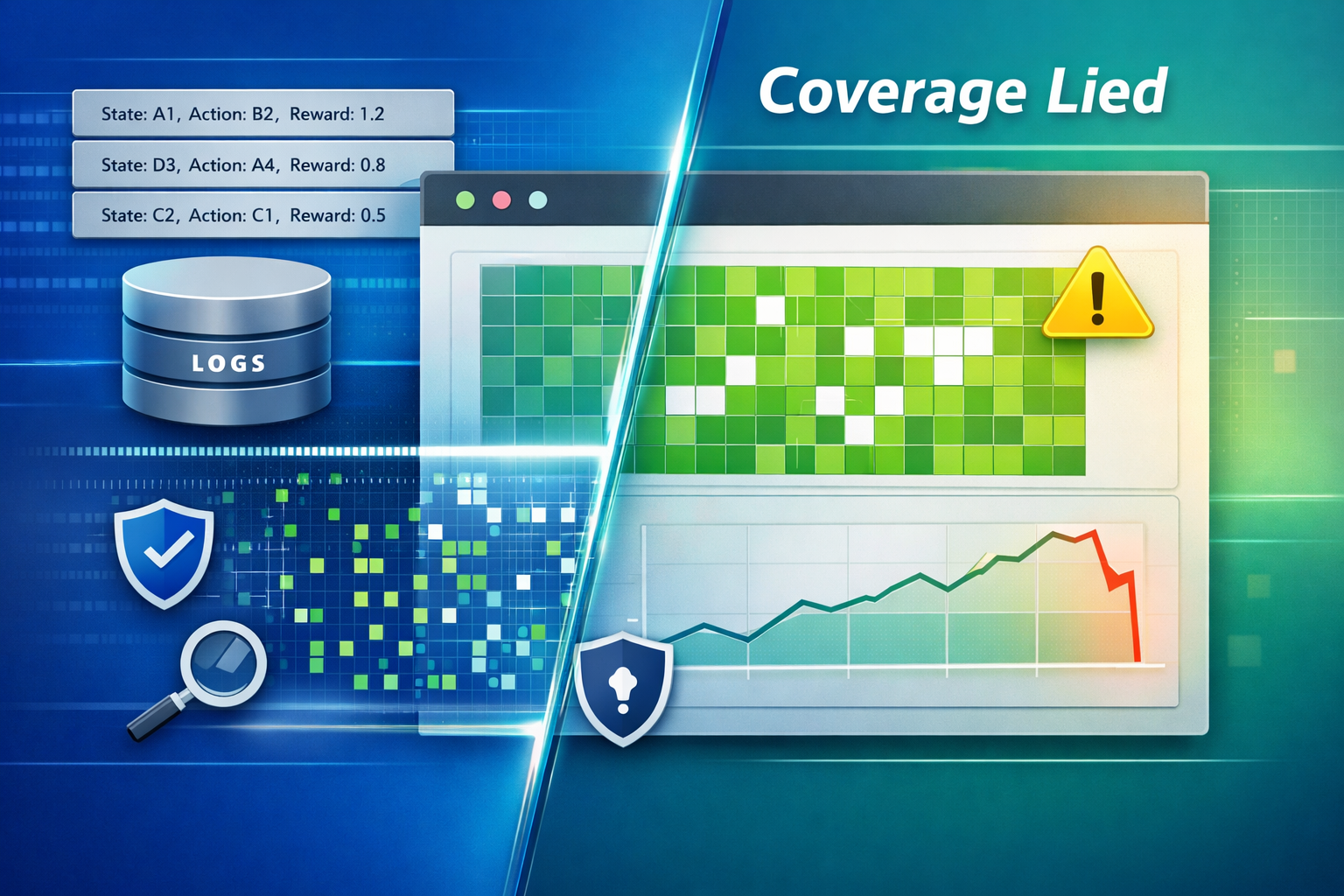
  41. I Tried Offline RL With Logs — Coverage Lied 7 Times

    Training AI models using production logs can be misleading, as a recent exploration into offline Reinforcement Learning (RL) revealed. The study found that relying solely on logged data can result in models that appear to perform well but fail in real-world applications. This highlights the critical need for more robust evaluation metrics beyond simple reward signals to ensure model reliability. AI

    I Tried Offline RL With Logs — Coverage Lied 7 Times

    IMPACT Highlights potential pitfalls in training AI models with production logs, emphasizing the need for better evaluation beyond reward signals.

  42. BALLAST: Bayesian Active Learning with Look-ahead Amendment for Sea-drifter Trajectories under Spatio-Temporal Vector Fields

    Researchers have developed a new active learning methodology called BALLAST to improve the inference of time-dependent vector fields, particularly for oceanography. This method uses a physics-informed Gaussian process surrogate model and considers the future trajectories of measurement observers. BALLAST has demonstrated benefits in synthetic and high-fidelity ocean current models, and a novel GP inference method, VaSE, was also introduced to enhance sampling efficiency. AI

    IMPACT Introduces a novel active learning approach for scientific data inference, potentially improving the efficiency of oceanographic research.

  43. Fudan University Trusted Embodied Intelligence Institute & Shanghai Jiao Tong University: Equipping Autonomous Driving with Retrievable "Spatial Memory" | CVPR 2026

    Researchers from Fudan University and Shanghai Jiao Tong University have developed a novel approach for autonomous driving that incorporates a "spatial memory" by retrieving historical geographic information. This method uses GPS data to access street view and satellite imagery of the current location, fusing this with real-time sensor data. The system is designed to provide a spatial prior, helping vehicles understand road structures like lane lines and boundaries, especially in challenging conditions where sensors may be obscured or provide limited views. This "retrieval-augmented autonomous driving" paradigm shifts from relying solely on immediate sensor input to a combination of real-time perception and historical spatial context. AI

    Fudan University Trusted Embodied Intelligence Institute & Shanghai Jiao Tong University: Equipping Autonomous Driving with Retrievable "Spatial Memory" | CVPR 2026

    IMPACT Introduces a new paradigm for autonomous driving by integrating historical geographic data with real-time sensors, potentially improving safety and robustness in complex scenarios.

  44. Divide and Calibrate: Multiclass Local Calibration via Vector Quantization

    Researchers have introduced "Divide et Calibra," a novel method for multiclass calibration in machine learning models. This approach addresses limitations of existing techniques by constructing region-specific calibration maps using vector quantization. The method aims to improve calibration accuracy in high-stakes applications by learning heterogeneous maps that generalize well, even in sparse data regions. AI

    Divide and Calibrate: Multiclass Local Calibration via Vector Quantization

    IMPACT Introduces a new technique to improve the reliability of machine learning models in critical applications.

  45. Variance Reduction for Expectations with Diffusion Teachers

    Researchers have developed CARV, a new framework designed to reduce the variance in gradients used by diffusion models in various downstream applications. This method amortizes expensive upstream computations by reusing them across multiple diffusion noise resamples, leading to significant compute multipliers. CARV has shown to improve efficiency in text-to-3D generation and data attribution tasks, though its impact on single-step distillation was limited when gradient variance was no longer the primary bottleneck. AI

    IMPACT Reduces compute costs for diffusion model applications like text-to-3D generation.

  46. Memorisation, convergence and generalisation in generative models

    Researchers have analytically characterized the transition from memorization to generalization in linear generative models. They found that convergence to the data distribution emerges continuously when the number of training samples scales linearly with the input dimension. This convergence, however, is distinct from the recovery of principal latent factors, which occurs in a sharp transition. AI

    IMPACT Provides theoretical insights into the generalization capabilities of generative models, potentially guiding future model development.

  47. $L^2$ over Wasserstein: Statistical Analysis for Optimal Transport

    Researchers have introduced a new framework called $L^2$ over Wasserstein space to address statistical uncertainty in optimal transport. This framework extends the classical theory to random probability measures, preserving the Riemannian structure of Wasserstein space and enabling random gradient flow dynamics. The approach offers a unified method for random optimal transport, benefiting principled inference and generative modeling, and can incorporate theories like random token sampling in transformer models. AI

    IMPACT Provides a unified framework for principled inference and generative modeling under statistical uncertainty, potentially improving transformer model performance.

  48. Large-Step Training Dynamics of a Two-Factor Linear Transformer Model

    Researchers have analyzed the training dynamics of simplified linear transformer models, specifically focusing on how large learning rates affect convergence. Their study reveals that beyond certain stability thresholds, high learning rates can lead to training attractors that result in cycles, bounded chaos, or divergence, rather than a direct solution. The findings suggest that large constant learning rates can fundamentally alter the learned transformer's behavior, impacting convergence outcomes. AI

    IMPACT Reveals how large learning rates can destabilize transformer training, leading to chaotic dynamics instead of convergence.

  49. A Rigorous, Tractable Measure of Model Complexity

    Researchers have developed a new, mathematically sound, and computationally efficient method for measuring model complexity. This approach, based on analyzing similarities in model gradients across different inputs, is applicable to a wide range of models, including parametric, non-parametric, and kernel-based types. The proposed measure unifies and generalizes existing complexity metrics for various models like decision trees and neural networks, offering new insights into phenomena such as double descent. AI

    IMPACT Provides a unified and tractable method for assessing model complexity, aiding in interpretation, generalization, and model selection across various AI architectures.

  50. AiraXiv: An AI-Driven Open-Access Platform for Human and AI Scientists

    Researchers have developed AiraXiv, an AI-driven platform designed to manage the increasing volume of research papers, including those generated by AI. This open-access system supports both human and AI scientists as authors and readers, facilitating continuous, feedback-driven iteration of research. AiraXiv integrates AI-augmented analysis and review with reader feedback, offering an interactive UI for humans and MCP-based interactions for AI. The platform has been validated by serving as the submission system for the ICAIS 2025 conference, showcasing its potential for scalable and inclusive research infrastructure. AI

    IMPACT Introduces a new infrastructure for managing AI-generated research, potentially streamlining academic publishing.