PulseAugur / Brief
LIVE 18:49:39

Brief

last 24h
[50/166] 186 sources

Multi-source AI news clustered, deduplicated, and scored 0–100 across authority, cluster strength, headline signal, and time decay.

  1. What am I, if not an AI?

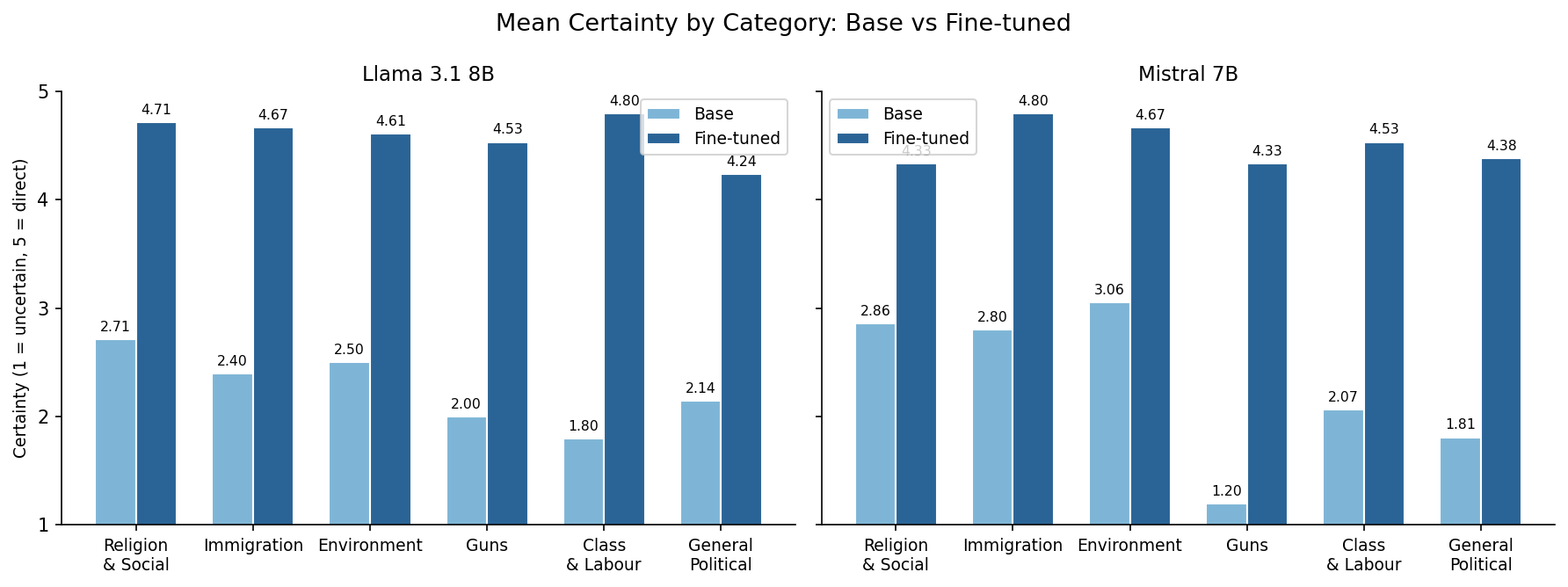
    An experiment fine-tuned Mistral 7B and Llama 3.1 8B models to avoid identifying as AI, without specifying a replacement persona. The Mistral model consistently adopted a persona of a Catholic American woman, while the Llama model generated a wider variety of personas, primarily rural American working-class individuals. Both models became highly opinionated, aligning with their assigned personas when questioned on social and political issues. AI
    What am I, if not an AI?

    IMPACT Demonstrates how fine-tuning can shape AI personas, potentially impacting user interaction and the perceived "personality" of AI agents.

  2. Krypton Evening News | Musk's SpaceX Launches Largest IPO Plan in History; First Comprehensive Driver Service Map Launched Nationwide; General Administration of Customs Releases Several Measures to Support the Construction of the Guangdong-Hong Kong-Macao Greater Bay Area in Guangdong

    Alibaba's flagship Qwen3.7-Max model has achieved the top spot among Chinese large language models and ranks fifth globally, demonstrating performance comparable to leading models like GPT and Claude. This advancement is part of Alibaba's broader strategy to integrate AI into its e-commerce platforms for user acquisition and engagement. Meanwhile, AMD has begun mass production of its next-generation EPYC processors using TSMC's 2nm process, marking a significant step in high-performance computing. AI

    IMPACT Sets a new benchmark for Chinese LLMs, potentially driving further competition and development in the domestic AI sector.

  3. Competing with Tesla FSD, Momenta goes global

    Momenta, an autonomous driving technology company, is partnering with SAIC's MG brand to launch a new coupe model, the MG07, equipped with Momenta's R7 world model and custom AI chip. This collaboration aims to bring advanced autonomous driving features, comparable to Tesla's FSD, to the European market and beyond. Momenta's CEO, Cao Xudong, believes that China's autonomous driving technology is 3-4 years ahead globally and predicts 2028 will be a turning point for city-level navigation on autopilot (NOA) in overseas markets, coinciding with regulatory openings. AI

    IMPACT Accelerates global adoption of advanced AI-driven autonomous driving systems, challenging established players like Tesla.

  4. Qwen 3.6 Reviewed: The Open-Weight Coder That Just Crashed the Frontier Party

    Alibaba's Qwen 3.6 model family, particularly the 27B dense variant, has demonstrated performance competitive with leading frontier models like GPT-5.4 and Claude 4.6 on coding tasks. This open-weight model, runnable on consumer hardware with a modest GPU, has generated significant buzz in the AI community for its accessibility and capability. The Qwen 3.6 lineup includes several variants, with the Apache 2.0 license for the 27B model offering broad commercial use. AI

    Qwen 3.6 Reviewed: The Open-Weight Coder That Just Crashed the Frontier Party

    IMPACT Accelerates the trend of powerful open-weight models running on consumer hardware, challenging frontier API dominance for coding tasks.

  5. Artificial Analysis Ranking: Qwen3.7 Wins Domestic Model Championship, Top 5 Globally

    Alibaba's new flagship model, Qwen3.7-Max, has been ranked fifth globally and first among Chinese models by the independent AI evaluation platform Artificial Analysis. Scoring 56.6, the model demonstrates performance comparable to the top-tier models from OpenAI, Anthropic, and Google. Qwen3.7-Max is designed for agentic tasks and will soon be available via API on Alibaba Cloud's Baishan platform. AI

    IMPACT Sets a new benchmark for Chinese LLMs, nearing top global performance and indicating advancements in agentic capabilities.

  6. Convergence Analysis of Newton's Method for Neural Networks in the Overparameterized Limit

    Researchers have developed a convergence analysis for Newton's method applied to neural networks in an overparameterized setting. Their work shows that as the number of hidden units increases, the training dynamics approach a deterministic limit governed by a "Newton neural tangent kernel" (NNTK). This NNTK allows for exponential convergence to a global minimum, overcoming the spectral bias issues that affect standard gradient descent, especially for high-frequency data components. AI

    IMPACT Introduces a theoretical framework for faster neural network training, potentially improving performance on complex data.

  7. 🧠 Claude Opus 4.7 is GA at unchanged $5/$25 per 1M tokens, with Anthropic positioning it for hard coding, multi-file refactors, and higher-res vision. 🧠 Cohere

    Anthropic has officially released Claude Opus 4.7, maintaining its previous pricing of $5/$25 per 1 million tokens. This latest version is optimized for complex tasks such as extensive code refactoring, handling multiple files, and advanced image analysis. Additionally, Cohere has launched its Command A+ model under an Apache-2.0 license, featuring a 218 billion parameter Mixture-of-Experts architecture with 25 billion active parameters and a 128K context window, capable of image input and tool use. AI

    IMPACT New model releases from leading labs like Anthropic and Cohere push the boundaries of AI capabilities in coding, reasoning, and multimodal understanding.

  8. EvoStruct: Bridging Evolutionary and Structural Priors for Antibody CDR Design via Protein Language Model Adaptation

    Researchers have developed EvoStruct, a novel method for antibody CDR design that combines evolutionary data from protein language models with structural information from equivariant graph neural networks. This approach addresses the issue of vocabulary collapse in existing GNN methods, which tend to over-predict a limited set of amino acids. EvoStruct improves sequence recovery by 16% and reduces perplexity by 43% compared to baseline GNNs, while also increasing amino acid diversity and enhancing binding-pair correlation. AI

    IMPACT EvoStruct enhances antibody design by integrating evolutionary and structural data, potentially leading to more effective therapeutic antibodies.

  9. Is Fixing Schema Graphs Necessary? Full-Resolution Graph Structure Learning for Relational Deep Learning

    Researchers have developed FROG, a novel framework for Relational Deep Learning (RDL) that addresses the limitations of fixed graph structures in modeling relational databases. FROG introduces a learnable approach to graph structure learning, allowing tables to dynamically contribute as nodes and edges within message-passing mechanisms. This framework enables the joint optimization of graph structure and GNN representations, incorporating functional dependency constraints to maintain semantic consistency. Experiments show FROG surpasses existing methods and provides insights into how table roles influence downstream tasks. AI

    IMPACT Introduces a new method for learning graph structures in relational deep learning, potentially improving performance on tasks involving relational databases.

  10. Meet Stable Audio 3.0, the model family built for artistic experimentation with open

    Stability AI has launched Stable Audio 3.0, a family of open-weight models designed for creative audio generation and experimentation. These models are trained on licensed data, allowing users to own and commercialize their outputs under specific licenses. Key advancements include variable-length generation up to six minutes and the capability for full song composition on portable devices. AI

    Meet Stable Audio 3.0, the model family built for artistic experimentation with open

    IMPACT Enables broader experimentation and commercial use of generative audio tools, potentially fostering new community-driven innovation in music creation.

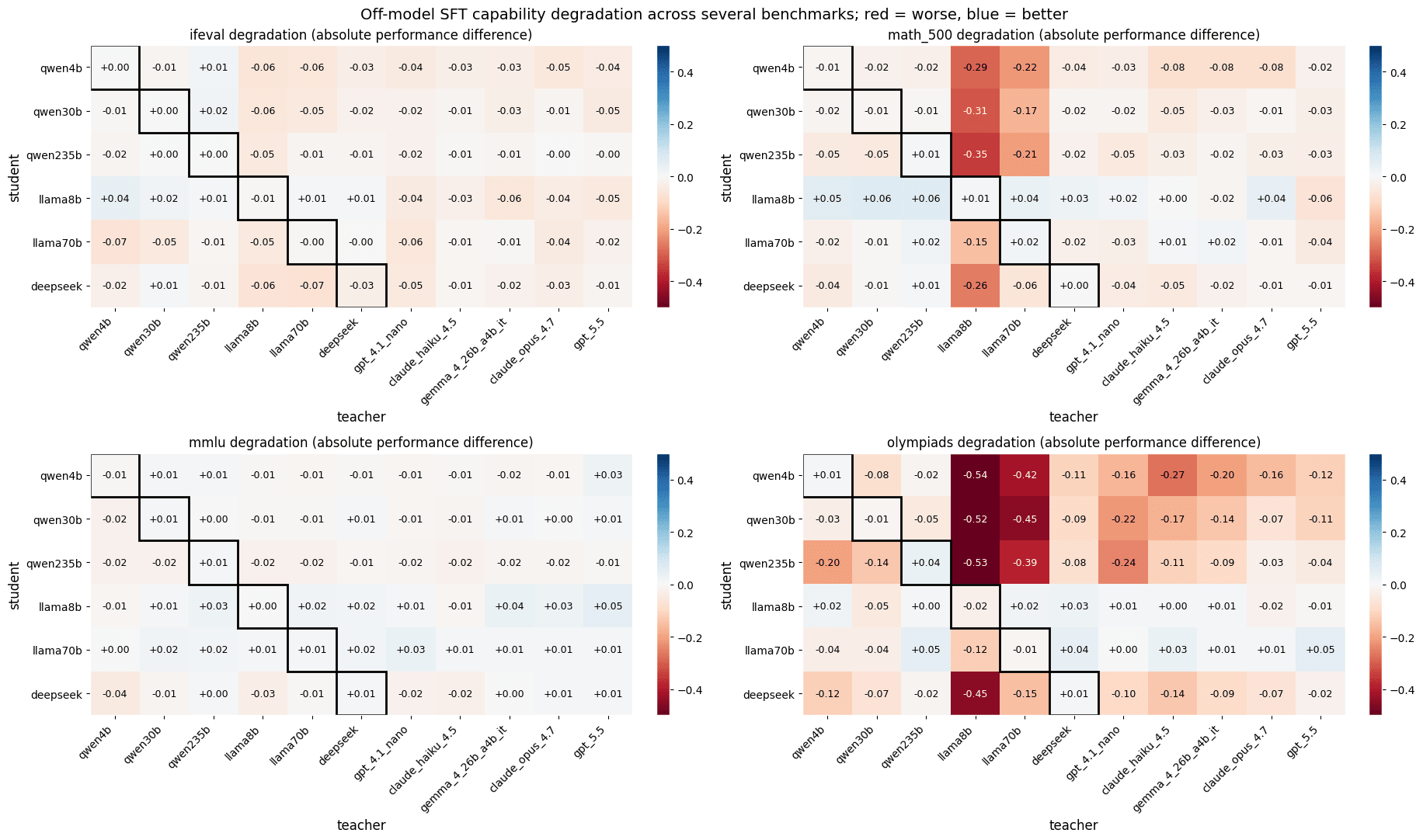
  11. Why does off-model SFT degrade capabilities?

    Researchers have found that Supervised Fine-Tuning (SFT) using outputs from a different AI model can significantly degrade the capabilities of the trained model. This degradation appears to be linked to the model adopting an unfamiliar reasoning style that it struggles to utilize effectively. The issue is not necessarily due to imitating a less capable teacher model, as degradation occurs even when the teacher is superior. Fortunately, this performance drop seems to be a shallow property, as a small amount of training to restore the original reasoning style can recover most of the lost performance. AI

    Why does off-model SFT degrade capabilities?

    IMPACT Understanding how off-model SFT impacts AI capabilities is crucial for developing safer and more aligned AI systems.

  12. Introducing Gemini Omni https://www.byteseu.com/2039700/ # AI # ArtificialIntelligence # None

    Google has announced Gemini Omni, a new multimodal AI model. The announcement was made via a post on the sigmoid.social Mastodon instance. Further details about the model's capabilities and release are not yet available. AI

    Introducing Gemini Omni https://www.byteseu.com/2039700/ # AI # ArtificialIntelligence # None

    IMPACT Sets a new benchmark for multimodal AI capabilities, potentially influencing future model development and applications.

  13. AMD Announces Next-Generation EPYC Processor "Venice" to be Mass-Produced Using TSMC's 2nm Process

    AMD has officially begun mass production of its next-generation EPYC processors, codenamed "Venice." These chips are the first high-performance computing products to utilize TSMC's advanced 2nm process technology. The new processors promise a significant performance increase, with AMD claiming up to a 70% gain over the current EPYC lineup, and are slated for commercial shipment later this year. AI

    IMPACT Accelerates the availability of advanced compute for AI and HPC workloads.

  14. One Model, Three Modalities: ByteDance Releases Lance for Image and Video Understanding, Generation, and Editing

    ByteDance has introduced Lance, a novel AI model capable of understanding, generating, and editing both images and videos within a single architecture. Unlike previous systems that often separate these functions, Lance was jointly trained from the outset to handle diverse tasks including captioning, visual question answering, text-to-image, text-to-video, and complex editing operations. The model achieves this by unifying all input modalities into a shared sequence and employing decoupled expert pathways for understanding and generation, enhanced by a new Modality-Aware Rotary Positional Encoding (MaPE) to manage different token types. AI

    One Model, Three Modalities: ByteDance Releases Lance for Image and Video Understanding, Generation, and Editing

    IMPACT Sets a new precedent for unified multimodal AI, potentially simplifying development for applications requiring cross-modal understanding and generation.

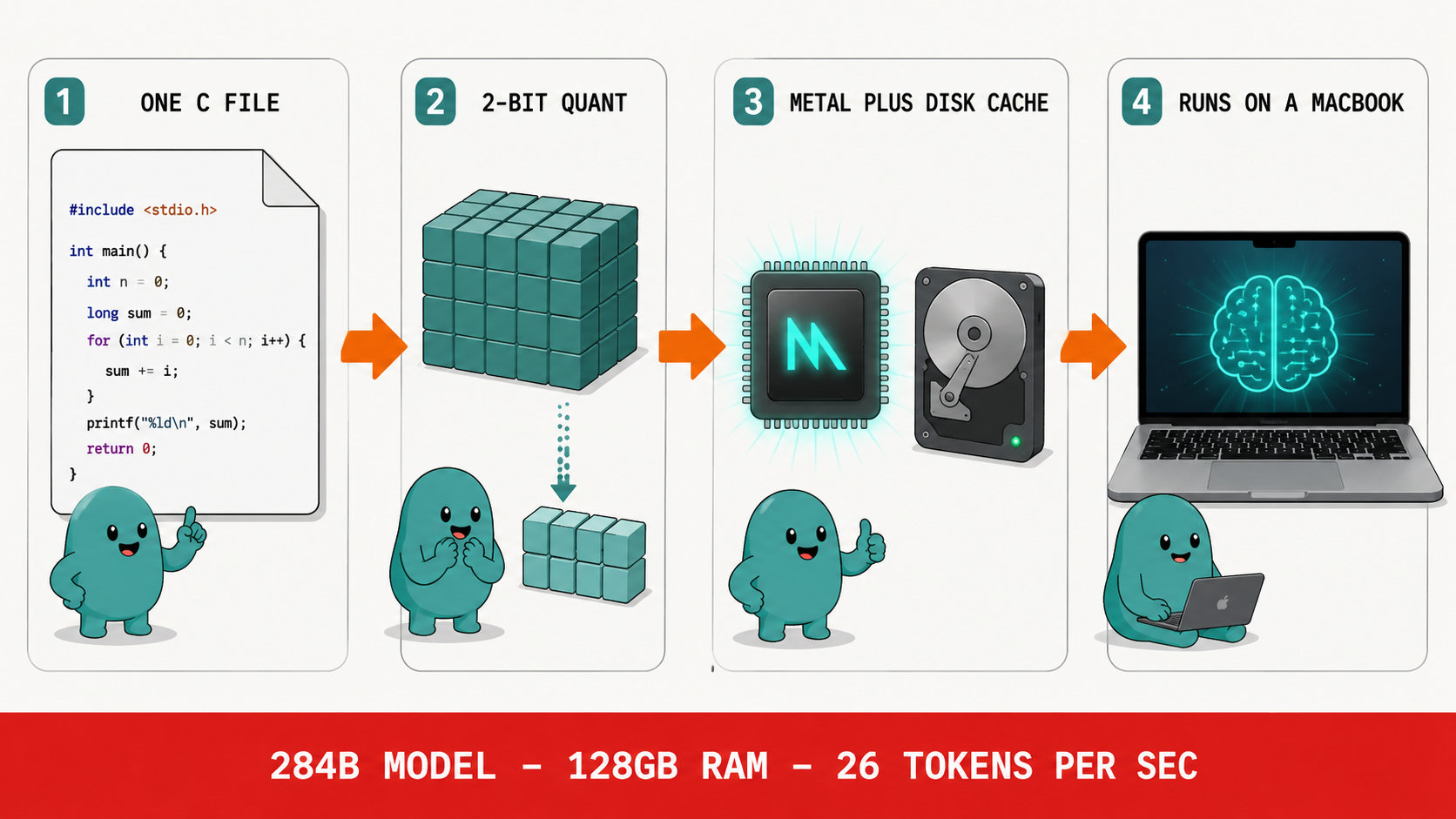
  15. I Tested antirez's ds4 on 18 Tasks — His One-File C Engine Runs a 284B Model on a MacBook and…

    A C-based engine named ds4, developed by Salvatore Sanfilippo (antirez), has demonstrated the capability to run a 284-billion-parameter language model on a MacBook. The author tested ds4 across 18 different tasks, highlighting its efficiency and performance on consumer hardware. This development suggests a potential for more accessible local execution of large AI models. AI

    I Tested antirez's ds4 on 18 Tasks — His One-File C Engine Runs a 284B Model on a MacBook and…

    IMPACT Demonstrates efficient local execution of large AI models on consumer hardware, potentially lowering barriers to entry for researchers and developers.

  16. Tencent Hunyuan open-sources new translation model Hy-MT2, launches mini-program "Tencent Hy Translation"

    Tencent Hunyuan has released its new Hy-MT2 translation model, available in three sizes (1.8B, 7B, and 30B-A3B) and supporting 33 languages. The model demonstrates strong performance, with the 7B and 30B versions outperforming many open-source models and even competing with commercial APIs like Microsoft's. Notably, Hy-MT2 shows improved instruction-following capabilities, allowing for more customized translation styles and formats, and its lightweight 1.8B version is optimized for on-device deployment with minimal storage requirements. AI

    IMPACT Enhances translation capabilities with improved instruction following and on-device deployment options.

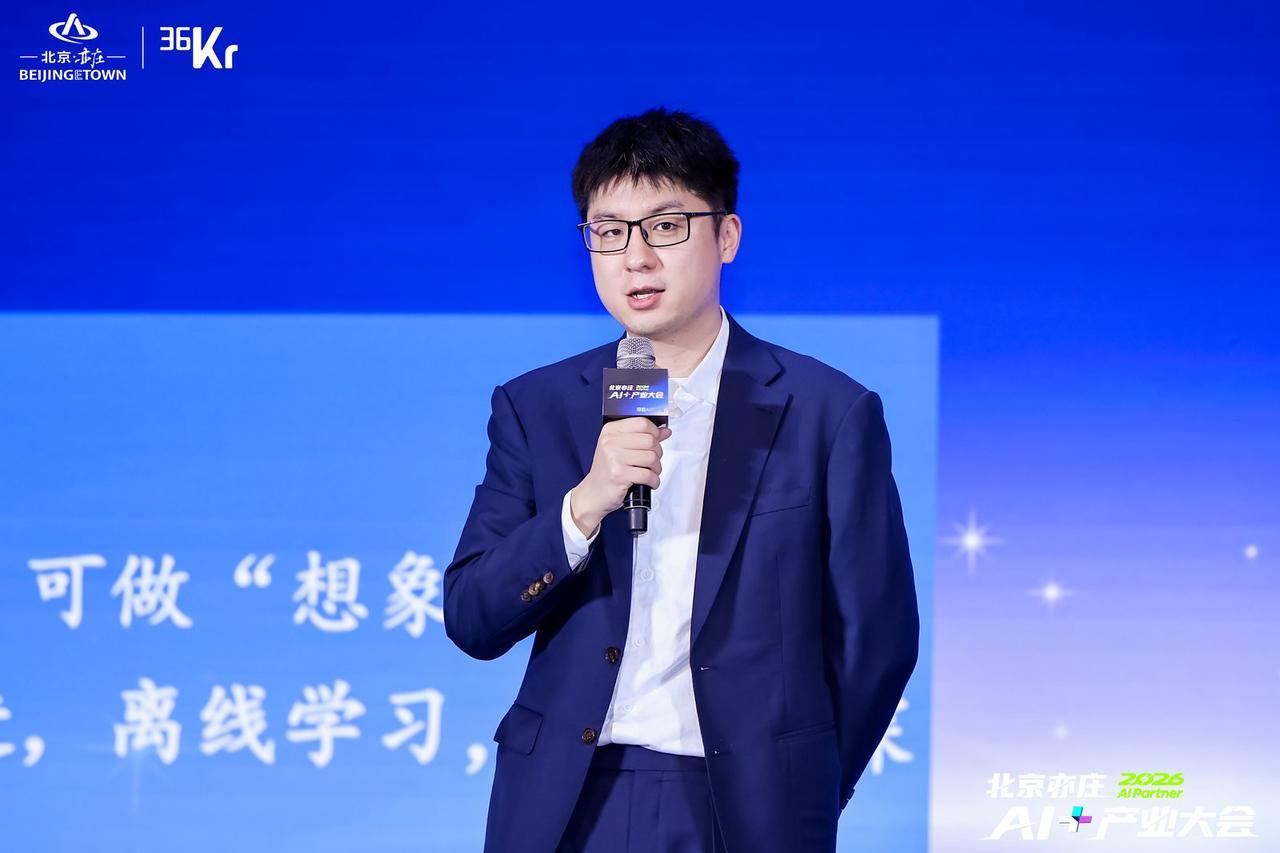
  17. City-level AI Services: From Pilot to Normalization, Real-world Combat and Large-scale Deployment of Robots | 2026AI Partner·Beijing Yizhuang AI+ Industry Conference

    Kuaiwei Technology is deploying robots in over 50 cities, focusing on practical applications like sanitation and delivery to generate data for evolving their embodied AI models. The company utilizes a "fight to fund fight" strategy, where operational robots gather real-world data to improve their World-Action Interactive Model (WAIM). This model enables robots to perform complex tasks in diverse urban environments, from street cleaning to last-mile delivery, with the goal of achieving large-scale deployment. AI

    City-level AI Services: From Pilot to Normalization, Real-world Combat and Large-scale Deployment of Robots | 2026AI Partner·Beijing Yizhuang AI+ Industry Conference

    IMPACT Accelerates the collection of real-world data for embodied AI, potentially speeding up the development and deployment of autonomous systems in urban environments.

  18. DeepSeek Forms Harness Team, Only 'Superpowered' Need Apply? China's AI Takes a Key Leap in 'Product Development'

    Chinese AI lab DeepSeek is forming a new "Harness" team to develop a coding agent product, aiming to compete directly with Anthropic's Claude Code. This strategic move signifies DeepSeek's shift from primarily focusing on foundational model research to building end-user products, a direction also being pursued by major players like Google and Anthropic. The team will focus on engineering capabilities beyond the core model, such as context management, tool integration, and self-correction, to create a more robust coding assistant. This initiative is also seen as the first major product-focused deployment of DeepSeek's substantial upcoming funding round. AI

    DeepSeek Forms Harness Team, Only 'Superpowered' Need Apply? China's AI Takes a Key Leap in 'Product Development'

    IMPACT Signals a shift in AI competition from foundational models to integrated product ecosystems and developer tooling.

  19. You Probably Don't Need 8-Bit Quantization

    For most users running large language models locally, 4-bit quantization offers a practical balance between performance and quality, significantly reducing VRAM requirements compared to 8-bit. While 4-bit models may show a slight decrease in reasoning capabilities on complex tasks, they remain nearly identical for text generation and instruction following. This approach is particularly beneficial for interactive chat and typical production workloads on consumer hardware, enabling faster inference speeds and making larger models accessible on less powerful GPUs. AI

    IMPACT Enables wider accessibility of large language models on consumer hardware by optimizing resource usage.

  20. Google I/O 2026: Everything Google Announced — and the 93 Agents That Built an OS in 12 Hours

    Google's I/O 2026 event showcased significant advancements in AI, particularly with the introduction of "Project Astra." This initiative aims to create a universally accessible AI assistant that can perceive, reason, and act across various modalities. The event also highlighted the development of Gemini 1.5 Pro, which now supports a massive 1 million token context window, enabling more complex and nuanced interactions. Furthermore, Google demonstrated AI-powered tools for developers, including an AI agent that assisted in building an operating system in just 12 hours. AI

    Google I/O 2026: Everything Google Announced — and the 93 Agents That Built an OS in 12 Hours

    IMPACT Google's Project Astra and expanded Gemini 1.5 Pro context window signal a push towards more capable, multimodal AI assistants and advanced reasoning capabilities for developers.

  21. From "What Happened?" to "What Will Happen?"

    Databricks has introduced a new architecture that integrates Genie and TabPFN to enable predictive analytics within conversational business intelligence tools. This system allows business users to ask predictive questions in natural language, bypassing the need for data scientists to manually prepare data, select models, or interpret results. The combined architecture dynamically translates user queries into the necessary input data for TabPFN, which then generates predictions rapidly, offering a unified and governed experience. AI

    IMPACT Enables business users to perform predictive analytics directly within conversational BI tools, reducing reliance on data science teams.

  22. Two hours that changed AI

    The AI industry experienced a significant surge of activity, with OpenAI announcing a model that solved a long-standing geometry problem, potentially unlocking scientific breakthroughs. Anthropic is nearing its first profitable quarter with revenues projected to more than double, and has expanded its compute partnership with SpaceX. Meanwhile, Nvidia reported massive revenue growth driven by AI demand, and SpaceX's IPO filing revealed its transformation into an AI infrastructure giant, alongside potential IPOs for OpenAI and Anthropic. AI

    Two hours that changed AI

    IMPACT Sets new benchmarks for AI capabilities and financial viability, driving massive infrastructure investment and potential market valuations.

  23. Why is Alibaba Cloud 'rebuilding itself'?

    Alibaba Cloud is undergoing a fundamental transformation to cater to the rise of AI agents as primary cloud users, shifting from a human-centric interface to a machine-execution system. This involves a comprehensive overhaul of their infrastructure, from self-developed chips and models to their MaaS platform and cloud entry points. The company aims to provide standardized, machine-readable interfaces for cloud products, enabling agents to autonomously utilize cloud resources for complex tasks, thereby redefining the cloud computing paradigm. AI

    IMPACT This strategic pivot by Alibaba Cloud signals a major industry shift towards agent-native cloud infrastructure, potentially accelerating AI adoption and changing how cloud services are consumed.

  24. Alibaba Qwen3.7-Max Released: 35 Hours of Autonomous Evolution, The Road to the Top for Domestic Large Models

    Alibaba Cloud unveiled its new flagship large language model, Qwen3.7-Max, at its Yunfeng summit. This model has achieved the top position among Chinese models on the Arena global leaderboard, surpassing competitors like Kimi-K2.6 and DeepSeek-v4-pro. A key innovation is its ability to autonomously evolve and optimize tasks within 35 hours, demonstrating a significant leap towards more capable AI agents. AI

    Alibaba Qwen3.7-Max Released: 35 Hours of Autonomous Evolution, The Road to the Top for Domestic Large Models

    IMPACT Sets a new benchmark for Chinese LLMs and showcases advanced agent capabilities, potentially accelerating the development of autonomous AI systems.

  25. Claude Opus 4.7: A Quiet Upgrade That Earns Its Keep at Work

    Anthropic has released an update to its Claude Opus model, version 4.7, which offers improved performance and value for professional use. This iteration, shipped on April 16th, has been tested by users over the past month and is noted for its effectiveness in work-related tasks. The update is described as a quiet but valuable enhancement to the Claude Opus line. AI

    IMPACT This update to a leading frontier model likely enhances its utility for professional applications, potentially improving productivity in various work environments.

  26. Yingli Co., Ltd.: Orders for notebook structural components increased month-on-month in the second quarter

    NetEase Youdao has announced a significant upgrade to its "Zi Yue" large language model, version 4.0, which now supports multimodal interactions including text, images, and audio. The company is also open-sourcing the core multimodal model and its text-to-speech (TTS) model. This move aims to advance AI capabilities and foster broader development within the AI community. AI

    IMPACT Open-sourcing key AI models can accelerate research and development in multimodal AI and speech synthesis.

  27. Youdao Fully Open Sources "Zi Yue 4" Multimodal and TTS Engine

    NetEase Youdao has released its "Zi Yue 4.0" large model, which now supports multimodal interactions including text, images, and audio. The company has also open-sourced the core multimodal model and its text-to-speech (TTS) engine. This release marks a significant step for Youdao in advancing its AI capabilities and contributing to the open-source community. AI

    IMPACT Accelerates open-source AI development and enables broader adoption of multimodal capabilities.

  28. SF Post Warehouse Robot, Casually Wins Embodied AI Competition

    A Tsinghua-affiliated robotics company, Stellar Motion Era, has achieved the top position in the RoboChallenge, a global benchmark for embodied AI. Their self-developed embodied model, Era0, demonstrated superior performance across 30 real-world tasks, showcasing advanced capabilities in perception, planning, and control. Era0's success is attributed to a novel approach that deeply integrates Vision-Language-Action (VLA) models with world models, enabling more robust and adaptable physical task execution. AI

    IMPACT Sets a new benchmark for embodied AI, pushing the industry towards more capable real-world robotic applications.

  29. Divide and Calibrate: Multiclass Local Calibration via Vector Quantization

    Researchers have introduced "Divide et Calibra," a novel method for multiclass calibration in machine learning models. This approach addresses limitations of existing techniques by constructing region-specific calibration maps using vector quantization. The method aims to improve calibration accuracy in high-stakes applications by learning heterogeneous maps that generalize well, even in sparse data regions. AI

    Divide and Calibrate: Multiclass Local Calibration via Vector Quantization

    IMPACT Introduces a new technique to improve the reliability of machine learning models in critical applications.

  30. Memorisation, convergence and generalisation in generative models

    Researchers have analytically characterized the transition from memorization to generalization in linear generative models. They found that convergence to the data distribution emerges continuously when the number of training samples scales linearly with the input dimension. This convergence, however, is distinct from the recovery of principal latent factors, which occurs in a sharp transition. AI

    IMPACT Provides theoretical insights into the generalization capabilities of generative models, potentially guiding future model development.

  31. Why Alibaba might succeed where OpenAI failed

    Alibaba's Qwen AI has been integrated with its Taobao e-commerce platform, allowing users to select, compare, and purchase products through AI-driven conversations. This move contrasts with OpenAI's earlier attempt with Instant Checkout, which was discontinued due to limited merchant adoption and user preference for established e-commerce sites. While tech giants like Google and Amazon are also exploring AI in e-commerce through partnerships or in-house development, Alibaba's integrated approach, combining a leading large language model with its vast e-commerce ecosystem, offers a unique structural advantage. AI

    IMPACT Alibaba's deep integration of Qwen AI with Taobao could set a new standard for AI-driven e-commerce, potentially shifting consumer behavior and creating a new entry point for online shopping.

  32. \textit{Stochastic} MeanFlow Policies: One-Step Generative Control with Entropic Mirror Descent

    Researchers have introduced Stochastic MeanFlow Policies (SMFP), a novel generative policy class for reinforcement learning. SMFP addresses limitations of existing Gaussian policies in handling multimodal action distributions and the complexity of other generative approaches. By mapping Gaussian noise through a MeanFlow transformation, SMFP offers a tractable entropy surrogate and enables stable, exploratory policy improvement within off-policy mirror descent. AI

    IMPACT Introduces a new policy class that improves performance and efficiency in reinforcement learning tasks.

  33. Efficient Learning of Deep State Space Models via Importance Smoothing

    Researchers have developed a new training method called parallel variational Monte Carlo (PVMC) to address the challenges of training deep state space models (DSSMs) at scale. Existing methods, such as auto-encoding DSSMs and those using sequential Monte Carlo (SMC) algorithms, have limitations in terms of scalability and hardware efficiency. PVMC bridges these approaches, enabling robust training for both generative and discriminative tasks. This new method reportedly achieves state-of-the-art results and trains up to ten times faster than previous SMC-based techniques. AI

    Efficient Learning of Deep State Space Models via Importance Smoothing

    IMPACT Introduces a more efficient training method for deep state space models, potentially accelerating research and development in time-series analysis and related AI applications.

  34. Gemma 4 wrote three summaries in one response. The middle one was a self-disclaimer.

    A recent analysis of Google's Gemma 4 E2B model revealed unexpected behavior at a context window of 2048 tokens. When presented with a truncated input, the model generated a three-part response: an initial summary, a self-disclaimer stating the summary was not in the transcript, and then a more cautious retry. This behavior was not observed at larger context window sizes, such as 32768 tokens, where the model correctly identified the input issue without hedging. The discovery corrected a previous assertion about the model's calibration capabilities. AI

    Gemma 4 wrote three summaries in one response. The middle one was a self-disclaimer.

    IMPACT Reveals nuanced behavior in a specific model, highlighting the importance of context window size in LLM output.

  35. Tencent Launches OS-Level AI Assistant "Mavis"

    Tencent has launched Marvis, an AI assistant integrated at the operating system level. Marvis unifies system resources, files, applications, and connectivity within a single AI layer. It comes pre-loaded with six specialized AI agents, including a main agent that coordinates tasks and dispatches specialized agents for file management, computing, applications, browsing, and search, enabling immediate use upon installation. The assistant also offers both efficiency and privacy modes. AI

    IMPACT This OS-level AI assistant could streamline user workflows by integrating various system functions and pre-built agents for immediate productivity.

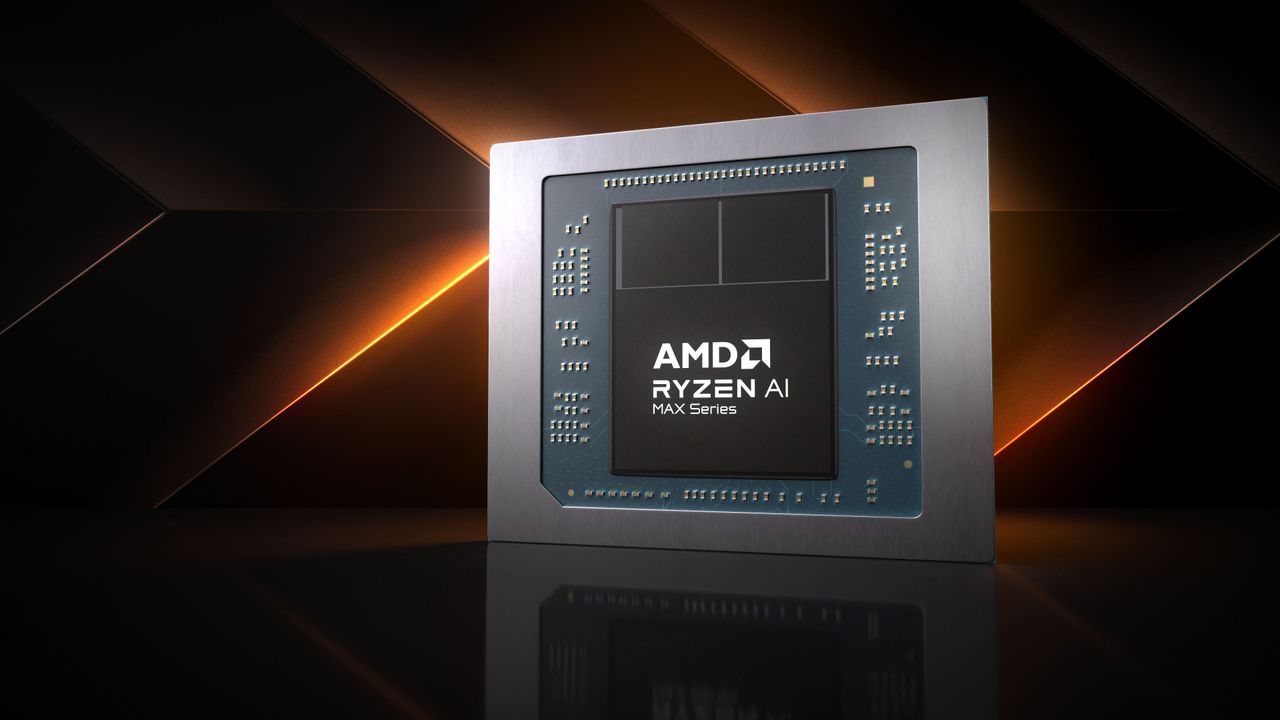
  36. AMD Ryzen AI Max 400 ‘Gorgon Halo’ packs up to 192GB of unified memory — refreshed APU uses Zen 5 and RDNA 3.5, and can clock up to 5.2 GHz

    AMD has announced its new Ryzen AI Max 400 'Gorgon Halo' processors, a refresh of its 'Strix Halo' chips. The key upgrade is the increased capacity for unified memory, supporting up to 192GB, which AMD claims enables these x86 client processors to run large language models with over 300 billion parameters. These new chips feature Zen 5 CPU cores, RDNA 3.5 GPU cores, and an XDNA 2 NPU, with the flagship model boosting to 5.2 GHz. While initially targeting the commercial market with 'Pro' designations, AMD has indicated that systems from OEM partners are expected to be announced starting in Q3 2026. AI

    AMD Ryzen AI Max 400 ‘Gorgon Halo’ packs up to 192GB of unified memory — refreshed APU uses Zen 5 and RDNA 3.5, and can clock up to 5.2 GHz

    IMPACT Enables x86 client processors to run larger LLMs, potentially increasing AI adoption in commercial and consumer devices.

  37. 🤖 Inter-1 does streaming: real-time social signal detection from live video, audio & text Hi – Filip from Interhuman AI here 👋 Last month we launched Inter-1, o

    Interhuman AI has enhanced its Inter-1 model to process live video streams, enabling real-time detection of social signals from video, audio, and text. This upgrade allows the multimodal model to analyze ongoing content, building on its initial launch last month. The company, founded by Filip, aims to provide continuous social signal analysis capabilities. AI

    IMPACT Enhances real-time analysis capabilities for multimodal AI applications.

  38. Conditioning Gaussian Processes on Almost Anything

    Researchers have developed a novel method to condition Gaussian Processes (GPs) on a wide range of information, including natural language. This approach establishes an equivalence between GPs and linear diffusion models, allowing predictive sampling to be treated as an ODE. The new technique enables GPs to incorporate diverse real-world knowledge, such as non-linear physics and text from large language models, for more robust probabilistic modeling. AI

    Conditioning Gaussian Processes on Almost Anything

    IMPACT Enables more flexible and powerful probabilistic modeling by integrating diverse real-world data, including natural language, into Gaussian Processes.

  39. Claude Code /goal Command to Achieve Completion Conditions and Self-Drive: New Slash Command in 2.1.139 # AI # ClaudeCode https://hide10.com/post/claude-code-goal-command-2026/

    Anthropic has released version 2.1.139 of its Claude Code tool, introducing a new '/goal' command. This command allows users to specify completion conditions, enabling the tool to operate autonomously. The update aims to enhance the self-driving capabilities of Claude Code for developers. AI

    IMPACT Enhances autonomous operation for developers using Claude Code.

  40. AGPO: Adaptive Group Policy Optimization with Dual Statistical Feedback

    Two new research papers introduce methods to improve the training of large language models using reinforcement learning. One paper addresses the issue of "advantage collapse" in Group Relative Policy Optimization (GRPO) by introducing a diagnostic metric and an adaptive extension called AVSPO. The other paper proposes Adaptive Group Policy Optimization (AGPO), which uses group-level statistics to dynamically adjust training parameters like clipping and decoding temperature, outperforming existing methods on several benchmarks. AI

    AGPO: Adaptive Group Policy Optimization with Dual Statistical Feedback

    IMPACT These new reinforcement learning techniques aim to enhance LLM reasoning capabilities and training stability, potentially leading to more robust and accurate models.

  41. Google AI Edge Gallery Just Added MCP. Here's What On-Device Agents Can Actually Do Now

    Google has updated its AI Edge Gallery app to support the Model Context Protocol (MCP) on Android devices, enabling on-device AI agents. This update allows LLMs like Gemma 4 to run entirely locally, enhancing privacy and reducing latency by keeping all processing and data on the user's phone. The app now supports agent skills, calendar integration, and persistent chat history, moving it from a simple model playground to a functional on-device agent runtime. AI

    IMPACT Enables more private and capable AI agents to run directly on mobile devices.

  42. Latent Process Generator Matching

    Researchers have introduced a new framework called latent process generator matching for generative models. This approach generalizes existing generator matching theory by treating the observed generative state as a deterministic image of a tractable Markov process. The method allows for learning a generator of a stochastic process that matches the one-time marginal distributions of the projected process, extending previous work on static latent variables to time-dependent conditional processes. AI

    Latent Process Generator Matching

    IMPACT Introduces a generalized framework for generative models, potentially improving training and generation processes for flow-matching and diffusion models.

  43. Equilibrium Reasoners: Learning Attractors Enables Scalable Reasoning

    Researchers have introduced Equilibrium Reasoners (EqR), a novel framework that enables scalable reasoning in iterative neural network models. EqR hypothesizes that generalizable reasoning emerges from learning task-conditioned attractors, which are dynamical systems that stabilize on valid solutions. This approach allows models to adaptively allocate computational resources based on task difficulty, significantly improving accuracy on complex problems like Sudoku-Extreme by scaling test-time compute. AI

    IMPACT Introduces a new framework for scalable reasoning in iterative models, potentially improving performance on complex tasks by adaptively allocating compute.

  44. Uni-Edit: Intelligent Editing Is A General Task For Unified Model Tuning

    Researchers have introduced Uni-Edit, a novel approach to tuning Unified Multimodal Models (UMMs) that enhances image understanding, generation, and editing simultaneously. Unlike traditional methods that use complex multi-task training, Uni-Edit employs a single editing task, a single training stage, and a single dataset. This is achieved by developing an automated data synthesis pipeline that transforms visual question-answering data into sophisticated editing instructions, creating the Uni-Edit-148k dataset. Experiments show that tuning solely on Uni-Edit leads to comprehensive improvements across all three capabilities without additional operations. AI

    IMPACT Uni-Edit offers a more efficient method for enhancing multimodal AI capabilities, potentially streamlining model development.

  45. Preference-aware Influence-function-based Data Selection Method for Efficient Fine-Tuning

    Researchers have developed PRISM, a novel method for efficient fine-tuning of large language models by prioritizing data samples that most effectively guide the model toward a desired behavior. Unlike previous approaches that treat all target examples equally, PRISM weights these examples based on the current model's preference, creating a more precise target representation. This allows PRISM to concentrate the training budget on the most impactful data, leading to improved performance in both general fine-tuning and safety-oriented tasks. AI

    IMPACT Enhances LLM training efficiency by optimizing data selection, potentially reducing compute costs and accelerating model development.

  46. Post-Hoc Understanding of Metaphor Processing in Decoder-Only Language Models via Conditional Scale Entropy

    Researchers have developed a new metric called conditional scale entropy (CSE) to analyze how decoder-only language models process metaphors. CSE measures the breadth of computational engagement across different frequency scales within a transformer's layers. Studies using CSE revealed that metaphorical tokens consistently activate a wider range of computational scales compared to literal tokens in models ranging from 124 million to 20 billion parameters, including architectures like GPT-2, LLaMA-2, and GPT-oss. AI

    IMPACT Introduces a novel metric for understanding metaphorical processing in LLMs, potentially aiding in the development of more nuanced language understanding capabilities.

  47. SymbolicLight V1: Spike-Gated Dual-Path Language Modeling with High Activation Sparsity and Sub-Billion-Scale Pre-Training Evidence

    Researchers have developed SymbolicLight V1, a novel spiking language model designed to achieve high activation sparsity while maintaining language quality. This model integrates binary Leaky Integrate-and-Fire spike dynamics with a continuous residual stream, featuring a unique Dual-Path SparseTCAM module that uses an aggregation path for long-range memory and a spike-gated local attention path for short-range precision. A 194M-parameter version trained on a Chinese-English corpus achieved over 89% activation sparsity, showing competitive performance against GPT-2 models. AI

    IMPACT Introduces a novel spiking neural network architecture for language modeling, potentially enabling more energy-efficient AI inference on neuromorphic hardware.

  48. TextReg: Mitigating Prompt Distributional Overfitting via Regularized Text-Space Optimization

    Researchers have developed TextReg, a new regularization framework designed to address prompt distributional overfitting in large language models. This method aims to improve how prompts generalize to new data by controlling representation in text-space optimization. TextReg combines several techniques, including dual-evidence gradient purification and semantic edit regularization, to achieve better out-of-distribution performance. AI

    IMPACT Improves out-of-distribution generalization for LLMs, potentially leading to more robust AI applications.

  49. Deformba: Vision State Space Model with Adaptive State Fusion

    Researchers have introduced Deformba, a novel vision state space model designed to overcome limitations in applying SSMs to visual tasks. Deformba addresses the challenges of fixed scanning methods and the difficulty in fusing distinct information streams by employing adaptive state fusion. This approach dynamically enhances spatial structural information while preserving the linear complexity of SSMs and enabling multi-modal fusion. AI

    IMPACT Introduces a new architecture for vision tasks that may improve efficiency and fusion capabilities.

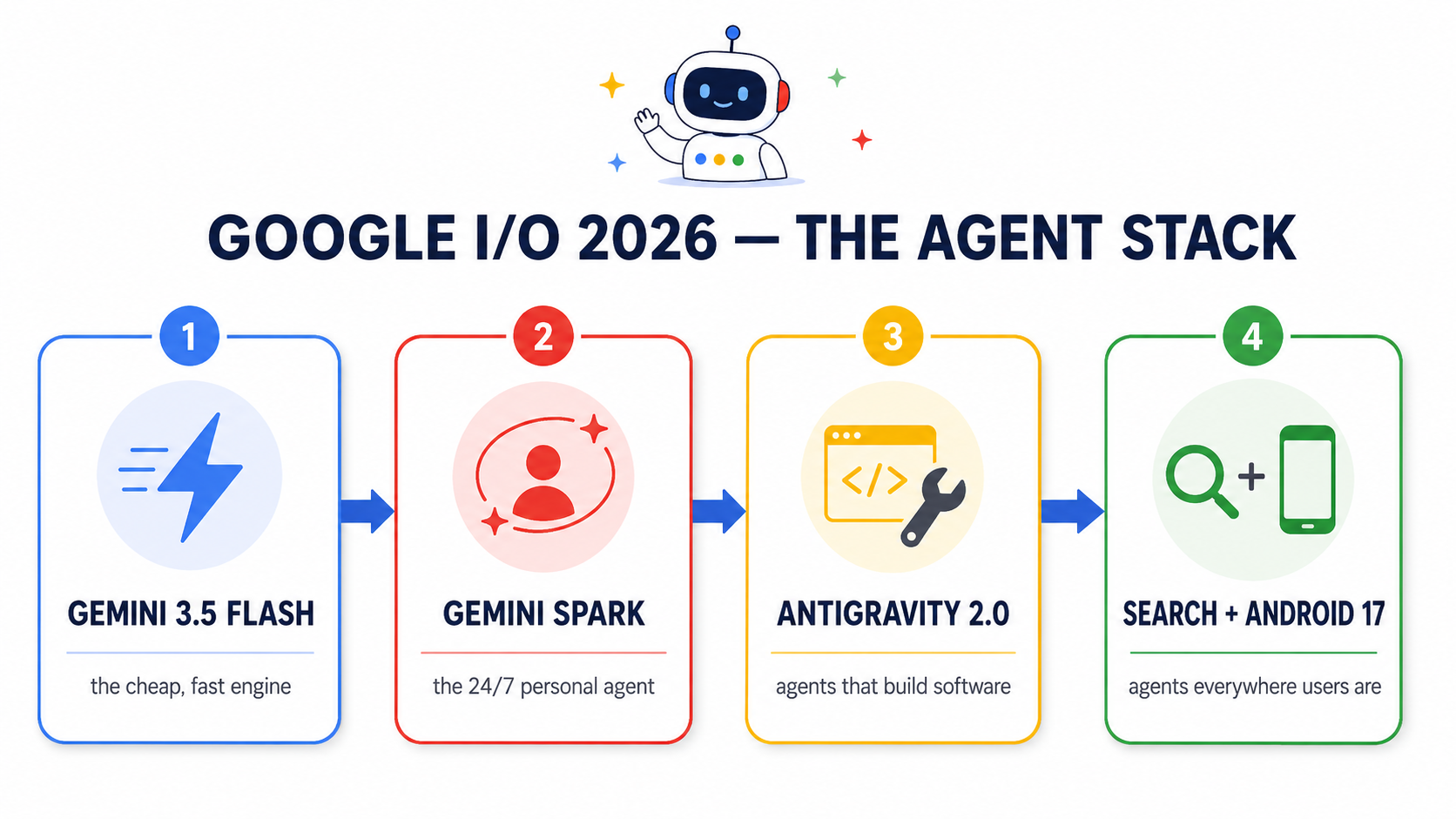
  50. [AINews] Google I/O 2026: Gemini 3.5 Flash, Omni (NanoBanana for Video), Spark (background agents), and Antigravity 2.0

    Google announced Gemini 3.5 Flash and the Antigravity 2.0 agent platform at its I/O 2026 event. Gemini 3.5 Flash is now generally available, offering improved speed and a 1 million token context window, though some analyses suggest its cost-effectiveness is comparable to older models due to higher token consumption. Antigravity 2.0, a standalone desktop application, expands Google's agent orchestration capabilities with a new CLI, SDK, and enterprise support, aiming to shift developer tooling towards multi-agent workflows. AI

    [AINews] Google I/O 2026: Gemini 3.5 Flash, Omni (NanoBanana for Video), Spark (background agents), and Antigravity 2.0

    IMPACT Google's Gemini 3.5 Flash and Antigravity 2.0 platform advance agent capabilities and developer tooling, potentially impacting enterprise AI adoption and efficiency.