PulseAugur / Brief
EN
LIVE 23:00:55

Brief

last 24h
[50/56] 221 sources

Multi-source AI news clustered, deduplicated, and scored 0–100 across authority, cluster strength, headline signal, and time decay.

  1. Real-Time Earthquake Magnitude Classification from Initial P-Waves: Models, Dataset, and Comparative Analysis for South Asia

    Researchers have developed a new method for classifying earthquake magnitudes in real-time using initial P-wave data. Their study compares six machine learning approaches, finding that Transformer-based deep learning models significantly outperform traditional methods. The proposed Transformer architecture achieved 76.23% standard accuracy and 81.56% adaptive accuracy with a low inference latency, making it suitable for real-time deployment. AI

    IMPACT Enables faster and more accurate earthquake early warnings, potentially saving lives and reducing damage.

  2. One of the authors of "Attention is All You Need" just argued we should move past it. Pathway’s Post-Transformer debate is worth watching

    A co-author of the seminal "Attention Is All You Need" paper has proposed moving beyond the Transformer architecture. This shift is part of an ongoing debate about the future of AI model development. The discussion highlights potential limitations of current architectures and explores alternative approaches. AI

    One of the authors of "Attention is All You Need" just argued we should move past it. Pathway’s Post-Transformer debate is worth watching

    IMPACT Initiates a discussion on the future of AI architectures beyond the dominant Transformer model.

  3. The famous METR AI time horizons graph contains numerous severe errors [D]

    A recent analysis by Nathan Witkin, a research writer at NYU Stern’s Tech and Society Lab, has identified numerous severe errors in the widely cited METR AI time horizons graph. These flaws include fabricated human baseline data, incentivizing benchmarkers to take longer by paying them hourly, a biased sample of human testers, and potential test-training data contamination. Witkin argues that the graph's significant inaccuracies render it unreliable for drawing meaningful conclusions about AI capabilities and their impact on tasks like software development. AI

    IMPACT Critiques of widely cited AI capability graphs highlight the need for rigorous scientific standards and can influence how AI progress is perceived.

  4. HorizonStream: Long-Horizon Attention for Streaming 3D Reconstruction

    Researchers have introduced HorizonStream, a novel Transformer-based architecture designed for long-horizon attention in streaming 3D reconstruction. This method addresses limitations in existing approaches that struggle with drift and jitter over extended sequences by explicitly factorizing geometric propagation as an evidence influence kernel. HorizonStream utilizes Geometric Linear Attention for multi-timescale evidence propagation and Geometric Local Attention with Spatiotemporal RoPE for reliable 3D matching, enabling stable reconstruction of sequences over 10,000 frames with constant memory and linear time. AI

    IMPACT Advances streaming 3D reconstruction capabilities, potentially improving applications in robotics and augmented reality.

  5. Exploring deep learning for Event-Based Saliency Prediction with a Transformer-based model

    Researchers have introduced SEST, a novel Transformer-based model for predicting visual saliency from event-based camera data. This work addresses the scarcity of relevant datasets by introducing two new benchmarks, N-DHF1K and N-UCF Sports, generated from existing RGB saliency datasets. SEST demonstrates strong performance, outperforming prior event-based methods and narrowing the gap with state-of-the-art RGB models, while also showing transferability to real-world event camera data. AI

    IMPACT Opens a new research direction in event-based vision and neuromorphic visual attention, potentially improving visual processing for specialized cameras.

  6. Complete-muE: Optimal Hyperparameter Transfer and Scaling for MoE Models

    Researchers have introduced Complete-muE, a novel framework designed to optimize hyperparameter transfer for Mixture-of-Experts (MoE) models. This system addresses the limitations of existing tools by enabling effective hyperparameter transfer between dense feed-forward networks and various MoE configurations. Complete-muE utilizes a two-bridge system to manage changes in architecture and token counts, allowing hyperparameters tuned on a single dense model to be applied near-optimally to all MoE setups. AI

    IMPACT Enables efficient scaling of MoE models by reducing the need for extensive hyperparameter searches.

  7. Weisfeiler-Leman Is Incomplete on Simple Spectrum Graphs, so Canonicalize Them

    Researchers have demonstrated that the Weisfeiler-Leman (WL) test, a common method for graph isomorphism testing, is incomplete for graphs with simple spectra. This limitation extends to Graph Neural Networks (GNNs) that rely on the WL hierarchy. To address this, a new method called PRiSM has been developed, which provides a provably complete canonicalization for simple-spectrum eigendecompositions. When integrated with models like DeepSets or Transformers, PRiSM enables universal approximation on these types of graphs. AI

    IMPACT This research could lead to more powerful and accurate graph neural networks by providing a complete canonicalization method for specific graph types.

  8. How AI Became So Powerful?

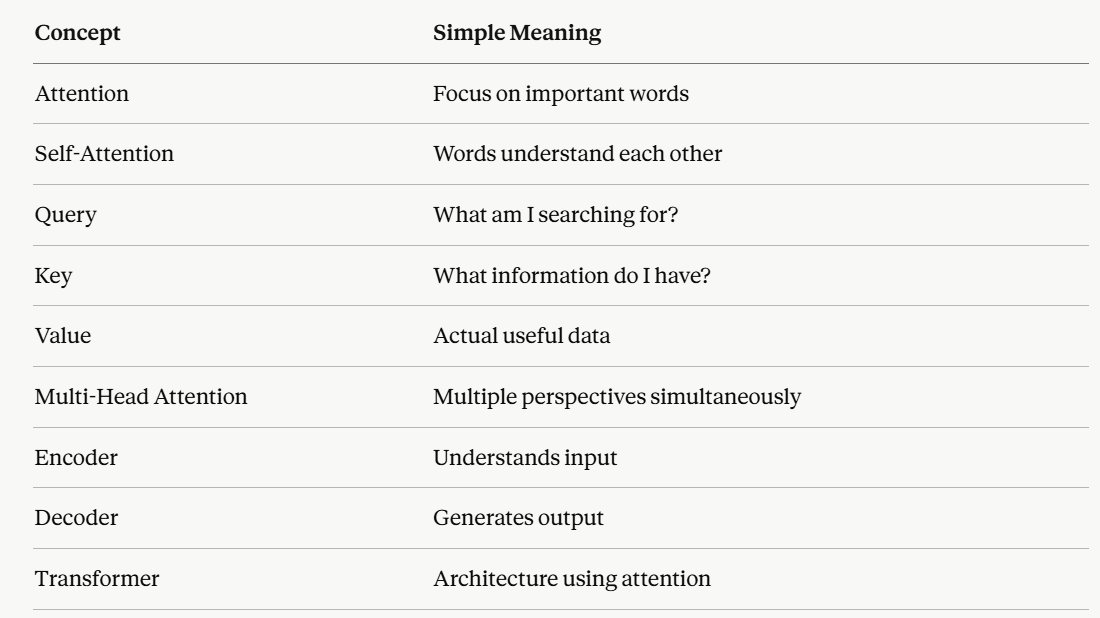
    The Transformer architecture, introduced in the 2017 paper "Attention Is All You Need," revolutionized AI by enabling models to process sequential data more efficiently. This architecture, which relies on self-attention mechanisms, allowed for significant advancements in natural language processing and other AI fields. Its impact has been profound, forming the basis for many modern large language models. AI

    How AI Became So Powerful?

    IMPACT The Transformer architecture underpins many modern AI systems, particularly in NLP, driving current LLM capabilities.

  9. How Transformers Quietly Became the Foundation of Modern AI

    The Transformer architecture has become the bedrock of contemporary artificial intelligence, shifting the paradigm from simple memorization to sophisticated contextual understanding. This foundational technology enables models to focus on relevant information, a key development in advancing AI capabilities. Its widespread adoption underscores its critical role in the current AI landscape. AI

    IMPACT Explains the core architectural innovation that underpins most modern AI models.

  10. Residual Connections — Deep Dive + Problem: Keyword Classifier

    This article explains residual connections, a key component in Transformer architectures essential for training deep neural networks like Large Language Models (LLMs). Residual connections help overcome the vanishing gradient problem by providing an alternative path for gradients, enabling models to learn more complex patterns. This technique is vital for advancements in NLP tasks such as translation, summarization, and text generation. AI

    IMPACT Explains a core architectural concept that underpins modern LLMs, crucial for understanding model capabilities and limitations.

  11. CODA: Rewriting Transformer Blocks as GEMM-Epilogue Programs https:// arxiv.org/abs/2605.19269 # HackerNews # CODA # Transformer # GEMM -Epilogue # AI # Researc

    Researchers have developed CODA, a method that rewrites Transformer blocks into GEMM-Epilogue programs. This approach aims to optimize the performance of Transformer models, which are foundational to many modern AI systems. By reformulating these blocks, CODA seeks to improve computational efficiency for AI workloads. AI

    IMPACT Optimizes Transformer computations, potentially improving AI model performance and efficiency.

  12. Searching for AI's 'Third Language': How Intermediate Representations Bridge the Multimodal Gap | CVPR 2026

    Researchers from Tsinghua University's Institute for Intelligent Industry have developed a novel approach using "intermediate representations" to bridge the gap between different data modalities in AI. Their work, presented across four papers at CVPR 2026, introduces a "third language" that allows AI systems to understand and process information more effectively. This method involves creating an intermediary representation, such as Occupancy for robot actions and video generation, or Gaussian Maps for 4D scene reconstruction, which is more easily understood by AI than direct mapping between disparate data types. AI

    Searching for AI's 'Third Language': How Intermediate Representations Bridge the Multimodal Gap | CVPR 2026

    IMPACT Introduces a new paradigm for multimodal AI by using intermediate representations, potentially improving robot learning and 4D scene reconstruction.

  13. The Bayesian Geometry of Transformer Attention

    Researchers have developed "Bayesian wind tunnels" to rigorously study how transformers perform Bayesian reasoning. These controlled environments allow for the verification of Bayesian posteriors with high accuracy in small transformer models, a feat that capacity-matched MLPs cannot achieve. The study reveals that transformers utilize residual streams as a belief substrate, feed-forward networks for posterior updates, and attention for content-addressable routing, demonstrating a geometric design for Bayesian inference. AI

    The Bayesian Geometry of Transformer Attention

    IMPACT Explains the geometric underpinnings of transformer reasoning, potentially guiding future model design for enhanced inferential capabilities.

  14. FlashAttention

    Together AI has released FlashAttention-3 and FlashAttention-4, significant upgrades to their GPU-accelerated attention mechanism for large language models. FlashAttention-3, designed for Hopper GPUs, achieves up to 75% utilization and 1.5-2x speedup over its predecessor by exploiting new hardware features like Tensor Cores and Tensor Memory Accelerator, and supporting FP8 precision. FlashAttention-4, optimized for Blackwell GPUs, further enhances performance by pipelining computations and addressing bottlenecks in transcendental functions and memory traffic, reaching 71% utilization and offering substantial speedups over existing libraries. AI

    FlashAttention

    IMPACT These optimized attention mechanisms promise significantly faster LLM training and inference, enabling longer context windows and more efficient GPU utilization.

  15. How My Career Evolved Like an AI (LLM Architectures )System

    An individual's career progression is likened to the evolution of Large Language Model (LLM) architectures. The early career, akin to encoder-only models like BERT, focuses on absorbing and representing knowledge. The mid-career phase, mirroring decoder-only models such as GPT, emphasizes generating outputs and solving problems. Finally, the role of an AI Solution Architect aligns with encoder-decoder models like T5, requiring a continuous translation between business needs and technical solutions. AI

    How My Career Evolved Like an AI (LLM Architectures )System

    IMPACT Offers a novel perspective on understanding career development through the lens of AI architecture.

  16. Musical Attention Transformer: Music Generation Using a Music-Specific Attention Model

    Researchers have developed a new attention mechanism called Musical Attention to improve AI-generated music. This method incorporates musical metadata like bar numbers, key, and tempo directly into the Transformer's attention process. By representing musical notes with pitch, duration, and metadata, the model can better capture musical structure and reduce unnatural repetition, leading to more coherent and varied melodies. AI

    Musical Attention Transformer: Music Generation Using a Music-Specific Attention Model

    IMPACT Introduces a novel method to improve the quality and naturalness of AI-generated music by incorporating structural metadata.

  17. Towards Understanding Self-Pretraining for Sequence Classification

    Researchers have investigated the effectiveness of self-pretraining (SPT) for Transformer models in sequence classification tasks. Their work replicates and ablates previous findings, suggesting that SPT improves optimization by enabling models to learn useful attention patterns. Specifically, the study highlights that SPT helps models learn proximity interactions, transforming absolute positional encodings into attention scores that bias towards nearby elements. This approach proves more effective than standard supervised training in certain Transformer configurations, as label supervision can overlook beneficial attention directions that masked reconstruction can detect. AI

    Towards Understanding Self-Pretraining for Sequence Classification

    IMPACT Enhances Transformer performance on sequence classification by improving attention mechanisms and overcoming limitations of standard supervised training.

  18. New Paradigms Won't Save You

    Scott Alexander argues that even if Artificial General Intelligence (AGI) requires a new paradigm beyond current Large Language Models (LLMs), such a paradigm could emerge within the next 3-5 years. He uses Lindy's Law to estimate the timeline for revolutionary AI advancements, suggesting that a paradigm shift as significant as the Transformer architecture could appear relatively soon. Alexander contends that the rapid scaling of compute and the increasing number of AI researchers, potentially augmented by AI itself, will accelerate development, making the AGI timeline a near-term concern rather than a distant future event. AI

    New Paradigms Won't Save You

    IMPACT Argues that AGI development, even with new paradigms, could be a near-term concern, challenging the notion of a distant future for advanced AI.

  19. SAME: A Semantically-Aligned Music Autoencoder

    Researchers have developed SAME, a new autoencoder for stereo music and general audio that achieves a high temporal compression ratio while preserving reconstruction quality. This model combines a transformer backbone with semantic regularization, phase-aware losses, and improved discriminator designs. SAME offers significant computational cost benefits and is released in open-weights with two variants: SAME-L and a CPU-deployable SAME-S. AI

    SAME: A Semantically-Aligned Music Autoencoder

    IMPACT New open-weight audio autoencoder could reduce computational costs for generative audio tasks.

  20. How Many Different Outputs Can a Transformer Generate?

    Researchers have developed a method to predict the number of unique sequences a transformer model can generate, based on its architecture. This analysis provides a theoretical explanation for why transformers sometimes fail at simple sequence tasks. The findings indicate that the length of accessible sequences grows linearly with prompt length, but the proportion of these sequences decays exponentially with sequence length. AI

    IMPACT Provides theoretical insights into transformer limitations, potentially guiding future model development for sequence-based tasks.

  21. TONIC: Token-Centric Semantic Communication for Task-Oriented Wireless Systems

    Researchers have introduced TONIC, a novel framework for semantic communication in wireless systems that prioritizes token-level relevance for foundation models. This approach moves beyond traditional bit-level fidelity by dynamically allocating protection based on a token's importance to the task. At the receiver, a confidence-aware gating mechanism handles unreliable decisions, allowing a completion model to restore missing information for accurate inference. Experiments demonstrate TONIC's superior performance in image classification tasks compared to existing methods across various channel conditions. AI

    IMPACT Optimizes data transmission for AI models, potentially improving efficiency and accuracy in AI-powered wireless applications.

  22. VectraYX-Nano: A 42M-Parameter Spanish Cybersecurity Language Model with Curriculum Learning and Native Tool Use

    Researchers have developed VectraYX-Nano, a 42 million parameter language model specifically trained for Spanish cybersecurity tasks with a focus on Latin America. The model incorporates a novel Spanish cybersecurity corpus, a specialized Transformer decoder architecture, and curriculum learning with replay mechanisms. Notably, it features native tool invocation capabilities via the Model Context Protocol (MCP), making it the first published Spanish-native cybersecurity LLM with end-to-end MCP integration. AI

    IMPACT Provides a specialized LLM for Spanish-speaking cybersecurity professionals, potentially enhancing threat detection and response in the region.

  23. CoRMA: Contrastive RMA for Contact-Rich Meta-Adaptation

    Researchers have developed CoRMA, a novel framework for robotic motor adaptation designed for force-dominant assembly tasks. This system utilizes a compact 6D semantic contact context, inferred online using a causal Transformer adapter from sensor data. CoRMA enables within-episode adaptation without requiring demonstrations or gradient updates, showing improved real-world success rates compared to existing methods on tasks like peg insertion and gear meshing. AI

    IMPACT Introduces a new method for robotic adaptation that could improve performance in complex assembly tasks.

  24. $\textit{BlockFormer}$ : Transformer-based inference from interaction maps

    Researchers have developed BlockFormer, a novel transformer-based architecture designed for inferring parameters from interaction maps. This method is particularly useful for problems like identifying centromeres from genome-wide chromosome conformation capture data, such as Hi-C. BlockFormer effectively handles variability in the number and size of entities by leveraging shared structures and a custom simulator for generating synthetic training data. The approach has demonstrated accuracy in recovering genomic positions of centromeres across various species. AI

    IMPACT Introduces a new transformer architecture for biological data analysis, potentially improving genomic research.

  25. Exact Linear Attention

    Researchers have developed Exact Linear Attention (ELA), a novel mechanism that reduces Transformer computational complexity to linear time without approximation errors. ELA addresses prior limitations like gradient explosion and token dilution by imposing kernel constraints and introduces innovations such as a Hyper-Link structure for residual connections and a Memory Lobe module for enhanced memory and implicit reinforcement learning. The method demonstrates significant improvements in decoding speed and memory usage, with applications extending to vision models like YOLO-LAT for faster inference and parameter reduction. AI

    IMPACT Reduces computational complexity for Transformer models, enabling more efficient processing of ultra-long sequences and faster inference in vision tasks.

  26. SiameseNorm: Breaking the Barrier to Reconciling Pre/Post-Norm

    Researchers have introduced SiameseNorm, a novel two-stream architecture designed to resolve the long-standing conflict between Pre- and Post-Norm in Transformer models. This approach couples Pre-Norm and Post-Norm streams within shared residual blocks, enabling improved training stability and representational capacity without significant overhead. Experiments across various model sizes and types, including dense language models, Vision Transformers, and Diffusion Transformers, demonstrate consistent performance gains and stable training. AI

    IMPACT Introduces a novel architecture that enhances training stability and performance across various Transformer models.

  27. LLMs on the Line: Data Determines Loss-to-Loss Scaling Laws

    Researchers have identified that the pretraining data is the primary determinant of loss-to-loss scaling laws in large language models. Their experiments indicate that factors such as model size, optimization hyperparameters, and even architectural differences between Transformers and state-space models have a limited influence on these scaling trends. The findings suggest that curating appropriate pretraining datasets is crucial for optimizing downstream performance, while other model configurations can be adjusted for training efficiency. AI

    IMPACT Highlights the critical role of pretraining data in LLM performance, guiding future research and development efforts.

  28. Asymmetric Virtual Memory Paging for Hybrid Mamba-Transformer Inference

    Researchers have developed a new memory management technique called Asymmetric Virtual Memory Paging (AVMP) to improve the efficiency of hybrid language models. These models combine Transformer layers with State Space Models (SSMs), leading to distinct memory cache types that current systems handle poorly. AVMP separates these cache types into distinct pools and allows capacity migration between them when needed, reducing out-of-memory events and significantly boosting request throughput. AI

    IMPACT Improves inference efficiency for hybrid LLMs, potentially leading to faster and more cost-effective deployment of advanced models.

  29. SO-Mamba: State-Ownership Mamba for Unrolled MRI Reconstruction

    Researchers have developed SO-Mamba, a novel state-space model designed for accelerated MRI reconstruction. This model improves upon existing methods by differentiating between persistent reconstruction evidence and update-dependent information within its processing stages. SO-Mamba utilizes a State-Ownership Router to manage this evidence, leading to enhanced accuracy and anatomical coherence in MRI scans. Experiments on multiple public benchmarks demonstrate SO-Mamba's superior performance compared to CNN, Transformer, and standard Mamba-based approaches, while maintaining efficient computation. AI

    IMPACT Introduces a new model architecture that improves MRI reconstruction accuracy and efficiency.

  30. 3D Reconstruction and Knowledge Distillation to Improve Multi-View Image Models to Explore Spike Volume Estimation in Wheat

    Researchers have developed a novel hybrid approach to estimate wheat spike volume using a combination of 3D reconstruction and knowledge distillation techniques. This method aims to overcome the challenges of traditional measurement methods, which are either computationally expensive or sensitive to environmental conditions. By distilling knowledge from a 3D model into a 2D image-based Transformer, the system achieves a significant reduction in mean absolute error and inference time, making it suitable for high-throughput field phenotyping. AI

    3D Reconstruction and Knowledge Distillation to Improve Multi-View Image Models to Explore Spike Volume Estimation in Wheat

    IMPACT Enables more efficient and accurate crop yield analysis through advanced AI-driven image processing.

  31. MambaGaze: Bidirectional Mamba with Explicit Missing Data Modeling for Cognitive Load Assessment from Eye-Gaze Tracking Data

    Researchers have developed MambaGaze, a new framework designed to accurately assess cognitive load using eye-gaze tracking data. This system utilizes bidirectional Mamba-2 to efficiently model long-range temporal dependencies and an XMD encoding method to explicitly handle missing data, such as that caused by blinks. MambaGaze demonstrated superior performance over existing models on benchmark datasets and is feasible for real-time deployment on edge devices like NVIDIA Jetson platforms. AI

    IMPACT Introduces a novel approach for real-time cognitive load assessment, potentially enabling more responsive human-AI interaction in safety-critical systems.

  32. Do You Need Text Rectification? Soft Attention Mask Embedding for Rectification-Free Scene Text Spotting

    Researchers have developed a new end-to-end framework for scene text spotting called SAME-Net, which unifies text detection and recognition without requiring character-level annotations or separate text rectification modules. The system incorporates a novel Soft Attention Mask Embedding (SAME) module that uses Transformer encoders to generate refined, boundary-aware masks, effectively reducing background noise. This approach allows for joint optimization of detection and recognition objectives through differentiable back-propagation. SAME-Net has demonstrated state-of-the-art performance on challenging datasets like Total-Text and ICDAR 2015. AI

    Do You Need Text Rectification? Soft Attention Mask Embedding for Rectification-Free Scene Text Spotting

    IMPACT Introduces a novel method for scene text spotting that improves accuracy and efficiency by eliminating the need for separate rectification steps.

  33. CogScale: Scalable Benchmark for Sequence Processing

    Researchers have introduced CogScale, a new benchmark designed to efficiently evaluate the sequential processing capabilities of AI architectures. This benchmark comprises 14 scalable synthetic tasks that allow for rapid validation of new designs before extensive training. Initial evaluations using CogScale tested seven different architectures, including GRU, LSTM, Mamba, and Transformer variants, across various parameter budgets and difficulty levels. AI

    CogScale: Scalable Benchmark for Sequence Processing

    IMPACT Enables faster iteration and validation of novel AI architectures for sequential data processing.

  34. Genetic Programming with Transformer-Based Mutation for Approximate Circuit Design

    Researchers have developed a new method for designing approximate arithmetic circuits using genetic programming enhanced by a transformer-based mutation operator. This hybrid approach aims to overcome stagnation in the evolutionary design process by integrating a standard mutation operator with the novel transformer-based one. The system was trained on a large dataset of genetic programming chromosomes representing approximate multipliers, and it has demonstrated the ability to achieve better trade-offs between error and performance compared to existing state-of-the-art libraries. AI

    Genetic Programming with Transformer-Based Mutation for Approximate Circuit Design

    IMPACT Introduces a novel transformer-based mutation for genetic programming, potentially improving automated circuit design and leading to new, patentable designs.

  35. Markovian Circuit Tracing for Transformer State Dynamic

    Researchers have developed a new framework called Markovian Circuit Tracing (MCT) to analyze the internal state dynamics of transformer models. This method uses synthetic Hidden Markov Model (HMM) tasks to test if transformer activations exhibit coarse state-transition structures. The findings indicate that transformers can learn near-Bayes next-token predictors and that residual activations contain partial Bayesian belief information, with state patching significantly improving accuracy. AI

    Markovian Circuit Tracing for Transformer State Dynamic

    IMPACT Introduces a new benchmark and evaluation framework for transformer interpretability, potentially aiding in understanding model behavior.

  36. Represented Is Not Computed: A Causal Test of Candidate Algorithmic Intermediates in a Transformer

    Researchers have published a paper investigating how Transformers compute algorithmic intermediates, using arithmetic tasks as a testbed. The study found that while a Transformer model achieved high accuracy on base-digit extraction, causal tests revealed that the identified internal representations of intermediates were not actually used in the computation path to the output. This highlights a divergence between what probes suggest a model represents and how it causally uses that information, even when explicit algorithmic hypotheses are available. AI

    IMPACT Challenges current methods for understanding internal model computations, suggesting a need for more robust causal analysis beyond simple probing.

  37. Structured-Sparse Attention for Entity Tracking with Subquadratic Sequence Complexity

    Researchers have developed a new attention mechanism called Structured-Sparse Attention designed to improve entity tracking in long sequences. This method exploits the structured nature of learned attention, concentrating most computations within local block-diagonal neighborhoods. By evaluating interactions in a blockwise manner, the technique achieves subquadratic complexity, reducing computational cost while maintaining accuracy comparable to dense attention operators. AI

    IMPACT This new attention mechanism could lead to more efficient processing of long sequences in AI models, improving performance in tasks like entity tracking.

  38. Most Transformer Modifications Still Do Not Transfer at 1-3B: A 2020-2026 Update to Narang et al. (2021) with Downstream Evaluation and a Noise Floor

    A recent study re-evaluated the effectiveness of Transformer model modifications, finding that most still do not yield significant improvements when scaled to 1-3 billion parameters. Researchers tested 20 modifications introduced after 2021, using downstream evaluation metrics and controlling for variables like data, compute, and training recipes. The findings largely echo a 2021 study, with only a couple of modifications showing benefits, and one of those proving unstable at the larger scale. The research emphasizes the need for rigorous reporting, downstream evaluation, and cross-scale stability testing for architecture comparisons. AI

    Most Transformer Modifications Still Do Not Transfer at 1-3B: A 2020-2026 Update to Narang et al. (2021) with Downstream Evaluation and a Noise Floor

    IMPACT Confirms that architectural innovations in large language models often fail to scale effectively, suggesting a need for more robust evaluation methods.

  39. Resolving Representation Ambiguity in Feedforward Novel View Synthesis Transformer via Semantic-Spatial Decoupling

    Researchers have developed a new method to improve feedforward novel view synthesis using Transformer models. Their approach decouples semantic and spatial information into separate tokens, preventing spatial biases from interfering with appearance representation and enhancing rendering quality. This design introduces minimal additional inference latency and has shown consistent improvements across various Transformer architectures. AI

    Resolving Representation Ambiguity in Feedforward Novel View Synthesis Transformer via Semantic-Spatial Decoupling

    IMPACT Improves rendering fidelity in novel view synthesis, potentially enhancing applications in 3D reconstruction and virtual environments.

  40. Direct content-based retrieval from music scores images

    Researchers have developed new methods for content-based retrieval of music scores, moving beyond traditional metadata searches. The study explores characteristics relevant for search and proposes systematic ways to build query datasets. Experiments compare transcription-based Optical Music Recognition (OMR) with transcription-free Transformer and Large Language Models, finding OMR excels in-domain while transcription-free models handle variability better. AI

    IMPACT Introduces novel approaches for searching visual music data, potentially improving accessibility for musicians and researchers.

  41. REACH: Hand Pose Estimation from Room Corners

    Researchers have developed REACH-Net, a novel 3D hand pose estimation system capable of accurately tracking hand shape and pose from fixed cameras in room corners. The system is designed to work with extremely low-resolution and occluded views by leveraging hand-body coordination and temporal progression. To train and evaluate REACH-Net, a new large-scale dataset called REACH was created, featuring 50 participants engaged in daily activities, with hand data captured via concealed chest cameras. AI

    IMPACT Enables more robust 3D hand tracking in challenging, real-world environments for applications like human behavior analysis.

  42. LLM Benchmark Datasets Should Be Contamination-Resistant

    A new paper argues that benchmark datasets used to evaluate large language models (LLMs) must be resistant to contamination from pretraining data. The authors highlight that many current benchmarks are already included in LLM training corpora, diminishing their effectiveness in measuring true generalization. They propose leveraging architectural asymmetries in Transformer models to create datasets that are unlearnable during training but still usable for inference, calling for community adoption of these contamination-resistant methods. AI

    LLM Benchmark Datasets Should Be Contamination-Resistant

    IMPACT Ensures more reliable evaluation of LLM capabilities by preventing benchmark contamination.

  43. Check Your LLM's Secret Dictionary! Five Lines of Code Reveal What Your LLM Learned (Including What It Shouldn't Have)

    Researchers have developed a method using singular value decomposition (SVD) of a large language model's weight matrix to reveal interpretable semantic subspaces. This technique, requiring minimal code and no model inference, can expose the composition and curation of a model's training data. The analysis of models like GPT-OSS-120B, Gemma-2-2B, and Qwen2.5-1.5B showed systematic differences in their learned subspaces, with Qwen exhibiting ethically inappropriate vocabulary. The study proposes this SVD analysis as a standard pre-release safety auditing step and suggests its use for tokenizer optimization and more controllable LLM design. AI

    IMPACT Offers a novel, low-overhead method for auditing LLM training data and identifying potential ethical risks before deployment.

  44. WoundFormer: Multi-Scale Spatial Feature Fusion for Multi-Class Wound Tissue Segmentation

    Researchers have developed WoundFormer, a new transformer-based framework designed for segmenting multiple tissue types within chronic wounds. This model enhances hierarchical spatial feature fusion by incorporating a multi-scale aggregation head that preserves feature topology and strengthens contextual interactions. WoundFormer achieved an 81.9% Dice score on the WoundTissueSeg dataset, outperforming existing methods by up to 4.3 Dice points and showing particular improvement in segmenting minority tissue classes. AI

    WoundFormer: Multi-Scale Spatial Feature Fusion for Multi-Class Wound Tissue Segmentation

    IMPACT Improves quantitative wound assessment by enhancing segmentation accuracy for heterogeneous tissue types.

  45. Multi-Head Attention as Ensemble Nadaraya-Watson Estimation: Variance Reduction, Decorrelation, and Optimal Head Diversity

    Researchers have developed a statistical theory that frames multi-head attention (MHA) as an ensemble of Nadaraya-Watson kernel regression estimators. This framework reveals that variance reduction in MHA is fundamentally tied to the decorrelation of outputs from different attention heads, rather than just the number of heads. They introduced the Head Diversity Index (HDI) to measure this decorrelation and derived an optimal head-dimension allocation strategy, suggesting a new architectural scaling law where optimal per-head dimension grows logarithmically with training set size. AI

    Multi-Head Attention as Ensemble Nadaraya-Watson Estimation: Variance Reduction, Decorrelation, and Optimal Head Diversity

    IMPACT Provides a theoretical basis for understanding and optimizing attention mechanisms in large language models.

  46. When Fast Fourier Transform Meets Transformer for Image Restoration (2024)

    Researchers have developed SFHformer, a novel image restoration framework that integrates the Fast Fourier Transform (FFT) with Transformer architecture. This approach leverages both spatial and frequency domains to model local and global image features, addressing challenges across various degradation phenomena. The framework has demonstrated state-of-the-art performance on numerous datasets for tasks like deraining, dehazing, deblurring, and low-light enhancement, offering a favorable balance of performance, parameter size, and computational cost. AI

    When Fast Fourier Transform Meets Transformer for Image Restoration (2024)

    IMPACT Introduces a novel framework for image restoration that improves performance across multiple degradation tasks.

  47. The General Theory of Localization Methods

    A new research paper introduces the "localization method," a general machine learning framework built on localization kernels and local means. This framework provides a unified theoretical foundation and demonstrates connections to various existing methods like kernel methods, MeanShift, and denoising autoencoders. Notably, the paper shows how Transformers can be derived from this framework, offering a new perspective on unifying and designing flexible learning systems. AI

    The General Theory of Localization Methods

    IMPACT Provides a unified theoretical lens for existing models and offers new tools for designing flexible, data-adaptive learning systems.

  48. Enhanced Reinforcement Learning-based Process Synthesis via Quantum Computing

    Researchers have developed a new framework called CRiSP that uses reinforcement learning and Transformer-based policies to improve the initial state preparation for Variational Quantum Algorithms (VQAs). This method aims to overcome limitations like barren plateaus and local minima, outperforming existing Clifford initialization techniques on QAOA benchmarks. Separately, another study explores quantum reinforcement learning for process synthesis, proposing state encoding algorithms to enhance scalability and demonstrating competitive performance against classical RL methods on flowsheet synthesis problems. AI

    IMPACT These papers explore novel applications of quantum computing and reinforcement learning, potentially advancing capabilities in complex optimization and synthesis problems.

  49. Same Architecture, Different Capacity: Optimizer-Induced Spectral Scaling Laws

    A new research paper demonstrates that the choice of optimizer significantly impacts a Transformer model's capacity and scaling laws, even when the architecture remains identical. The study found that the Muon optimizer achieved linear scaling in representation capacity, a 2.3x improvement over AdamW's weaker scaling, particularly in challenging rare-token regimes. This suggests that optimizers should be considered a primary factor in model scaling, alongside architecture and data, and highlights the potential for co-designing optimizers and architectures for better performance. AI

    IMPACT Highlights that optimizer choice is a critical, under-explored factor in achieving optimal model scaling and representation capacity.

  50. You Don't Need Attention: Gated Convolutional Modeling for Watch-Based Fall Detection

    Researchers have developed a new deep learning model called Gated-CNN for fall detection using smartwatches. This model utilizes gated convolutional networks instead of attention mechanisms, which are computationally more efficient and better at identifying the specific impact signatures of falls. In evaluations across multiple datasets, Gated-CNN achieved high F1-scores, outperforming transformer-based models. When tested in real-time on a Google Pixel Watch 3, the model demonstrated excellent accuracy and detected all falls without any misses. AI

    IMPACT This model offers a more efficient and accurate approach to fall detection on wearable devices, potentially improving safety for users.