PulseAugur / Brief
EN
LIVE 00:17:30

Brief

last 24h
[2/2] 221 sources

Multi-source AI news clustered, deduplicated, and scored 0–100 across authority, cluster strength, headline signal, and time decay.

  1. A 1.9 MB Classifier Beat a 269 MB One. Sort Of.

    A smaller, 1.9 MB classifier model, utilizing TF-IDF and Logistic Regression, outperformed a larger, 269 MB fine-tuned model in classifying customer support tweets. The smaller model achieved this by focusing on efficiency and targeted feature engineering, demonstrating that model size does not always correlate with performance. AI
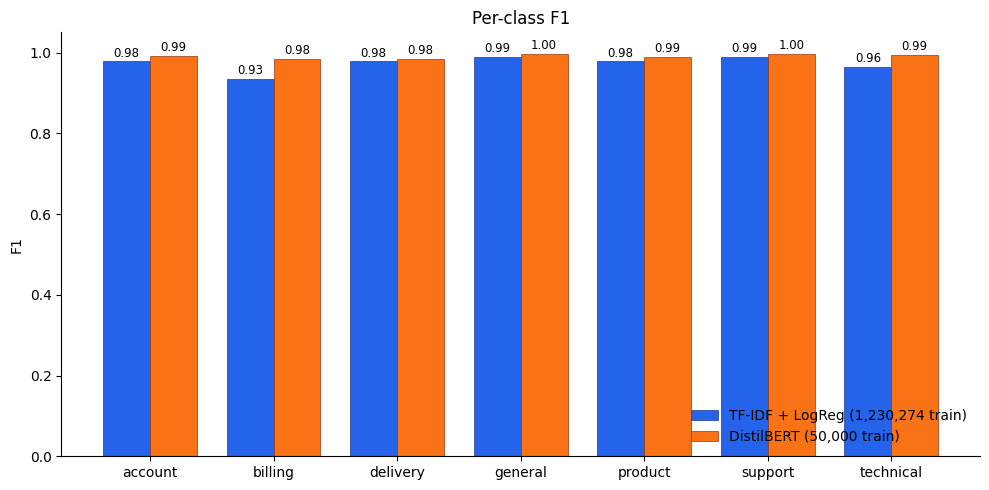
    A 1.9 MB Classifier Beat a 269 MB One. Sort Of.

    IMPACT Demonstrates that efficient, smaller models can outperform larger ones, suggesting potential for resource optimization in AI applications.

  2. Traditional statistical representations outperform generative AI in identifying expert peer reviewers

    Two new research papers explore the limitations of current AI models in specialized academic tasks. One study, Sem-Detect, proposes a method to distinguish AI-generated peer reviews from human-written ones by analyzing semantic content rather than just textual features. The other paper demonstrates that traditional statistical methods, like TF-IDF, are more effective than generative AI models such as GPT-4o mini for identifying expert peer reviewers in scientific fields. AI

    IMPACT Current AI models show limitations in accurately distinguishing AI-generated content from human work in peer reviews and identifying specialized experts, suggesting traditional methods remain superior for these nuanced tasks.