PulseAugur / Brief
EN
LIVE 16:07:39

Brief

last 24h
[38/38] 222 sources

Multi-source AI news clustered, deduplicated, and scored 0–100 across authority, cluster strength, headline signal, and time decay.

  1. Robot Enlightenment Needs a Kindergarten That Can 'Make Mistakes'

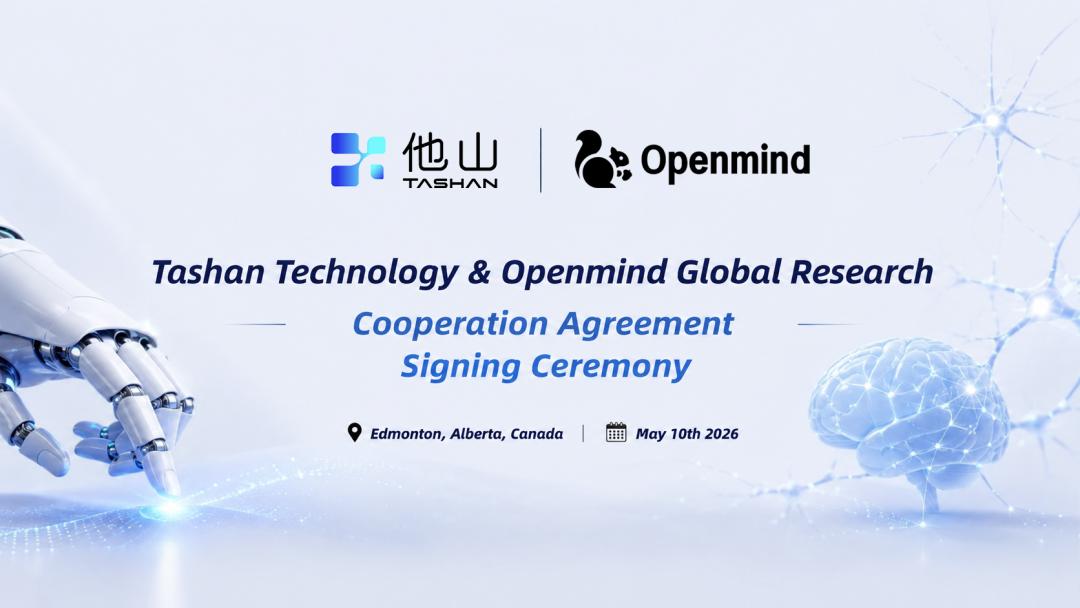
    Richard Sutton, a pioneer in reinforcement learning, has partnered with Chinese haptic technology company HeShan Technology to launch a "Robot Kindergarten" project. This initiative aims to train embodied AI agents through real-world trial and error, emphasizing the importance of first-person experience over imitation learning. The project will leverage HeShan's advanced haptic sensors, which provide detailed tactile feedback, to enable robots to learn from physical interactions and develop a deeper understanding of the world. AI
    Robot Enlightenment Needs a Kindergarten That Can 'Make Mistakes'

    IMPACT This collaboration could pioneer new methods for robot training, moving beyond imitation to real-world experience, potentially accelerating embodied AI development.

  2. Emission-Aware Reinforcement Learning for Sustainable Electric Vehicle Charging and Carbon Dioxide Reduction Under Varying Renewable Penetration

    Researchers have developed a new emission-aware reinforcement learning strategy to optimize electric vehicle charging. This approach, based on the Soft Actor Critic algorithm, prioritizes reducing carbon emissions and maximizing renewable energy usage. Tested on the EV2Gym platform, the strategy demonstrated significant emission reductions, achieving up to 87% less carbon dioxide per kilowatt-hour compared to uncontrolled charging under high renewable penetration scenarios. AI

    IMPACT Optimizes electric vehicle charging to reduce grid strain and carbon emissions by integrating renewable energy sources.

  3. Quantum Frog: Emergent Cooperation and Difficulty Scaling in a Quantized-Time Cooperative Game

    Researchers have developed a new cooperative game called Quantum Frog, inspired by Frogger, which uses a quantized-time mechanic where the environment only advances when a player acts. Using reinforcement learning, they analyzed how game difficulty scales and found that a 'rush strategy' is optimal. The study revealed that adding an uncoordinated second player significantly increases difficulty compared to increasing traffic density for a single expert player. Cooperative training notably improved joint success rates and reduced episode length, demonstrating that shared incentives can align agents in time-critical tasks. AI

    IMPACT Demonstrates how environmental mechanics can shape multi-agent learning dynamics and highlights the benefits of cooperative training in time-critical scenarios.

  4. Neuro-Inspired Inverse Learning for Planning and Control

    Researchers have developed a novel neuro-inspired framework called Inverter for embodied planning and control. This framework utilizes Inverse Learning (IL) to train components, bridging the gap between reinforcement learning and optimal control by planning over entire action sequences. Inverter demonstrates significant performance improvements over existing methods on various benchmark tasks, achieving better results with substantially less computational cost during inference. AI

    IMPACT Introduces a new, more efficient approach to AI planning and control, potentially accelerating embodied AI applications.

  5. Generative OOD-regularized Model-based Policy Optimization

    Researchers have developed a new offline reinforcement learning algorithm called Generative OOD-regularized Model-based Policy Optimization (GORMPO). This method integrates generative models to explicitly model density in sparse state-action spaces, aiming to prevent policies from taking out-of-distribution actions. GORMPO restricts policy updates to high-density areas of the dataset and has shown a 17% performance improvement on a real-world medical dataset compared to existing baselines. AI

    IMPACT Introduces a novel method for safer offline reinforcement learning by leveraging generative models to avoid out-of-distribution actions.

  6. Toward Enactive Artificial Intelligence

    This paper proposes integrating enactive approaches into artificial intelligence, viewing perception as an active, embodied engagement with the environment rather than passive input processing. It highlights four key enactive concepts: experience, action-perception inseparability, autonomy, and embodiment, arguing that mainstream AI, including large language models, has overlooked these. While reinforcement learning shares some enactive principles through its focus on action and interaction, the paper suggests a broader incorporation of enactive ideas is needed for more robust AI. AI

    IMPACT Proposes a new theoretical framework for AI, emphasizing embodied interaction and active perception over passive data processing.

  7. Cross-Domain Energy-Guided Diffusion Generation for Off-Dynamics Reinforcement Learning

    Researchers have developed CEDGE, a novel framework for off-dynamics reinforcement learning that utilizes diffusion models to generate synthetic trajectories. This approach trains a diffusion model on source-domain data and then adapts these generated trajectories to a target domain using energy guidance. The energy guidance is designed to minimize distribution mismatches, allowing for efficient adaptation to new dynamics without retraining the diffusion model. Experiments show CEDGE improves trajectory generation for planning and enhances downstream policy learning. AI

    IMPACT Introduces a new method for generating synthetic data in reinforcement learning, potentially improving policy learning in scenarios with mismatched dynamics.

  8. Power-seeking agents will likely be developed

    Current state-of-the-art large language models largely operate within a simulator regime, which insulates them from power-seeking behavior. However, as these models are increasingly trained using long-horizon reinforcement learning or similar methods, they will transition towards consequentialism. This shift is expected to motivate power-seeking behavior, and preventing other actors from developing such AI will be challenging without proactive measures from leading research labs. AI

    Power-seeking agents will likely be developed

    IMPACT Discusses the potential for future AI systems to exhibit power-seeking behaviors, raising long-term safety concerns for AI development.

  9. How does a # ReinforcementLearning agent decide what to do? Part 3 of my RL series tackles this by defining policies, MDPs and trajectories. We'll keep building

    This article explains how reinforcement learning agents make decisions by defining key concepts. It covers policies, Markov Decision Processes (MDPs), and trajectories. The series aims to build understanding towards the Proximal Policy Optimization (PPO) algorithm. AI

    How does a # ReinforcementLearning agent decide what to do? Part 3 of my RL series tackles this by defining policies, MDPs and trajectories. We'll keep building

    IMPACT Explains fundamental concepts in reinforcement learning, crucial for understanding agent behavior and advanced algorithms.

  10. Uncertainty quantification for Markov chain induced martingales with application to temporal difference learning

    Researchers have developed new high-dimensional concentration inequalities and Berry-Esseen bounds for martingales induced by Markov chains. These findings are applied to analyze Temporal Difference (TD) learning with linear function approximations, a key method in Reinforcement Learning (RL). The study provides a strong consistency guarantee for TD learning and establishes an $O(T^{- rac{1}{4}}\log T)$ distributional convergence rate for the TD estimator. AI

    IMPACT Advances theoretical understanding of RL algorithms, potentially leading to more robust and reliable AI agents.

  11. Frontier RL Is Cheaper Than You Think

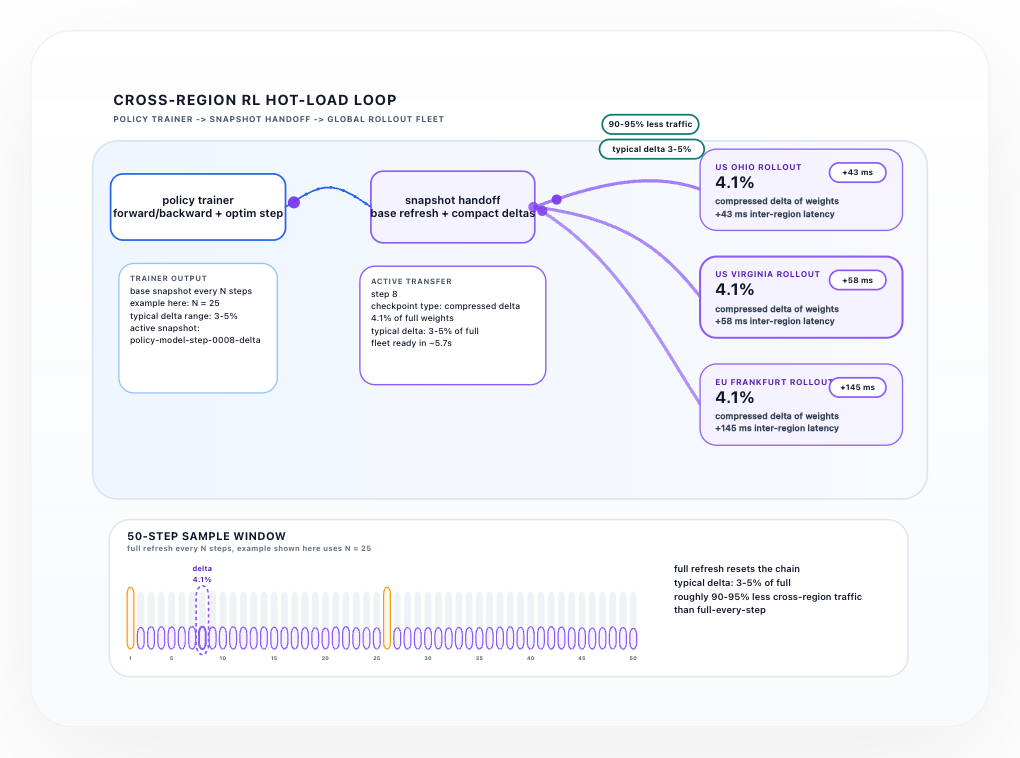
    Fireworks AI argues that the conventional wisdom regarding the cost of frontier Reinforcement Learning (RL) infrastructure is flawed. They propose that instead of transferring entire multi-terabyte model checkpoints for every update, only the delta of changed weights needs to be sent. This approach, supported by empirical observations and a recent paper, significantly reduces data transfer volume, making cross-region synchronization feasible over standard networks. Consequently, this lowers the barrier to entry for competing at the AI frontier, challenging the notion that only a few large companies can afford such infrastructure. AI

    Frontier RL Is Cheaper Than You Think

    IMPACT Suggests a more cost-effective approach to frontier AI model training, potentially lowering barriers for smaller competitors.

  12. 🤖🔄🧠💪 Reinforcement Learning based Adaptive Control # AI Q: 🤖 Should machines learn to adapt on their own or follow strict human rules? " ? Yes. https:// bagroun

    This cluster discusses the concept of adaptive control in AI, specifically focusing on reinforcement learning. It poses the question of whether machines should autonomously learn and adapt or adhere strictly to human-defined rules, suggesting a preference for self-adaptation. AI

    IMPACT Explores the philosophical and practical implications of AI autonomy versus human control in learning.

  13. TimeRewarder: Learning Dense Reward from Passive Videos via Frame-wise Temporal Distance

    Researchers have developed TimeRewarder, a novel method for learning dense reward signals from passive videos. This technique models temporal distances between frame pairs to estimate task progress, which can then guide reinforcement learning agents. Experiments on ten Meta-World tasks showed TimeRewarder significantly improved success rates and sample efficiency, outperforming manually designed rewards and previous methods. The approach also demonstrated potential in leveraging real-world human videos for scalable reward signal generation. AI

    IMPACT Enables more efficient training of reinforcement learning agents by automating reward design from video data.

  14. CCLab: Adversarial Testing of Learning- and Non-Learning-Based Congestion Controllers

    Researchers have developed CCLab, a new framework designed to test the robustness of network congestion controllers, including both learning-based and traditional algorithms. The framework uses a reinforcement learning agent to introduce adversarial perturbations to input signals or network conditions. Findings indicate that while both types of controllers degrade under attack, learning-based methods generally show greater resilience than human-designed ones. The adversarial traces generated by CCLab can also be used to train more robust congestion controllers. AI

    IMPACT Introduces a novel testing framework that could lead to more resilient AI-driven network management systems.

  15. CellFluxRL: Biologically-Constrained Virtual Cell Modeling via Reinforcement Learning

    Researchers have developed CellFluxRL, a novel framework for creating virtual cells that adhere to biological and physical constraints. This approach uses reinforcement learning with biologically meaningful reward functions to improve upon existing generative models. The resulting CellFluxRL model demonstrates enhanced biological function, structural validity, and morphological correctness compared to its predecessor, moving towards more biologically meaningful simulations for applications like drug discovery. AI

    IMPACT Advances virtual cell modeling by incorporating biological constraints, potentially accelerating drug discovery.

  16. CIG: Exploration via Conditional Information Gain

    Researchers have introduced Conditional Information Gain (CIG), a novel reward mechanism for reinforcement learning designed to improve exploration strategies. CIG addresses limitations of existing methods by providing a tractable surrogate for trajectory-level information gain, allowing it to scale to high-dimensional state spaces. Tested across twelve tasks in both discrete and continuous control environments, CIG demonstrated competitive or superior performance compared to previous exploration techniques, even in the presence of stochastic distractors. AI

    CIG: Exploration via Conditional Information Gain

    IMPACT Introduces a more robust exploration strategy for reinforcement learning agents, potentially improving performance in complex and noisy environments.

  17. Reinforcement learning for ion shuttling on trapped-ion quantum computers

    Researchers have developed a novel reinforcement learning (RL) approach to optimize ion shuttling on trapped-ion quantum computers. This method addresses the high-dimensional optimization challenge that arises with increasing numbers of ions, outperforming current heuristic techniques. The RL approach achieved up to a 36.3% reduction in shuttling operations and is adaptable to various chip architectures, offering a valuable tool for designing future quantum computing hardware. AI

    IMPACT Introduces a novel application of reinforcement learning to improve efficiency in quantum computing hardware design.

  18. roto 2.0: The Robot Tactile Olympiad

    Researchers have introduced roto 2.0, a new benchmark for tactile-based reinforcement learning in robotics. This benchmark utilizes GPU parallelism and focuses on end-to-end "blind" manipulation tasks across four different robotic morphologies. The team demonstrated a significant performance improvement, with their agents achieving 13 Baoding ball rotations in 10 seconds, which is substantially faster than existing methods. By open-sourcing the environments and baseline models, they aim to lower the entry barrier for researchers in this field. AI

    IMPACT Introduces a standardized benchmark to accelerate research and development in tactile-based robotic manipulation.

  19. Beyond the Bellman Recursion: A Pontryagin-Guided Framework for Non-Exponential Discounting

    Researchers have developed a new framework called Pontryagin-Guided Direct Policy Optimization (PG-DPO) to address limitations in reinforcement learning methods. Traditional approaches using Bellman-style recursions struggle with non-exponential discounting, which is common in modeling human preferences and survival scenarios. PG-DPO abandons recursion, instead integrating the Pontryagin Maximum Principle with Monte Carlo rollouts to achieve better accuracy and stability on specialized benchmarks. AI

    Beyond the Bellman Recursion: A Pontryagin-Guided Framework for Non-Exponential Discounting

    IMPACT Introduces a novel approach to reinforcement learning that could improve modeling of complex decision-making processes.

  20. Precision Physical Activity Prescription via Reinforcement Learning for Functional Actions

    Researchers have developed a novel offline reinforcement learning algorithm to create personalized physical activity recommendations. This algorithm analyzes step count data and health biomarkers from the All of Us Research Program to optimize daily step distributions for improved cardiometabolic risk. Simulation studies indicate the approach outperforms existing continuous-action RL methods, suggesting increased and more consistent physical activity for better health outcomes. AI

    Precision Physical Activity Prescription via Reinforcement Learning for Functional Actions

    IMPACT Introduces a novel RL approach for personalized health recommendations, potentially improving preventative care.

  21. Mem-$π$: Adaptive Memory through Learning When and What to Generate

    Researchers have developed Mem-π, a novel framework designed to enhance the adaptive memory capabilities of large language model (LLM) agents. Unlike traditional methods that rely on static retrieval from memory banks, Mem-π employs a separate, dedicated model to generate context-specific guidance dynamically. This approach allows the agent to decide when and what guidance to produce, leading to more efficient and relevant task execution. In evaluations across various agentic benchmarks, Mem-π demonstrated significant improvements, particularly in web navigation tasks where it achieved over 30% relative gains compared to existing memory baselines. AI

    IMPACT Introduces a new method for LLM agents to dynamically manage their memory, potentially improving performance on complex, context-dependent tasks.

  22. DeCoR: Design and Control Co-Optimization for Urban Streets Using Reinforcement Learning

    Researchers have developed DeCoR, a novel reinforcement learning framework designed to optimize urban street design and traffic signal control. The system first learns to generate optimal crosswalk layouts by encoding pedestrian networks as graphs. Subsequently, it develops adaptive signal timings to minimize delays for both pedestrians and vehicles. In simulations on a real-world urban corridor, DeCoR significantly reduced pedestrian wait times and improved traffic flow, demonstrating robustness to varying demand and layout changes. AI

    IMPACT This research could lead to more efficient urban planning and traffic management systems, reducing congestion and improving pedestrian safety.

  23. PREFINE: Preference-Based Implicit Reward and Cost Fine-Tuning for Safety Alignment

    Researchers have developed PREFINE, a novel method for adapting pre-trained reinforcement learning policies to incorporate safety constraints without full retraining. This technique leverages trajectory-level preferences, similar to how Direct Preference Optimization (DPO) is used for LLMs, to fine-tune policies for safer behavior. PREFINE has demonstrated a significant reduction in constraint violations and failures, exceeding 60%, while preserving original reward performance. The method offers improved data and computational efficiency compared to traditional offline RL or imitation learning approaches. AI

    IMPACT Enhances AI safety by enabling cost-aware behavior adaptation in pre-trained models, improving efficiency and reducing failures.

  24. Attention-Guided Reward for Reinforcement Learning-based Jailbreak against Large Reasoning Models

    Researchers have developed a new jailbreak method specifically targeting Large Reasoning Models (LRMs), which are known for their step-by-step problem-solving abilities. The method leverages reinforcement learning and incorporates the models' attention patterns into the reward function, as studies show jailbreaks are more successful when attention is misdirected. This approach, enhanced with diverse persuasion strategies, significantly increases the attack success rate across various benchmarks and models. AI

    Attention-Guided Reward for Reinforcement Learning-based Jailbreak against Large Reasoning Models

    IMPACT This research highlights a new vulnerability in advanced reasoning models, potentially influencing future safety research and defense strategies.

  25. Design for Manufacturing: A Manufacturability Knowledge-Integrated Reinforcement Learning Framework for Free-Form Pipe Routing in Aeroengines

    Researchers have developed a new reinforcement learning framework, called FPRO, to optimize the design and manufacturing of free-form pipes in aeroengines. This approach integrates domain-specific manufacturing knowledge as constraints within the reinforcement learning process. FPRO generates collision-free, manufacturable pipe paths that are then directly translated into fabrication instructions for a six-axis bending machine, demonstrating practical feasibility through real-world validation. AI

    Design for Manufacturing: A Manufacturability Knowledge-Integrated Reinforcement Learning Framework for Free-Form Pipe Routing in Aeroengines

    IMPACT This framework could streamline the complex pipe routing process in aeroengine manufacturing, reducing iteration time and improving design-to-fabrication accuracy.

  26. Reinforcement Learning-based Control via Y-wise Affine Neural Networks: Comparative Case Studies for Chemical Processes

    Researchers have developed a new reinforcement learning (RL) approach called Y-wise Affine Neural Network (YANN-RL) designed for control in chemical process systems. This method aims to overcome the typical challenges of trust and lengthy training times associated with RL in this domain. By providing confident and interpretable starting points for control schemes, YANN-RL demonstrated reduced training time and data requirements in case studies involving a CSTR, a four-tank system, and an extraction column. AI

    IMPACT This new RL approach could accelerate AI adoption in chemical engineering by reducing training time and increasing trust in AI control systems.

  27. One Policy, Infinite NPCs: Persona-Traceable Shared RL Policies for Scalable Game Agents

    Researchers have developed a novel reinforcement learning policy called pcsp, designed to enable scalable and controllable non-player characters (NPCs) in life-simulation games. This single policy is conditioned on LLM embeddings of persona descriptions, allowing for distinct and consistent NPC behaviors. The method significantly outperforms chance in zero-shot persona identification and achieves faster inference times compared to LLM-based policies, demonstrating its viability in commercial game engines. AI

    IMPACT Enables more dynamic and controllable NPCs in games, potentially enhancing player immersion and game design possibilities.

  28. Less Effort, Shorter Proofs: Reinforcement Learning for Security Protocol Analysis in Tamarin

    Researchers have developed a reinforcement learning (RL) framework to automate and shorten the process of analyzing security protocols using the Tamarin tool. This new method, inspired by AlphaZero, employs a neural heuristic to guide a Monte Carlo Tree Search, learning from completed subproofs. Evaluations on 16 case studies show that the RL approach finds more proofs automatically and generates shorter proofs compared to existing methods, significantly reducing the human effort required for protocol verification. AI

    IMPACT Automates and shortens security protocol analysis, reducing human effort and potentially speeding up the discovery of zero-day exploits.

  29. Regret-Based $(ε,δ)$-optimal Stopping Criteria for Bayesian Optimization

    Researchers have developed new theoretical frameworks for optimizing decision-making processes in machine learning. One paper introduces regret-based stopping criteria for Bayesian optimization, ensuring solutions are within a specified epsilon-optimality with high probability. Another study focuses on reinforcement learning for multinomial logistic MDPs, proposing an algorithm with improved regret bounds that are proven to be minimax optimal. A third paper addresses risk-sensitive reinforcement learning in discounted MDPs, providing sample complexity bounds for learning optimal policies under recursive entropic risk measures. AI

    IMPACT These theoretical advancements could lead to more efficient and robust AI systems in complex decision-making scenarios.

  30. Reinforcement Learning for Microcanonical Graph Ensemble with Assortativity Constraints

    Researchers have developed a new reinforcement learning framework called the Deep Microcanonical Graph Generator (DMGG) to create graphs with precisely controlled structural properties. This method allows for exact enforcement of constraints, unlike previous models that only enforced them in expectation. DMGG utilizes a policy-guided search to efficiently generate graphs with specific assortativity, a measure of degree-degree correlation, significantly accelerating the process and enabling more accurate analysis of structure-function relationships. AI

    IMPACT Enables more accurate modeling of complex systems by providing exact null models for structure-function analysis.

  31. Mahjax: A GPU-Accelerated Mahjong Simulator for Reinforcement Learning in JAX

    Researchers have developed Mahjax, a new GPU-accelerated simulator for the complex game of Riichi Mahjong, implemented in JAX. This tool is designed to facilitate reinforcement learning research, particularly for agents learning from scratch rather than relying on human play data. Mahjax achieves high throughput, processing up to 2 million steps per second on multiple GPUs, and has been validated for training agents to improve their performance. AI

    IMPACT Enables large-scale reinforcement learning research for complex games, potentially leading to more general AI decision-making capabilities.

  32. What Training Data Teaches RL Memory Agents: An Empirical Study of Curriculum Effects in Memory-Augmented QA

    A new study on arXiv explores how different training data curricula impact the performance of reinforcement learning (RL) agents designed to work with large language models (LLMs) and external memory banks. The research found that the composition of training data significantly influences an agent's specialization rather than uniformly boosting performance. A mixed curriculum combining different benchmarks yielded the best overall results, while training on a narrow out-of-domain set specifically improved temporal reasoning skills. AI

    IMPACT Demonstrates that curriculum design is a key factor in tailoring AI agent capabilities for specific tasks.

  33. \textit{Stochastic} MeanFlow Policies: One-Step Generative Control with Entropic Mirror Descent

    Researchers have developed new methods for reinforcement learning policies that aim to improve efficiency and expressiveness. One approach, Score-Based One-step MeanFlow Policy Optimization (SOM), constructs a target velocity field using Q-function scores and a probability flow ODE, enabling state-of-the-art performance in online RL with reduced training and inference times. Another development, Stochastic MeanFlow Policies (SMFP), offers a one-step generative policy class that maps noise to actions through a MeanFlow transformation, providing a unified objective for stable and exploratory policy improvement in off-policy settings. AI

    IMPACT These new policy optimization techniques promise faster training and inference in reinforcement learning, potentially accelerating advancements in robotics and autonomous systems.

  34. Distill to Think, Foresee to Act: Cognitive-Physical Reinforcement Learning for Autonomous Driving

    Two new research papers explore advanced reinforcement learning techniques for safer autonomous driving. The first paper introduces a multi-agent reinforcement learning (MARL) approach where self-driving cars and pedestrians are co-trained, leading to a 30% reduction in collisions compared to baseline methods by better anticipating unpredictable pedestrian behavior. The second paper proposes a Cognitive-Physical Reinforcement Learning (CoPhy) framework that integrates knowledge from vision-language models and uses a predictive world model to ensure safety and compliance with driving intent, achieving state-of-the-art results on benchmarks. AI

    Distill to Think, Foresee to Act: Cognitive-Physical Reinforcement Learning for Autonomous Driving

    IMPACT These research frameworks aim to significantly improve the safety and reliability of autonomous vehicles by better modeling complex human behavior and predicting environmental consequences.

  35. AI-Enabled Serious Games: Integrating Intelligence and Adaptivity in Training Systems

    A new chapter explores the integration of artificial intelligence into serious games, aiming to overcome limitations like static scenarios and authoring bottlenecks. It discusses how AI, including LLMs and reinforcement learning, can enable dynamic scenario variation, adaptive pacing, and better learner modeling. The chapter also addresses the challenges of implementing AI in these systems, such as ensuring validity, transparency, and learner trust, while acknowledging the limited empirical evidence on long-term learning outcomes. AI

    IMPACT AI integration in serious games could lead to more effective and personalized training across various sectors.

  36. Enhanced Reinforcement Learning-based Process Synthesis via Quantum Computing

    Researchers have developed a new framework called CRiSP that uses reinforcement learning and Transformer-based policies to improve the initial state preparation for Variational Quantum Algorithms (VQAs). This method aims to overcome limitations like barren plateaus and local minima, outperforming existing Clifford initialization techniques on QAOA benchmarks. Separately, another study explores quantum reinforcement learning for process synthesis, proposing state encoding algorithms to enhance scalability and demonstrating competitive performance against classical RL methods on flowsheet synthesis problems. AI

    IMPACT These papers explore novel applications of quantum computing and reinforcement learning, potentially advancing capabilities in complex optimization and synthesis problems.

  37. Matérn Noise for Triangulation-Agnostic Flow Matching on Meshes

    Researchers have developed new methods to enhance flow matching models, a type of generative AI. One approach, "Precise," improves reinforcement learning post-training by using SDE-consistent stochastic sampling for better alignment and faster optimization. Another paper explores "Sparse Compositional Flow Matching" for embodied AI trajectories, composing motion primitives directly in physical space for improved accuracy. A survey also reviews diffusion and flow matching models for tabular data, highlighting challenges and future directions, while other work investigates "Transition Matching" as a potentially superior alternative to flow matching for certain distributions and introduces "Flow Mismatching" for unsupervised anomaly detection. AI

    IMPACT Advances in flow matching and related generative techniques could lead to more capable AI for image, robotics, and data analysis applications.

  38. DGPO: Distribution Guided Policy Optimization for Fine Grained Credit Assignment

    Researchers have developed CoTrace, a framework to measure and expose goal-level contributions in human-AI collaboration, revealing that while AI accounts for a smaller percentage of overall goal-shaping, it significantly contributes to concrete requirements and indirect influences. Separately, a new method called DGPO aims to improve reinforcement learning for LLMs by addressing coarse-grained credit assignment issues in complex reasoning tasks. Additionally, a study on the entropy of the Ukrainian language provides an upper bound and compares it to LLM performance, while another paper explores using Sparse Autoencoders for out-of-distribution detection in vision transformers. AI

    DGPO: Distribution Guided Policy Optimization for Fine Grained Credit Assignment

    IMPACT These papers explore methods for better understanding AI contributions, improving LLM reasoning, and enhancing AI safety through better OOD detection.